
Teachers › Worlds and Lives poetry
Worlds and Lives poetry: scheme of learning
AQA GCSE English Literature · Paper 2, Section B
A complete scheme of work (we call it a scheme of learning): 39 lessons across about 6 to 10 weeks, built around one big question: how do the places we live and the people around us shape who we are? Every lesson has slides, teacher notes and a student booklet with three levels of support.
Files last updated 5 November 2026.
Written for the current AQA specification, which every student now in Years 8 to 11 will sit. Reformed GCSE English is not expected to be examined before 2031. What is confirmed and what is not.
Three levels of support in 37 of the 39 lessons · 4 Feedback Loop kits · an end-of-unit essay with model answers
Watch: the exam paper
The paper this scheme prepares students for: the questions, the marks and the timing.
AQA English Literature Paper 2 explained
4 minutes · captions available
The modern text, the poetry anthology and the unseen poems: the questions, the timing and how they are marked.
Real pages from the scheme
Choose a page to see it larger. Preview Lesson 3 here; we email the full editable lesson free.
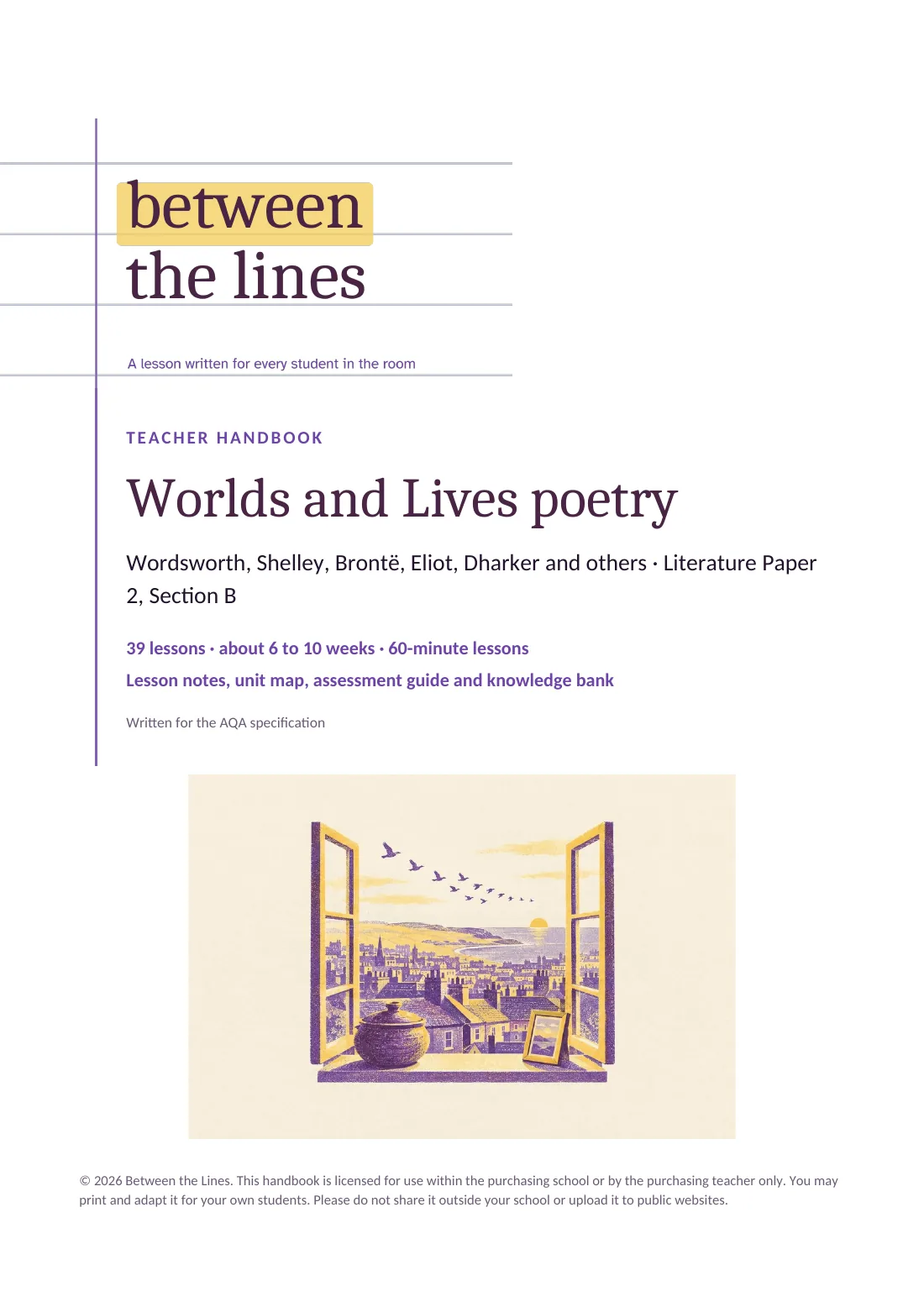 Teacher handbookCover
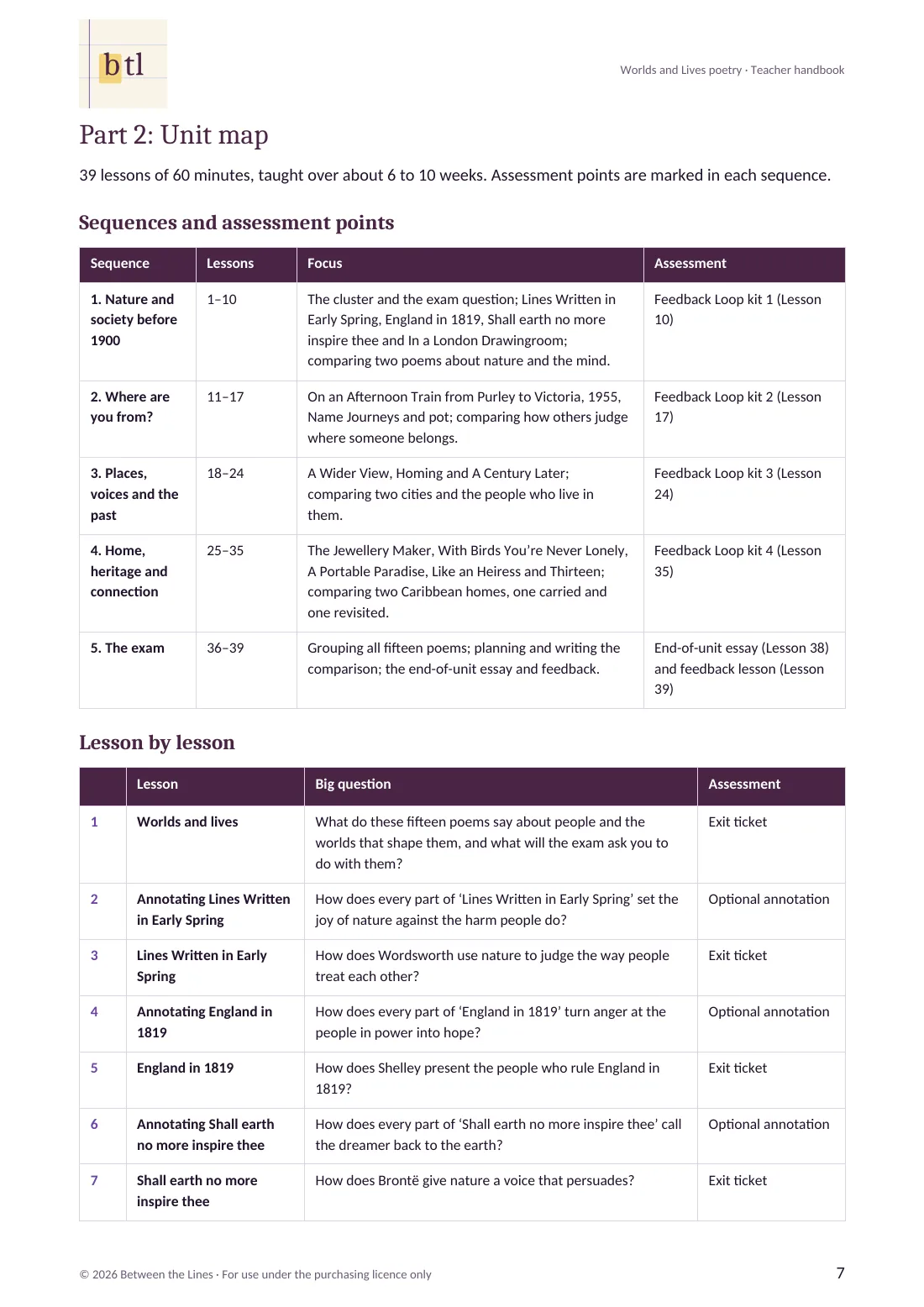 Unit mapTeacher handbook, page 7
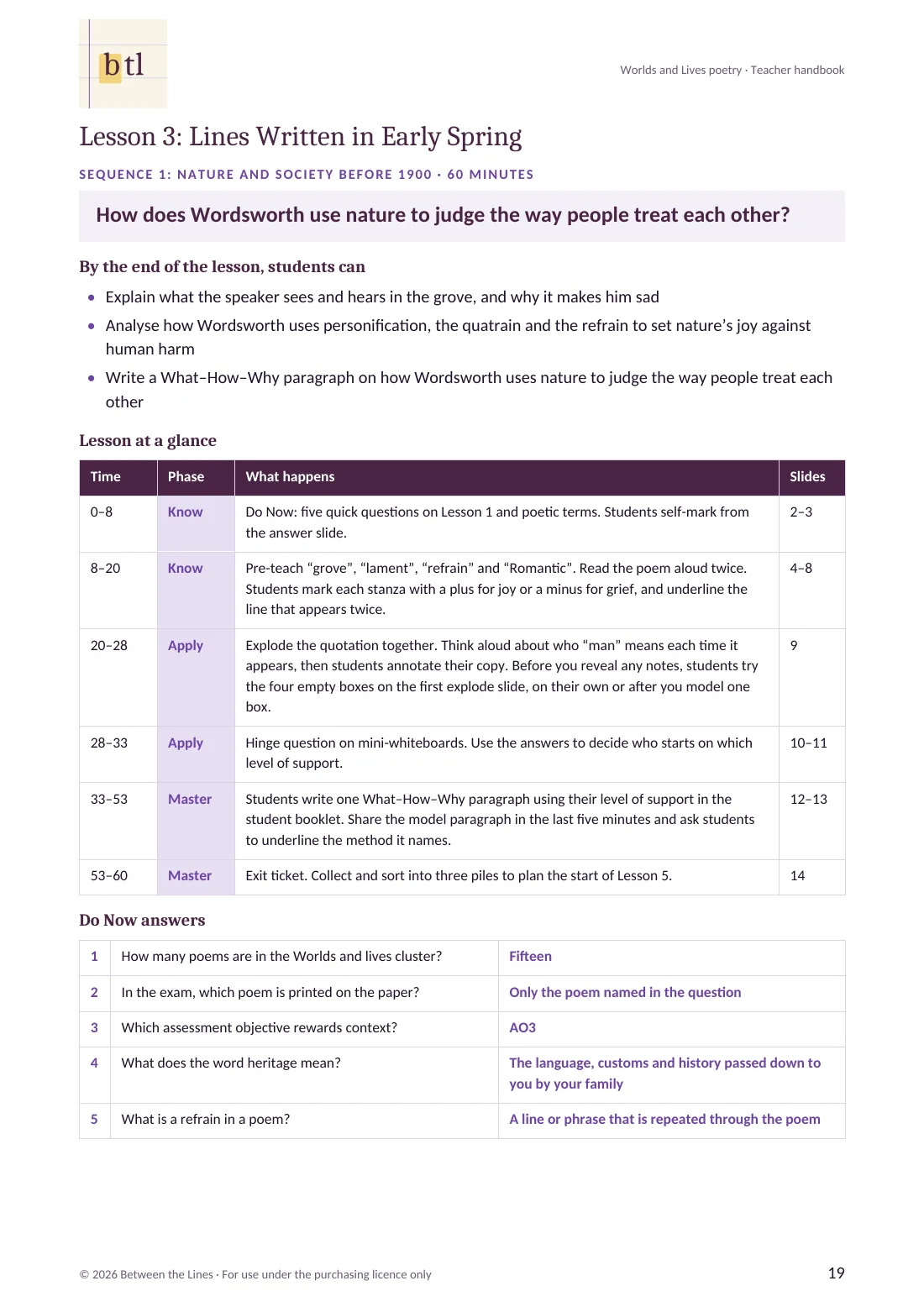 Lesson notesLesson 3 in the teacher handbook
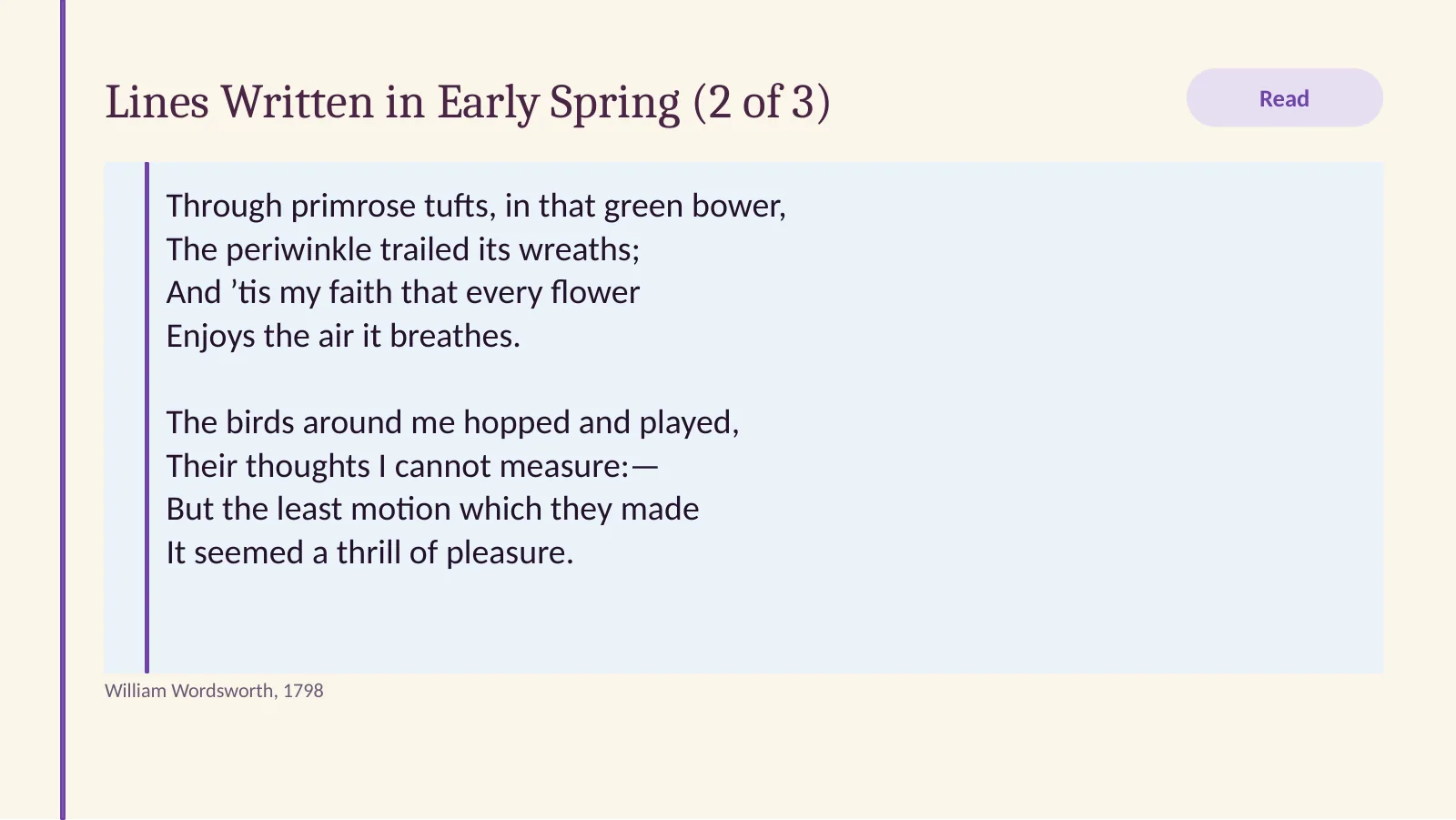 SlidesLesson 3: exploding the quotation
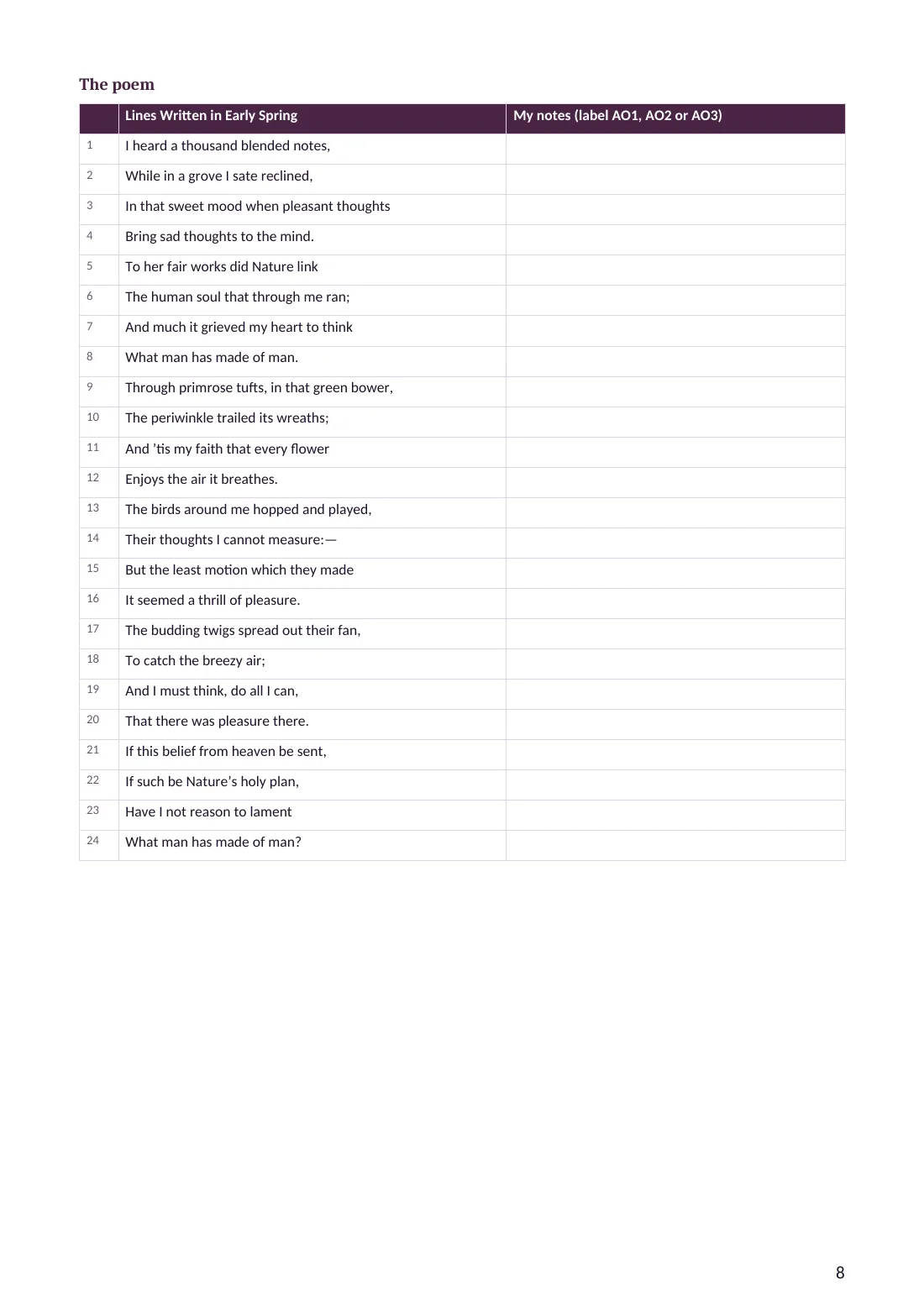 SecuringLesson 3 task, aiming for a 4
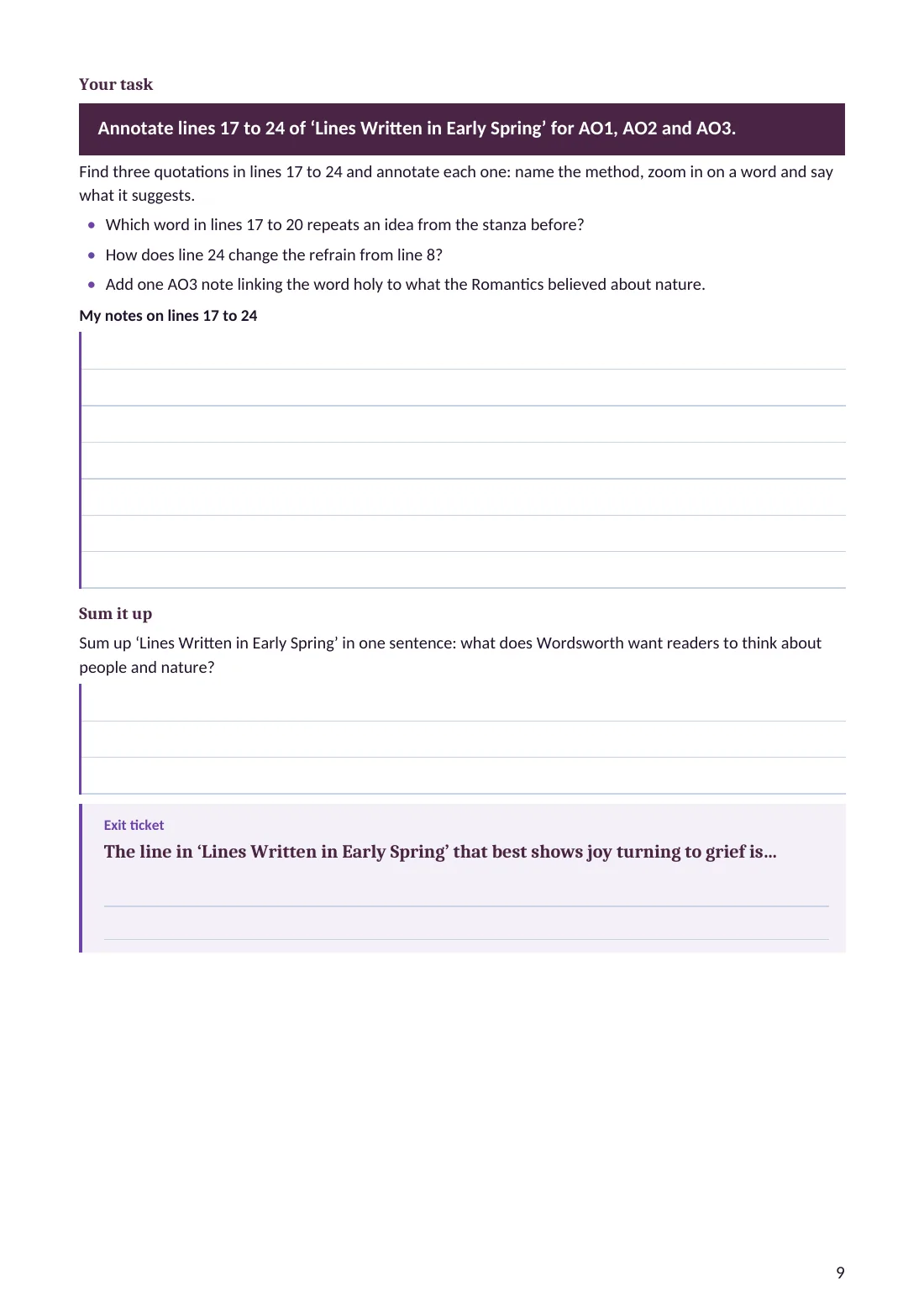 StrengtheningLesson 3 task, aiming for grades 5 to 6
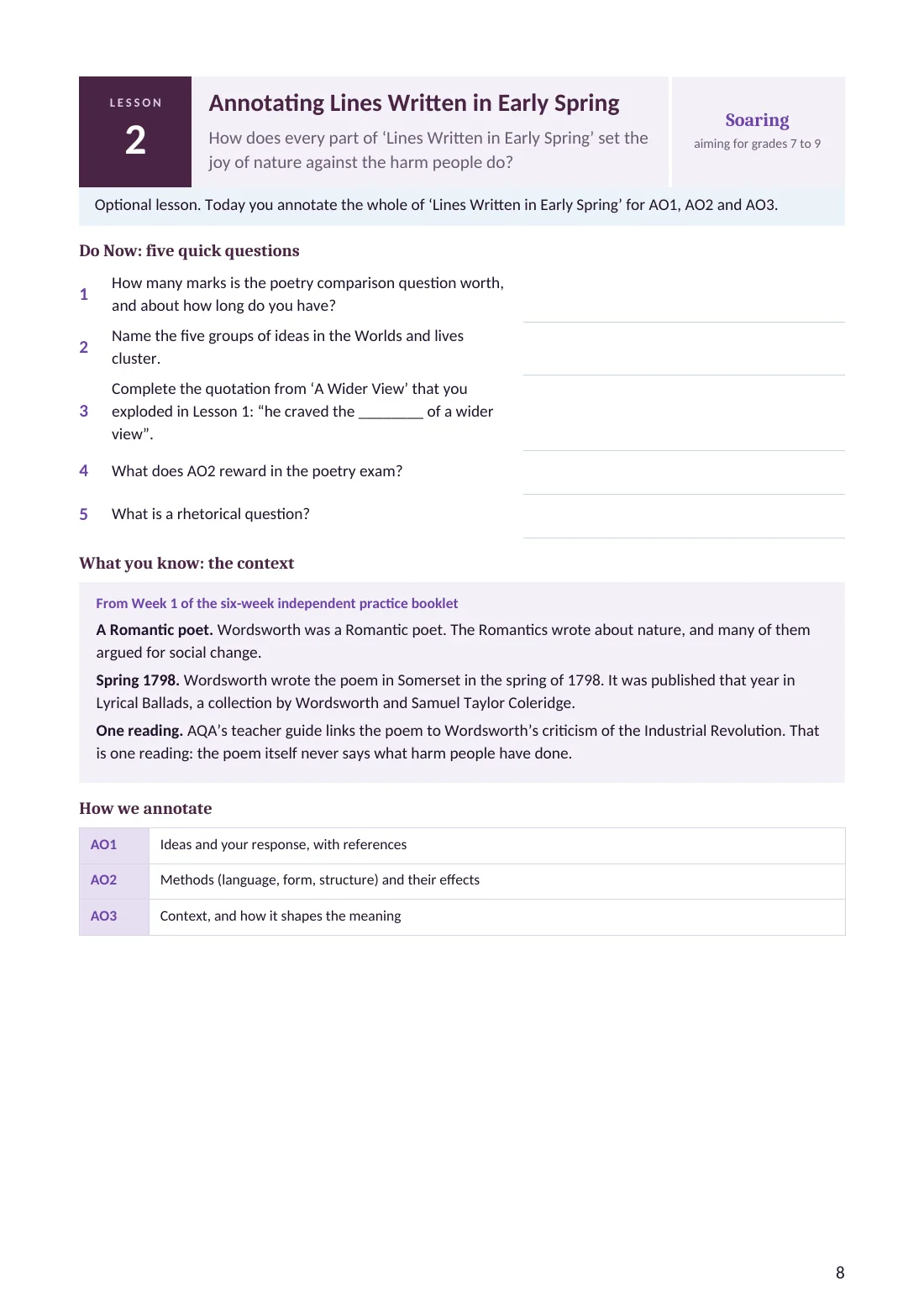 SoaringLesson 3 task, aiming for grades 7 to 9
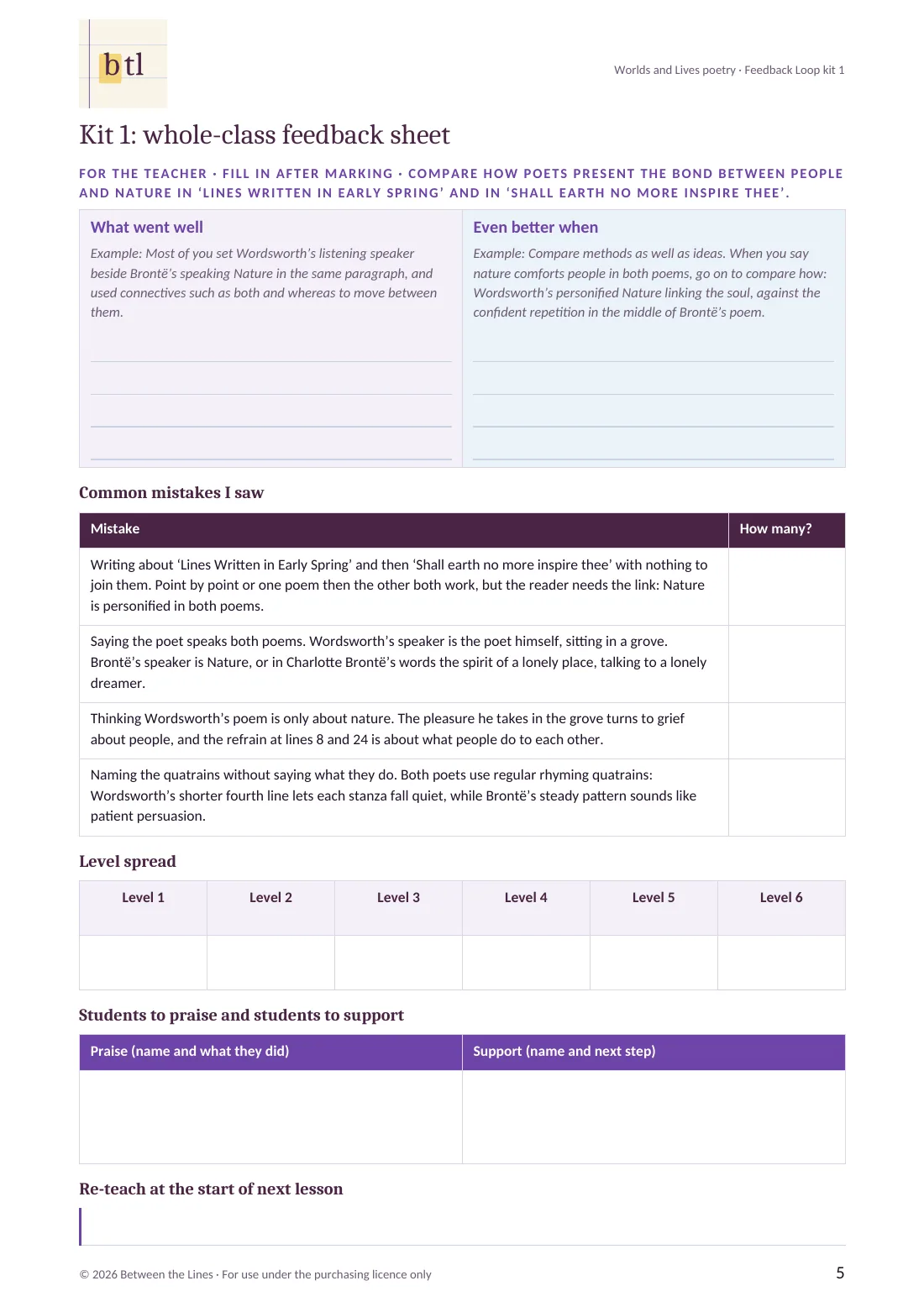 Whole-class feedbackFeedback Loop kit 1
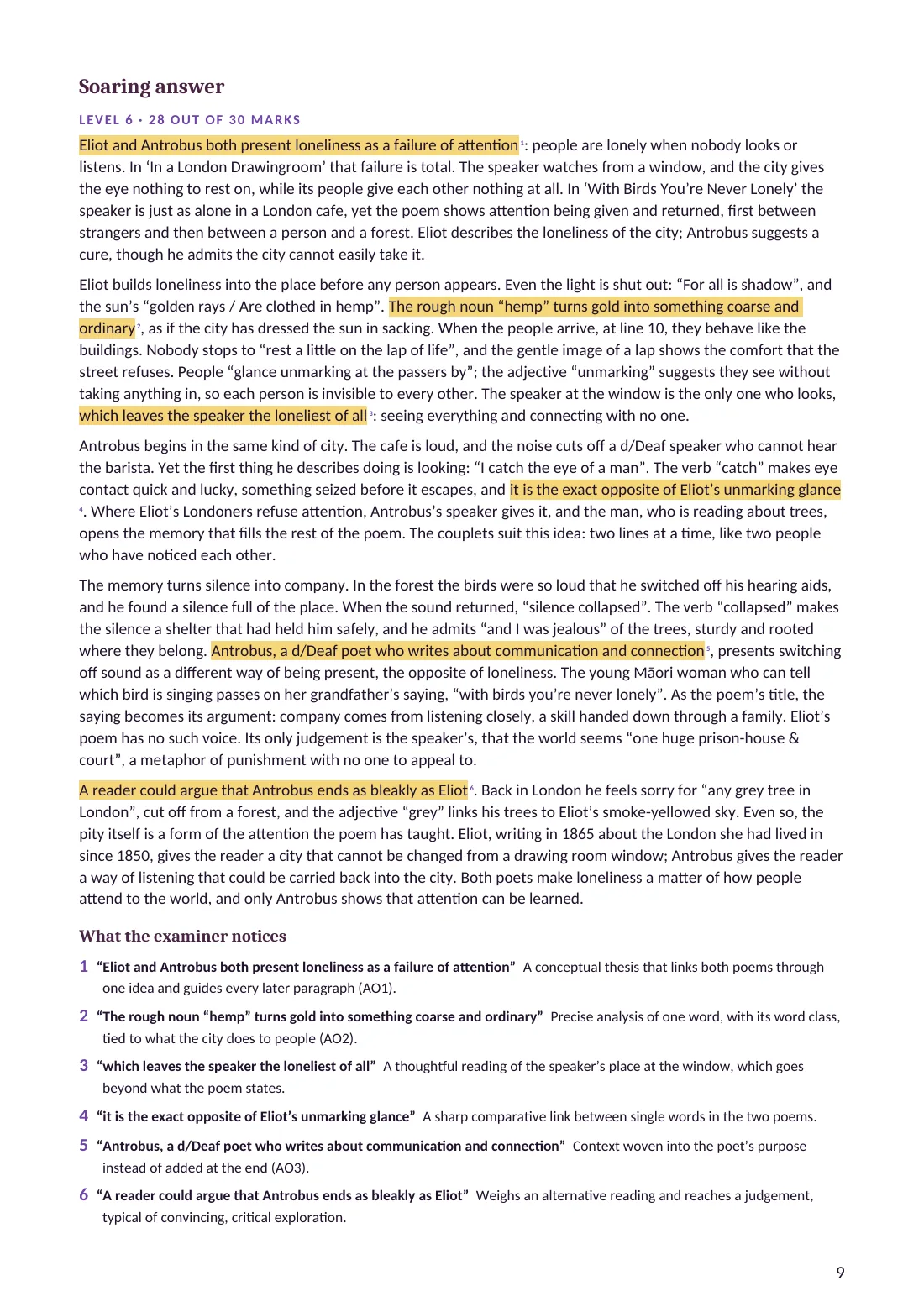 Model answersA Soaring answer with notes
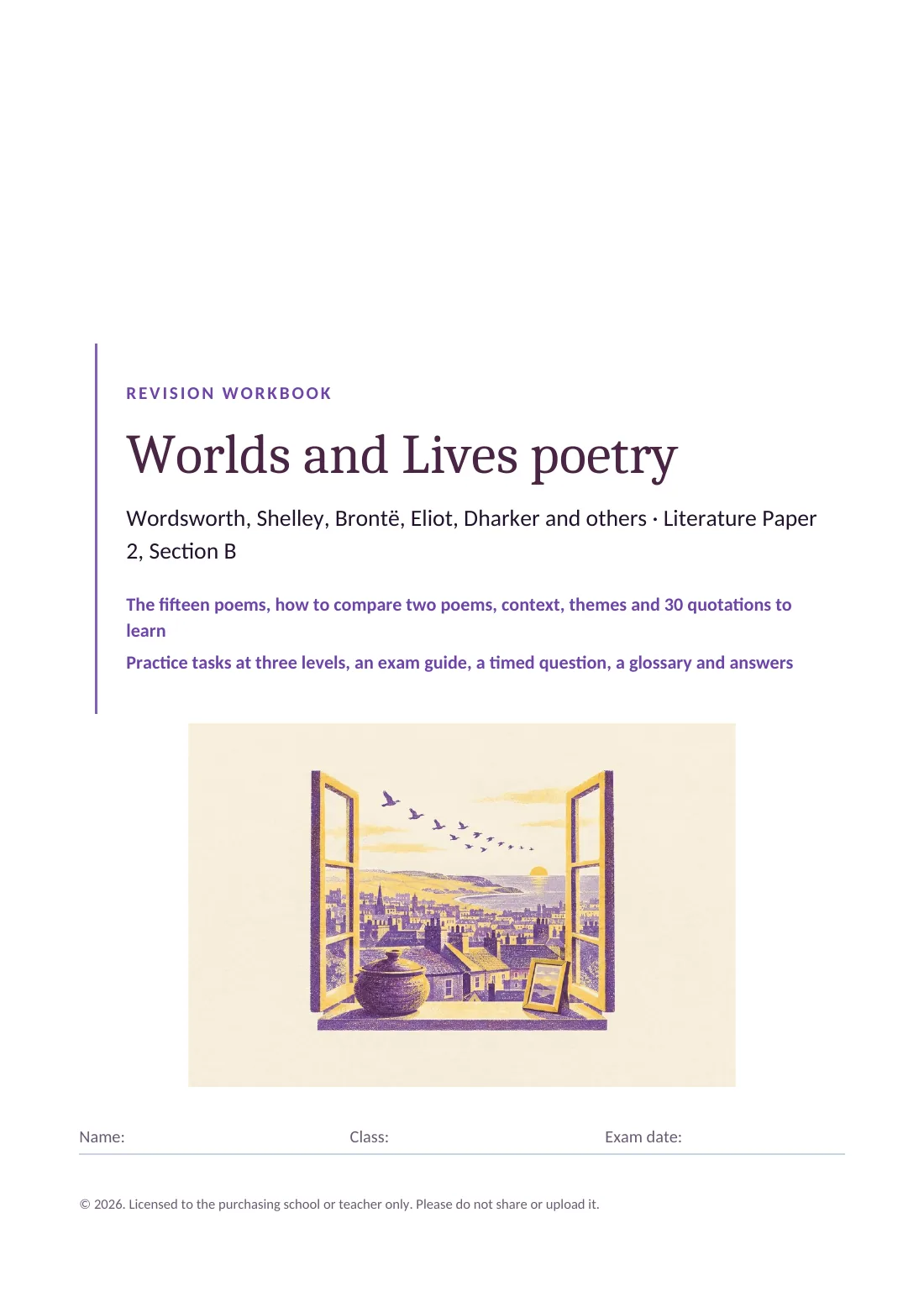 Revision workbookFor students
One question, three levels
Lesson 3 asks every student the same question: How does Wordsworth use nature to judge the way people treat each other? Each level keeps the task and changes the support around it, and all three sit side by side in the student booklet.
Securing
Aiming for a 4
A word bank, a choice of exact quotations, a worked example on a different quotation, and sentence starters for What, How and Why.
Strengthening
Aiming for grades 5 to 6
Prompts for What, How and Why, a paragraph planner and a success checklist.
Soaring
Aiming for grades 7 to 9
A debatable statement to argue with, prompts to think about, analytical verbs, and an argument planner that asks for an alternative reading.
All three levels are in the free Lesson 3 sampler.
Five sequences, 39 lessons
Feedback Loop kits and the end-of-unit essay are planned into the sequence. Open a sequence to see its lessons. Preview Lesson 3 here; we email the full editable lesson free.
Nature and society before 1900Lessons 1 to 10
- 1Worlds and livesWhat do these fifteen poems say about people and the worlds that shape them, and what will the exam ask you to do with them?
- 2Annotating Lines Written in Early SpringOptional annotationHow does every part of 'Lines Written in Early Spring' set the joy of nature against the harm people do?
- 3Lines Written in Early SpringFreeHow does Wordsworth use nature to judge the way people treat each other?
- 4Annotating England in 1819Optional annotationHow does every part of 'England in 1819' turn anger at the people in power into hope?
- 5England in 1819How does Shelley present the people who rule England in 1819?
- 6Annotating Shall earth no more inspire theeOptional annotationHow does every part of 'Shall earth no more inspire thee' call the dreamer back to the earth?
- 7Shall earth no more inspire theeHow does Brontë give nature a voice that persuades?
- 8Annotating In a London DrawingroomOptional annotationHow does every part of 'In a London Drawingroom' shut out light, colour and life?
- 9In a London DrawingroomHow does Eliot present a city that takes away people’s individuality?
- 10Comparing nature: Lines Written in Early Spring and Shall earth no more inspire theeFeedback Loop kit 1How do Wordsworth and Brontë present the bond between nature and the human mind?
Where are you from?Lessons 11 to 17
- 11Annotating On an Afternoon Train from Purley to Victoria, 1955Optional annotationHow does every part of 'On an Afternoon Train from Purley to Victoria, 1955' show the gap between a kind stranger and what she knows?
- 12On an Afternoon Train from Purley to Victoria, 1955How does Berry present a friendly conversation that shows how little one stranger knows about another?
- 13Annotating Name JourneysOptional annotationHow does every part of 'Name Journeys’ show a name and a language changed by a new country?
- 14Name JourneysHow does Mundair present what happens to a name and a language when a child grows up in a new country?
- 15Annotating potOptional annotationHow does every part of 'pot' turn an object in a museum into a question about belonging?
- 16potHow does khan use a pot in a museum to explore who belongs where?
- 17Comparing belonging: On an Afternoon Train from Purley to Victoria, 1955 and potFeedback Loop kit 2How do Berry and khan present the way other people judge where someone comes from?
Places, voices and the pastLessons 18 to 24
- 18Annotating A Wider ViewOptional annotationHow does every part of 'A Wider View' join a mill worker in 1869 to the poet today?
- 19A Wider ViewHow does Seneviratne present a working man’s need for space and hope?
- 20Annotating HomingOptional annotationHow does every part of 'Homing' set a hidden accent free?
- 21HomingHow does Liz Berry present an accent as something precious that was locked away?
- 22Annotating A Century LaterOptional annotationHow does every part of 'A Century Later' turn a walk to school into a battle the girl wins?
- 23A Century LaterHow does Dharker present a girl’s right to an education as a victory over violence?
- 24Comparing places: In a London Drawingroom and A Wider ViewFeedback Loop kit 3How do Eliot and Seneviratne present people’s need to see beyond the city around them?
Home, heritage and connectionLessons 25 to 35
- 25Annotating The Jewellery MakerOptional annotationHow does every part of 'The Jewellery Maker' show the skill of a man whose work others will wear?
- 26The Jewellery MakerHow does Parker present the gap between the maker and the people who will wear his work?
- 27Annotating With Birds You’re Never LonelyOptional annotationHow does every part of 'With Birds You’re Never Lonely' move between noise, silence and connection?
- 28With Birds You’re Never LonelyHow does Antrobus present the way sound and silence shape a person’s connection with the world?
- 29Annotating A Portable ParadiseOptional annotationHow does every part of 'A Portable Paradise' turn a memory into something you can carry?
- 30A Portable ParadiseHow does Robinson present memories of home as a way to get through hard times?
- 31Annotating Like an HeiressOptional annotationHow does every part of 'Like an Heiress’ turn a return home into a worry about the planet?
- 32Like an HeiressHow does Nichols present a return to a childhood shore spoiled by waste?
- 33Annotating ThirteenOptional annotationHow does every part of 'Thirteen' show a boy’s childhood turned against him?
- 34ThirteenHow does Femi present a thirteen-year-old boy who is treated as a suspect?
- 35Comparing home: A Portable Paradise and Like an HeiressFeedback Loop kit 4How do Robinson and Nichols present a Caribbean home that is carried in memory or visited again?
The examLessons 36 to 39
- 36Grouping the poemsWhich poems make the best partners, and why?
- 37Writing the comparisonHow do you write a 30-mark comparison in 45 minutes?
- 38End-of-unit essayEnd-of-unit essayCompare how poets present injustice in 'England in 1819' and in one other poem from 'Worlds and lives’.
- 39Feedback and improvementFeedback lessonWhat does a stronger comparison look like, and how will you improve yours?
Buy the scheme
Both licences include every file in the scheme, its 30 Raising Achievement drills, the model answer pack and the revision workbook.
The teacher licence, £80 incl. VAT, covers one named teacher with their own classes. It moves with you if you change school, and upgrades to a school licence for the difference (£133.33 + VAT).
Your school needs the school licence, £200 + VAT. It covers every teacher and student at one school on one site, with every correction and update to the unit for the current specification.
Half price for the further school. Each further school in the same multi-academy trust has its own school licence for the same unit at half the school licence price. Tell us the trust and both schools and we’ll send the files and an invoice.
A revision pack suits home better. The scheme is for teaching. The Worlds and Lives poetry revision pack has the revision workbook, the model answer pack and practice at three levels, as PDFs, for £15 including VAT.
Not covered. Private tuition isn’t covered by the teacher or school licence. Email hello@btl.education to ask about it.
One teacher
For your own classes
£80incl. VAT
- Print and adapt for your own students
- Put it on your school’s own secure learning platform
- Upgrade to a school licence for the difference: £160 incl. VAT (£133.33 + VAT)
School
Every teacher and student at one school
£200+ VAT
- Print and adapt for every class in the school
- Put it on your school’s own secure learning platform
- Each further school in the same trust pays half
Keeping your own scheme? The 30 Raising Achievement drills are sold on their own too: £60 + VAT for a school, £24 incl. VAT for one teacher. Try Drill 1 free · Raising Achievement
Buy the Raising Achievement drills on their own
Several schemes together cost less: see the bundles. To upgrade a teacher licence, or to license another school in your trust at half price, email hello@btl.education. Please don’t share the files outside your school or upload them to public websites.
Both licences include nine folders: see what is in each
- 00Start here6 pages: how the scheme fits together
- 01Teacher handbook186 pages: intent, unit map, lesson notes, assessment guide, knowledge bank
- 02Slides39 PowerPoint decks with teacher notes, and a PDF copy of each
- 03Student bookletEvery lesson with the Securing, Strengthening and Soaring support side by side, 134 pages, plus one pack per level for set classes
- 04Independent practiceAll three levels in one booklet, 46 pages, so students can move up week by week, plus one booklet per level, with a nine-week version for a slower timetable
- 05Feedback Loop kitsFour kits, 7 pages each
- 06End-of-unit assessmentEssay paper and teacher guide with model answers
- 09Missed a lessonA one-page catch-up sheet for every lesson, with a box for the teacher’s check-in
- 10InclusionNotes for students with SEND, students learning English and pupil premium students, and a key words list
Both licences also include the model answer pack (25 pages) and the revision workbook (48 pages). Everything arrives as zip files of editable Word and PowerPoint files, with a PDF copy of each.
Buying through your school? Ask your school to buy it: it opens an email with both licences, the prices and our company details, ready to send to whoever approves the spending.
Licence questions
Can colleagues use my teacher licence?
No. A teacher licence covers one named teacher with their own classes. If colleagues want to use the resources, your school needs a school licence, and a teacher licence upgrades to one for the difference in price.
Can I put the files on Google Classroom or Teams?
Yes, on your school’s own learning platform, where only your students can see them. With a school licence, the school’s staff and students can see them there too. Not on any website or sharing service that people outside the licence can reach, Tes included.
What happens if I move school?
A teacher licence moves with you. Tell us at hello@btl.education and we will update our record and reissue your files. A school licence stays with the school.
Can students keep their copies?
With a school licence, yes: students may keep their copies for their own study, including after they leave.
Do we get updates?
A school licence includes every correction and update to that unit for the current specification. We send them to the email address on the order. When a reformed specification replaces it, a school licence for a text that continues can be exchanged for the rebuilt scheme at half price.
Does a school licence cover the other schools in our trust?
No. Each school needs its own licence. Each further school in the same multi-academy trust can have a school licence for the same unit at half price.
Can I edit the files?
Yes. Edit the Word and PowerPoint files to suit your classes. Edited versions stay under the same licence and may not be shared any more widely than the originals.
Is private tuition covered?
No. The teacher licence does not cover private tuition, and a school licence covers one school’s teachers and students.
Does our CLA licence cover these resources?
No. These resources are not covered by the CLA Education Licence, so it gives schools no further right to copy them.
Why are a name and an order number printed on the files?
Paid files carry the licence holder’s name and the order number, so a shared file shows whose copy it is. We never print an email address.
The licence terms have the full wording.
Teach Lesson 3 of Worlds and Lives poetry, free
Lesson 3 of every scheme, with the slides, the teacher notes and the student booklet at Securing, Strengthening and Soaring. Try it with one class and see what your students write. Enter a school or personal email address and we email you the three files straight away. We add you to no list unless you tick the box.
Get our emails
About once a month: new free resources and the dates that matter for GCSE English.