

Teachers › Power and Conflict poetry
Power and Conflict poetry scheme of work for AQA GCSE
AQA GCSE English Literature · Paper 2, Section B
A complete scheme of work (we call it a scheme of learning): 39 lessons across about 6 to 10 weeks, built around one big question: what does power do to people, and how do poets make us feel it? Every lesson has PowerPoint slides with teacher notes, lesson-by-lesson notes with timings in the handbook, and a student booklet with three levels of support.
£200+ VAT, a school · £80for one teacher, incl. VAT · Lesson 3 free
Files last updated 22 November 2026.
Written for the current AQA specification, which every student now in Years 8 to 11 will sit. Reformed GCSE English is not expected to be examined before 2031. What is confirmed and what is not.
Three levels of support in 37 of the 39 lessons · 4 Feedback Loop kits · an end-of-unit essay with model answers
Watch: the scheme in five minutes
What is in the scheme and how a lesson runs.
Power and Conflict poetry: the scheme in five minutes
5 minutes · captions available
The Power and Conflict poetry scheme of learning in five minutes: the scheme at a glance, one lesson, the three levels of support and the Feedback Loop kits.
Chapters
Also: AQA English Literature Paper 2 explained, 4 minutes.
Real pages from the scheme
Choose a page to see it larger. Preview Lesson 3 here; we email the full editable lesson free.
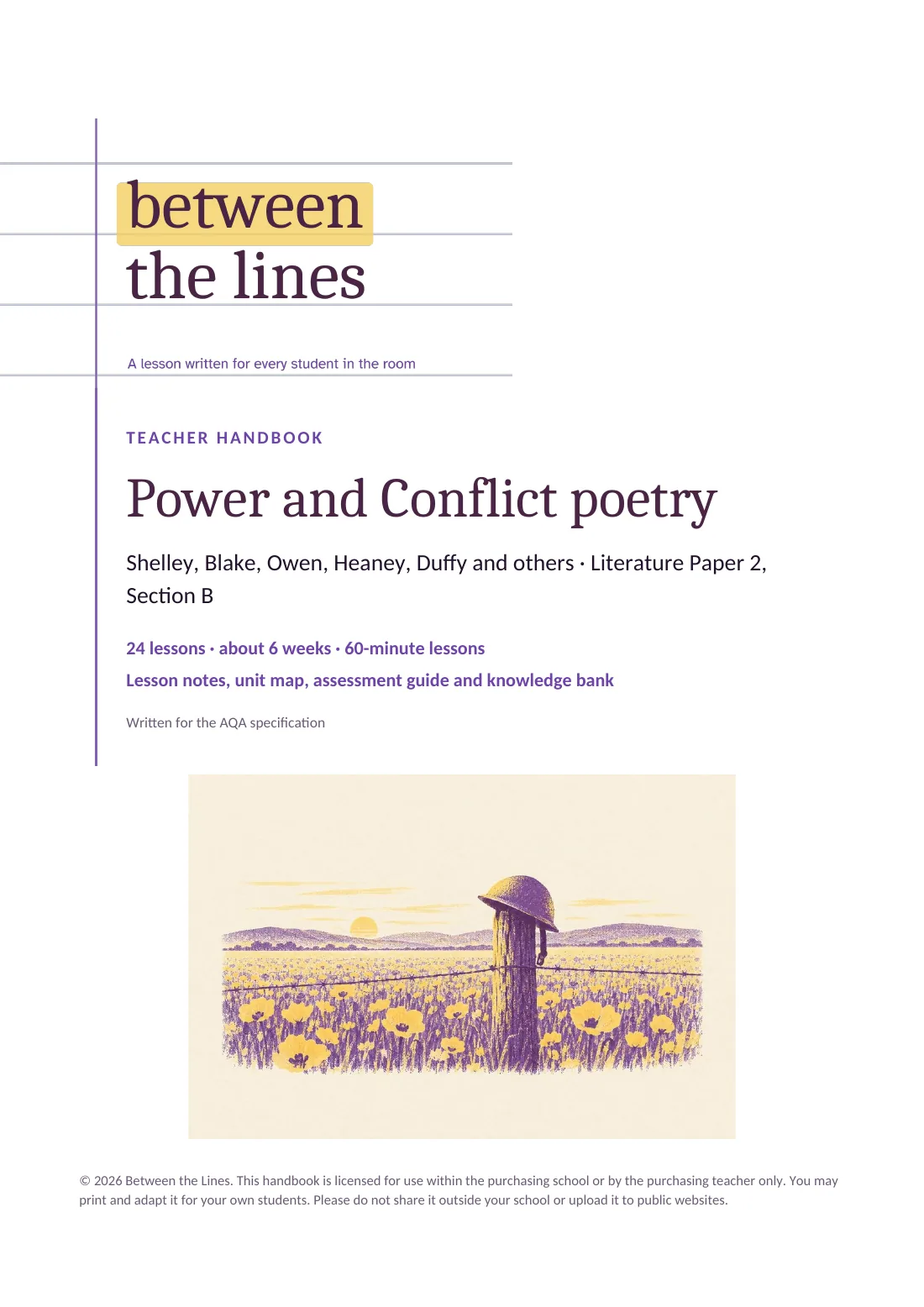 Teacher handbookCover
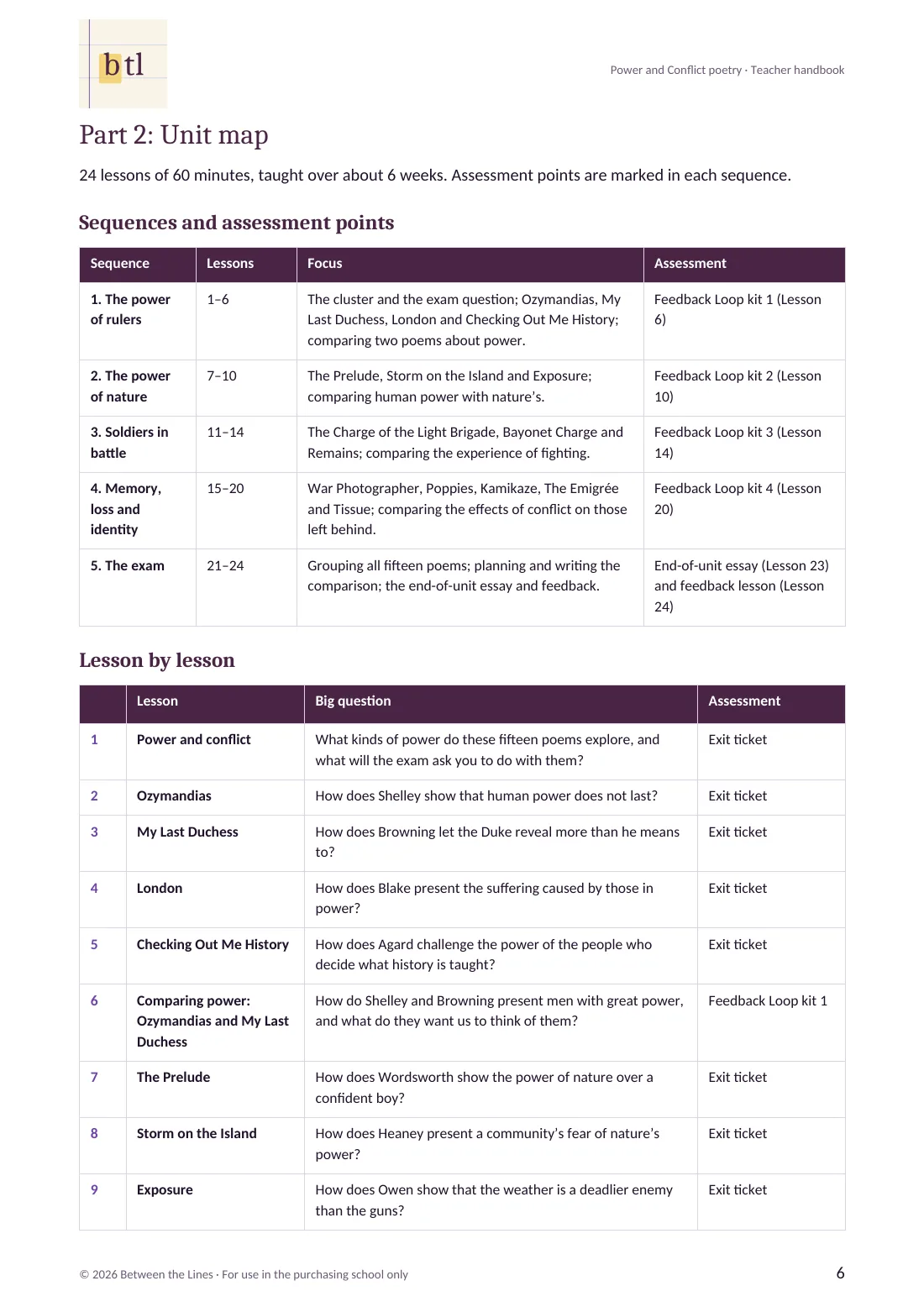 Unit mapTeacher handbook, page 7
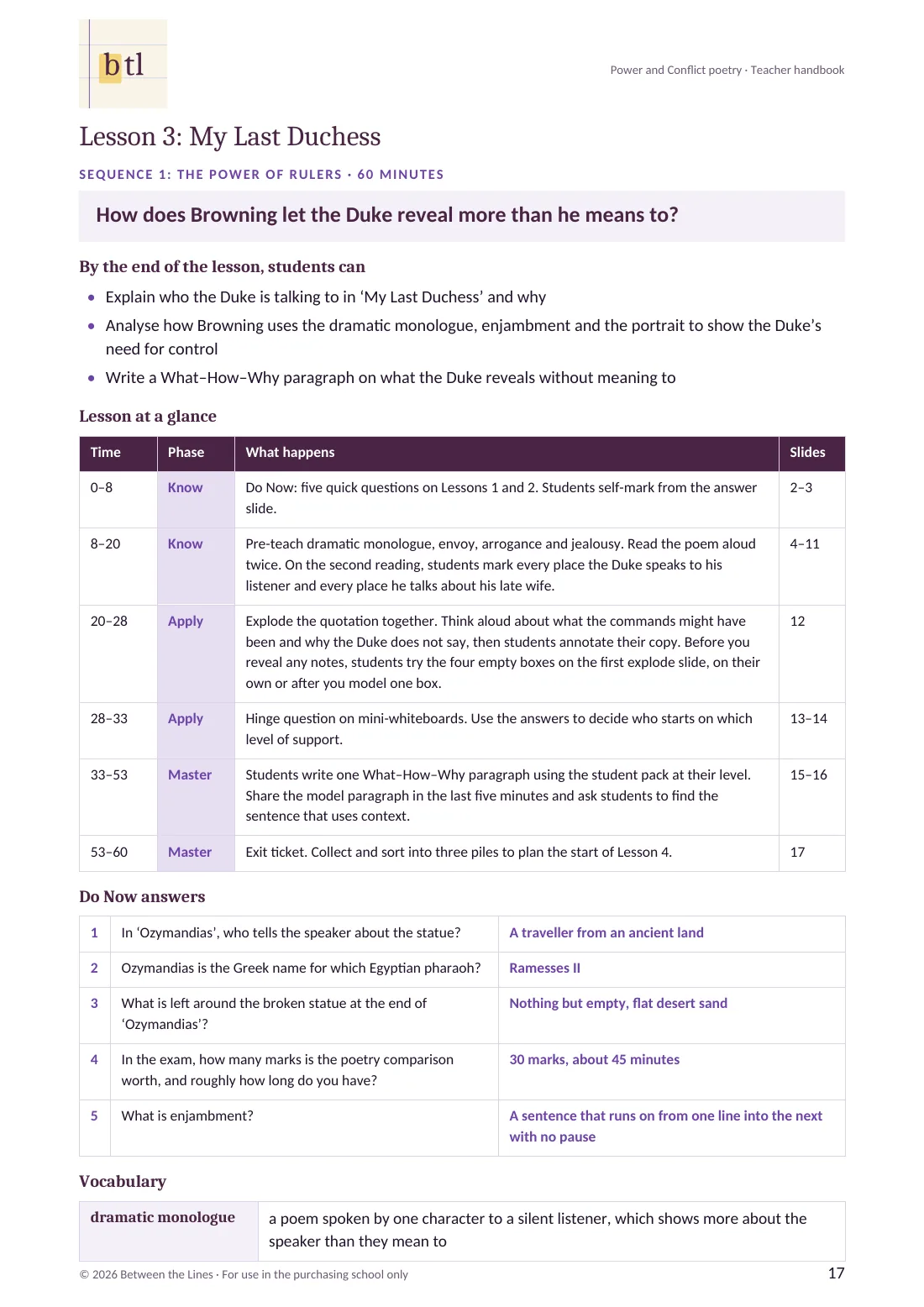 Lesson notesLesson 3 in the teacher handbook
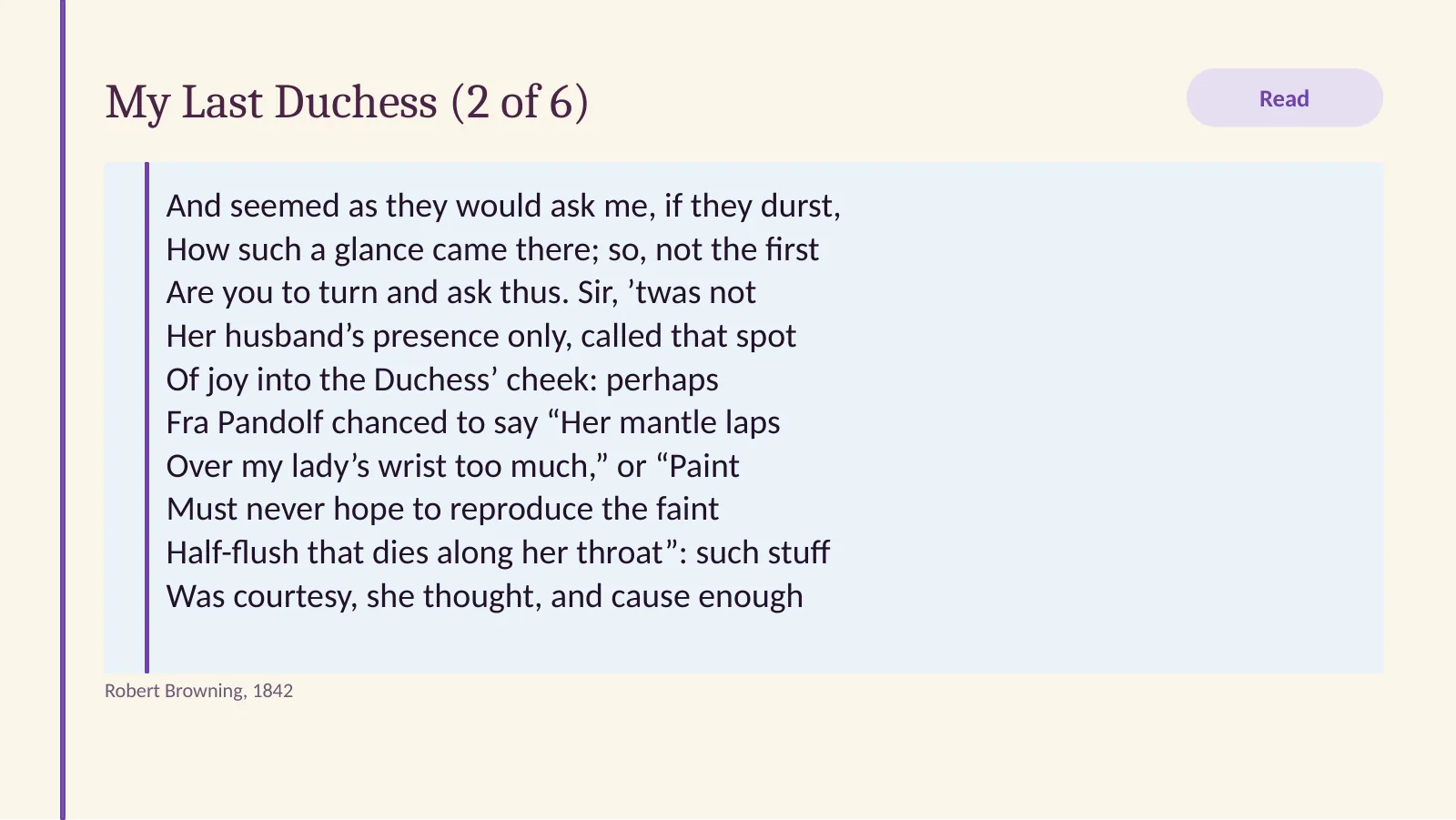 SlidesLesson 3: exploding the quotation
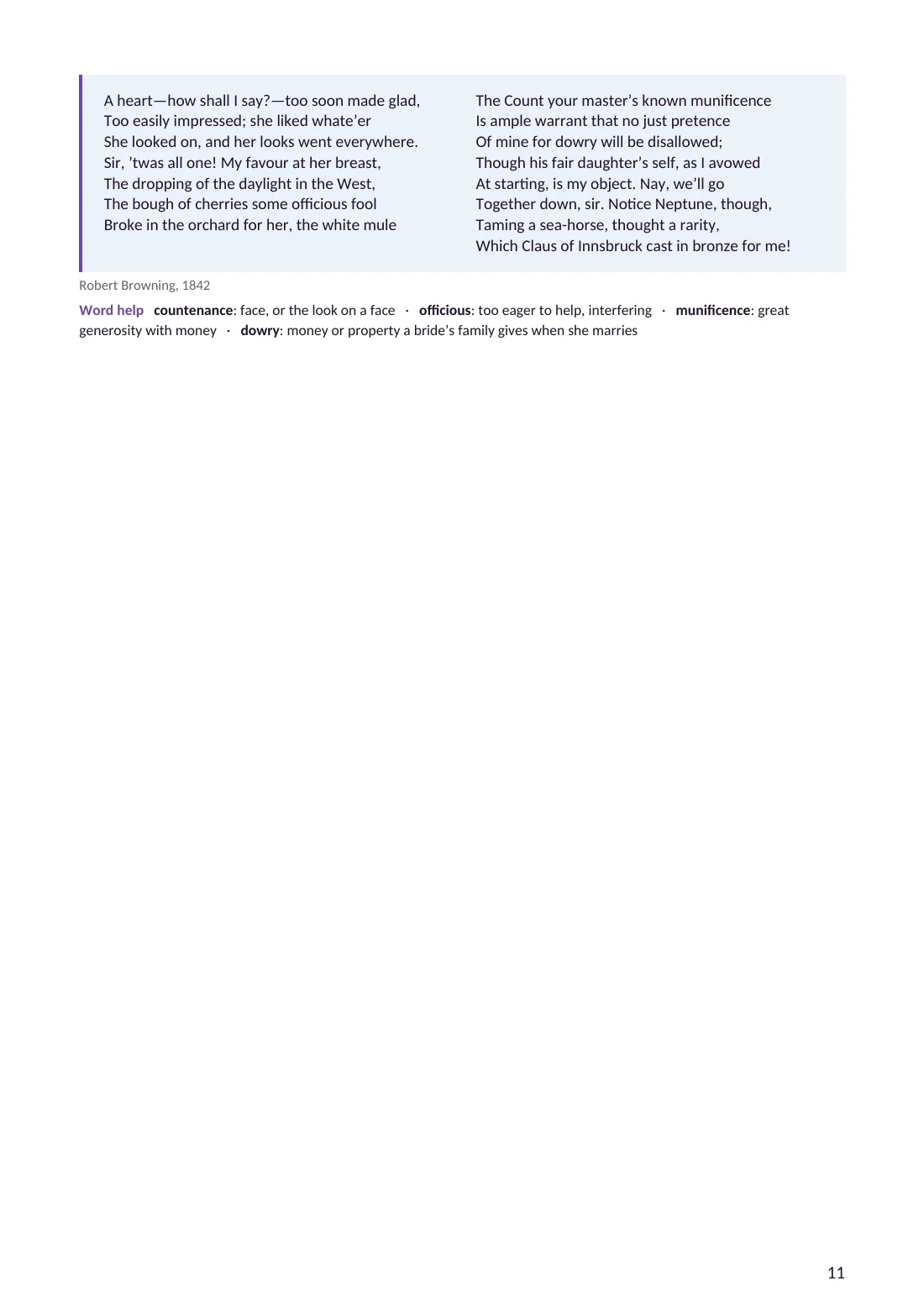 SecuringLesson 3 task, aiming for a 4
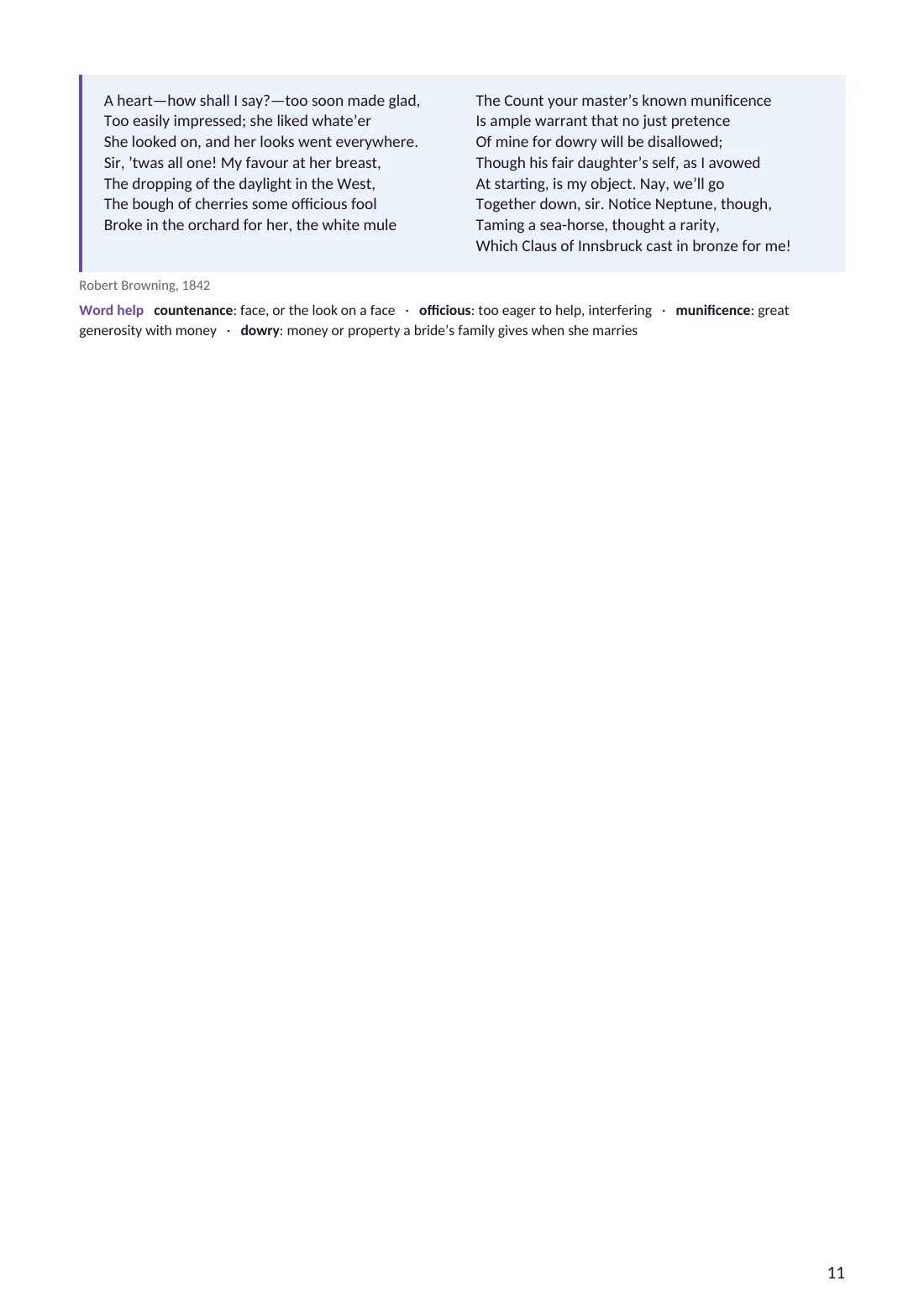 StrengtheningLesson 3 task, aiming for grades 5 to 6
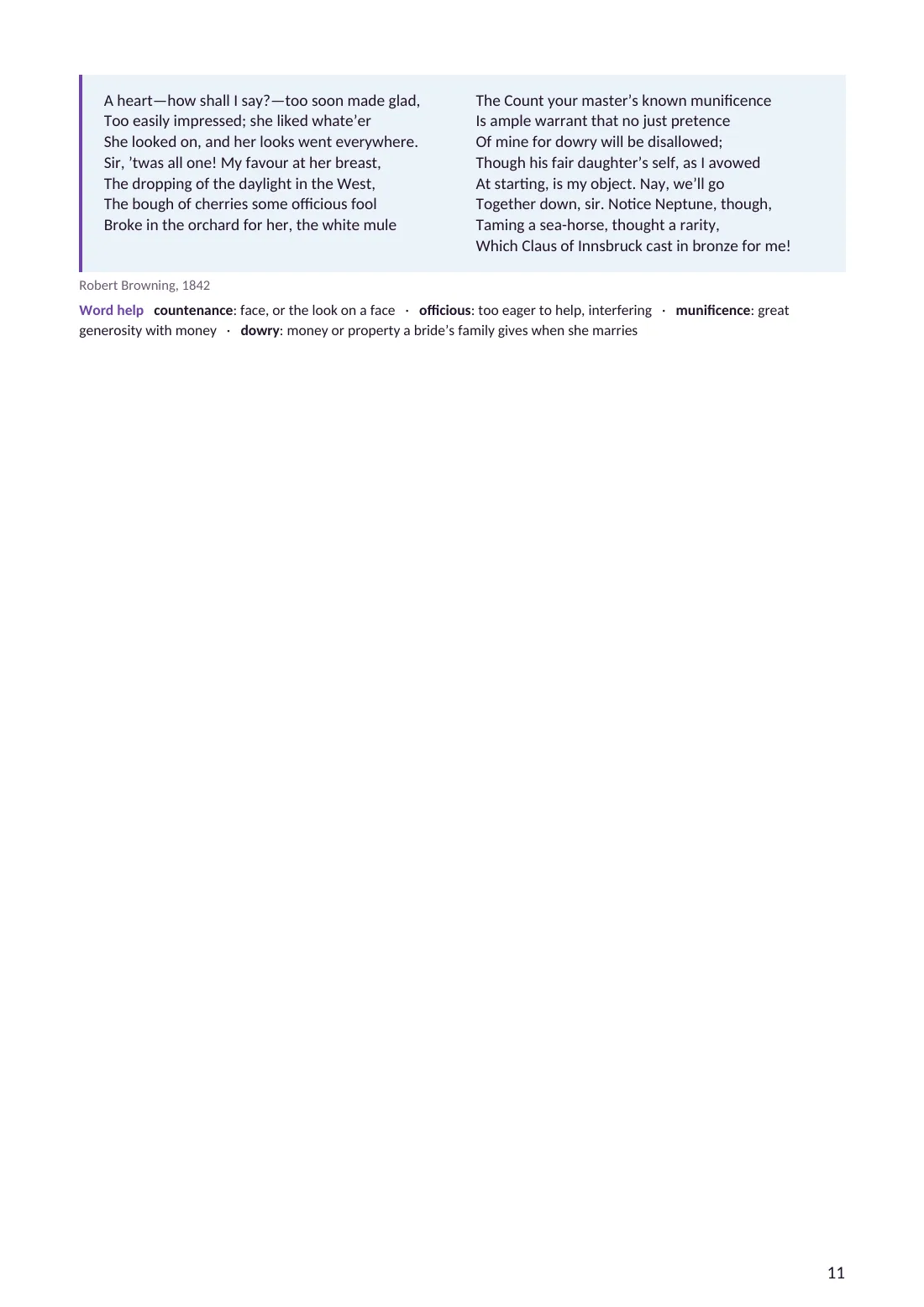 SoaringLesson 3 task, aiming for grades 7 to 9
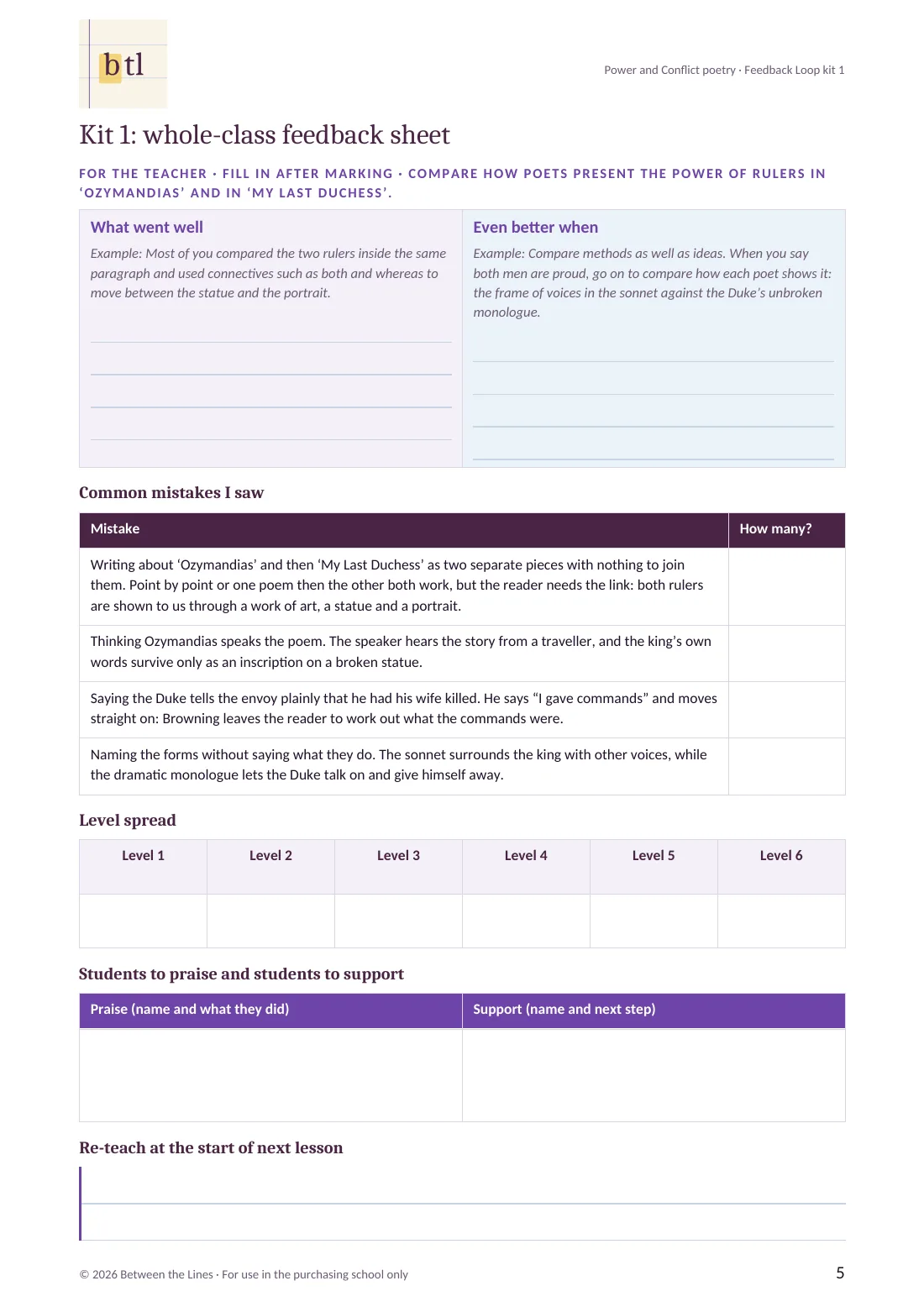 Whole-class feedbackFeedback Loop kit 1
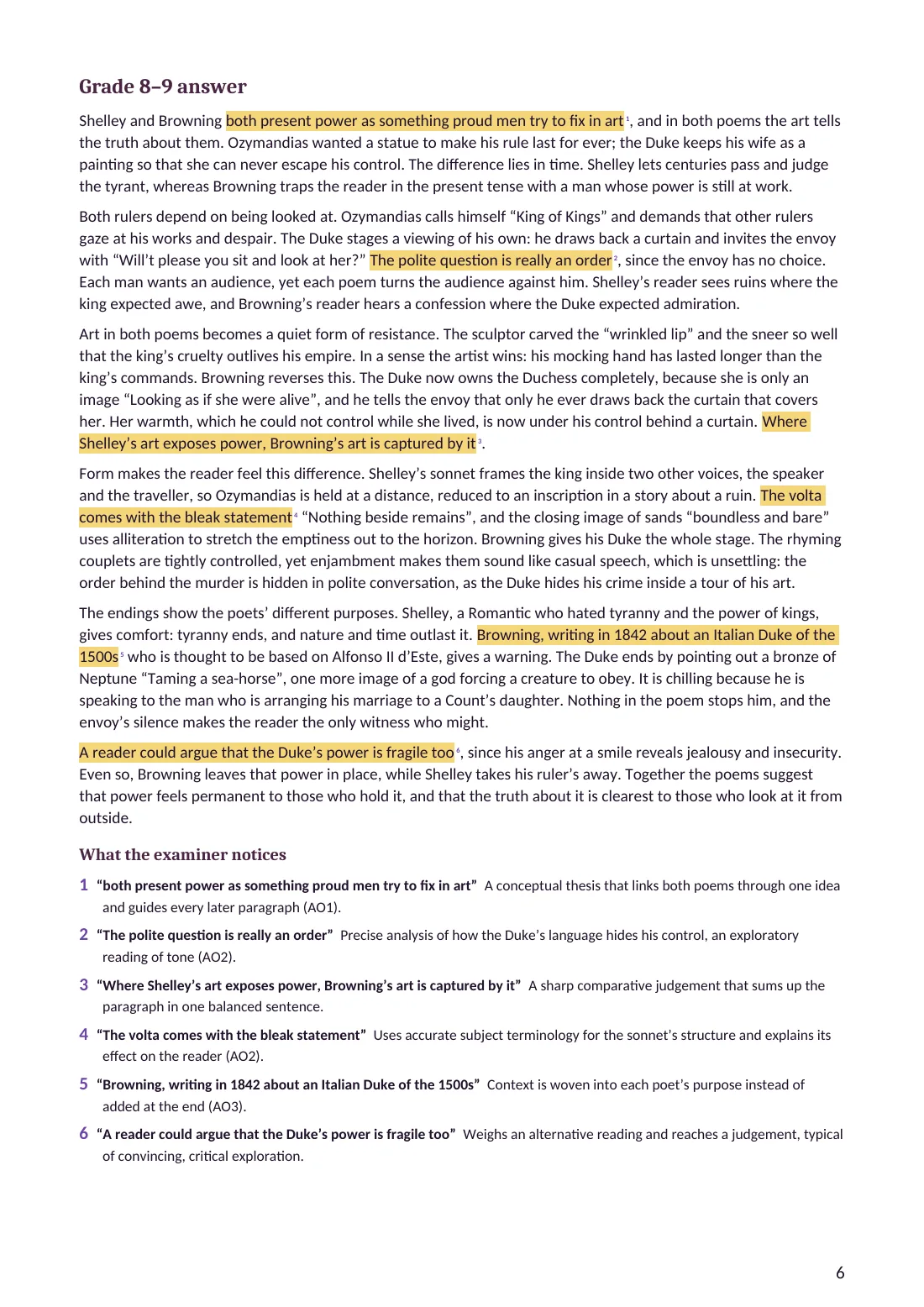 Model answersA Soaring answer with notes
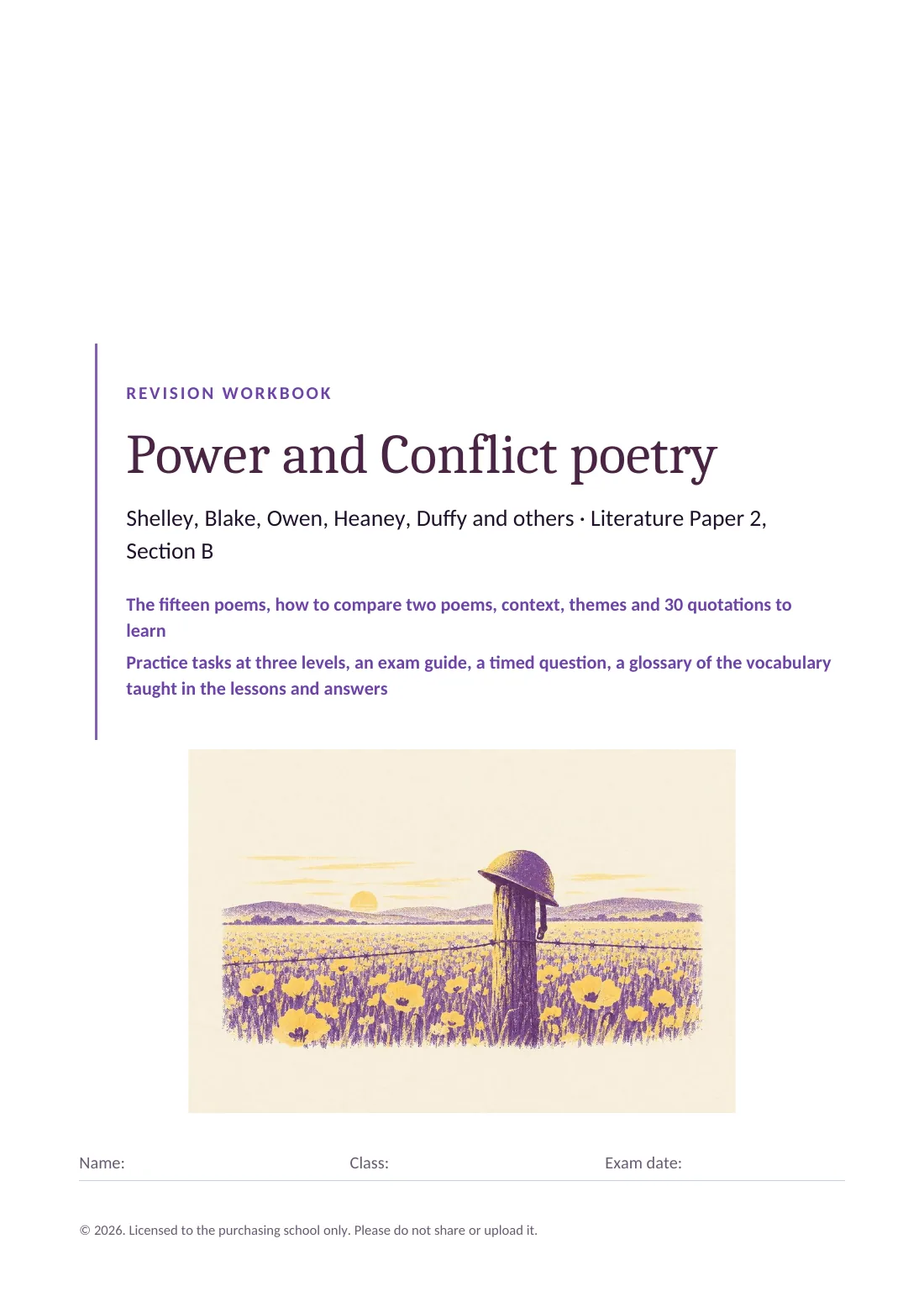 Revision workbookFor students
One question, three levels
Lesson 3 asks every student the same question: How does Shelley show that human power does not last? Each level keeps the task and changes the support around it, and all three sit side by side in the student booklet.
Securing
Aiming for a 4
A word bank, a choice of exact quotations, a worked example on a different quotation, and sentence starters for What, How and Why.
Strengthening
Aiming for grades 5 to 6
Prompts for What, How and Why, a paragraph planner and a success checklist.
Soaring
Aiming for grades 7 to 9
A debatable statement to argue with, prompts to think about, analytical verbs, and an argument planner that asks for an alternative reading.
All three levels are in the free Lesson 3 sampler.
Five sequences, 39 lessons
Feedback Loop kits and the end-of-unit essay are planned into the sequence. Open a sequence to see its lessons. Preview Lesson 3 here; we email the full editable lesson free.
The power of rulersLessons 1 to 10
- 1Power and conflictWhat kinds of power do these fifteen poems explore, and what will the exam ask you to do with them?
- 2Annotating OzymandiasOptional annotationHow does every part of 'Ozymandias’ show that a ruler’s power does not last?
- 3OzymandiasFreeHow does Shelley show that human power does not last?
- 4Annotating My Last DuchessOptional annotationHow does every part of 'My Last Duchess’ show the Duke’s need to control?
- 5My Last DuchessHow does Browning let the Duke reveal more than he means to?
- 6Annotating LondonOptional annotationHow does every part of 'London' show the people in power causing suffering?
- 7LondonHow does Blake present the suffering caused by those in power?
- 8Annotating Checking Out Me HistoryOptional annotationHow does every part of 'Checking Out Me History' fight back against the history the speaker was given?
- 9Checking Out Me HistoryHow does Agard challenge the power of the people who decide what history is taught?
- 10Comparing power: Ozymandias and My Last DuchessFeedback Loop kit 1How do Shelley and Browning present men with great power, and what do they want us to think of them?
The power of natureLessons 11 to 17
- 11Annotating The PreludeOptional annotationHow does every part of the extract from 'The Prelude' show nature humbling a confident boy?
- 12The PreludeHow does Wordsworth show the power of nature over a confident boy?
- 13Annotating Storm on the IslandOptional annotationHow does every part of 'Storm on the Island' turn a community’s confidence into fear?
- 14Storm on the IslandHow does Heaney present a community’s fear of nature’s power?
- 15Annotating ExposureOptional annotationHow does every part of 'Exposure' show soldiers worn down by cold and waiting?
- 16ExposureHow does Owen show that the weather is a deadlier enemy than the guns?
- 17Comparing nature’s power: The Prelude and Storm on the IslandFeedback Loop kit 2How do Wordsworth and Heaney present the power of nature over people?
Soldiers in battleLessons 18 to 24
- 18Annotating The Charge of the Light BrigadeOptional annotationHow does every part of 'The Charge of the Light Brigade' turn a military mistake into a story of courage?
- 19The Charge of the Light BrigadeHow does Tennyson turn a military blunder into a story of heroism?
- 20Annotating Bayonet ChargeOptional annotationHow does every part of 'Bayonet Charge' show a soldier’s beliefs giving way to terror?
- 21Bayonet ChargeHow does Hughes show a soldier’s patriotism disappearing in the moment of attack?
- 22Annotating RemainsOptional annotationHow does every part of 'Remains’ show a killing that will not stay in the past?
- 23RemainsHow does Armitage show that a soldier cannot leave a killing behind?
- 24Comparing soldiers: The Charge of the Light Brigade and Bayonet ChargeFeedback Loop kit 3How do Tennyson and Hughes present soldiers in the moment of battle?
Memory, loss and identityLessons 25 to 35
- 25Annotating War PhotographerOptional annotationHow does every part of 'War Photographer' show the gap between the suffering he records and the people who look at it?
- 26War PhotographerHow does Duffy present the gap between the horror of war and the people who look at it?
- 27Annotating PoppiesOptional annotationHow does every part of 'Poppies’ show a mother’s private grief inside a public act of Remembrance?
- 28PoppiesHow does Weir present a mother’s loss as her son leaves for war?
- 29Annotating KamikazeOptional annotationHow does every part of 'Kamikaze' show a pilot caught between his duty and his love of life?
- 30KamikazeHow does Garland present the cost of a pilot’s choice to turn back?
- 31Annotating The EmigréeOptional annotationHow does every part of 'The Emigrée' keep the speaker’s lost city bright?
- 32The EmigréeHow does Rumens present a speaker’s love for a city she cannot return to?
- 33Annotating TissueOptional annotationHow does every part of 'Tissue' show that what people build is as thin as paper?
- 34TissueHow does Dharker show that the things people build are less permanent than they think?
- 35Comparing memory: Remains and PoppiesFeedback Loop kit 4How do Armitage and Weir present the lasting effects of conflict on one person?
The examLessons 36 to 39
- 36Grouping the poemsWhich poems make the best partners, and why?
- 37Writing the comparisonHow do you write a 30-mark comparison in 45 minutes?
- 38End-of-unit essayEnd-of-unit essayCompare how poets present the effects of conflict in 'Exposure' and in one other poem from 'Power and conflict'.
- 39Feedback and improvementFeedback lessonWhat does a stronger comparison look like, and how will you improve yours?
Buy the scheme
Both licences include every file in the scheme, its 30 Raising Achievement drills, the model answer pack and the revision workbook.
The teacher licence, £80 incl. VAT, covers one named teacher with their own classes. It moves with you if you change school, and upgrades to a school licence for the difference (£133.33 + VAT).
Your school needs the school licence, £200 + VAT. It covers every teacher and student at one school on one site, with every correction and update to the unit for the current specification.
Half price for the further school. Each further school in the same multi-academy trust has its own school licence for the same unit at half the school licence price. Tell us the trust and both schools and we’ll send the files and an invoice.
A revision pack suits home better. The scheme is for teaching. The Power and Conflict poetry revision pack has the revision workbook, the model answer pack and practice at three levels, as PDFs, for £15 including VAT.
Not covered. Private tuition isn’t covered by the teacher or school licence. Email hello@btl.education to ask about it.
One teacher
For your own classes
£80incl. VAT
- Print and adapt for your own students
- Put it on your school’s own secure learning platform
- Upgrade to a school licence for the difference: £160 incl. VAT (£133.33 + VAT)
School
Every teacher and student at one school
£200+ VAT
- Print and adapt for every class in the school
- Put it on your school’s own secure learning platform
- Each further school in the same trust pays half
Keeping your own scheme? The 30 Raising Achievement drills are sold on their own too: £60 + VAT for a school, £24 incl. VAT for one teacher. Try Drill 1 free · Raising Achievement
Buy the Raising Achievement drills on their own
Several schemes together cost less: see the bundles. To upgrade a teacher licence, or to license another school in your trust at half price, email hello@btl.education. Please don’t share the files outside your school or upload them to public websites.
Both licences include ten folders: see what is in each
- 00Start here6 pages: how the scheme fits together
- 01Teacher handbook186 pages: intent, unit map, lesson notes, assessment guide, knowledge bank
- 02Slides39 PowerPoint decks with teacher notes, and a PDF copy of each
- 03Student bookletEvery lesson with the Securing, Strengthening and Soaring support side by side, 134 pages, plus one pack per level for set classes
- 04Independent practiceAll three levels in one booklet, 46 pages, so students can move up week by week, plus one booklet per level, with a nine-week version for a slower timetable
- 05Feedback Loop kitsFour kits, 6 pages each
- 06End-of-unit assessmentEssay paper and teacher guide with model answers
- 09Missed a lessonA one-page catch-up sheet for every lesson, with a box for the teacher’s check-in
- 10InclusionNotes for students with SEND, students learning English and pupil premium students, and a key words list
- 11Talk routinesSixteen routines for spoken English in any lesson, with steps, sentence stems and a student sheet
Both licences also include the model answer pack (26 pages) and the revision workbook (49 pages). Everything arrives as zip files of editable Word and PowerPoint files, with a PDF copy of each.
Buying through your school? Ask your school to buy it: it opens an email with both licences, the prices and our company details, ready to send to whoever approves the spending.
Licence questions
Can colleagues use my teacher licence?
No. A teacher licence covers one named teacher with their own classes. If colleagues want to use the resources, your school needs a school licence, and a teacher licence upgrades to one for the difference in price.
Can I put the files on Google Classroom or Teams?
Yes, on your school’s own learning platform, where only your students can see them. With a school licence, the school’s staff and students can see them there too. Not on any website or sharing service that people outside the licence can reach, Tes included.
What happens if I move school?
A teacher licence moves with you. Tell us at hello@btl.education and we will update our record and reissue your files. A school licence stays with the school.
Can students keep their copies?
With a school licence, yes: students may keep their copies for their own study, including after they leave.
Do we get updates?
A school licence includes every correction and update to that unit for the current specification. We send them to the email address on the order. When a reformed specification replaces it, a school licence for a text that continues can be exchanged for the rebuilt scheme at half price.
Does a school licence cover the other schools in our trust?
No. Each school needs its own licence. Each further school in the same multi-academy trust can have a school licence for the same unit at half price.
Can I edit the files?
Yes. Edit the Word and PowerPoint files to suit your classes. Edited versions stay under the same licence and may not be shared any more widely than the originals.
Is private tuition covered?
No. The teacher licence does not cover private tuition, and a school licence covers one school’s teachers and students.
Does our CLA licence cover these resources?
No. These resources are not covered by the CLA Education Licence, so it gives schools no further right to copy them.
Why are a name and an order number printed on the files?
Paid files carry the licence holder’s name and the order number, so a shared file shows whose copy it is. We never print an email address.
The licence terms have the full wording.
Teach Lesson 3 of Power and Conflict poetry, free
Lesson 3 of every scheme, with the slides, the teacher notes and the student booklet at Securing, Strengthening and Soaring. Try it with one class and see what your students write. Enter a school or personal email address and we email you the three files straight away. We add you to no list unless you tick the box.
Get our emails
About once a month: new free resources and the dates that matter for GCSE English.