
Power and Conflict poetry: videos to go with the book
Free videos to go with the Between the Lines revision book for Power and Conflict poetry. Watch one, then go back to the book and write: the exam is sat by hand.
Start here
Watch the complete revision guide before you start the book.
Read the transcript
This is the complete revision guide to the Power and Conflict cluster of the AQA poetry anthology. I’m Hannah, and I teach English. In one video you’ll get every poem in its context, the themes that link them, the terms to know and the quotations worth learning. The themes. For each one, here’s the idea in a sentence.
That sentence is the start of a thesis. The power of rulers. Kings, dukes and governments who think their power will last: Ozymandias, My Last Duchess, London, Checking Out Me History, Tissue. The power of nature. Nature is stronger than people and their plans: The Prelude, Storm on the Island, Exposure, Ozymandias.
The reality of war. What fighting is like for the soldier, set against the stories told at home: The Charge of the Light Brigade, Bayonet Charge, Exposure, Remains. Memory and its effects. Conflict that stays in the mind after it ends: Remains, Poppies, War Photographer, Kamikaze, The Emigrée, The Prelude. Identity and belonging.
Who decides who we are and where we belong: Checking Out Me History, The Emigrée, Tissue, Kamikaze. Pride and its fall. Pride that makes people cruel, or blind: Ozymandias, My Last Duchess, The Charge of the Light Brigade, Bayonet Charge. The context. Use it where it explains a choice the writer made.
One clause inside a point does more than a paragraph of history. Ozymandias was published in 1818. Ozymandias is the Greek name for the Egyptian pharaoh Ramesses II. Shelley was a Romantic poet who hated tyranny and the power of kings. London was published in 1794 in Songs of Experience.
Blake lived and worked in London, and he attacked the church, the monarchy and the rich for the poverty around him, including children forced to work as chimney sweeps. The Prelude is a long autobiographical poem about Wordsworth’s own life, published in 1850, the year he died. The extract describes a night from his childhood in the Lake District. Wordsworth was a Romantic: he believed nature could teach and shape people. My Last Duchess was published in 1842.
It is a dramatic monologue spoken by a Duke of Ferrara, an Italian nobleman of the 1500s, and is thought to be based on Alfonso II d’Este, whose young first wife died in suspicious circumstances. The Charge of the Light Brigade was written in 1854, weeks after the Battle of Balaclava in the Crimean War, when a mistaken order sent about six hundred cavalrymen to charge the Russian guns. Tennyson was Poet Laureate, writing for a public who read newspaper reports of the battle. Wilfred Owen fought in the First World War. Exposure describes soldiers in the trenches in the bitter winter of early 1917.
Owen was killed in November 1918, a week before the war ended, and most of his poems were published after his death. Seamus Heaney grew up on a farm in Northern Ireland. Storm on the Island was published in his first collection, Death of a Naturalist (1966). He won the Nobel Prize in Literature in 1995. Ted Hughes’s father fought in the First World War and survived Gallipoli.
Bayonet Charge, set in that war, was published in Hughes’s first collection, The Hawk in the Rain (1957). Hughes was Poet Laureate from 1984 until his death in 1998. Remains comes from The Not Dead (2008), a collection Simon Armitage wrote after interviewing soldiers who had come back from war, including the war in Iraq. Many had post-traumatic stress disorder (PTSD). Armitage became Poet Laureate in 2019.
Poppies was written in 2009, when Carol Ann Duffy asked poets to write about the wars in Iraq and Afghanistan. Since the First World War the red poppy has been worn in Britain to remember people who died in war. War Photographer was published in 1985. Carol Ann Duffy was friends with war photographers and wrote about the difficulty of their job. Duffy was Poet Laureate from 2009 to 2019.
Imtiaz Dharker was born in Pakistan and grew up in Glasgow. She is a poet, artist and film-maker. Tissue was published in 2006 in a collection called The Terrorist at My Table. Carol Rumens published The Emigrée in 1993. An émigrée is a woman who has left her own country, often to escape war or political danger.
John Agard was born in 1949 in British Guiana (now Guyana) in the Caribbean and moved to Britain in 1977. Checking Out Me History is written in a voice shaped by Caribbean Creole, and it names Black heroes who were left out of the history he was taught. Kamikaze pilots were Japanese pilots in the Second World War who flew their planes, loaded with explosives, into enemy ships. They were seen as heroes in Japan, and a pilot who returned could be treated as a disgrace. Beatrice Garland’s Kamikaze was published in 2013.
The terms to know. Name a method only when you can say what it does. Speaker: The voice in the poem. It may or may not be the poet. Dramatic monologue: A poem spoken by one character to a silent listener, which shows the speaker’s personality, often more than they mean to.
Sonnet: A fourteen-line poem with a set rhyme scheme, often about love; Shelley uses it for power. Volta: The turn in a poem, where the thought or mood changes. Blank verse: Unrhymed lines with a regular rhythm of ten syllables (iambic pentameter). Free verse: Poetry with no regular rhyme or rhythm. Quatrain: A stanza of four lines.
Refrain: A line or phrase that is repeated through a poem. Enjambment: A sentence that runs on from one line into the next with no pause. Caesura: A pause in the middle of a line, usually marked by punctuation. Half-rhyme: Words whose sounds nearly rhyme, such as wire and war. Personification: Giving human qualities to something that is not human.
Extended metaphor: A metaphor that is developed across several lines or a whole poem. Semantic field: A group of words linked by meaning, such as words about war. Juxtaposition: Placing two contrasting ideas or images side by side. Irony: When words or events mean the opposite of what is expected or said. Dactyl: A rhythm of one stressed syllable then two unstressed (HALF a league), which sounds like galloping.
In medias res: Starting a poem or story in the middle of the action. First person plural: Writing with we, us and our, which speaks for a group. Comparative connective: A word or phrase that links two poems: similarly, whereas, in contrast, both. The quotations. These are the 20 I’d want every student to know by heart.
For each one: who says it, where, and why it matters. “Look on my Works, ye Mighty, and despair!”. The inscription, in Ozymandias. The king’s proud claim, now spoken to an empty desert: his power has become a joke. “The lone and level sands stretch far away”.
The traveller, in Ozymandias. Alliteration and a long, flat line: time and nature outlast any ruler. “I gave commands; / Then all smiles stopped together”. The Duke, in My Last Duchess. The Duke admits, calmly, that he had his wife silenced or killed.
“I choose / Never to stoop”. The Duke, in My Last Duchess. Pride: the enjambment makes the reader wait for his refusal. “mind-forg’d manacles”. The speaker, in London.
People are chained by fear and by ideas as well as by laws. “Runs in blood down Palace walls”. The speaker, in London. The soldier’s suffering stains the monarchy that sent him to fight. “Dem tell me”.
The speaker, in Checking Out Me History. The refrain names the people who control what history is taught. “a huge peak, black and huge”. The speaker, in The Prelude. Repetition makes the mountain grow in the boy’s eyes and in his fear.
“There hung a darkness”. The speaker, in The Prelude. Nature’s power stays in his mind long after the night on the lake. “We are prepared”. The islanders, in Storm on the Island.
A confident start that the storm will prove wrong. “But nothing happens”. The soldiers, in Exposure. The refrain: waiting, boredom and slow death in the cold. “merciless iced east winds that knive us”.
The soldiers, in Exposure. Personified weather attacks like an enemy soldier. “Someone had blundered”. The speaker, in The Charge of the Light Brigade. Tennyson admits the mistake, then moves straight on to the soldiers’ courage.
“Theirs not to reason why”. The speaker, in The Charge of the Light Brigade. Obedience is praised, and the reader may question it. “King, honour, human dignity, etcetera”. The speaker, in Bayonet Charge.
Patriotic ideals reduced to a list ending in ‘etcetera’. “probably armed, possibly not”. The soldier, in Remains. Doubt that returns and will not let him rest. “his bloody life in my bloody hands”.
The soldier, in Remains. Guilt, like blood on the hands that will not wash off. “Belfast. Beirut. Phnom Penh.”.
The speaker, in War Photographer. Three places of conflict, each a short sentence: suffering everywhere. “All flesh is grass”. The speaker, in War Photographer. A line from the Bible, as if a priest were speaking at a funeral: every life is short, and the photographer knows it.
“Paper that lets the light / shine through”. The speaker, in Tissue. The opening metaphor: fragile things can be beautiful and honest. That’s everything in one place. Watch it again in a week, and pause on any section you couldn’t have explained yourself.
Everything in this video comes from our Power and Conflict poetry scheme of learning for schools. If you’re a teacher, Lesson 3 of every scheme is free at btl.education. Thank you for watching.
The poems and their context
The themes and the context first, then a video on each poem, in the order of the anthology.
Read the transcript
This is ‘Ozymandias’ by Percy Bysshe Shelley, from the Power and Conflict cluster of the AQA anthology. I’m Hannah, and I teach English. The question we’ll answer: How does every part of ‘Ozymandias’ show that a ruler’s power does not last? We’ll go through the context, the poem section by section, one quotation explored closely, a model paragraph, the quotations to learn and which poems to compare it with. First, the context.
A Romantic poet. Shelley was one of the Romantic poets, who wrote in England in the late 1700s and early 1800s about strong feeling, ordinary people and the natural world. An age of revolution. In 1789 the people of France rose up against their king. Many young English writers hoped that ordinary people everywhere would win more freedom.
Shelley and tyranny. Shelley hated tyranny and the power of kings. In ‘Ozymandias’ (1818) all that is left of a mighty king is a broken statue in the desert. Ramesses II. Ozymandias is the Greek name for the Egyptian pharaoh Ramesses II, who ruled over 3,000 years before the poem and built huge statues of himself.
Here’s the poem. Read it with me. I met a traveller from an antique land, Who said—“Two vast and trunkless legs of stone Stand in the desert. . .
. Near them, on the sand, Half sunk a shattered visage lies, whose frown, And wrinkled lip, and sneer of cold command, Tell that its sculptor well those passions read Which yet survive, stamped on these lifeless things, The hand that mocked them, and the heart that fed; And on the pedestal, these words appear: My name is Ozymandias, King of Kings; Look on my Works, ye Mighty, and despair! Nothing beside remains. Round the decay Of that colossal Wreck, boundless and bare The lone and level sands stretch far away.” Lines 1 to 5: The broken statue. “I met a traveller from an antique land”.
A frame narrative: the speaker only repeats a traveller’s story, so the king reaches us second-hand, already distant and reduced. “Two vast and trunkless legs of stone”. The adjective “vast” shows the size of the king’s ambition; “trunkless” shows it broken. Size and ruin sit side by side. “Half sunk a shattered visage lies”.
The face that once commanded people is now half buried. The reader sees a ruler brought down to the level of the sand. “sneer of cold command”. Shelley hated tyranny. The sibilant “sneer” and the harsh “cold command” sum up a cruel ruler, the kind of king the Romantics wanted gone.
Lines 6 to 8: The sculptor’s work. “Tell that its sculptor well those passions read”. The sculptor saw through the king. An ordinary worker understood the tyrant’s character and recorded it in stone for ever. “Which yet survive, stamped on these lifeless things”.
Irony: the king’s passions “survive” only because a craftsman carved them. The art outlasts the man and his power. “The hand that mocked them, and the heart that fed”. Parallel phrases: the sculptor’s hand “mocked” (copied and made fun of) the king, while the king’s heart “fed” his own cruelty. “The hand that mocked them”.
Like the French revolutionaries Shelley admired, an ordinary person has the last laugh at a king, quietly, through his art. Lines 9 to 11: The inscription. “And on the pedestal, these words appear”. The volta: the poem turns from the statue to the king’s own words. We now hear the tyrant speak for himself.
“My name is Ozymandias, King of Kings”. The possessive pronoun “My” and the title “King of Kings” show pride and a claim to rule over every other ruler. “Look on my Works, ye Mighty, and despair!”. An imperative and an exclamation: he orders other rulers to despair. The reader now sees the order is absurd, because his works have gone.
“ye Mighty”. A warning to the kings of Shelley’s own time: whatever they build, their power will end as this pharaoh’s did. And lines 12 to 14. “Nothing beside remains”. A short, blunt sentence after the proud claim, with a caesura after it.
The pronoun “Nothing” answers the king’s “my Works”. “colossal Wreck, boundless and bare”. The alliteration in “boundless and bare” makes the desert sound endless beside the king’s “colossal” statue: the desert is bigger, and it wins. “The lone and level sands stretch far away”. The poem ends on nature and time, not on the king.
The reader is left looking at emptiness, where his empire stood. “The lone and level sands”. A Romantic ending: nature is the lasting power. Shelley suggests every tyranny, including those of his own day, will be levelled like this. So, to sum it up in one sentence: Shelley uses the broken statue and the empty desert to show that a tyrant’s power, however proud, is destroyed by time and nature, while the art made by an ordinary sculptor survives.
One quotation, explored closely: “The lone and level sands stretch far away”. Try it yourself first: method, zoom in, effect, and the context or purpose. Method: Alliteration in the last line of the sonnet, with no pause from start to finish. Zoom in: “lone” tells us nothing else is left. “level” means flat: the desert has worn everything down.
Effect: The long, slow line makes the reader see sand going on for ever. The king’s statue is a tiny broken thing inside it. Purpose: Shelley, a Romantic who hated tyranny, gives the last word to nature and time. Every ruler’s power ends in the same empty sand. And here’s a model What–How–Why paragraph for the question: How does Shelley show that human power does not last in ‘Ozymandias’?
Shelley shows that human power does not last by setting the king’s proud words against the empty desert around them. After the volta, the inscription is followed by a short, blunt sentence: “Nothing beside remains”. The caesura after it makes the reader stop, as if the line has run out of things to describe. The bleak pronoun “Nothing” cancels every great work the king bragged about. The final line, “The lone and level sands stretch far away”, uses alliteration to slow the reader down, so the desert seems endless.
Shelley was a Romantic who hated tyranny. By ending with sand, he shows that time and nature are stronger than any king. The quotations from ‘Ozymandias’ worth learning by heart. “Look on my Works, ye Mighty, and despair!”. The king’s proud claim, now spoken to an empty desert: his power has become a joke.
“The lone and level sands stretch far away”. Alliteration and a long, flat line: time and nature outlast any ruler. In our scheme, ‘Ozymandias’ is compared with ‘My Last Duchess’. The question: How do Shelley and Browning present men with great power, and what do they want us to think of them? In the exam you choose your own second poem, so have two or three ready for each theme.
Everything in this video comes from our Power and Conflict poetry scheme of learning for schools. If you’re a teacher, Lesson 3 of every scheme is free at btl.education. Thank you for watching.
Read the transcript
This is ‘London’ by William Blake, from the Power and Conflict cluster of the AQA anthology. I’m Hannah, and I teach English. The question we’ll answer: How does every part of ‘London’ show the people in power causing suffering? We’ll go through the context, the poem section by section, one quotation explored closely, a model paragraph and the quotations to learn. First, the context.
An age of revolution. Blake was one of the Romantic poets. In 1789 the people of France rose up against their king, and many young English writers hoped ordinary people everywhere would win more freedom. Blake’s London. Blake lived and worked in London.
He saw poverty on every street, including children forced to work as chimney sweeps. Who Blake blamed. Blake blamed the people in charge: the church, the monarchy and the rich. ‘London’ was published in 1794 in Songs of Experience. Chains in the mind.
In the phrase “mind-forg’d manacles” Blake suggests that people are held down by fear and habit as well as by laws. Here’s the poem. Read it with me. I wander thro’ each charter’d street, Near where the charter’d Thames does flow. And mark in every face I meet Marks of weakness, marks of woe.
In every cry of every Man, In every Infants cry of fear, In every voice: in every ban, The mind-forg’d manacles I hear How the Chimney-sweepers cry Every blackning Church appalls, And the hapless Soldiers sigh Runs in blood down Palace walls But most thro’ midnight streets I hear How the youthful Harlots curse Blasts the new-born Infants tear And blights with plagues the Marriage hearse. Lines 1 to 4: The charter’d streets. “I wander thro’ each charter’d street”. The verb “wander” sounds free and aimless, but the adjective “charter’d” means owned and controlled. The speaker walks freely through a city that is not free.
“And mark in every face I meet”. The determiner “every” begins a pattern that runs through the poem. Nobody the speaker passes escapes the suffering. “Marks of weakness, marks of woe”. Repetition of “mark” as verb then noun: the speaker notices, and the people are marked.
Readers feel a whole city worn down. Lines 5 to 8: The sounds of fear. “In every cry of every Man”. Anaphora: four phrases begin “In every”. The poem moves from sight to sound, and the repeated cries build up like noise in a crowded street.
“In every Infants cry of fear”. Even babies cry in fear. The reader sees that suffering starts at birth, before anyone has done anything wrong. “in every ban”. A “ban” is a law or a public order.
Blake saw the people in charge controlling ordinary lives through rules. “The mind-forg’d manacles I hear”. A metaphor: “manacles” are chains, “forg’d” by the mind. Placing it at the end of the stanza makes the chains sound like the cause of every cry. And lines 13 to 16.
“But most thro’ midnight streets I hear”. The conjunction “But” and the adverb “most” signal that the worst sound is still to come. “midnight” moves the poem into darkness and the hidden life of the city. “How the youthful Harlots curse”. The adjective “youthful” shows a girl forced by poverty to sell sex.
Her curse sounds like anger at the life she has been pushed into. “Blasts the new-born Infants tear”. Often read as disease passed from mother to baby. Blake blamed the people in charge for the poverty that pushed young women into this life. “And blights with plagues the Marriage hearse”.
An oxymoron: “Marriage” means new life and joy, a “hearse” carries a coffin. The poem ends with love and family themselves infected by death. So, to sum it up in one sentence: Blake walks the reader through a city where every face and every cry shows suffering, and he blames the church, the monarchy and the rich for chaining people in poverty from birth to death. One quotation, explored closely: “mind-forg’d manacles”. Try it yourself first: method, zoom in, effect, and the context or purpose.
Method: A metaphor, with alliteration on the m sound. Zoom in: Forged means made by a blacksmith from hot metal. Here the chains are made by minds, so they are invisible. Effect: The reader sees that Londoners are trapped by fear and by the ideas they have been taught, as well as by laws. Context: Blake attacked the church, the monarchy and the rich.
He suggests that people accept their suffering because those in power taught them to. And here’s a model What–How–Why paragraph for the question: How does Blake present the suffering caused by those in power in ‘London’? Blake presents the suffering in London as the fault of the institutions that should protect the poor. In the third stanza he writes that “Every blackning Church appalls”. The double-edged verb “appalls” means shocks, and also suggests a pall, the cloth placed over a coffin.
The Church is darkened by soot and by guilt. Then the soldier’s sigh “Runs in blood down Palace walls”. This metaphor puts the soldier’s blood on the monarchy’s own walls, as if the palace cannot wash itself clean. Blake attacked the church, the monarchy and the rich for the poverty around him. By linking each victim to a building of power, he makes his 1794 readers see who is to blame.
The quotations from ‘London’ worth learning by heart. “mind-forg’d manacles”. People are chained by fear and by ideas as well as by laws. “Runs in blood down Palace walls”. The soldier’s suffering stains the monarchy that sent him to fight.
Everything in this video comes from our Power and Conflict poetry scheme of learning for schools. If you’re a teacher, Lesson 3 of every scheme is free at btl.education. Thank you for watching.
Read the transcript
This is ‘The Prelude’ by William Wordsworth, from the Power and Conflict cluster of the AQA anthology. I’m Hannah, and I teach English. The question we’ll answer: How does every part of the extract from ‘The Prelude’ show nature humbling a confident boy? We’ll go through the context, the poem section by section, one quotation explored closely, a model paragraph, the quotations to learn and which poems to compare it with. First, the context.
A Romantic poet. Wordsworth was one of the Romantic poets, who wrote in England in the late 1700s and early 1800s about strong feeling, ordinary people and the natural world. Nature as a teacher. Wordsworth believed nature could teach and shape people. In the extract, one night on a lake teaches a confident boy a lesson he cannot forget.
A poem about his own life. ‘The Prelude’ is a long autobiographical poem, published in 1850, the year Wordsworth died. The extract remembers a night from his childhood in the Lake District. A power above rulers. Blake attacks the people in charge and Shelley mocks them.
Wordsworth shows a power greater than any ruler: nature, which is older than any crown. Here’s the poem. Read it with me. One summer evening (led by her) I found A little boat tied to a willow tree Within a rocky cove, its usual home. Straight I unloosed her chain, and stepping in Pushed from the shore.
It was an act of stealth And troubled pleasure, nor without the voice Of mountain-echoes did my boat move on; Leaving behind her still, on either side, Small circles glittering idly in the moon, Until they melted all into one track Of sparkling light. But now, like one who rows, Proud of his skill, to reach a chosen point With an unswerving line, I fixed my view Upon the summit of a craggy ridge, The horizon’s utmost boundary; far above Was nothing but the stars and the grey sky. She was an elfin pinnace; lustily I dipped my oars into the silent lake, And, as I rose upon the stroke, my boat Went heaving through the water like a swan; When, from behind that craggy steep till then The horizon’s bound, a huge peak, black and huge, As if with voluntary power instinct, Upreared its head. I struck and struck again, And growing still in stature the grim shape Towered up between me and the stars, and still, For so it seemed, with purpose of its own And measured motion like a living thing, Strode after me. With trembling oars I turned, And through the silent water stole my way Back to the covert of the willow tree; There in her mooring-place I left my bark, - And through the meadows homeward went, in grave And serious mood; but after I had seen That spectacle, for many days, my brain Worked with a dim and undetermined sense Of unknown modes of being; o’er my thoughts There hung a darkness, call it solitude Or blank desertion.
No familiar shapes Remained, no pleasant images of trees, Of sea or sky, no colours of green fields; But huge and mighty forms, that do not live Like living men, moved slowly through the mind By day, and were a trouble to my dreams. Lines 11 to 20: Rowing with pride. “Proud of his skill, to reach a chosen point”. The simile compares him to a skilled rower. The adjective “Proud” shows his confidence: he believes he is in control of the boat and the night.
“With an unswerving line, I fixed my view”. He fixes his eyes on one point and steers straight for it. Readers see a boy who thinks he can master the scene by will alone. “She was an elfin pinnace; lustily”. The metaphor “elfin pinnace” turns the boat into a small magical ship.
The adverb “lustily” shows his energy and joy as he rows. “Went heaving through the water like a swan”. The Romantics wrote about the natural world. Comparing his boat to a swan, the boy feels at home in nature, graceful and at ease, just before it turns on him. Lines 30 to 33: The retreat home.
“And through the silent water stole my way”. The verb “stole” echoes the theft: he creeps back as quietly as he came. The adjective “silent” makes the lake feel watchful. “There in her mooring-place I left my bark”. He puts the boat back where it belongs.
Readers may see guilt here, and a wish to undo what he did. “And through the meadows homeward went, in grave”. ‘The Prelude’ tells how Wordsworth’s mind grew. This sombre walk home marks the moment the boy first feels how much bigger nature is than he is. So, to sum it up in one sentence: Wordsworth shows a proud boy, rowing a stolen boat, frightened home by a mountain that seems alive, so that readers see nature as a power that can humble people and shape their minds for days afterwards.
One quotation, explored closely: “a huge peak, black and huge”. Try it yourself first: method, zoom in, effect, and the context or purpose. Method: Repetition: the same adjective opens and closes the phrase. Zoom in: “huge” comes twice, with the colour black trapped between. The peak seems to fill the whole view.
Effect: The reader sees the mountain grow as the boy watches. The proud rower suddenly feels tiny. Context: Wordsworth was a Romantic who believed nature could teach and shape people. Here nature teaches a proud boy how small he is. And here’s a model What–How–Why paragraph for the question: How does Wordsworth present the power of nature in the extract from ‘The Prelude’?
In the extract from ‘The Prelude’, Wordsworth presents nature as a living force far stronger than a proud boy. The boy rows out with confidence until “a huge peak, black and huge” rises up behind the ridge, and the repetition of “huge” makes it grow before his eyes. Personification follows: the peak “Upreared its head” and “Strode after me”, as if it is chasing a thief. The blank verse runs on through enjambment, so the sentences keep going like the boy’s panic. Wordsworth was a Romantic who believed nature could teach and shape people.
The reader watches nature teach the boy a lesson he cannot shake off, because for days afterwards “There hung a darkness” over his thoughts. The quotations from ‘The Prelude’ worth learning by heart. “a huge peak, black and huge”. Repetition makes the mountain grow in the boy’s eyes and in his fear. “There hung a darkness”.
Nature’s power stays in his mind long after the night on the lake. In our scheme, ‘The Prelude’ is compared with ‘Storm on the Island’. The question: How do Wordsworth and Heaney present the power of nature over people? In the exam you choose your own second poem, so have two or three ready for each theme. Everything in this video comes from our Power and Conflict poetry scheme of learning for schools.
If you’re a teacher, Lesson 3 of every scheme is free at btl.education. Thank you for watching.
Read the transcript
This is ‘My Last Duchess’ by Robert Browning, from the Power and Conflict cluster of the AQA anthology. I’m Hannah, and I teach English. The question we’ll answer: How does every part of ‘My Last Duchess’ show the Duke’s need to control? We’ll go through the context, the poem section by section, one quotation explored closely, a model paragraph, the quotations to learn and which poems to compare it with. First, the context.
Victorian readers. Robert Browning published ‘My Last Duchess’ in 1842, early in the reign of Queen Victoria. The poem takes his readers back three hundred years, to Italy in the 1500s. Art as power. In the Renaissance, wealthy nobles paid artists to paint them and their families.
A portrait or a statue showed off a family’s power, wealth and taste to anyone who entered the room. A real duke. The speaker is a Duke of Ferrara, thought to be based on Alfonso II d’Este. His young first wife died in suspicious circumstances. A dramatic monologue.
Only the Duke speaks. He shows his late wife’s portrait to an envoy who is arranging his next marriage, to a Count’s daughter. There is no narrator, so readers must judge him from his own words. Here’s the poem. Read it with me.
That’s my last Duchess painted on the wall, Looking as if she were alive. I call That piece a wonder, now: Fra Pandolf’s hands Worked busily a day, and there she stands. Will’t please you sit and look at her? I said “Fra Pandolf” by design, for never read Strangers like you that pictured countenance, The depth and passion of its earnest glance, But to myself they turned (since none puts by The curtain I have drawn for you, but I) And seemed as they would ask me, if they durst, How such a glance came there; so, not the first Are you to turn and ask thus. Sir, ’twas not Her husband’s presence only, called that spot Of joy into the Duchess’ cheek: perhaps Fra Pandolf chanced to say “Her mantle laps Over my lady’s wrist too much,” or “Paint Must never hope to reproduce the faint Half-flush that dies along her throat”: such stuff Was courtesy, she thought, and cause enough For calling up that spot of joy.
She had A heart—how shall I say?—too soon made glad, Too easily impressed; she liked whate’er She looked on, and her looks went everywhere. Sir, ’twas all one! My favour at her breast, The dropping of the daylight in the West, The bough of cherries some officious fool Broke in the orchard for her, the white mule She rode with round the terrace—all and each Would draw from her alike the approving speech, Or blush, at least. She thanked men,—good! but thanked Somehow—I know not how—as if she ranked My gift of a nine-hundred-years-old name With anybody’s gift.
Who’d stoop to blame This sort of trifling? Even had you skill In speech—(which I have not)—to make your will Quite clear to such an one, and say, “Just this Or that in you disgusts me; here you miss, Or there exceed the mark”—and if she let Herself be lessoned so, nor plainly set Her wits to yours, forsooth, and made excuse, —E’en then would be some stooping; and I choose Never to stoop. Oh sir, she smiled, no doubt, Whene’er I passed her; but who passed without Much the same smile? This grew; I gave commands; Then all smiles stopped together. There she stands As if alive.
Will’t please you rise? We’ll meet The company below, then. I repeat, The Count your master’s known munificence Is ample warrant that no just pretence Of mine for dowry will be disallowed; Though his fair daughter’s self, as I avowed At starting, is my object. Nay, we’ll go Together down, sir. Notice Neptune, though, Taming a sea-horse, thought a rarity, Which Claus of Innsbruck cast in bronze for me!
Lines 1 to 13: The portrait and curtain. “That’s my last Duchess painted on the wall”. The possessive “my” and the adjective “last” open the poem: she is one wife in a series, owned like the painting on his wall. “Looking as if she were alive”. The Duke praises how lifelike the painting is.
The reader starts to ask why the painted woman is here and the living one is gone. “The curtain I have drawn for you, but I”. The brackets slip in a proud aside: nobody else opens the curtain. He now decides who sees her face and when. “Fra Pandolf’s hands”.
Renaissance nobles paid artists to show off their wealth and taste. The Duke names his painter to impress the envoy with his collection. Lines 14 to 24: The spot of joy. “Her husband’s presence only”. The Duke is thought to be based on Alfonso II d’Este, whose young wife died in suspicious circumstances.
Here his jealousy of anyone else pleasing her begins to show. “Of joy into the Duchess’ cheek”. A painter’s compliment made her blush with pleasure. The Duke resents it, but the reader sees a warm, happy young woman. “too soon made glad”.
The Duke pauses with dashes, as if choosing his words with care. The adverb “soon” turns her happiness into a fault. “and her looks went everywhere”. He means she was too friendly with everyone. Many readers see innocence and kindness, and a husband who wanted every look for himself.
Lines 25 to 34: All one to her. “Sir, ’twas all one!”. A short exclamation after a long, smooth sentence. For a moment the Duke’s anger breaks through his polite manner. “The dropping of the daylight in the West”.
A list sets the Duke’s own gift beside a sunset, some cherries and a mule. To her they were equal, and that is what he cannot forgive. “some officious fool”. The man who broke off a bough of cherries for her is a “fool” to the Duke. The reader sees his contempt for anyone below him.
“My gift of a nine-hundred-years-old name”. For a Renaissance noble, an old family name meant power and status. The Duke treats marrying into it as the greatest gift a woman could receive. Lines 35 to 46: Never to stoop. “which I have not”.
A parenthesis of false modesty. He claims he has no skill in speech while he controls every word he says to the envoy. “Never to stoop”. Pride stops him talking to his wife. Telling her what upset him would lower him, so he chose another way to deal with her.
“This grew; I gave commands;”. Short clauses and semicolons make the line flat and quick. The worst event in the poem takes three words, and he never says what the commands were. “Then all smiles stopped together”. Like the real duke’s first wife, the Duchess dies with no explanation.
With no narrator, Victorian readers had to judge a great nobleman from his own calm words. And lines 47 to 56. “Which Claus of Innsbruck cast in bronze for me!”. The poem ends on “me” and on another work of art he paid for. As in Renaissance Italy, art shows off his power.
So, to sum it up in one sentence: Browning lets the Duke’s polite, controlled voice give away a proud and jealous man who treated his wife as a possession and had her silenced, so readers judge him by his own words. One quotation, explored closely: “I gave commands; / Then all smiles stopped together”. Try it yourself first: method, zoom in, effect, and the context or purpose. Method: A short main clause, then a semicolon at the end of the line, so the reader pauses before “Then all smiles stopped together”. Zoom in: “commands” is plural and vague.
The Duke never says what he ordered, and he does not need to. Effect: The calm tone is chilling. The reader realises that the Duchess was silenced or killed, and that the Duke feels no guilt. Context: The Duke of Ferrara is thought to be based on Alfonso II d’Este, whose young first wife died in suspicious circumstances. And here’s a model What–How–Why paragraph for the question: How does Browning let the Duke reveal more than he means to in ‘My Last Duchess’?
Browning lets the Duke reveal that his pride matters more to him than his wife’s life. The Duke complains that she treated “My gift of a nine-hundred-years-old name” like any small gift. The long, hyphenated adjective shows how heavily he values his family name. He then says “I choose / Never to stoop”. The enjambment makes the reader wait on “choose”, so his refusal to speak to her sounds cold and deliberate.
Soon after comes “I gave commands”, spoken as calmly as a list of chores. Because this is a dramatic monologue, the Duke never hears himself. The reader does. The Duke of Ferrara is thought to be based on Alfonso II d’Este, whose young first wife died in suspicious circumstances, so Browning makes us fear for the next Duchess. The quotations from ‘My Last Duchess’ worth learning by heart.
“I gave commands; / Then all smiles stopped together”. The Duke admits, calmly, that he had his wife silenced or killed. “I choose / Never to stoop”. Pride: the enjambment makes the reader wait for his refusal. In our scheme, ‘My Last Duchess’ is compared with ‘Ozymandias’.
The question: How do Shelley and Browning present men with great power, and what do they want us to think of them? In the exam you choose your own second poem, so have two or three ready for each theme. Everything in this video comes from our Power and Conflict poetry scheme of learning for schools. If you’re a teacher, Lesson 3 of every scheme is free at btl.education. Thank you for watching.
Read the transcript
This is ‘The Charge of the Light Brigade’ by Alfred, Lord Tennyson, from the Power and Conflict cluster of the AQA anthology. I’m Hannah, and I teach English. The question we’ll answer: How does every part of ‘The Charge of the Light Brigade’ turn a military mistake into a story of courage? We’ll go through the context, the poem section by section, one quotation explored closely, a model paragraph, the quotations to learn and which poems to compare it with. First, the context.
The Crimean War. In 1854 Britain was at war with Russia in the Crimea. At the Battle of Balaclava, a mistaken order sent about six hundred cavalrymen of the Light Brigade to charge the Russian guns. News from the front. People in Britain read about the battle in newspaper reports, so Tennyson’s readers already knew the outline of the story before they read his poem.
The Poet Laureate. Tennyson was Poet Laureate, the poet chosen to write for the nation. He wrote ‘The Charge of the Light Brigade’ only weeks after the battle. A disaster made heroic. The poem admits that someone made a mistake, then moves straight on to the soldiers’ obedience and courage, and ends by telling readers to honour them.
Here’s the poem. Read it with me. Half a league, half a league, Half a league onward, All in the valley of Death Rode the six hundred. “Forward, the Light Brigade! Charge for the guns!” he said.
Into the valley of Death Rode the six hundred. “Forward, the Light Brigade!” Was there a man dismayed? Not though the soldier knew Someone had blundered. Theirs not to make reply, Theirs not to reason why, Theirs but to do and die. Into the valley of Death Rode the six hundred.
Cannon to right of them, Cannon to left of them, Cannon in front of them Volleyed and thundered; Stormed at with shot and shell, Boldly they rode and well, Into the jaws of Death, Into the mouth of hell Rode the six hundred. Flashed all their sabres bare, Flashed as they turned in air Sabring the gunners there, Charging an army, while All the world wondered. Plunged in the battery-smoke Right through the line they broke; Cossack and Russian Reeled from the sabre stroke Shattered and sundered. Then they rode back, but not Not the six hundred. Cannon to right of them, Cannon to left of them, Cannon behind them Volleyed and thundered; Stormed at with shot and shell, While horse and hero fell.
They that had fought so well Came through the jaws of Death, Back from the mouth of hell, All that was left of them, Left of six hundred. When can their glory fade? O the wild charge they made! All the world wondered. Honour the charge they made!
Honour the Light Brigade, Noble six hundred! Lines 1 to 8: Into the valley. “Half a league, half a league,”. Repetition in a falling dactylic rhythm (one stressed syllable, two unstressed) that sounds like galloping hooves. The poem starts at full speed.
“All in the valley of Death”. A metaphor: the valley belongs to Death, written with a capital letter as if Death were a person waiting for them. The reader knows the danger at once. “Charge for the guns!”. he said.” The order comes from an unnamed “he”.
Writing for the nation weeks after Balaclava, Tennyson gives the order and moves on without naming any officer. “Rode the six hundred.”. The men are named only by their number, so they ride as one body. The reader sees a united group, all equally brave. Lines 9 to 17: The blunder.
“Was there a man dismayed?”. A rhetorical question with the answer no. Tennyson wants the reader to see that not one soldier lost his nerve. “Someone had blundered.”. At Balaclava a mistaken order sent the brigade at the guns.
The pronoun “Someone” admits the error to readers who knew the story, but blames no one. “Theirs not to make reply,”. Anaphora: “Theirs” opens three lines in a row in a short, firm beat, like a drill. The repeated negatives leave the soldiers no voice and no choice. “Theirs but to do and die.”.
Alliteration ties “do” to “die”: duty leads straight to death. The reader admires their obedience and may also feel uneasy that they had to die for a mistake. Lines 18 to 26: Surrounded by cannon. “Cannon to right of them,”. Three lines begin with “Cannon”, one for each side.
The structure traps the men on the page as the guns trap them in the valley. “Stormed at with shot and shell,”. Sibilance and the verbs “Volleyed and thundered” make the gunfire sound like a storm, a force of nature the men cannot stop. “Into the jaws of Death,”. Metaphor: Death is a beast with “jaws” and a “mouth”, and the riders go straight in.
The parallel lines speed them towards it. “Boldly they rode and well,”. In the middle of the gunfire Tennyson stops to praise them. The adverbs “Boldly” and “well” ask the reader to see skill and courage, whatever the odds. Lines 27 to 38: At the guns.
“Shattered and sundered.”. Two violent past participles joined by sibilance. The sound breaks apart like the enemy line it describes. Lines 39 to 49: The ride back. “Cannon behind them”.
Stanza 3 returns with one change: “behind” replaces “in front of”. The same structure carries the men back through the guns. “While horse and hero fell.”. The noun “hero” turns every man who falls into a hero. Tennyson asks the reader to grieve and admire at once.
“Came through the jaws of Death,”. The metaphor of stanza 3 is repeated, but “Into” becomes “through” and “Back from”. The survivors have passed through death and out again. “Left of six hundred.”. Tennyson never says how many came back.
Readers who had followed the newspaper reports already knew that many had not. And lines 50 to 55. “When can their glory fade?”. A rhetorical question that expects the answer never. The poem moves from the battle to how the men will be remembered.
“O the wild charge they made!”. An exclamation opened by “O”. The adjective “wild” suggests both thrilling daring and recklessness. “Honour the Light Brigade,”. Imperative verbs: “Honour” opens two lines and commands the reader directly.
The poem ends by telling us what to feel. So, to sum it up in one sentence: Tennyson admits that someone blundered, then uses a galloping rhythm, the repeated “six hundred” and commands to honour the men, so readers feel pride in the soldiers’ obedience and courage more than anger at the mistake. One quotation, explored closely: “Theirs not to reason why”. Try it yourself first: method, zoom in, effect, and the context or purpose. Method: Repetition at the start of three lines in a row, in a short, firm rhythm.
Zoom in: “reason” means to think and question. The soldiers do not question the order; their duty is to obey. Effect: The reader admires their obedience, and may also feel uneasy that they rode to death without asking why. Context: Tennyson was Poet Laureate, writing weeks after the Battle of Balaclava for a public who read newspaper reports of it. He praises the men and says little about who gave the order.
And here’s a model What–How–Why paragraph for the question: How does Tennyson present the soldiers of the Light Brigade as heroes? Tennyson presents the soldiers as heroes whose courage matters more than the mistake that killed them. He admits in one short line that someone had blundered, then turns at once to the men: “Theirs not to reason why” and “Theirs but to do and die”. The dactylic rhythm carries them forward, and the metaphor “Into the jaws of Death” makes the Russian guns a monster that they ride into anyway. The final stanza becomes commands to the reader: “Honour the Light Brigade”.
Tennyson was Poet Laureate, writing weeks after the Battle of Balaclava for a public who had read newspaper reports of the battle. He wants readers to mourn and admire the men, and the closing “Noble six hundred” turns a blunder into a story of glory. The quotations from ‘The Charge of the Light Brigade’ worth learning by heart. “Someone had blundered”. Tennyson admits the mistake, then moves straight on to the soldiers’ courage.
“Theirs not to reason why”. Obedience is praised, and the reader may question it. In our scheme, ‘The Charge of the Light Brigade’ is compared with ‘Bayonet Charge’. The question: How do Tennyson and Hughes present soldiers in the moment of battle? In the exam you choose your own second poem, so have two or three ready for each theme.
Everything in this video comes from our Power and Conflict poetry scheme of learning for schools. If you’re a teacher, Lesson 3 of every scheme is free at btl.education. Thank you for watching.
Read the transcript
This is ‘Exposure’ by Wilfred Owen, from the Power and Conflict cluster of the AQA anthology. I’m Hannah, and I teach English. The question we’ll answer: How does every part of ‘Exposure’ show soldiers worn down by cold and waiting? We’ll go through the context, the poem section by section, one quotation explored closely, a model paragraph and the quotations to learn. First, the context.
The Western Front. In the First World War (1914 to 1918), soldiers in France and Belgium spent weeks in trenches, often waiting for an attack that did not come. A soldier poet. Owen fought in the war. ‘Exposure’ describes soldiers in the trenches in the bitter winter of early 1917, where the cold is as deadly as the enemy.
Published after his death. Owen was killed in November 1918, a week before the war ended. Most of his poems were published after his death, so readers met them as the words of a soldier who did not come home. A double title. The men are exposed to wind, frost and snow, and the poem exposes to readers at home what the war was really like.
Here’s the poem. Read it with me. Our brains ache, in the merciless iced east winds that knive us . . .
Wearied we keep awake because the night is silent . . . Low, drooping flares confuse our memory of the salient . .
. Worried by silence, sentries whisper, curious, nervous, But nothing happens. Watching, we hear the mad gusts tugging on the wire, Like twitching agonies of men among its brambles. Northward, incessantly, the flickering gunnery rumbles, Far off, like a dull rumour of some other war. What are we doing here?
The poignant misery of dawn begins to grow . . . We only know war lasts, rain soaks, and clouds sag stormy. Dawn massing in the east her melancholy army Attacks once more in ranks on shivering ranks of grey, But nothing happens.
Sudden successive flights of bullets streak the silence. Less deadly than the air that shudders black with snow, With sidelong flowing flakes that flock, pause, and renew, We watch them wandering up and down the wind’s nonchalance, But nothing happens. Pale flakes with fingering stealth come feeling for our faces— We cringe in holes, back on forgotten dreams, and stare, snow-dazed, Deep into grassier ditches. So we drowse, sun-dozed, Littered with blossoms trickling where the blackbird fusses. —Is it that we are dying?
Slowly our ghosts drag home: glimpsing the sunk fires, glozed With crusted dark-red jewels; crickets jingle there; For hours the innocent mice rejoice: the house is theirs; Shutters and doors, all closed: on us the doors are closed,— We turn back to our dying. Since we believe not otherwise can kind fires burn; Nor ever suns smile true on child, or field, or fruit. For God’s invincible spring our love is made afraid; Therefore, not loath, we lie out here; therefore were born, For love of God seems dying. Tonight, this frost will fasten on this mud and us, Shrivelling many hands, puckering foreheads crisp. The burying-party, picks and shovels in shaking grasp, Pause over half-known faces.
All their eyes are ice, But nothing happens. Lines 1 to 10: Waiting in the cold. “But nothing happens.”. The short refrain ends the stanza flat. Repeated through the poem, it makes the waiting itself the horror.
Lines 11 to 20: Dawn and snow attack. “Attacks once more in ranks on shivering ranks of grey”. The repeated “ranks” lines the clouds up like rows of soldiers, and “shivering” gives the cold to the sky itself. Lines 21 to 30: Dreams of home. “So we drowse, sun-dozed,”.
Freezing men drift into warm dreams. Readers may sense the danger: falling asleep in the cold can mean dying. “Is it that we are dying?”. The question is quiet and calm. The reader feels the horror of men who cannot tell dreaming from dying.
And lines 31 to 40. “For love of God seems dying.”. The last short line of the stanza changes the pattern: faith itself now seems to be dying, along with the men. “Tonight, this frost will fasten on this mud and us,”. The verb “fasten” personifies the frost, gripping the men, and the future “will” makes their death sound certain.
So, to sum it up in one sentence: Owen shows soldiers in the winter of 1917 slowly killed by cold and endless waiting, so that readers at home understand that the weather and hopelessness were as deadly as the enemy’s guns. One quotation, explored closely: “merciless iced east winds that knive us”. Try it yourself first: method, zoom in, effect, and the context or purpose. Method: Personification, with sibilance in the hissing s sounds. Zoom in: “knive” turns a noun into a verb.
The wind stabs the men like a blade. Effect: The reader feels the cold cutting into the soldiers, and the s sounds hiss like the wind. Context: Owen fought in the First World War, and the poem describes the bitter winter of early 1917. The weather attacks as an enemy soldier would. And here’s a model What–How–Why paragraph for the question: How does Owen present the weather as an enemy in ‘Exposure’?
In ‘Exposure’, Owen presents the weather as a deadlier enemy than the guns, one that attacks slowly and never stops. The poem opens with “Our brains ache, in the merciless iced east winds that knive us”. The personified wind is cruel, and the brutal verb “knive” is made from a noun, so the cold stabs the men like a blade. Later, “Dawn massing in the east her melancholy army” turns daybreak into enemy troops. The refrain “But nothing happens” closes stanzas with a short line, so the waiting drags.
Owen fought in the First World War, and the poem describes the bitter winter of early 1917. He wants readers at home to see men dying of cold while they wait, and the question “What are we doing here?” makes the reader ask what the war is for. The quotations from ‘Exposure’ worth learning by heart. “But nothing happens”. The refrain: waiting, boredom and slow death in the cold.
“merciless iced east winds that knive us”. Personified weather attacks like an enemy soldier. Everything in this video comes from our Power and Conflict poetry scheme of learning for schools. If you’re a teacher, Lesson 3 of every scheme is free at btl.education. Thank you for watching.
Read the transcript
This is ‘Storm on the Island’ by Seamus Heaney, from the Power and Conflict cluster of the AQA anthology. I’m Hannah, and I teach English. The question we’ll answer: How does every part of ‘Storm on the Island’ turn a community’s confidence into fear? We’ll go through the context, the poem section by section, one quotation explored closely, a model paragraph, the quotations to learn and which poems to compare it with. First, the context.
A farming childhood. Seamus Heaney was born in 1939 and grew up on a farm in County Derry, Northern Ireland. Many of his early poems use the words and work of farm life. His first collection. ‘Storm on the Island’ comes from Death of a Naturalist (1966), Heaney’s first collection, which draws on his rural childhood and often shows nature as harsh and frightening.
A possible second meaning. The title can be heard as ‘Stormont’, the Northern Ireland parliament building. Some readers find political tension in the poem; this is one reading, and the poem works first as a poem about a storm. Later life. Heaney won the Nobel Prize in Literature in 1995 and died in 2013.
‘Storm on the Island’ is still in copyright, so I won’t read it here. Open your anthology at the poem and read it twice: once for what happens, once for who is speaking and what changes. Lines 1 to 5: We are prepared. “We are prepared”. A confident opening statement in the first person plural.
The speaker talks for the whole community, sure that they are ready for anything. “build our houses squat”. The adjective squat (low and wide) shows houses built to sit tight against the wind. The present tense makes this a habit of island life. “The wizened earth”.
Personification: the earth is old and wrinkled like a face. The land is too poor to grow crops, so there is little to lose. “stooks that can be lost”. Heaney grew up on a farm. Words such as stacks and stooks (bundles of cut crops) come from the farming life he knew.
Lines 6 to 11: No trees for company. “you know what I mean”. Direct address in a chatty, spoken voice. The speaker talks to us like a neighbour, which makes the fear that follows feel real. “a tragic chorus in a gale”.
A metaphor from the theatre: trees in a storm would wail like the chorus in a tragedy. At least then the islanders could hear what they fear. “no natural shelter”. Heaney’s early poems often show rural life as hard. Here the island is bare: nature gives the islanders nothing to hide behind.
Lines 12 to 16: The sea turns savage. “the sea is company”. The speaker imagines a listener who thinks the sea is friendly. He corrects us: the familiar sea becomes the attacker. “Exploding comfortably”.
An oxymoron: a violent verb with a gentle adverb. From a distance the waves seem safe; up close they are a bomb. “spits like a tame cat”. A simile: the spray hits the windows like a pet that has turned wild. Something familiar becomes a threat, and the mood darkens.
And lines 17 to 19. “strafes invisibly”. War language: to strafe is to attack from low-flying aircraft with gunfire. The adverb invisibly makes the enemy impossible to see or fight. “Space is a salvo”.
A short sentence and a metaphor: a salvo is many guns fired at once. The sibilance (repeated s sounds) hisses like the wind. “bombarded by the empty air”. Heard as ‘Stormont’, the title opens a political reading of this war language. Keep it to one possible reading, tied to these words.
“a huge nothing that we fear”. The ending admits fear. The oxymoron huge nothing shows an enemy that is everywhere and yet invisible, and the confidence of “We are prepared” has gone. So, to sum it up in one sentence: Heaney shows a community that believes it is ready for any storm, then uses the language of war to show that an invisible enemy, the empty air, can still fill them with fear. One quotation, explored closely: “a huge nothing that we fear”.
Try it yourself first: method, zoom in, effect, and the context or purpose. Method: An oxymoron in the final line: something huge that is also nothing. Zoom in: “nothing” is the enemy. The wind is empty air, with no shape the islanders can see or fight. Effect: The poem ends on fear, and the reader feels how helpless the islanders are against something invisible.
Purpose: Heaney shows confidence draining away. The community that began with “We are prepared” now admits its fear. And here’s a model What–How–Why paragraph for the question: How does Heaney present the power of nature in ‘Storm on the Island’? In ‘Storm on the Island’, Heaney presents nature as an invisible army that breaks down a community’s confidence. The poem opens with “We are prepared”, a short, calm statement in the first person plural, as if the islanders speak with one voice.
Once the storm begins, Heaney uses a semantic field of war: the wind “strafes invisibly”, like a fighter plane firing on people below. Then “We are bombarded by the empty air”: the violent verb “bombarded” puts the islanders under siege, yet their attacker is only air. Heaney grew up on a farm in Northern Ireland, and he shows how small people are beside the power of nature. By the end the confidence has gone, and the last line admits that it is “a huge nothing that we fear”. The quotations from ‘Storm on the Island’ worth learning by heart.
“We are prepared”. A confident start that the storm will prove wrong. In our scheme, ‘Storm on the Island’ is compared with ‘The Prelude’. The question: How do Wordsworth and Heaney present the power of nature over people? In the exam you choose your own second poem, so have two or three ready for each theme.
Everything in this video comes from our Power and Conflict poetry scheme of learning for schools. If you’re a teacher, Lesson 3 of every scheme is free at btl.education. If this helped, give the video a like and subscribe, so the next poem turns up in your feed. There’s another video on screen now to watch next. Thank you for watching.
Read the transcript
This is ‘Bayonet Charge’ by Ted Hughes, from the Power and Conflict cluster of the AQA anthology. I’m Hannah, and I teach English. The question we’ll answer: How does every part of ‘Bayonet Charge’ show a soldier’s beliefs giving way to terror? We’ll go through the context, the poem section by section, one quotation explored closely, a model paragraph, the quotations to learn and which poems to compare it with. First, the context.
The First World War. The war lasted from 1914 to November 1918 and killed millions of soldiers. On the Western Front, in Belgium and France, both sides dug long lines of trenches. A father’s war. Ted Hughes was born after the war, but his father fought in it and survived Gallipoli.
Hughes imagined the war a generation later, perhaps helped by his father’s memories. The Hawk in the Rain. ‘Bayonet Charge’ was published in Hughes’s first collection, The Hawk in the Rain (1957). Hughes was later Poet Laureate, from 1984 until his death in 1998. Against the glory of war.
Like Owen, Hughes turns against the older idea that war is glorious. His soldier stops believing the patriotic words he was given. ‘Bayonet Charge’ is still in copyright, so I won’t read it here. Open your anthology at the poem and read it twice: once for what happens, once for who is speaking and what changes. Lines 1 to 8: Running into fire.
“Suddenly he awoke and was running”. In medias res: the adverb “Suddenly” drops us into the charge with no build-up. The verb “awoke” suggests he has only now seen what war is. “raw-seamed hot khaki”. The uniform rubs and burns.
The soldier is a body in pain, sweating and stumbling, and the reader feels the charge physically. “smacking the belly out”. Personification: the air has a belly that bullets tear open. The harsh verb “smacking” makes the whole space around him violent. “The patriotic tear”.
The love of country that sent men to the First World War once brought a tear to his eye. In the charge it turns to sweat and burning heat. Lines 9 to 15: The frozen moment. “cold clockwork of the stars”. A metaphor: the war is a vast cold machine run by fate and by governments.
Hughes’s father was one soldier among millions in a war decided far above him. “jumped up in the dark”. A simile of someone woken in the night: he runs without knowing why. The reader sees a man who has lost the reason he came to fight. “Statuary in mid-stride”.
Enjambment leaves his foot hanging at the end of line 14, then the simile freezes him like a statue. Time stops for one moment of doubt. And lines 16 to 23. “rolled like a flame”. A simile: the yellow hare, thrown up by the shellfire, burns and writhes.
Nature is wrecked by the battle along with the men. “its eyes standing out”. The hare’s open, silent suffering mirrors the soldier’s. The reader may see in it the pain he cannot show, and every living thing hurt by war. “King, honour, human dignity, etcetera”.
These are the ideals soldiers of the First World War were told they fought for. Writing a generation later, Hughes cuts the list off with “etcetera”. “Dropped like luxuries”. A simile: the ideals are luxuries he can no longer afford. The verb “Dropped” shows him throwing them away as he runs.
“His terror’s touchy dynamite”. The poem ends on terror, an explosive about to go off. He keeps charging out of fear, with no belief left, and the reader is left uneasy. So, to sum it up in one sentence: Hughes follows one soldier through a single charge to show that patriotic ideals like king and honour fall away under fire, until only terror drives him on. One quotation, explored closely: “King, honour, human dignity, etcetera”.
Try it yourself first: method, zoom in, effect, and the context or purpose. Method: A list of the ideals that send men to war, ending in a throwaway word. Zoom in: “etcetera” cuts the list short. The great ideals become an afterthought that the soldier cannot be bothered to finish. Effect: The reader sees patriotism fall away.
In the moment of attack only fear and survival are left. Context: Hughes’s father fought in the First World War and survived Gallipoli. The poem questions the ideals that men were told they were fighting for. And here’s a model What–How–Why paragraph for the question: How does Hughes show the soldier’s patriotism disappearing in ‘Bayonet Charge’? Hughes shows patriotism as a feeling that cannot survive the reality of battle.
The soldier once felt “The patriotic tear”, and in stanza 1 it has turned to sweat and heat in his chest, so a noble emotion becomes physical pain. By stanza 3 the list “King, honour, human dignity, etcetera” is “Dropped like luxuries”. The dismissive adverb “etcetera” makes the ideals sound like an afterthought, and the simile suggests extras he cannot afford while he runs for his life. Hughes’s father fought in the First World War and survived Gallipoli. Hughes shows that in the moment of attack a soldier thinks only of escape, and the reader sees that the words used to send men to war mean little under fire.
The quotations from ‘Bayonet Charge’ worth learning by heart. “King, honour, human dignity, etcetera”. Patriotic ideals reduced to a list ending in ‘etcetera’. In our scheme, ‘Bayonet Charge’ is compared with ‘The Charge of the Light Brigade’. The question: How do Tennyson and Hughes present soldiers in the moment of battle?
In the exam you choose your own second poem, so have two or three ready for each theme. Everything in this video comes from our Power and Conflict poetry scheme of learning for schools. If you’re a teacher, Lesson 3 of every scheme is free at btl.education. If this helped, give the video a like and subscribe, so the next poem turns up in your feed. There’s another video on screen now to watch next.
Thank you for watching.
Read the transcript
This is ‘Remains’ by Simon Armitage, from the Power and Conflict cluster of the AQA anthology. I’m Hannah, and I teach English. The question we’ll answer: How does every part of ‘Remains’ show a killing that will not stay in the past? We’ll go through the context, the poem section by section, one quotation explored closely, a model paragraph, the quotations to learn and which poems to compare it with. First, the context.
Wars since 1945. Since the Second World War ended in 1945, British soldiers have fought in many conflicts, including the wars in Iraq and Afghanistan, far from home. Soldiers’ own words. Simon Armitage interviewed soldiers who had come back from war, including the war in Iraq. From those interviews came The Not Dead (2008), and ‘Remains’ is one of its poems.
PTSD. Many of the soldiers had post-traumatic stress disorder (PTSD), in which memories of a terrible event return again and again. A memory that remains. A soldier tells the story of a shooting in a casual, spoken voice. The memory follows him home, and drink and drugs do not help.
Armitage became Poet Laureate in 2019. ‘Remains’ is still in copyright, so I won’t read it here. Open your anthology at the poem and read it twice: once for what happens, once for who is speaking and what changes. Lines 1 to 8: The shooting. “On another occasion”.
A casual opening, as if this is one story among many. The reader expects an everyday anecdote, which makes what follows more shocking. “legs it up the road”. Colloquial slang in the present tense. The chatty voice of a man telling a mate a story keeps the event at a distance, for now.
“probably armed, possibly not”. Armitage built the poem from interviews with soldiers back from Iraq. The doubt about whether the man was a threat is what the soldier will carry home. “Three of a kind”. A card-game idiom: three soldiers fire together, so the blame is shared.
The pronouns “we” and “us” spread the responsibility across the group. Lines 9 to 16: The body. “rips through his life”. The violent verb “rips” goes through a life, where we might expect a body. The soldier sees he is ending a life, and the pronoun “I” takes over.
“sort of inside out”. The hedge “sort of” shows the speaker struggling for words. The reader is horrified by the image and by his casual attempt to describe it. “tosses his guts back”. The careless verb “tosses” sounds like a soldier’s own account, the voice Armitage heard in his interviews.
Horror is spoken as if it were routine. Lines 17 to 20: End of story? “End of story, except not really.”. The volta, with a caesura after “End of story”. The soldier tries to close the anecdote and cannot: the poem turns from the street to his mind.
“His blood-shadow stays on the street”. The compound noun “blood-shadow” makes the stain a ghost of the man. The soldier walks over it on patrol, and the reader sees there is no escape. “home on leave”. PTSD brings a memory back again and again.
The soldier leaves the war zone, but the killing comes home with him, as it did for the soldiers Armitage met. And lines 21 to 30. “he bursts again through the doors”. A flashback in the present tense. The adverb “again” shows the shooting replaying whenever he blinks, sleeps or dreams.
“the drink and the drugs”. Many soldiers Armitage interviewed had PTSD. The verb “flush” shows the soldier trying to wash the memory out of himself, and failing. “dug in behind enemy lines”. A military metaphor: the dead man is now the enemy, entrenched in the soldier’s mind.
The war goes on inside him. “my bloody hands”. “bloody” is both literal blood and a swear word, so we hear guilt and anger together. The poem ends in the present, with the guilt still his. So, to sum it up in one sentence: Armitage moves from a casual story about a shooting to a mind that cannot let it go, to show that for a soldier with PTSD the killing goes on long after the war is over.
One quotation, explored closely: “his bloody life in my bloody hands”. Try it yourself first: method, zoom in, effect, and the context or purpose. Method: The last line of the poem, built on the repetition of one word. Zoom in: “bloody” has two meanings. It describes the real blood of the shooting, and it is also a swear word, so we hear the soldier’s anger and despair.
Effect: The dead man’s life ends up in the soldier’s hands, like blood that will not wash off, and the reader feels the weight of his guilt. Context: Armitage wrote the poem after interviewing soldiers back from war, including Iraq. Many had post-traumatic stress disorder, and the poem ends with the trauma still in the present. And here’s a model What–How–Why paragraph for the question: How does Armitage show that the soldier cannot leave the killing behind? Armitage shows that the killing moves from the street into the soldier’s mind, where he cannot escape it.
At first the soldier tells the story casually, and the line “End of story, except not really” sounds like a shrug. Yet the hesitant adjectival phrase “probably armed, possibly not” comes back near the end, now in his sleep. The repetition shows that his doubt has never gone away. By the final stanzas the dead man is “dug in behind enemy lines”. This military metaphor turns the soldier’s own head into a battlefield, and the looter now holds the ground.
Armitage wrote the poem after interviewing soldiers who came back from war, including Iraq, many with post-traumatic stress disorder. He wants readers to see that a soldier’s war does not end when he comes home. The quotations from ‘Remains’ worth learning by heart. “probably armed, possibly not”. Doubt that returns and will not let him rest.
“his bloody life in my bloody hands”. Guilt, like blood on the hands that will not wash off. In our scheme, ‘Remains’ is compared with ‘Poppies’. The question: How do Armitage and Weir present the lasting effects of conflict on one person? In the exam you choose your own second poem, so have two or three ready for each theme.
Everything in this video comes from our Power and Conflict poetry scheme of learning for schools. If you’re a teacher, Lesson 3 of every scheme is free at btl.education. If this helped, give the video a like and subscribe, so the next poem turns up in your feed. There’s another video on screen now to watch next. Thank you for watching.
Read the transcript
This is ‘Poppies’ by Jane Weir, from the Power and Conflict cluster of the AQA anthology. I’m Hannah, and I teach English. The question we’ll answer: How does every part of ‘Poppies’ show a mother’s private grief inside a public act of Remembrance? We’ll go through the context, the poem section by section, one quotation explored closely, a model paragraph and which poems to compare it with. First, the context.
The red poppy. Since the First World War, people in Britain have worn a red poppy to remember those who died in war. Each November, at Remembrance, they fall silent and gather at war memorials. Iraq and Afghanistan. Since 1945 British soldiers have fought in many conflicts.
In 2009 Carol Ann Duffy, then Poet Laureate, asked poets to respond to the wars in Iraq and Afghanistan. ‘Poppies’ was Jane Weir’s answer. Public and private. Remembrance is public, with a set date, silence and symbol. ‘Poppies’ moves it into one home: a mother pins a poppy on her son, and later visits a memorial alone.
An open ending. Weir never says whether the son has died. The mother may be grieving a death, or a child who has grown up and gone. ‘Poppies’ is still in copyright, so I won’t read it here. Open your anthology at the poem and read it twice: once for what happens, once for who is speaking and what changes.
Lines 1 to 6: Pinning on the poppy. “Three days before Armistice Sunday”. Armistice Sunday, an older name for Remembrance Sunday, recalls the Armistice that ended the fighting of the First World War in 1918. A national ritual frames a private goodbye. “Three days before Armistice Sunday”.
The speaker is a mother talking directly to her son. Poppies are already on war graves, so death is in the background from the first lines. “spasms of paper red”. The noun “spasms” suggests pain and twitching muscle, and red suggests blood. The poppy looks like a wound on his chest, as if she already imagines him hurt.
“disrupting a blockade”. Military language enters a home scene: a “blockade” is a barrier in war. The yellow trim of his blazer, a school uniform, already sounds like a battle line. Lines 7 to 17: Getting him ready. “Sellotape bandaged around my hand”.
The verb “bandaged” belongs to injury, yet she is only using tape to pick cat hairs off his clothes. Ordinary care is shadowed by thoughts of wounds. “steeled the softening”. She forces her face to stay hard so she will not cry. The reader sees how much effort it takes to let her child go calmly.
“I resisted the impulse”. She wants to rub noses and stroke his hair, as she did when he was little, but holds back. He is too old now, and the loss starts before he leaves. “flattened, rolled, turned into felt”. A metaphor from textiles: her words are pressed down like felt, so she cannot say what she feels.
The list of verbs slows the goodbye. “flattened, rolled, turned into felt”. Felt is also the past tense of the verb to feel. Weir moves Remembrance into a mother’s silent feelings at home, far from the wars in Iraq and Afghanistan. Lines 18 to 29: Letting him go.
“like a treasure chest”. A simile from his point of view: the world outside is full of exciting riches. Enjambment and a sudden “split second” show how fast he is gone. “a song bird from its cage”. In his empty bedroom she lets a bird go free.
The reader can see it as a mother accepting that her son must leave the home that kept him safe. “making tucks, darts, pleats”. A semantic field of sewing for her nerves: her stomach folds and gathers like fabric. Domestic words carry a fear she cannot put into plain speech. “making tucks, darts, pleats”.
In line 29 she goes out without coat, scarf or gloves, which she calls reinforcements, a military word. Like a soldier, she sets out unprotected, which ties the home to the war. And lines 30 to 35. “the inscriptions on the war memorial”. She traces the names of the dead, as people do at Remembrance.
Weir leaves us to wonder whether her son’s name is now among them. “pulled freely against the sky”. In line 32 she leans on the memorial like a wishbone, which snaps when pulled. The dove, a sign of peace, pulls freely while she stays fragile and held. “your playground voice”.
The poem ends on her son as a child, heard only as she hopes. The reader feels an ache with no answer, because his fate is never told. “your playground voice”. The possessive “your” and the image of a playground take us back to his childhood. The final line has no full rhyme or resolution, so the grief stays open.
So, to sum it up in one sentence: Weir uses a mother’s small, domestic actions and words from sewing and war to show that a son going to war leaves a grief at home that public Remembrance cannot fully hold. One quotation, explored closely: “leaned against it like a wishbone”. Try it yourself first: method, zoom in, effect, and the context or purpose. Method: A simile near the end of the poem, as the mother reaches the war memorial. Zoom in: “wishbone” is thin and fragile, and it is pulled until it snaps.
It is also used to make a wish. Effect: The mother’s body looks worn and breakable, yet she still holds on to a wish. The reader feels her grief and her hope at the same time. Context: The poem was written in 2009, when poets were asked to write about the wars in Iraq and Afghanistan. Weir shows war through the person left at home.
And here’s a model What–How–Why paragraph for the question: How does Weir present the mother’s feelings as her son leaves? Weir presents a mother whose love is too strong to say out loud, so it comes out through the familiar language of sewing. Her words are “flattened, rolled, turned into felt”. The list of crushing verbs sounds like fabric being pressed, and the soft noun “felt” is a pun: it is a material, and it is what she has felt. She cannot speak, so her emotions harden into cloth.
Later she is “making tucks, darts, pleats” inside, as if worry is folding her body. Weir wrote the poem in 2009, when poets were asked to write about the wars in Iraq and Afghanistan. By using a mother’s everyday world, she shows that war also wounds the people left at home, long before any news arrives. In our scheme, ‘Poppies’ is compared with ‘Remains’. The question: How do Armitage and Weir present the lasting effects of conflict on one person?
In the exam you choose your own second poem, so have two or three ready for each theme. Everything in this video comes from our Power and Conflict poetry scheme of learning for schools. If you’re a teacher, Lesson 3 of every scheme is free at btl.education. If this helped, give the video a like and subscribe, so the next poem turns up in your feed. There’s another video on screen now to watch next.
Thank you for watching.
Read the transcript
This is ‘The Emigrée’ by Carol Rumens, from the Power and Conflict cluster of the AQA anthology. I’m Hannah, and I teach English. The question we’ll answer: How does every part of ‘The Emigrée’ keep the speaker’s lost city bright? We’ll go through the context, the poem section by section, one quotation explored closely and a model paragraph. First, the context.
What an émigrée is. An émigrée is a woman who has left her own country, often to escape war or political danger. Exile means being forced to live away from your own country. Rumens’s poem. Carol Rumens published ‘The Emigrée’ in 1993.
Her speaker left her city as a child and cannot go back. A city in danger. The speaker admits that her city may now be at war or ruled by tyrants, yet she keeps it bright in her memory. Memory as resistance. The city she carries in her memory cannot be taken by any state.
Remembering it becomes a way of resisting. ‘The Emigrée’ is still in copyright, so I won’t read it here. Open your anthology at the poem and read it twice: once for what happens, once for who is speaking and what changes. Lines 1 to 8: The bright memory. “sunlight-clear”.
A compound adjective that joins light to clarity. After the fairy-tale opening of line 1, the memory sounds bright and sharp, the way a child would see it. “I am told”. She only hears second-hand about the city’s dark side. Her own memory refuses it, and the reader begins to wonder whether her bright city still exists.
“sick with tyrants”. Personification: the country is ill. The next line returns to light, as she is branded by it, so the threat never wins the stanza. Each stanza ends on sunlight. “sick with tyrants”.
An émigrée often leaves to escape war or political danger. Rumens never names the country, so these cruel rulers could belong to many places people have fled. Lines 9 to 16: Tanks, borders and language. “time rolls its tanks”. Metaphor: time becomes an invading army.
The verb “rolls” makes it slow and unstoppable, yet the white streets of line 9 glow clearer as it advances. “like a hollow doll”. A simile for the child’s language she brought with her. Like a nesting doll, it opens and spills out more and more of the place she lost. “banned by the state”.
A government that silences its people. Her language or her memory may now be forbidden at home, the kind of political danger that makes people leave their country. “banned by the state”. She admits the memory may now be a lie, then refuses to give it up because it tastes of sunlight. Her loyalty is stubborn and physical.
Lines 17 to 20: The city comes to her. “I have no passport”. Without papers she cannot cross the border. The short, flat statement makes exile final: being forced to live away from her country is now her whole life. “I comb its hair”.
Personification: the city flies to her in its own plane and lies down calmly like a child. The verb “comb” is tender and protective. “I comb its hair”. The roles reverse. She left the city as a child, and now she mothers it.
The reader sees a love that has grown stronger with distance. And lines 21 to 25. “dark in their free city”. Where she lives now, people distrust her as an outsider. The irony of “free” suggests that a free country can still treat someone who has fled with suspicion.
“dark in their free city”. Light against dark: to the people around her she is “dark”, while she carries sunlight inside her. Their walls and repeated accusations close in on her. “evidence of sunlight”. The last line ends on sunlight, as every stanza does.
A shadow needs light to cast it, so even her darkness proves the city still shines. “evidence of sunlight”. A defiant ending. They accuse and threaten her, yet she has the last word, and the city hiding behind her in line 24 stays safe. So, to sum it up in one sentence: Rumens uses light imagery and personification to show that a person forced to leave her country can keep her city alive in memory, where no tanks, borders or suspicious neighbours can reach it.
One quotation, explored closely: “time rolls its tanks”. Try it yourself first: method, zoom in, effect, and the context or purpose. Method: A metaphor in the second stanza that personifies time as an invading army. Zoom in: “tanks” brings war into the poem. The verb “rolls” makes the advance slow, heavy and impossible to stop.
Effect: The longer she is away, the more the city is threatened by war and by time. The reader feels her memory under attack. Context: An émigrée is a woman who has left her own country, often to escape war or political danger. Rumens shows exile as a war fought with time as well as tanks. And here’s a model What–How–Why paragraph for the question: How does Rumens present the speaker’s love for her city?
Rumens presents the speaker’s love for her city as a bond that war and distance cannot break. Her memory is “sunlight-clear”, and light returns all through the poem. Even when she admits the city may be “sick with tyrants”, the light stays. In the third stanza the city is personified: “I comb its hair”. The gentle verb makes the city like a child she cares for, so the speaker becomes its protector.
By the end “My city hides behind me”, as if she is shielding it from the people who accuse her. An émigrée is a woman who has left her country, often to escape war or political danger. Rumens shows that memory gives the speaker a power that no state can take away: the city lives on inside her. Everything in this video comes from our Power and Conflict poetry scheme of learning for schools. If you’re a teacher, Lesson 3 of every scheme is free at btl.education.
If this helped, give the video a like and subscribe, so the next poem turns up in your feed. There’s another video on screen now to watch next. Thank you for watching.
Read the transcript
This is ‘Checking Out Me History’ by John Agard, from the Power and Conflict cluster of the AQA anthology. I’m Hannah, and I teach English. The question we’ll answer: How does every part of ‘Checking Out Me History’ fight back against the history the speaker was given? We’ll go through the context, the poem section by section, one quotation explored closely, a model paragraph and the quotations to learn. First, the context.
Born in a colony. John Agard was born in 1949 in British Guiana, then part of the British Empire and now Guyana, in the Caribbean. He moved to Britain in 1977. History from the centre. The history Agard was taught came from the centre of the empire.
The poem sets 1066, Columbus and nursery- rhyme figures against Black heroes he was not told about. The missing heroes. Toussaint L’Ouverture, Nanny de Maroon and Mary Seacole have their stories told in separate italic stanzas. A Creole voice. The poem is written in a voice shaped by Caribbean Creole.
Its spelling is a claim in itself: the speaker’s own language is fit for history and for poetry. ‘Checking Out Me History’ is still in copyright, so I won’t read it here. Open your anthology at the poem and read it twice: once for what happens, once for who is speaking and what changes. Lines 1 to 8: What dem tell me. “Dem tell me”.
A refrain in Creole. The pronoun “Dem” is never explained: the people who control his learning are faceless, which makes them harder to argue with. “Bandage up me eye”. A metaphor: a bandage should heal, but this one covers his eyes. The reader sees an education that blinded him to his own past.
“Dem tell me”. Agard grew up in British Guiana under the British Empire. The 1066 and Dick Whittington he was taught came from the centre of the empire, not from his own people. Lines 9 to 20: Toussaint the beacon. “With vision”.
The first italic stanza uses very short lines of two or three words. The form changes with the subject, and each line lands like a drumbeat. “Napoleon”. Toussaint L’Ouverture, born into slavery, led the Haitian Revolution against French rule. Agard sets this enslaved man against Napoleon, the most famous general in Europe.
“Toussaint de beacon”. A metaphor of light: a beacon guides and warns. The reader sees Toussaint as a hero who shows others the way to freedom. Lines 21 to 30: Nursery rhymes and Nanny. “cow who jump over de moon”.
Rhyming couplets and nursery-rhyme figures make what he was taught sound silly. Agard mocks a history full of nonsense with no room for real heroes. “Nanny de maroon”. Maroons were enslaved people who escaped and lived free in the hills. Nanny was a leader of the Maroons in Jamaica, left out of the history he was taught.
“Fire-woman struggle”. Compound nouns, like “Fire-woman”, pack images into a few words. Fire and water build a picture of Nanny’s energy carrying her people towards freedom. “Nanny de maroon”. The rhyme with “moon” makes the swap clear: a nursery rhyme was taught in place of a real woman.
The reader feels the speaker’s anger at the loss. Lines 31 to 38: Heroes left out. “Shaka de great Zulu”. Most couplets pair a name he was taught with one left out, and “but” opens the line about the one left out, so the poem keeps setting one history against another.
“what happen to de Caribs”. The Caribs and Arawaks were peoples of the Caribbean whose numbers fell sharply after Columbus arrived in 1492. The question asks what celebrating Columbus hides. “never tell me bout Mary Seacole”. Rhyme links the nursery-rhyme King Cole with Mary Seacole.
The speaker is angry that a make- believe king was taught and a real nurse was not. And lines 39 to 52. “even when de British said no”. Seacole, from Jamaica, was turned down when she asked to nurse in the Crimean War. She paid her own way there and cared for wounded soldiers.
“A healing star”. A metaphor of light, like the beacon for Toussaint. The adjective “healing” shows her care, and “star” shows how she guided and gave hope. “Dem tell me”. The refrain returns, but this time a new line follows it.
The structure turns: the speaker stops listening and starts acting. “I carving out me identity”. The pronoun “I” replaces “Dem”. The verb “carving” is active and lasting: he builds his own identity, as if cutting it in stone. “I carving out me identity”.
The last line is still in Creole. Agard, raised in a British colony, claims his own language and his own past as fit for poetry and for history. So, to sum it up in one sentence: Agard sets the trivial history the speaker was taught against the Black heroes he was denied, and shows him taking back the power to choose his own past and identity in his own Creole voice. One quotation, explored closely: “Bandage up me eye with me own history”. Try it yourself first: method, zoom in, effect, and the context or purpose.
Method: A metaphor in the speaker’s Creole voice. Zoom in: “Bandage” should heal a wound. Here it covers his eye, so the teaching that claims to help him stops him seeing. Effect: The reader feels his anger: his own history has been used against him, to keep him from knowing who he is. Context: Agard was born in British Guiana and moved to Britain in 1977.
The poem names Black heroes left out of the history he was taught. And here’s a model What–How–Why paragraph for the question: How does Agard challenge the power of the people who decide what history is taught in ‘Checking Out Me History’? Agard challenges the people in power by showing the speaker moving from being told to telling. The refrain “Dem tell me” returns again and again, so the reader hears how often the speaker has been fed someone else’s history. The vague personal pronoun “Dem” is never explained: the power is faceless.
By the last lines the speaker says “I carving out me identity”. The forceful verb “carving” suggests hard, physical work, as if he is cutting a statue out of stone. The power has moved from “Dem” to the speaker himself. Agard was born in British Guiana and moved to Britain in 1977. He wants readers to ask who chooses what history is taught, and to see that people can take that power back.
The quotations from ‘Checking Out Me History’ worth learning by heart. “Dem tell me”. The refrain names the people who control what history is taught. Everything in this video comes from our Power and Conflict poetry scheme of learning for schools. If you’re a teacher, Lesson 3 of every scheme is free at btl.education.
If this helped, give the video a like and subscribe, so the next poem turns up in your feed. There’s another video on screen now to watch next. Thank you for watching.
Read the transcript
This is ‘Kamikaze’ by Beatrice Garland, from the Power and Conflict cluster of the AQA anthology. I’m Hannah, and I teach English. The question we’ll answer: How does every part of ‘Kamikaze’ show a pilot caught between his duty and his love of life? We’ll go through the context, the poem section by section, one quotation explored closely and a model paragraph. First, the context.
Kamikaze pilots. In the Second World War, Japanese pilots were sent on kamikaze missions, in which each pilot was meant to die in the attack on an enemy ship. Honour and disgrace. Kamikaze pilots were honoured as heroes in Japan. A pilot who returned alive could be treated as a disgrace by the people around him.
Garland’s pilot. In Beatrice Garland’s ‘Kamikaze’ (2013), a pilot turns back. His family and neighbours then treat him as though he does not exist. Told years later. His daughter tells the story to her own children long after the war, weighing his survival against the silence he lived in.
‘Kamikaze’ is still in copyright, so I won’t read it here. Open your anthology at the poem and read it twice: once for what happens, once for who is speaking and what changes. Lines 1 to 6: The pilot sets out. “a samurai sword”. The samurai were Japan’s old warrior class, with a strict code of honour.
The sword ties the mission to that tradition of dying for duty. “full of powerful incantations”. The noun “incantations” suggests chants or spells. His head has been filled with words from outside, as if his thoughts are not fully his own. “journey into history”.
He carries only enough fuel to fly one way. The reader sees that he is expected to die and be remembered, and the plan leaves him no way home. Lines 7 to 18: The sea below. “recounting it later to her children”. A frame narrative: his daughter tells the story years later, and line 7 makes clear she is only imagining what he saw.
“strung out like bunting”. A simile: the fishing boats look like flags at a celebration. Life below seems bright and joyful, pulling him away from death. “like a huge flag”. The shoals of fish move together like a national flag, yet one waved first one way and then the other, perhaps his own mind turning.
“flashing silver”. Bright colour and movement fill these stanzas. The reader feels the beauty of the living world, which makes his mission of death harder to accept. “like a huge flag”. A flag stands for the nation he is meant to die for.
Garland lets nature make its own flag, so loyalty to Japan meets love of the sea he grew up beside. Lines 19 to 30: Memories of childhood. “built cairns of pearl-grey pebbles”. He remembers waiting on the shore with his brothers for their father’s boat. Memories of family, and of safe return, start to pull him home.
“yes, grandfather’s boat”. Dashes break into the line as the daughter’s own voice interrupts. The word safe, repeated before and after this phrase, stresses the idea of coming home alive. “the dark prince, muscular, dangerous”. Personification makes the tuna a royal, threatening figure.
The list of the catch is full of life, and this full stop ends a single sentence of thirty lines. “the dark prince, muscular, dangerous”. The long, flowing sentence follows his thoughts away from the mission. Garland suggests that family life and nature, more than duty to the nation, decide his choice. And lines 31 to 42.
“my mother never spoke again”. The voice shifts into the first person: the daughter now speaks for herself. The adverb “never” makes his wife’s silence towards him total and lasting. “as though he no longer existed”. A pilot who returned could be treated as a disgrace in wartime Japan.
The neighbours act as if he had died on the mission, the death expected of him. “as though he no longer existed”. Only the children still laugh with him at first, until they learn the silence too. The reader feels the loss spread through the whole family. “the better way to die”.
The ending is ambiguous: he survived the mission, yet his life became a kind of death. The reader is left asking whether choosing to live was worth the cost. So, to sum it up in one sentence: Garland shows a pilot drawn back to life by the beauty of the sea and memories of home, then shut out by a family and a society that saw survival as disgrace, so we pity him and question that idea of honour. One quotation, explored closely: “as though he no longer existed”. Try it yourself first: method, zoom in, effect, and the context or purpose.
Method: A simile in the daughter’s account of how the neighbours treated her father. Zoom in: “existed” goes further than ignored. The pilot is alive, yet the people around him act as if he has gone. Effect: The father becomes a ghost in his own home. The reader feels how lonely his life is after he chose to live.
Context: Kamikaze pilots were seen as heroes in Japan, and a pilot who returned could be treated as a disgrace. The community punishes him with silence. And here’s a model What–How–Why paragraph for the question: How does Garland present the cost of the pilot’s choice to turn back? Garland presents the pilot’s choice to live as one that costs him his place in his own family. The neighbours treated him “as though he no longer existed”.
The simile makes him a ghost in his own home: alive, yet unseen. The daughter’s own voice then admits that the children learned silence too, until he “was no longer the father we loved”. The repetition of “no longer” shows the family shutting him out step by step. In Japan kamikaze pilots were seen as heroes, and a pilot who returned could be treated as a disgrace. The final line, “which had been the better way to die”, makes the reader see the family’s silence as a second, slower death, and question the idea of honour that caused it.
Everything in this video comes from our Power and Conflict poetry scheme of learning for schools. If you’re a teacher, Lesson 3 of every scheme is free at btl.education. If this helped, give the video a like and subscribe, so the next poem turns up in your feed. There’s another video on screen now to watch next. Thank you for watching.
Quotations to learn
Watch these alongside Part 5 of the book, Quotations to learn.
Read the transcript
These are the key quotations from Power and Conflict poetry, one from every lesson in our scheme that studies a moment closely. I’m Hannah, and I teach English. For each one we’ll do what the exam rewards: name the method, zoom in on one word, say what effect it has, and explain the writer’s purpose. Method, zoom in, effect, purpose. Try each one yourself before I explain it.
Pause the video when the quotation appears, and fill in the four boxes in your head or on paper. “Look on my Works, ye Mighty, and despair!”. The inscription, Ozymandias. The method: An imperative, carved on the king’s statue in ‘Ozymandias’, ending with an exclamation mark. Zoom in: “Mighty” speaks to other kings.
He wants even the strongest rulers to feel small beside him. The effect: The statue now lies broken in an empty desert, so the proud claim sounds hollow. The reader sees the irony and almost laughs. The purpose: Shelley hated tyranny. He lets the king’s own words mock him, so the reader learns that a ruler’s power does not last.
And why it matters for the exam: The king’s proud claim, now spoken to an empty desert: his power has become a joke. “The lone and level sands stretch far away”. The traveller, Ozymandias. The method: Alliteration in the last line of the sonnet, with no pause from start to finish. Zoom in: “lone” tells us nothing else is left.
“level” means flat: the desert has worn everything down. The effect: The long, slow line makes the reader see sand going on for ever. The king’s statue is a tiny broken thing inside it. The purpose: Shelley, a Romantic who hated tyranny, gives the last word to nature and time. Every ruler’s power ends in the same empty sand.
And why it matters for the exam: Alliteration and a long, flat line: time and nature outlast any ruler. “I gave commands; / Then all smiles stopped together”. The Duke, My Last Duchess. The method: A short main clause, a semicolon, then enjambment that carries the reader into the next line. Zoom in: “commands” is plural and vague.
The Duke never says what he ordered, and he does not need to. The effect: The calm tone is chilling. The reader realises that the Duchess was silenced or killed, and that the Duke feels no guilt. The context: The Duke of Ferrara is thought to be based on Alfonso II d’Este, whose young first wife died in suspicious circumstances. And why it matters for the exam: The Duke admits, calmly, that he had his wife silenced or killed.
“mind-forg’d manacles”. The speaker, London. The method: A metaphor, with alliteration on the m sound. Zoom in: Forged means made by a blacksmith from hot metal. Here the chains are made by minds, so they are invisible.
The effect: The reader sees that Londoners are trapped by fear and by the ideas they have been taught, as well as by laws. The context: Blake attacked the church, the monarchy and the rich. He suggests that people accept their suffering because those in power taught them to. And why it matters for the exam: People are chained by fear and by ideas as well as by laws. “Bandage up me eye with me own history”.
The method: A metaphor in the speaker’s Creole voice. Zoom in: “Bandage” should heal a wound. Here it covers his eye, so the teaching that claims to help him stops him seeing. The effect: The reader feels his anger: his own history has been used against him, to keep him from knowing who he is. The context: Agard was born in British Guiana and moved to Britain in 1977.
The poem names Black heroes left out of the history he was taught. “sneer of cold command”. The method: Alliteration on the hard c sound, in the sculptor’s carving of the king’s face. Zoom in: “cold” suggests a king who gave orders without feeling. The sneer shows contempt for the people he ruled.
The effect: The face is broken and half buried, so the reader sees cruelty that has lost its power. In contrast, the Duke’s “commands” still frighten us. The purpose: Shelley hated tyranny, so he shows a tyrant’s cruelty surviving only as a ruin. Browning lets his Duke’s cruelty speak for itself in the present. “a huge peak, black and huge”.
The speaker, The Prelude. The method: Repetition: the same adjective opens and closes the phrase. Zoom in: “huge” comes twice, with the colour black trapped between. The peak seems to fill the whole view. The effect: The reader sees the mountain grow as the boy watches.
The proud rower suddenly feels tiny. The context: Wordsworth was a Romantic who believed nature could teach and shape people. Here nature teaches a proud boy how small he is. And why it matters for the exam: Repetition makes the mountain grow in the boy’s eyes and in his fear. “a huge nothing that we fear”.
The method: An oxymoron in the final line: something huge that is also nothing. Zoom in: “nothing” is the enemy. The wind is empty air, with no shape the islanders can see or fight. The effect: The poem ends on fear, and the reader feels how helpless the islanders are against something invisible. The purpose: Heaney shows confidence draining away.
The community that began with “We are prepared” now admits its fear. “merciless iced east winds that knive us”. The soldiers, Exposure. The method: Personification, with sibilance in the hissing s sounds. Zoom in: “knive” turns a noun into a verb.
The wind stabs the men like a blade. The effect: The reader feels the cold cutting into the soldiers, and the s sounds hiss like the wind. The context: Owen fought in the First World War, and the poem describes the bitter winter of early 1917. The weather attacks as an enemy soldier would. And why it matters for the exam: Personified weather attacks like an enemy soldier.
“Strode after me”. The method: Personification, with a verb of movement. Zoom in: “Strode” means long, confident steps. The mountain walks after the boy like a giant chasing a thief. The effect: The reader feels the boy is being hunted.
The proud rower is now the one running away. The purpose: Both poets give nature a body. Wordsworth’s peak follows like one giant, whereas Heaney’s wind attacks like an army the islanders cannot see. “Theirs not to reason why”. The speaker, The Charge of the Light Brigade.
The method: Repetition at the start of three lines in a row, in a short, firm rhythm. Zoom in: “reason” means to think and question. The soldiers do not question the order; their duty is to obey. The effect: The reader admires their obedience, and may also feel uneasy that they rode to death without asking why. The context: Tennyson was Poet Laureate, writing weeks after the Battle of Balaclava for a public who read newspaper reports of it.
He praises the men and says little about who gave the order. And why it matters for the exam: Obedience is praised, and the reader may question it. “King, honour, human dignity, etcetera”. The speaker, Bayonet Charge. The method: A list of the ideals that send men to war, ending in a throwaway word.
Zoom in: “etcetera” cuts the list short. The great ideals become an afterthought that the soldier cannot be bothered to finish. The effect: The reader sees patriotism fall away. In the moment of attack only fear and survival are left. The context: Hughes’s father fought in the First World War and survived Gallipoli.
The poem questions the ideals that men were told they were fighting for. And why it matters for the exam: Patriotic ideals reduced to a list ending in ‘etcetera’. “his bloody life in my bloody hands”. The soldier, Remains. The method: The last line of the poem, built on the repetition of one word.
Zoom in: “bloody” has two meanings. It describes the real blood of the shooting, and it is also a swear word, so we hear the soldier’s anger and despair. The effect: The dead man’s life ends up in the soldier’s hands, like blood that will not wash off, and the reader feels the weight of his guilt. The context: Armitage wrote the poem after interviewing soldiers back from war, including Iraq. Many had post-traumatic stress disorder, and the poem ends with the trauma still in the present.
And why it matters for the exam: Guilt, like blood on the hands that will not wash off. “Theirs not to reason why”. The speaker, The Charge of the Light Brigade. The method: A short line, one of a group of lines that each begin with Theirs. The repetition sounds like a rule being recited.
Zoom in: “reason” means thinking and questioning. The riders are not allowed to ask why, even after a mistaken order. The effect: Tennyson presents obedience as noble, and the reader admires the riders. A modern reader may also feel uneasy that six hundred men could not question a blunder. The purpose: Tennyson was Poet Laureate, writing weeks after Balaclava for a public who read the newspaper reports.
Hughes’s soldier does the opposite: in his frozen second stanza he stops and asks why. And why it matters for the exam: Obedience is praised, and the reader may question it. “spools of suffering set out in ordered rows”. The method: Sibilance and a metaphor in the first stanza. The films become rows of human pain.
Zoom in: “ordered” shows the photographer keeping control. The suffering is lined up neatly, as graves are in a war cemetery. The effect: The soft s sounds make the darkroom hushed, like a church. The reader senses a man holding chaos at arm’s length. The purpose: Duffy was friends with war photographers.
The regular stanzas and rhyme copy his order, and the poem shows how hard that control is to keep. “leaned against it like a wishbone”. The method: A simile near the end of the poem, as the mother reaches the war memorial. Zoom in: “wishbone” is thin and fragile, and it is pulled until it snaps. It is also used to make a wish.
The effect: The mother’s body looks worn and breakable, yet she still holds on to a wish. The reader feels her grief and her hope at the same time. The context: The poem was written in 2009, when poets were asked to write about the wars in Iraq and Afghanistan. Weir shows war through the person left at home. “as though he no longer existed”.
The method: A simile in the daughter’s account of how the neighbours treated her father. Zoom in: “existed” goes further than ignored. The pilot is alive, yet the people around him act as if he has gone. The effect: The father becomes a ghost in his own home. The reader feels how lonely his life is after he chose to live.
The context: Kamikaze pilots were seen as heroes in Japan, and a pilot who returned could be treated as a disgrace. The community punishes him with silence. “time rolls its tanks”. The method: A metaphor in the second stanza that personifies time as an invading army. Zoom in: “tanks” brings war into the poem.
The verb “rolls” makes the advance slow, heavy and impossible to stop. The effect: The longer she is away, the more the city is threatened by war and by time. The reader feels her memory under attack. The context: An émigrée is a woman who has left her own country, often to escape war or political danger. Rumens shows exile as a war fought with time as well as tanks.
“the shapes that pride can make”. The method: Abstract noun. Dharker names the feeling that drives people to build, not the buildings themselves. Zoom in: “pride” suggests that huge buildings show off their makers. They are built to say: look how strong we are.
The effect: The reader starts to doubt solid buildings. Something made from pride can fall, just as paper can. The purpose: Dharker wants the reader to value what is fragile and open. She questions human power that tries to look permanent. “End of story, except not really”.
The method: Colloquial language and a caesura. The comma splits the line into a claim and a correction. Zoom in: “except” takes back what the soldier has just said. He tries to close the story and fails in the same breath. The effect: The reader feels the shift from a told story to a memory that will not end.
The poem turns from the street to his mind. The context: Armitage wrote the poem after interviewing soldiers back from war, including Iraq. Many had post-traumatic stress disorder, where the event goes on happening inside the mind. “mind-forg’d manacles”. The speaker, London.
The method: Metaphor and alliteration. The repeated m sound links mind and chains. Zoom in: “forg’d” means made by a blacksmith. The chains are made, on purpose, inside people’s heads. The effect: The reader sees power working on thoughts as well as bodies.
People are trained to accept their suffering. The purpose: Blake attacked the church, the monarchy and the rich. This image links ‘London’ to any poem about control of the mind, such as ‘Checking Out Me History’. And why it matters for the exam: People are chained by fear and by ideas as well as by laws. “Nothing beside remains”.
The method: A short, flat sentence straight after the king’s proud command. It is the turn in the sonnet’s argument. Zoom in: “Nothing” answers the inscription completely. The works the king told the mighty to look on have gone. The effect: The reader hears the joke: the proud command now speaks to an empty desert.
The purpose: Shelley hated tyranny and the power of kings. In a comparison, this line pairs well with any poem about the things people build to show power. Pick the five you find hardest and write a What–How–Why paragraph on each this week: a point, the quotation with its method and one word zoomed in on, and the writer’s purpose. Every quotation and explanation here comes from our Power and Conflict poetry scheme of learning for schools. If you’re a teacher, Lesson 3 of every scheme is free at btl.education.
If this helped, give the video a like and subscribe for more quotation videos and full revision guides. There’s another video on screen now to watch next. Thank you for watching.
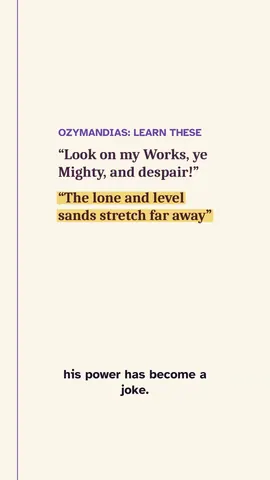
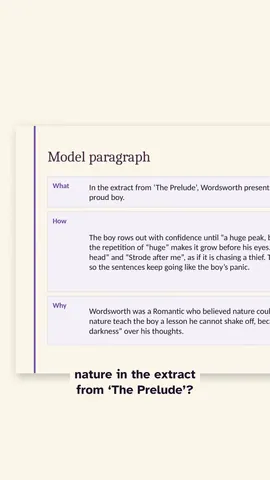
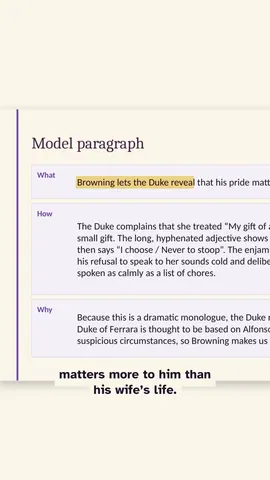
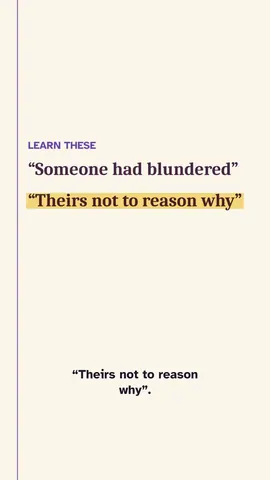
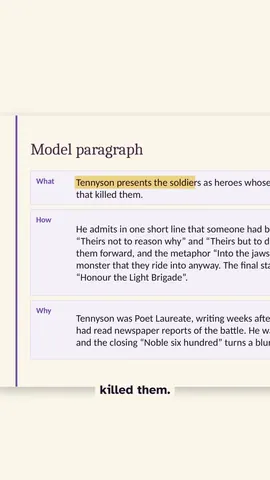
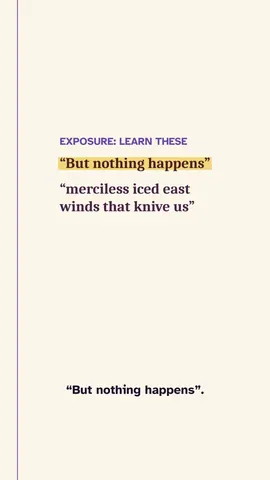
Model answers explained
Write your own comparison first, then watch.
Read the transcript
This is the end-of-unit essay from our Power and Conflict poetry scheme, with three complete model answers: one at Level 3, one at Level 4 and one at Level 6. I’m Hannah. I’ll read each answer, then tell you why it sits in that level and what would move it up. The question is: Compare how poets present the effects of conflict in ‘Exposure’ and in one other poem from ‘Power and conflict’. It’s worth 30 marks, and you have 45 minutes.
Here it is. ‘Exposure’. Our brains ache, in the merciless iced east winds that knive us . . .
Wearied we keep awake because the night is silent . . . Low, drooping flares confuse our memory of the salient . .
. Worried by silence, sentries whisper, curious, nervous, But nothing happens. Watching, we hear the mad gusts tugging on the wire, Like twitching agonies of men among its brambles. Northward, incessantly, the flickering gunnery rumbles, Far off, like a dull rumour of some other war. What are we doing here?
The poignant misery of dawn begins to grow . . . We only know war lasts, rain soaks, and clouds sag stormy. Dawn massing in the east her melancholy army Attacks once more in ranks on shivering ranks of grey, But nothing happens.
Sudden successive flights of bullets streak the silence. Less deadly than the air that shudders black with snow, With sidelong flowing flakes that flock, pause, and renew, We watch them wandering up and down the wind’s nonchalance, But nothing happens. Pale flakes with fingering stealth come feeling for our faces— We cringe in holes, back on forgotten dreams, and stare, snow-dazed, Deep into grassier ditches. So we drowse, sun-dozed, Littered with blossoms trickling where the blackbird fusses. —Is it that we are dying?
Slowly our ghosts drag home: glimpsing the sunk fires, glozed With crusted dark-red jewels; crickets jingle there; For hours the innocent mice rejoice: the house is theirs; Shutters and doors, all closed: on us the doors are closed,— We turn back to our dying. Since we believe not otherwise can kind fires burn; Nor ever suns smile true on child, or field, or fruit. For God’s invincible spring our love is made afraid; Therefore, not loath, we lie out here; therefore were born, For love of God seems dying. Tonight, this frost will fasten on this mud and us, Shrivelling many hands, puckering foreheads crisp. The burying-party, picks and shovels in shaking grasp, Pause over half-known faces.
All their eyes are ice, But nothing happens. That poem is by Wilfred Owen. Before the answers, here’s what a marker is looking for in this question. A marker looks for a comparative thesis about the effects of conflict, then paragraphs organised by idea or one poem then the other; neither earns more marks, so judge how clearly the links are made. In ‘Exposure’, strong answers explore waiting and boredom through the refrain “But nothing happens”, the weather as the real enemy in “merciless iced east winds that knive us” and “Dawn massing in the east her melancholy army”, the dream of home in “Slowly our ghosts drag home”, and loss of faith and life, ending with “All their eyes are ice”.
They treat form as a method: the short last line of each stanza, the half-rhymes, the present tense. Good partners: ‘Remains’ and ‘Poppies’ (effects that last), ‘Bayonet Charge’ and ‘The Charge of the Light Brigade’ (the soldier’s experience), ‘Storm on the Island’ (nature as an enemy). AQA’s June 2025 report found that students who paired ‘Exposure’ with ‘Storm on the Island’ wrote about the weather in each but were often less successful when they tried to write about conflict in Northern Ireland. Context should explain purpose: Owen fought in the First World War and wrote of the winter of early 1917. And here’s how I’d plan it.
Read the question twice and underline the focus: the effects of conflict. An effect can be on the body, on the mind, on a family, or on a soldier’s belief in what he is fighting for. Choose your second poem in the first two minutes, scanning the list of fifteen titles printed on the paper. It must come from the Power and conflict cluster: an answer that uses a poem from another cluster can be capped at the top of Level 2. Good partners for ‘Exposure’ include ‘Remains’, ‘Bayonet Charge’, ‘The Charge of the Light Brigade’, ‘Storm on the Island’ and ‘Poppies’.
Pick the one you know the most quotations from. Write a one-sentence thesis that names both poems and one difference between them. For example: Owen shows conflict slowly killing soldiers who wait, whereas Armitage shows it living on in one soldier’s mind. Plan three or four paragraphs. You can go idea by idea, or write about ‘Exposure’ and then your second poem, with the comparison set up in your introduction and drawn together at the end; neither earns more marks.
For each idea, note a quotation from ‘Exposure’, a quotation from memory from your second poem, and the comparative connective you will use to link them. Use context only where it explains a poet’s purpose. One sentence on Owen fighting in the trenches, or on Armitage interviewing soldiers, placed inside a comparison, earns more than a paragraph of history. If you choose ‘Storm on the Island’, stay with the poem’s storm and the islanders: AQA’s June 2025 report found that answers which tried to write about conflict in Northern Ireland were often less successful. The pitfalls to avoid.
Writing about ‘Exposure’ for most of the time and squeezing the partner poem into the last few lines. One poem then the other works only when both get proper attention and the comparison is set up and drawn together. Choosing a partner on a loose link, so the comparison has nothing to say about the effects of conflict. Adding a paragraph of history about the First World War, separate from any point about Owen’s purpose. Misquoting the partner poem from memory.
A short, exact quotation is safer, and a moment described in their own words is better than a quotation with words changed. The first answer was written at Securing, the level of support for students aiming at a grade 4. It sits in Level 3, explained, structured comments. Both ‘Exposure’ and ‘Remains’ show that conflict has terrible effects on soldiers. In ‘Exposure’ the soldiers suffer from the cold and the waiting in the trenches, whereas in ‘Remains’ the soldier suffers in his mind after he comes home.
In ‘Exposure’ Owen shows the weather attacking the soldiers. He describes the “merciless iced east winds that knive us”. This is personification, because the wind is like an enemy with a knife. The cruel adjective “merciless” shows the wind will never stop hurting them. In ‘Remains’ the attack comes from the soldiers themselves, when they shoot a looter in the street.
Both poems show violence, yet in ‘Exposure’ it comes from nature and in ‘Remains’ it comes from people. Both poets also use repetition. In ‘Exposure’ the line “But nothing happens” is repeated through the poem. This shows the soldiers are bored and waiting, and the cold is killing them while they wait. Similarly, in ‘Remains’ the soldier repeats “probably armed, possibly not”.
This shows he is unsure whether the man had a weapon, so he feels guilty. The repetition shows the memory coming back again and again. The effects of conflict also last in both poems. In ‘Exposure’ many soldiers die from the cold. Near the end Owen writes “All their eyes are ice”, which is a metaphor that shows the dead men are frozen.
In ‘Remains’ the soldier survives, but the memory stays with him. He says the man is “dug in behind enemy lines” in his head. This metaphor makes his mind sound like a battlefield. He also says he has “his bloody life in my bloody hands”. The crude adjective “bloody” is used as swearing and also means covered in blood, which shows his guilt.
Owen fought in the trenches in the winter of 1917, so he knew what the soldiers suffered. Armitage interviewed soldiers who came back from war, and many had PTSD. Both poets want the reader to understand that conflict hurts soldiers. Owen shows conflict hurting the body, whereas Armitage shows it hurting the mind long after the fighting has ended. So why does it sit there, and what would move it up?
This answer sits in Level 3 (Explained, structured comments): it links the two poems throughout and explains what each quotation shows. Methods such as personification, repetition and metaphor are named, and single words such as “merciless” and “bloody” are picked out, though the effects are explained simply. Context is accurate and comes at the end in one paragraph, instead of being linked to each poet’s purpose inside the comparison. To move up, it needs a sharper thesis about how the effects differ, a closer look at form, such as Owen’s short final lines, and context placed inside each point. The second answer was written at Strengthening, for students aiming at grades 5 and 6.
It sits in Level 4, clear understanding. Both Owen and Hughes present conflict as something that destroys a soldier’s belief in the reasons for war. In ‘Exposure’ the effect is slow: soldiers freeze and lose hope while they wait for an attack. In ‘Bayonet Charge’ the effect is sudden: one soldier is thrown into a charge, and his patriotism disappears in a few seconds. The poets present the experience of conflict at very different speeds.
Owen’s soldiers are stuck. The refrain “But nothing happens” closes several stanzas, and its short line cuts each stanza off, as if time has stopped. The sibilance in “Worried by silence, sentries whisper, curious, nervous” lets the reader hear the hush of men listening for an enemy who never comes. In contrast, Hughes starts in the middle of the action: “Suddenly he awoke and was running”. The abrupt adverb “Suddenly” throws the reader into the charge with no warning, and the long, run-on lines push forward like the soldier himself.
Both poets show soldiers with no control over time: Owen’s men can only wait, whereas Hughes’s soldier cannot stop. Both poets also suggest that the real enemy is different from the one the soldiers expected. In ‘Exposure’ the weather is personified as the attacker. Owen writes that “Pale flakes with fingering stealth come feeling for our faces”, and the soft, repeated f sounds make the snow creep forward like a soldier on a raid. Hughes’s soldier is attacked from the inside by “his terror’s touchy dynamite”.
The metaphor suggests that his fear is an explosive that could go off at any moment. Owen shows nature killing men from the outside, whereas Hughes shows terror taking over from within. The most serious effect in both poems is the loss of belief. Owen’s soldiers dream of home and then accept they cannot go back, and the speaker admits “For love of God seems dying”. The bleak present participle “dying” suggests that faith is freezing along with the men.
Hughes shows the same loss more bluntly. In his panic the soldier drops “King, honour, human dignity, etcetera”. The list starts with grand ideals and ends with “etcetera”, as if they are no longer worth naming. Similarly, the question “What are we doing here?” in ‘Exposure’ shows soldiers who no longer know why they are fighting. The poets also show conflict harming the natural world, though in different ways.
Hughes’s soldier sees “a yellow hare that rolled like a flame”, and the simile shows an innocent animal caught in the gunfire, which shocks him into running on. In ‘Exposure’ nature is the attacker, whereas in ‘Bayonet Charge’ nature is a victim, like the soldier. Context helps to explain each poet’s purpose. Owen fought in the trenches in the bitter winter of early 1917 and was killed a week before the war ended, so ‘Exposure’ comes from his own experience. Hughes’s father fought in the First World War and survived Gallipoli, and Hughes published ‘Bayonet Charge’ in 1957.
Both poets want readers to see past the patriotic story of war: Owen through slow suffering, and Hughes through one terrified moment. So why does it sit there, and what would move it up? This answer sits in Level 4 (Clear understanding): it opens with a clear comparative thesis and keeps both poems in view throughout. Methods in both poems are explained precisely, including the refrain, sibilance, personification, metaphor and the list ending in “etcetera”, with a word picked out in most quotations. Context is accurate and linked to purpose, though it is gathered in the last paragraph instead of being part of the argument throughout.
To reach Level 5, it needs one developed argument running through the whole answer, more on form, such as Owen’s half-rhyme, and context built into each point. The third answer was written at Soaring, for students aiming at grades 7 to 9. It sits in Level 6, convincing, critical analysis and exploration. Owen and Tennyson both write about soldiers who die because of decisions made far above them, yet they present the effects of conflict in opposite ways. Tennyson, writing as Poet Laureate weeks after the Battle of Balaclava, turns a mistaken order into a story of glory, so the effect of conflict is fame.
Owen, who fought in the trenches in the winter of 1917, strips the glory away: the effect of conflict is a slow, unseen death in which nothing heroic happens at all. Read side by side, ‘Exposure’ can feel like an answer to the kind of war poem Tennyson wrote. The clearest contrast is in movement. Tennyson’s dactylic rhythm gallops, and the repeated “Into the valley of Death” carries the reader forward with the horses, while stanzas of different lengths suggest a charge that is breaking up as it goes. Owen gives his soldiers no such momentum.
Each stanza closes on a short line, and several close on the refrain “But nothing happens”, which shuts the stanza like a door. The half-rhymes add to the unease: sounds that almost match and never settle suit men whose waiting never ends in battle. Tennyson’s reader rides with the brigade, whereas Owen’s reader is made to wait, cold and bored, with the men. Both poems place soldiers under attack, yet they disagree about where the attack comes from. Tennyson’s men are “Stormed at with shot and shell”, and the alliteration makes the Russian guns loud and visible: an enemy a brave man can ride against.
Owen’s soldiers are attacked by the weather: “Our brains ache, in the merciless iced east winds that knive us”. The caesura after “Our brains ache” makes the reader stop on the pain, and the brutal verb “knive”, made from a noun, hands the wind a soldier’s weapon. Later, “Dawn massing in the east her melancholy army” turns the sunrise itself into an enemy force. For Owen, conflict makes the whole natural world hostile; for Tennyson, the enemy is human and can be faced with courage. The difference matters: an enemy you can see can be charged, while the cold cannot be fought at all, so Owen’s soldiers lose even the chance of the courage that Tennyson gives his men.
The poets also differ in what death means. Tennyson admits “Someone had blundered”, yet the line passes quickly, and “Theirs not to reason why” turns obedience into a virtue: the men die because they are loyal. The repeated, collective possessive pronoun “Theirs” keeps them as one body, never as individuals. Owen’s dead are nameless too, yet the effect is horror. In the final stanza the burying-party finds that “All their eyes are ice”, a short metaphor of single syllables in which the frozen faces can hardly be told apart.
Earlier, “Slowly our ghosts drag home” shows soldiers who already think of themselves as dead, visiting a home whose doors are closed to them. Tennyson’s soldiers die once, in a blaze of noise; Owen’s die slowly, first in spirit and then in body. The endings show each poet’s purpose most clearly. Tennyson closes with a command, “Honour the Light Brigade”, addressed to a public who had read newspaper reports of the battle: the effect of the conflict on the nation should be pride and remembrance. Owen, killed a week before the war ended, ends with the refrain once more, and the circular structure suggests that nothing has changed and nothing will.
It could be argued that Tennyson’s poem holds its own doubt, since a poem that admits a blunder invites the reader to ask who made it. Even so, Tennyson resolves that doubt into honour, whereas Owen gives the reader nothing to set against it. Tennyson asks his reader to remember the dead; Owen makes his reader share the cold, a harder and more honest picture of what conflict does to people. So why does it sit there, and what would move it up? This answer sits in Level 6 (Convincing, critical analysis and exploration): a single argument about glory against slow, unseen death runs through the whole answer.
It happens to compare point by point; an answer that took one poem and then the other, held together by the same argument, could reach the same level. Analysis is close and precise across language, form and structure, from the dactylic rhythm and the refrain to the caesura after “Our brains ache” and the verb “knive”. Context is part of each poet’s purpose throughout: Tennyson’s public role and readers, and Owen’s experience and death, are used to explain choices in the poems. It explores an alternative reading of Tennyson before rejecting it. A teacher might still push for one more method in ‘The Charge of the Light Brigade’, such as the change in stanza length at the end.
When classes sit this essay, the same three things come up in the feedback. Make the comparison clear. Several essays wrote about ‘Exposure’ and then the partner poem with nothing to link them. Either set up the comparison in your introduction and draw it together at the end, or organise each paragraph by an idea; join the poems with whereas, similarly or in contrast. Quote your partner poem accurately.
Some quotations had words changed or two lines run together. Learn short quotations word for word, and if you are unsure, describe the moment without quotation marks. Weave context into your point about purpose. Say what Owen, who fought in the First World War, wanted readers to understand, and do the same for your partner poem, inside the paragraph. And here’s the improvement task for each level.
Find the one that matches your own answer, and redraft one paragraph in green pen. Levels 1 and 2: Pick one quotation from ‘Exposure’, such as “But nothing happens”. Write three sentences: what it shows about the soldiers, which method Owen uses, and what one word suggests. Then write one sentence that starts: Similarly, in my partner poem ____. Levels 3 and 4: Redraft one paragraph so it is about one idea in both poems, such as the enemy the soldiers face.
Use one short quotation from each poem, zoom in on one word in each, and join them with whereas or similarly. Levels 5 and 6: Rewrite your thesis so it says how the effects of conflict differ in the two poems as well as how they are alike. Then redraft one paragraph to compare form: the short final line of each stanza in ‘Exposure’ against a structural choice in your partner poem, and why each poet makes it. This essay, the level guidance and all three models are part of our Power and Conflict poetry scheme of learning for schools. If you’re a teacher, Lesson 3 of every scheme is free at btl.education.
Thank you for watching.
The exam and writing your argument
How Paper 2 works, how to start an essay with a thesis, and a plan for the last twelve weeks.
AQA English Literature Paper 2 explained
4 minutes · captions available
The modern text, the poetry anthology and the unseen poems: the questions, the timing and how they are marked.
Read the transcript
If there’s one sentence that changes a Literature essay, it’s the first one. I’m Hannah, and I teach English, and this video is about the thesis: how to write one for any GCSE English Literature question. A thesis is your answer to the essay question in one sentence. It goes at the start of your essay, and every paragraph after it gives evidence for it. A good thesis is an argument that someone could disagree with.
That’s the test. If nobody could disagree with it, it’s a fact, and a fact gives your essay nowhere to go. Here’s the formula. It has three steps, and each one matches one of our levels of support. Step one, Securing.
The writer presents, then the character or theme, as, then your idea. Make a clear claim that uses the words of the question. Step two, Strengthening. Add in order to, and the writer’s purpose: what did they want the audience or reader to think, feel or do? Step three, Soaring.
Add yet, and a complication or a change across the text, then in doing so, and what the writer achieves. Now your argument has somewhere to go. Let’s build one. The question: How does Dickens present Scrooge as an outsider in A Christmas Carol? Not yet a thesis: Scrooge is an outsider in A Christmas Carol.
That’s a fact. Nobody could disagree with it. Getting there: Dickens presents Scrooge as an outsider who shuts himself away from other people. A clear claim, but no purpose. Strong: Dickens presents Scrooge’s isolation as his own choice, in order to show readers that selfishness cuts people off from the warmth of other people.
Top level: Dickens presents Scrooge as an outsider by choice, yet hints that he can still be reached; in doing so, he warns wealthy readers and persuades them that change is possible. Listen to what changed. The top-level thesis has a claim, a complication and a purpose, and every paragraph of the essay now has a job: prove one part of that sentence. Here are three more, for other set texts. In Macbeth, Shakespeare presents Macbeth’s ambition as a force that destroys his conscience, in order to warn his audience that disrupting the natural order leads to chaos.
In An Inspector Calls, Priestley presents the Inspector as the voice of social responsibility, in order to persuade his post-war audience to reject the selfishness of the Birlings. In ‘Ozymandias’, from the Power and Conflict cluster, Shelley presents human power as temporary, in order to show that even the proudest ruler is humbled by time. Your turn. Here are five questions. Pause the video and write a thesis for each.
Start with the Securing frame if you need it, then try to add a purpose and a complication. One: How does Dickens present the importance of family in A Christmas Carol? Two: How does Dickens use the Ghost of Christmas Yet to Come to frighten Scrooge into changing? Three: How does Shakespeare present Lady Macbeth as a powerful woman? Four: How does Shakespeare present guilt in Macbeth?
Five: How does Priestley present Sheila as a character who changes? Then check each one. Does it answer the question that was asked? Does it use the words of the question? Does it make an argument someone could disagree with?
Does it name the writer’s purpose? And will every paragraph you plan support it? The Thesis Statement Builder is free to download and print at btl.education. Keep it next to you every time you plan an essay. Thank you for watching.
Read the transcript
Twelve weeks before your first English exam is the right moment to start a plan, and this is ours. It’s called the Year 11 countdown, it’s free to download and print, and in this video I’ll take you through it week by week. I’m Hannah, and I teach English. One focus a week. About thirty minutes a day, five days a week.
That’s all it asks. Every week runs the same way. Days 1 and 2: retrieve. Write down everything you remember about the focus, then check your notes and fill the gaps in a different colour. Test yourself on quotations.
Days 3 and 4: practise. Plan an answer to an exam-style question in ten minutes, then write two What–How–Why paragraphs from your plan. Day 5: time yourself. Write one full answer in exam time, then mark it against the level descriptors or ask your teacher for feedback. Retrieve first, because what you can remember without your notes is what you’ll have in the exam.
Then practise, then time yourself. The order matters. Here are the twelve weeks. The countdown uses Macbeth, A Christmas Carol and An Inspector Calls as its set texts; if you study different ones, swap yours in. Week 12: Macbeth: plot and characters.
Retell the play act by act from memory; one character profile a day. Week 11: Macbeth: themes, context and quotations. Learn ten quotations; link each one to a theme and to Jacobean context. Week 10: A Christmas Carol: plot, characters and context. Retell the five staves; revise the Poor Law, Malthus and Dickens’s purpose.
Week 9: A Christmas Carol: themes and quotations. Learn ten quotations; write one timed extract-to-whole essay. Week 8: An Inspector Calls: plot, characters and context. Retell the play; revise 1912 and 1945, class, age and gender. Week 7: An Inspector Calls: themes and quotations.
Learn ten quotations; write one timed essay. Week 6: Power and Conflict: the first eight poems. One poem a day: its context, three quotations and one method each. Week 5: Power and Conflict: the last seven poems and comparison. Finish the anthology; plan three comparisons that pair poems by theme.
Week 4: Unseen poetry. Practise the single-poem question and the comparison question on new poems. Week 3: Language Paper 1. Reading questions 1 to 4 on a fiction extract; one descriptive or narrative piece. Week 2: Language Paper 2.
Reading questions 1 to 4 on two non-fiction sources; one viewpoint piece. Week 1: Final week. Read through your notes and quotation lists, do short timed tasks only, and get plenty of sleep. In 2027 your four English papers are spread over four weeks: Literature Paper 1 on Wednesday 12 May, Literature Paper 2 on Wednesday 19 May, Language Paper 1 on Monday 24 May and Language Paper 2 on Tuesday 8 June. After each paper, spend about thirty minutes a day on the next one only.
From 12 to 18 May, Literature Paper 2: An Inspector Calls quotations, one Power and Conflict comparison plan a day, and one unseen poem in forty-five minutes. From 19 to 23 May, Language Paper 1: reread your Week 3 notes, practise Questions 2 to 4 on a new fiction extract, and plan one Question 5 a day. From 24 May to 7 June, Language Paper 2: practise Questions 1 to 4 on pairs of non-fiction sources, write one timed viewpoint piece a week, and do one full paper in an hour and forty-five minutes in the last week. And the night before an English exam. Read through your quotation lists once.
Leave new material alone. Pack at least two black pens in a see-through pencil case. You may highlight the question paper but not your answers. Watches aren’t allowed in the exam room, so plan to time yourself by the room clock. Remind yourself of the timings for each question on the paper.
There’s a table at the bottom of the countdown to write them in. And go to bed at your usual time. The Year 11 countdown is free at btl.education, along with a guide for parents and carers and the Thesis Statement Builder. Print it, stick it on the wall, and tick each week off. Good luck.
Thank you for watching.