Videos › For parents and carers
GCSE English explained for parents and carers
4 minutes · captions available
The four English exams, how they are marked in levels, what the levels of support mean, and what helps at home. For parents and carers.
Chapters
Transcript
Introduction
If your child is in Year 10 or Year 11, GCSE English can feel like a closed box. Lots of talk about papers, levels and quotations, and not much explanation of what any of it means. I'm Hannah. I teach English, and in the next few minutes I'll take you through how the exams work, how they're marked, and what actually helps at home. You don't need to be an English teacher for any of it. First, there are two GCSEs. English Language and English Literature are separate qualifications with separate grades, and most students take both. Each one has two papers, so that's four exams in the summer of Year 11. There's no coursework. Everything is decided in those four exam halls, which is why the practice in Year 10 and 11 matters so much. English Language is about reading texts your child has never seen before, and about writing. Paper 1 gives them a piece of twentieth or twenty-first century fiction. They answer questions on how it's written, then write a description or the opening of a story. Paper 2 gives them two pieces of non-fiction, one from the nineteenth century and one modern, and asks them to compare them. Then they write to argue their point of view. Both papers are an hour and forty-five minutes. Nothing can be revised in the sense of learning content. What improves is the skill of reading closely and writing with control. English Literature is about set texts your child studies in class. Paper 1 is a Shakespeare play, often Macbeth or Romeo and Juliet, and a nineteenth-century novel, such as A Christmas Carol or Jekyll and Hyde. Paper 2 is a modern play or novel, such as An Inspector Calls, poems from the anthology, and two unseen poems. And here's the part that surprises a lot of parents. Literature is closed book. They get a short extract for Shakespeare and the novel, and the poem they're asked about, but they don't get a copy of the text. Quotations have to be learned. The four exams fall in May and June. For 2027, Literature Paper 1 is on the twelfth of May, Literature Paper 2 on the nineteenth of May, Language Paper 1 on the twenty-fourth of May and Language Paper 2 on the eighth of June. Mocks usually come in November, December or January, depending on the school. The dates are in our free guide for parents and carers, along with everything in this video. Every answer is marked in levels. The mark scheme describes what an answer at each level does, from simple comments up to perceptive, detailed analysis. Examiners find the level that best fits, then the mark within it. Grades only come at the very end, when grade boundaries are set for that year, and the boundaries move every year. So when an essay comes home with a level and a mark on it, that's the most useful information you'll get. A grade on a single essay is an estimate. In our resources you'll see three words a lot: Securing, Strengthening and Soaring. They're three levels of support for the same task, and they describe the help on the page. They say nothing about your child. Securing gives the most scaffolding, for students working towards a grade 4. Strengthening is for grades 5 and 6. Soaring is for students aiming at 7 to 9. Every student answers the same question, so they're all doing the same lesson. So what can you actually do? Ask them to explain a quotation to you, and keep asking how do you know, until they've proved it from the text. Put a handful of short quotations on the fridge and swap them every week. Ask what their last piece of feedback said, and ask them to try that one thing in their next answer. And give them time with the texts themselves: reading, listening or watching. None of this needs you to know the answers. It needs you to ask good questions, which you can do. If you'd like more structure, our family revision packs are made from the same student files as our schemes: workbooks, model answers marked with their level and mark, and practice at all three levels. A single text is fifteen pounds, and the complete GCSE English pack is fifty. And if you'd like someone to read their work, I mark GCSE English essays myself, against the AQA mark schemes. Everything is at btl.education, along with the free guide.
More videos
Every folder in the A Christmas Carol scheme: the teacher handbook, the slides, the student packs at three levels, the Feedback Loop kits, the end-of-unit essay, the stretch booklet and the catch-up and inclusion sheets.
Hannah teaches through the free Lesson 3, Meet Scrooge: the Do Now, the four key words, exploding a quotation, the hinge question and the same task at Securing, Strengthening and Soaring.
The schemes and licences, the free resources, revision packs for home, essay marking, the Knowledge hub and the display settings for reading on screen.
Long reads on the thinking behind the schemes, guides for teachers, students and parents and carers, education news and a glossary of 336 terms. Free to read, no sign-up.
Every question on Paper 1: what it asks, how many marks it carries, how long to spend and what a strong answer does.
Every question on Paper 2: the two sources, summary, language, comparison and the viewpoint writing task.
The Shakespeare play and the 19th-century novel: the extract-to-whole question, timing, and what examiners reward.
The modern text, the poetry anthology and the unseen poems: the questions, the timing and how they are marked.
A 25-minute intervention session from start to finish: Do Now, extract, one quotation or skill, an exam question and a green-pen check.
How a Feedback Loop kit runs: the progress check, whole-class feedback in one lesson, and the improvement tasks at three levels.
A half-hour walkthrough of the An Inspector Calls scheme, made for departments using it: the handbook, one lesson in practice, the three levels, Feedback Loop kits, practice booklets, assessment, catch-up and inclusion.
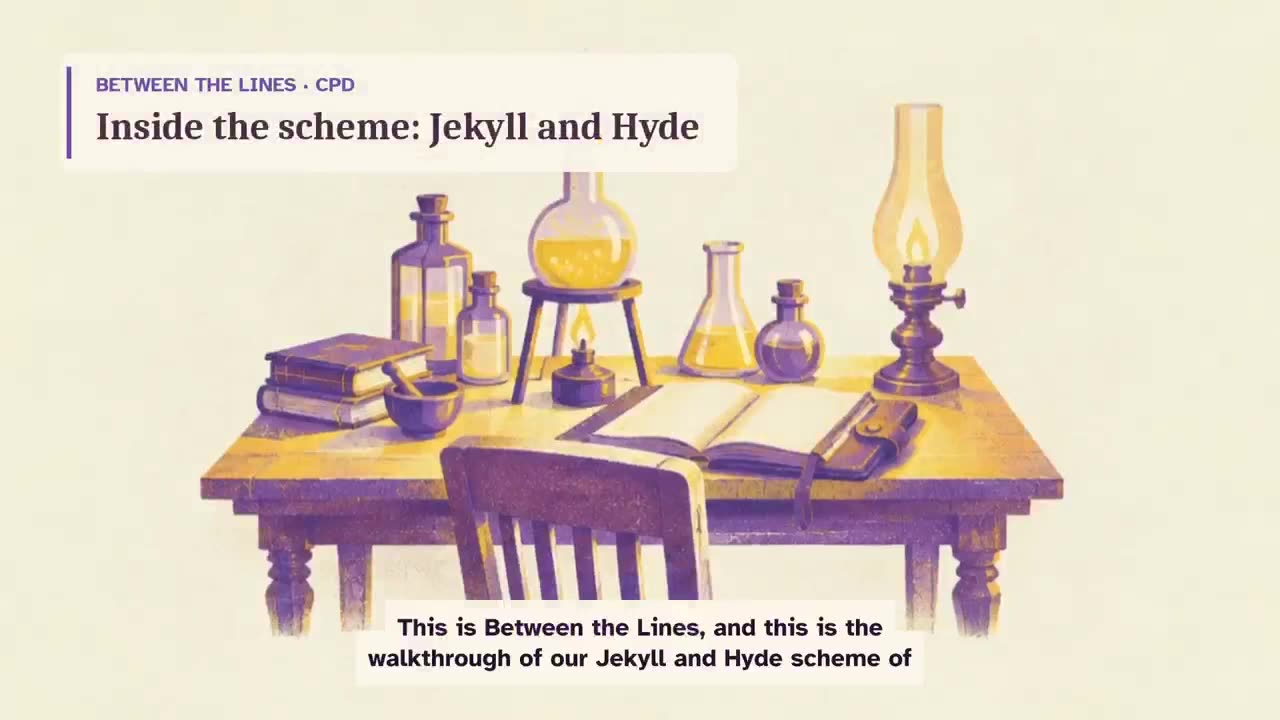
A half-hour walkthrough of the Jekyll and Hyde scheme, made for departments using it: the handbook, one lesson in practice, the three levels, Feedback Loop kits, practice booklets, assessment, catch-up and inclusion.
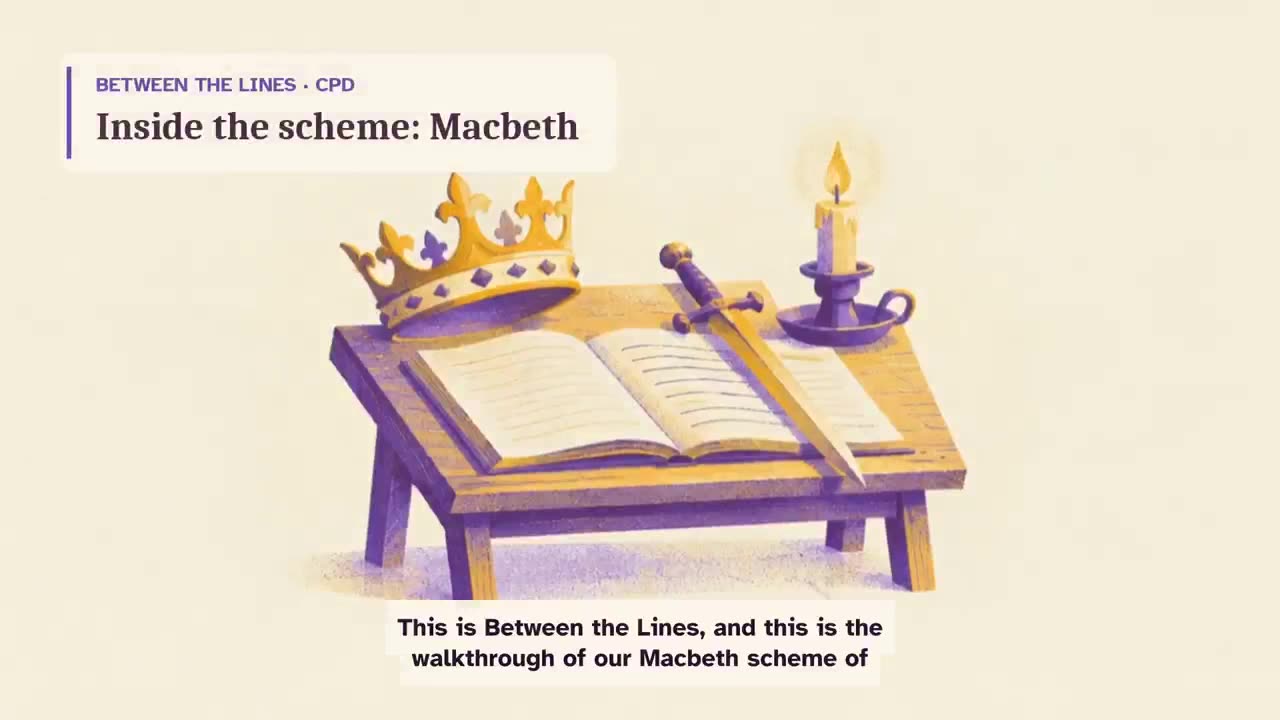
A half-hour walkthrough of the Macbeth scheme, made for departments using it: the handbook, one lesson in practice, the three levels, Feedback Loop kits, practice booklets, assessment, catch-up and inclusion.
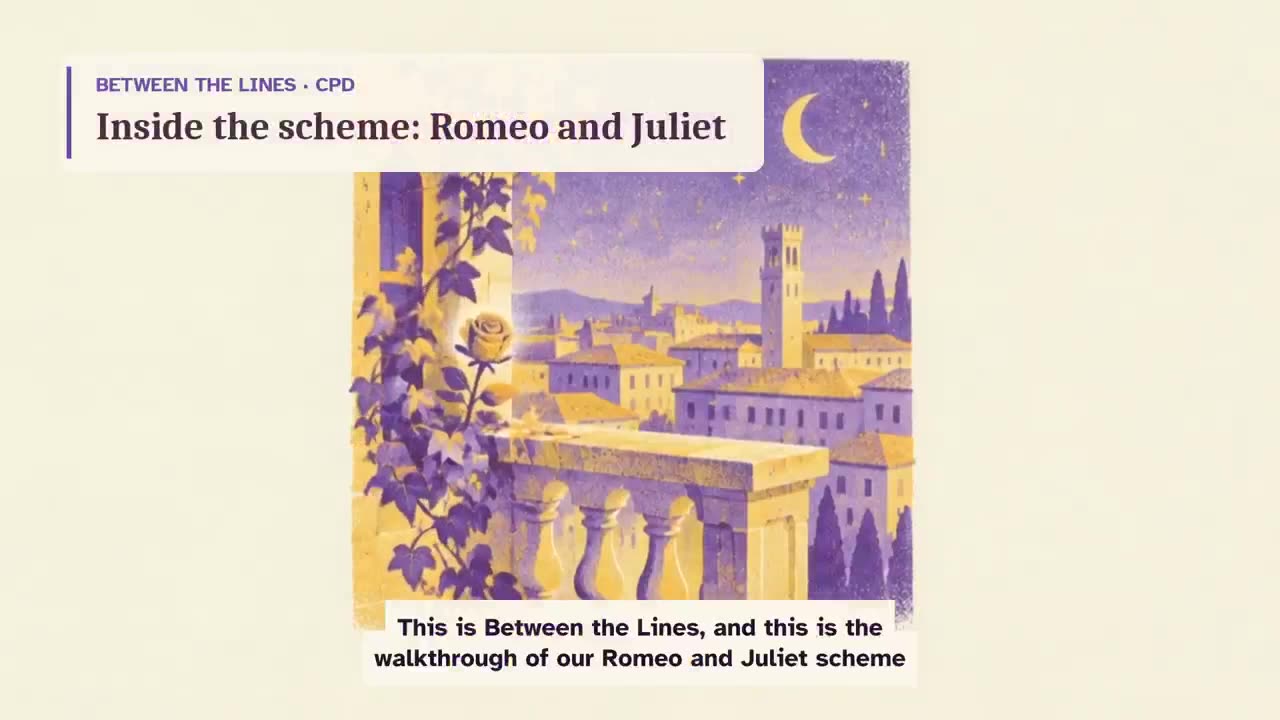
A half-hour walkthrough of the Romeo and Juliet scheme, made for departments using it: the handbook, one lesson in practice, the three levels, Feedback Loop kits, practice booklets, assessment, catch-up and inclusion.
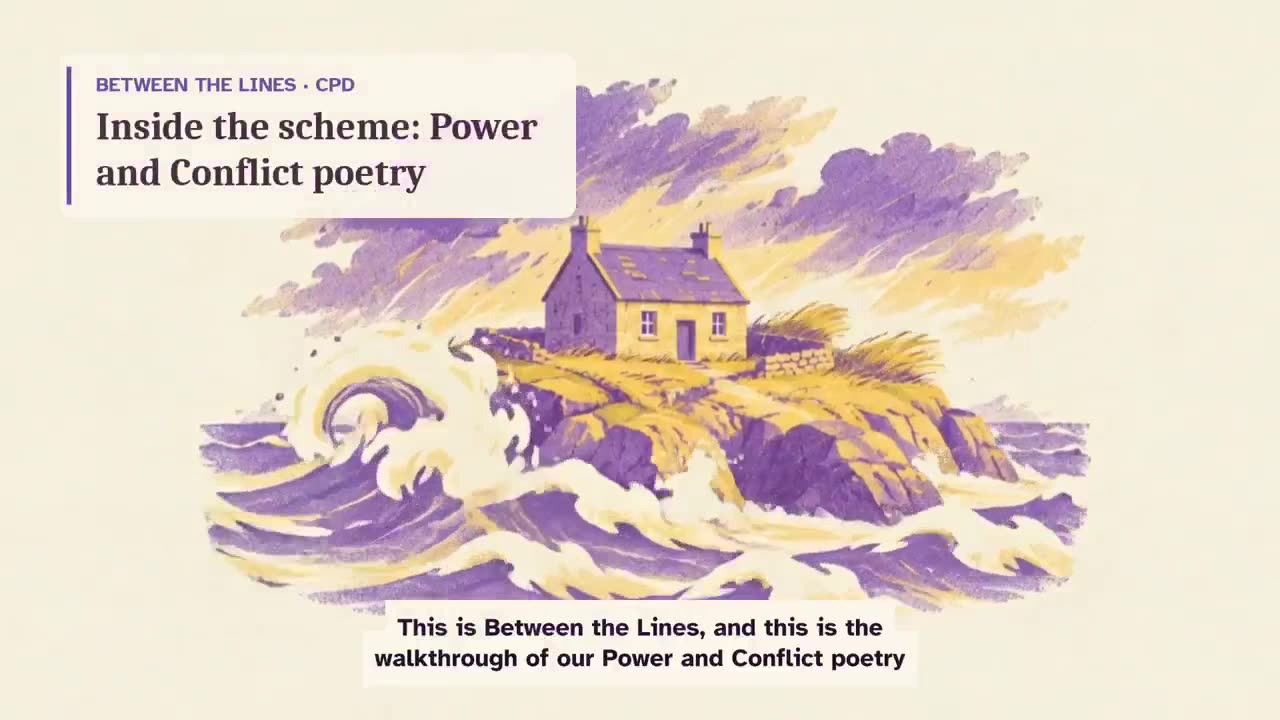
A half-hour walkthrough of the Power and Conflict poetry scheme, made for departments using it: the handbook, one lesson in practice, the three levels, Feedback Loop kits, practice booklets, assessment, catch-up and inclusion.
A half-hour walkthrough of the Unseen poetry scheme, made for departments using it: the handbook, one lesson in practice, the three levels, Feedback Loop kits, practice booklets, assessment, catch-up and inclusion.
A half-hour walkthrough of the Language Paper 1 scheme, made for departments using it: the handbook, one lesson in practice, the three levels, Feedback Loop kits, practice booklets, assessment, catch-up and inclusion.
A half-hour walkthrough of the Language Paper 2 scheme, made for departments using it: the handbook, one lesson in practice, the three levels, Feedback Loop kits, practice booklets, assessment, catch-up and inclusion.
How the 30 drills in each Raising Achievement set work, how to choose them and how to run them with small groups or whole classes.
Get our emails
About once a month: new free resources and the dates that matter for GCSE English.