

Knowledge hub › For students › Pride and Prejudice: the story
Pride and Prejudice: the story, part by part
A proud rich man insults a clever young woman at a dance, and it takes two proposals and one long letter for them to see each other clearly. Read the whole story in eight parts, then the characters and ideas.
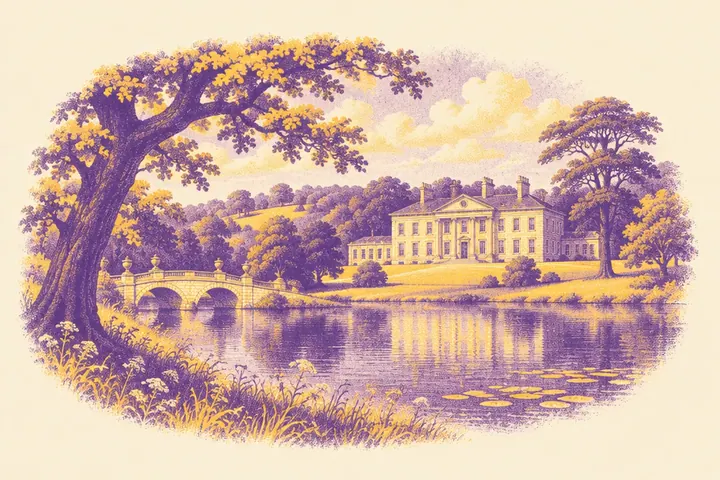
In Jane Austen’s novel Pride and Prejudice (1813), Elizabeth Bennet takes an instant dislike to the proud Mr Darcy and believes a charming liar, Mr Wickham. She refuses Darcy’s first proposal, learns from his letter how wrong she has been, and accepts him at the end. It is Section B of AQA GCSE English Literature Paper 1.
Jane Austen was born in Steventon, Hampshire, in 1775 and died in Winchester in 1817. She wrote the first version of this novel in 1796 and 1797 and called it First Impressions. She revised it, and it came out on 28 January 1813, in three volumes, without her name on it.
- 61chapters in the novel, numbered straight through as in most school editionsStandard Ebooks text
- 1813the year the novel was first published, on 28 JanuaryJane Austen Society of North America
- 30marks for the Pride and Prejudice question, with no marks for spelling, punctuation and grammarAQA specification
The Bennets have five daughters and no son. Their house, Longbourn, is entailed: when Mr Bennet dies it must pass to a male cousin, Mr Collins. So the girls need to marry, and their mother thinks of little else. The exam question prints an extract, then asks about the novel as a whole, so you need the whole story.
Part 1: First impressions
This part covers Chapters 1 to 6. The novel opens with a joke: “It is a truth universally acknowledged, that a single man in possession of a good fortune, must be in want of a wife.” The real truth is the other way round. The local families want a rich husband for their daughters.
A rich young man, Mr Bingley, has rented Netherfield Park, near the Bennets’ home in Hertfordshire. Mrs Bennet is delighted. The narrator sums her up at once: “She was a woman of mean understanding, little information, and uncertain temper.”
At a public dance, the Meryton assembly, Bingley arrives with his sisters and his friend Mr Darcy, who is even richer. At first the room admires Darcy. Within an hour they decide he thinks himself “above his company, and above being pleased”. Bingley dances twice with Jane, the eldest Bennet sister. When he urges Darcy to dance with Elizabeth, the second sister, Darcy replies: “She is tolerable; but not handsome enough to tempt me”. Elizabeth overhears, and tells the story to her friends as a joke.
Later Elizabeth says she “could easily forgive his pride, if he had not mortified mine”. Mortified means hurt and humiliated. Her friend Charlotte Lucas thinks Jane should show Bingley more feeling, because “Happiness in marriage is entirely a matter of chance.” Elizabeth laughs at her. Meanwhile Darcy begins to admire Elizabeth’s fine eyes and lively talk. She has no idea.
Part 2: At Netherfield
This part covers Chapters 7 to 12. Jane is invited to Netherfield, and her mother sends her on horseback in the hope of rain, so that she must stay the night. It rains, and Jane falls ill. Elizabeth walks three miles across muddy fields to nurse her. Caroline Bingley, who wants Darcy for herself, sneers at the walk as “an abominable sort of conceited independence”. Darcy thinks it has made Elizabeth’s eyes brighter.
In the evenings Elizabeth and Darcy spar about pride and faults. Darcy admits: “My good opinion once lost is lost forever.” Elizabeth says his fault is to hate everybody. He answers that hers is “wilfully to misunderstand them”. Each names the other’s fault and misses their own. When Jane is well, the sisters go home, and Darcy is relieved. He is attracted to Elizabeth and does not want to be.
Part 3: Mr Collins and Mr Wickham
This part covers Chapters 13 to 18. Mr Collins comes to stay. He is the cousin who will inherit Longbourn, a pompous clergyman whose patroness, the rich Lady Catherine de Bourgh, gave him his post at Hunsford in Kent. He means to choose a wife from the Bennet girls. He picks Jane, hears she is likely to be engaged, and switches to Elizabeth in a few minutes.
In Meryton the sisters meet Mr Wickham, a handsome new officer in the militia regiment camped there. When Darcy and Wickham see each other in the street, one goes white and the other red. At a party Wickham tells Elizabeth that he grew up at Pemberley, Darcy’s estate, and that Darcy cheated him of a living in the Church that old Mr Darcy had promised him. Elizabeth believes every word: “Elizabeth honoured him for such feelings, and thought him handsomer than ever”. Jane thinks there must be a mistake somewhere.
At the Netherfield ball, Wickham stays away, and Elizabeth blames Darcy. She dances with Darcy and they argue about Wickham. Then her family shame her. Collins introduces himself to Darcy without being introduced. Mrs Bennet talks loudly about Jane marrying Bingley, where Darcy can hear. Mary sings too long, and Lydia and Kitty chase the officers.
Part 4: Two proposals and a departure
This part covers Chapters 19 to 23. The morning after the ball, Collins proposes to Elizabeth. He lists his reasons, and love is not one of them. She refuses, and he will not believe her. She asks him to see her as “a rational creature speaking the truth from her heart”. Mrs Bennet tells her husband to make Elizabeth accept. He says: “Your mother will never see you again if you do not marry Mr. Collins, and I will never see you again if you do.”
Bingley leaves for London, and his sister Caroline writes that the whole party will stay there for the winter. Jane is hurt but blames no one. Three days after Elizabeth’s refusal, Collins proposes to Charlotte Lucas, and she accepts. Elizabeth is shocked. Charlotte explains: “I am not romantic you know. I never was. I ask only a comfortable home”. She is twenty-seven, plain and not rich. The narrator calls marriage “the only honourable provision for well-educated young women of small fortune”.
Part 5: London, Hunsford and Rosings
This part covers Chapters 24 to 33. Bingley does not come back. Jane goes to stay in London with her aunt and uncle, Mr and Mrs Gardiner, who are kind and sensible, though Mr Gardiner earns his money in trade. Caroline Bingley visits Jane once, coldly, and Jane sees that Caroline was never her friend. Wickham turns his attention to a Miss King, who has just come into ten thousand pounds. Elizabeth does not hold it against him.
In the spring Elizabeth visits Charlotte at Hunsford, next to Lady Catherine’s great house, Rosings Park. Collins boasts that Lady Catherine is “all affability and condescension”, meaning she is gracious to people below her. At Rosings, Lady Catherine questions Elizabeth and gives orders on everything. Elizabeth answers calmly.
Darcy and his cousin, Colonel Fitzwilliam, come to Rosings. Darcy calls often but says little. Then the Colonel tells Elizabeth, without knowing who the lady was, that Darcy recently saved a friend from a very unwise marriage. Elizabeth knows he means Bingley and Jane, and she is furious.
Part 6: The proposal and the letter
This part covers Chapters 34 to 42. Darcy finds Elizabeth alone and begins: “In vain have I struggled. It will not do. My feelings will not be repressed.” He proposes, but he also dwells on how low her family is. He expects her to say yes. She refuses, accuses him of ruining Jane’s happiness and of cruelty to Wickham, and says she would have refused less harshly “had you behaved in a more gentleman-like manner”. Darcy prides himself on being a gentleman, and the words hit hard.
The next morning he gives her a letter. He explains that he truly believed Jane did not love Bingley, and that her family behaved badly. Then he tells the truth about Wickham. Wickham took money in place of the living, spent it, and asked for the living after all. Last summer he tried to persuade Georgiana, Darcy’s fifteen-year-old sister, to run away with him for her fortune.
Elizabeth rereads the letter and slowly sees it is true. She judged both men on one evening each, and vanity made her believe Wickham. She calls her behaviour “blind, partial, prejudiced, absurd”, and says: “Till this moment, I never knew myself.” This is the turning point of the novel.
At home, Lydia, the youngest sister, is invited to Brighton, where the regiment will camp for the summer. Elizabeth warns her father that Lydia is wild and will disgrace them all. Mr Bennet lets her go, because it is easier than having her complain at home.
Part 7: Pemberley
This part covers Chapters 43 to 50. Elizabeth tours Derbyshire with the Gardiners, and they visit Pemberley while Darcy is away. She admires it and thinks “to be mistress of Pemberley might be something!” The housekeeper praises Darcy: “He is the best landlord, and the best master”.
Darcy comes home early and meets them in the grounds. He is polite and warm, talks kindly to the Gardiners and introduces his shy sister to Elizabeth. Elizabeth begins to feel grateful to him, and more than grateful.
Then letters from Jane arrive. Lydia has run away with Wickham, and they seem to be hiding in London, not marrying. Elizabeth tells Darcy, and he leaves quickly. She is sure that this disgrace has ended his love. Lydia’s note says: “What a good joke it will be!” Mr Bennet searches London and fails. He admits to Elizabeth: “Let me once in my life feel how much I have been to blame.”
Mr Gardiner writes that the couple have been found, and Wickham will marry Lydia for a small yearly sum. Mr Bennet thinks his brother-in-law must have paid a great deal. Mrs Bennet is simply thrilled that a daughter is to be married. Elizabeth now feels sure Darcy would be the right husband for her, just when she thinks she has lost him.
Part 8: Secrets and second proposals
This part covers Chapters 51 to 61. Lydia comes home married and not at all ashamed. She lets slip that Darcy was at her wedding. Mrs Gardiner writes to Elizabeth with the truth. Darcy found the couple, paid Wickham’s debts and paid him to marry Lydia, and asked for it to be kept secret.
Bingley returns to Netherfield, with Darcy, and soon proposes to Jane. She says: “I am certainly the most fortunate creature that ever existed!”
Then Lady Catherine arrives, having heard a rumour that Elizabeth is to marry Darcy. She orders Elizabeth to promise never to accept him. Elizabeth replies: “He is a gentleman; I am a gentleman’s daughter; so far we are equal.” She will not promise. Lady Catherine leaves asking: “Are the shades of Pemberley to be thus polluted?”
Lady Catherine’s complaint gives Darcy hope. On a walk, Elizabeth thanks him for saving Lydia, and he says: “My affections and wishes are unchanged”. Austen gives Elizabeth’s answer in reported speech: her feelings have changed, and she accepts. Darcy admits: “I have been a selfish being all my life, in practice, though not in principle.” Asked when he fell in love, he says: “I was in the middle before I knew that I had begun.”
Mr Bennet gives his consent once he learns what Darcy did for Lydia. In the last chapter Jane and Bingley move near Pemberley, Kitty improves away from Lydia, and Lydia and Wickham drift about in debt. Elizabeth and Darcy stay close to the Gardiners, who brought her to Derbyshire.
The main characters
- Elizabeth Bennet: the second of five sisters, clever and lively. She is proud of reading people well, misjudges Darcy and Wickham, and learns from Darcy’s letter.
- Fitzwilliam Darcy: a rich, proud gentleman who owns Pemberley. Elizabeth’s refusal teaches him to change his manners.
- Jane Bennet: the eldest sister, gentle and beautiful, who thinks well of everyone. She marries Bingley.
- Charles Bingley: Darcy’s cheerful, easily led friend, whose money comes from his father’s trade.
- Mr Bennet: the sarcastic father, who hides in his library, laughs at his family and fails to control Lydia.
- Mrs Bennet: the mother, loud and nervous, whose business in life is to get her daughters married.
- Lydia Bennet: the youngest sister, fifteen at the start, who runs away with Wickham.
- George Wickham: a charming officer who lies about Darcy and preys on young women with money.
- Mr Collins: the pompous clergyman cousin who will inherit Longbourn.
- Charlotte Lucas: Elizabeth’s practical friend, who marries Mr Collins for a comfortable home.
- Lady Catherine de Bourgh: Darcy’s aunt, who expects to be obeyed.
- Mr and Mrs Gardiner: Mrs Bennet’s sensible brother and his wife.
The main ideas and context
Pride. Darcy is proud of his rank, and Elizabeth is proud of her own judgement. Both kinds of pride have to fall.
Prejudice and first impressions. Prejudice means judging before you know the facts. Elizabeth judges two men on one evening each and is wrong about both.
Marriage. Charlotte marries for security, Lydia for excitement, Mr Bennet once married for looks, and Jane and Elizabeth marry for love and respect. The novel asks which kind will last.
Money and the entail. The families belong to the gentry, landowners who lived on rent and did not work. A man’s income was spoken of as so much a year. A gentleman’s daughter had very few respectable ways to earn money, so marriage really mattered, and the entail means the Bennet girls could lose their home.
Class. Lady Catherine, the Bingley sisters and at first Darcy look down on the Bennets’ relatives in trade. Elizabeth answers that a gentleman’s daughter is his equal.
The wider world. Britain was at war with France for most of the years from 1793 to 1815, and militia regiments were moved around the country, which is why officers camp at Meryton and Brighton. In England people under twenty-one needed their parents’ consent to marry, so eloping couples went to Gretna Green in Scotland.
Austen’s narrator knows everyone’s thoughts and judges them with irony, saying one thing and meaning another. She also uses free indirect speech, slipping into a character’s thoughts without quotation marks. Letters move the plot at its turning points.
Myths about Pride and Prejudice
Myth Darcy is the proud one and Elizabeth is the prejudiced one.
What the evidence says
Each of them is both. Elizabeth admits that Darcy “mortified” her pride, and her prejudice grows from that hurt. Darcy’s pride makes him judge her family before he knows them.
Source: Jane Austen, Pride and Prejudice (1813), Chapters 5 and 36
Myth Darcy stays rude until the very end.
What the evidence says
He begins to change after Elizabeth’s refusal in Chapter 34. At Pemberley in Chapter 43 he is already polite to her and the Gardiners, and he saves Lydia in secret.
Source: Jane Austen, Pride and Prejudice (1813), Chapters 43 and 52
Myth Charlotte Lucas is just foolish for marrying Mr Collins.
What the evidence says
Austen shows why she does it. Charlotte is twenty-seven and not rich, and the narrator calls marriage the only honourable provision for women like her.
Source: Jane Austen, Pride and Prejudice (1813), Chapter 22
Pride and Prejudice in the exam
Pride and Prejudice is one of the 19th-century novels on AQA Literature Paper 1. The paper lasts 1 hour 45 minutes and makes up 40% of your English Literature GCSE. Section A is on your Shakespeare play and Section B is on your 19th-century novel.
The question prints an extract, then asks about the extract and the novel as a whole. It is worth 30 marks, with no marks for spelling, punctuation and grammar in this section. Spend about 50 minutes on it. The paper is closed book, so every quotation from outside the extract comes from memory. Know where each part of the story sits, so that you can link an extract to the first proposal, the letter or the ending.
What to do next
Learn the quotations on Pride and Prejudice: quotations to learn, and practise with How to answer the extract question. For the entail and the marriage market, see Using context in your answers. You can read the whole novel free on Project Gutenberg.
Frequently asked questions
How many chapters are there in Pride and Prejudice?
There are 61. The novel was first printed in three volumes, and some editions number the chapters again in each volume. Most school editions number them 1 to 61, as this guide does.
Why does Elizabeth refuse Darcy the first time?
He insults her family while he proposes, and she believes he parted Jane from Bingley and wronged Wickham. She tells him he did not behave in a gentleman-like manner.
What is the entail in Pride and Prejudice?
An entail was a legal arrangement that kept an estate in one family line. Longbourn will go to Mr Collins when Mr Bennet dies, not to his wife or daughters.
When does Elizabeth change her mind about Darcy?
The turning point is Chapter 36, when she rereads his letter. Her feelings grow at Pemberley in Chapter 43, and in Chapter 52 she learns that he saved Lydia.
Is Pride and Prejudice on Paper 1 or Paper 2?
It is on AQA Literature Paper 1, Section B. You get one question with a printed extract, worth 30 marks.
Sources
- Standard Ebooks, Jane Austen, Pride and Prejudice (1813)
- Project Gutenberg, Jane Austen, Pride and Prejudice (ebook 1342)
- Jane Austen Society of North America, Pride and Prejudice
- Encyclopaedia Britannica, Jane Austen summary
- AQA, GCSE English Literature 8702 specification