

Teachers › Key Stage 3 › Year 8 › Science fiction: The War of the Worlds
Science fiction: The War of the Worlds
Key Stage 3 · Year 8 scheme of learning · Spring 2 in our Year 8 plan
A half-term scheme of learning for Year 8: 14 one-hour lessons across about six weeks, built around one big question: what happens when humans are no longer in charge of the Earth? Every lesson has slides, teacher notes and a student booklet with three levels of support.
H. G. Wells, 1898. Every extract is printed in the booklets, so no class set of books is needed.
Three levels of support · a checkpoint in Lesson 7 with whole-class feedback · an end-of-unit assessment in Lesson 13, placed in five bands
Real pages from the scheme
Choose a page to see it larger. Lesson 3 is free: we email the full editable lesson.
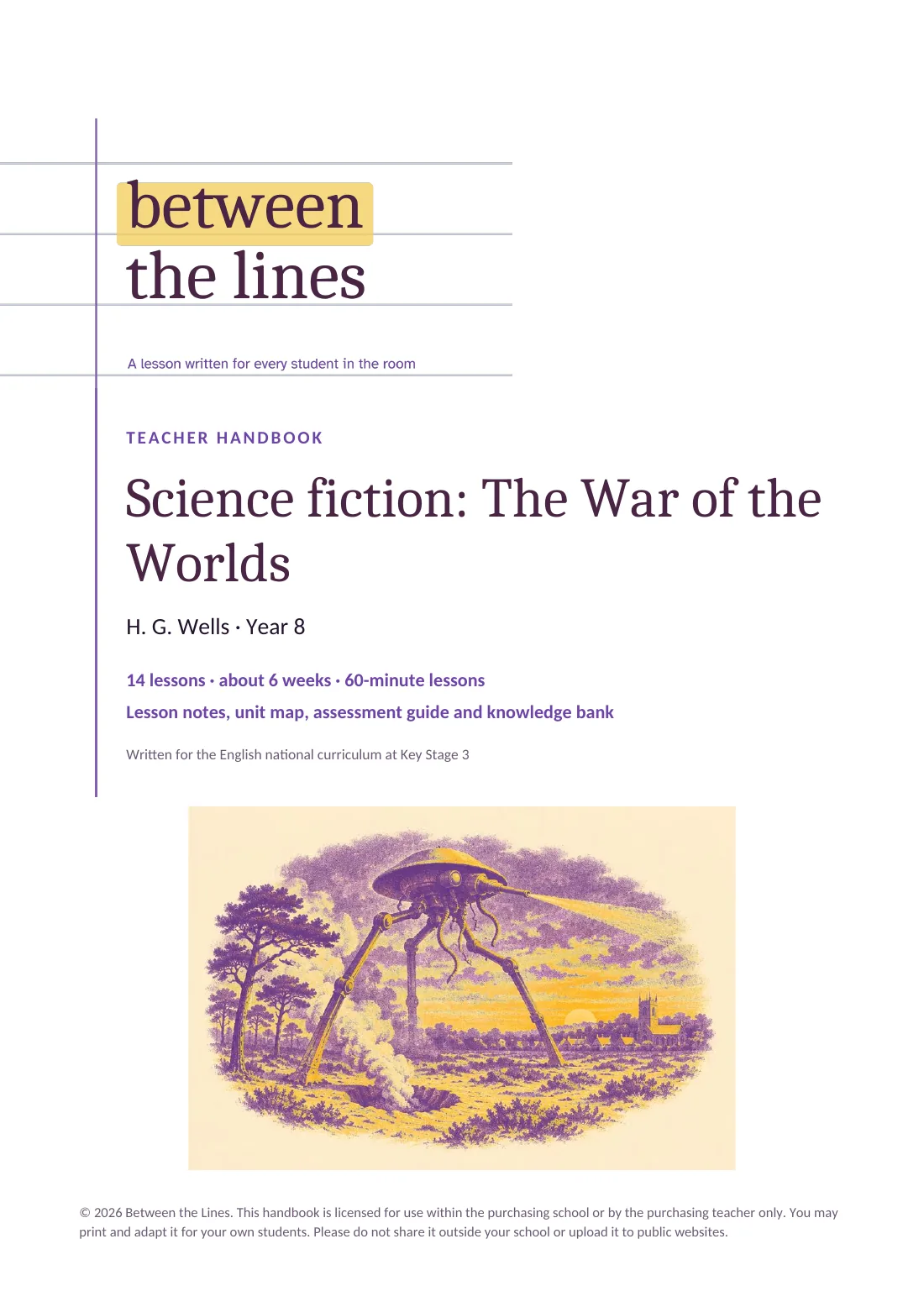 Teacher handbookCover
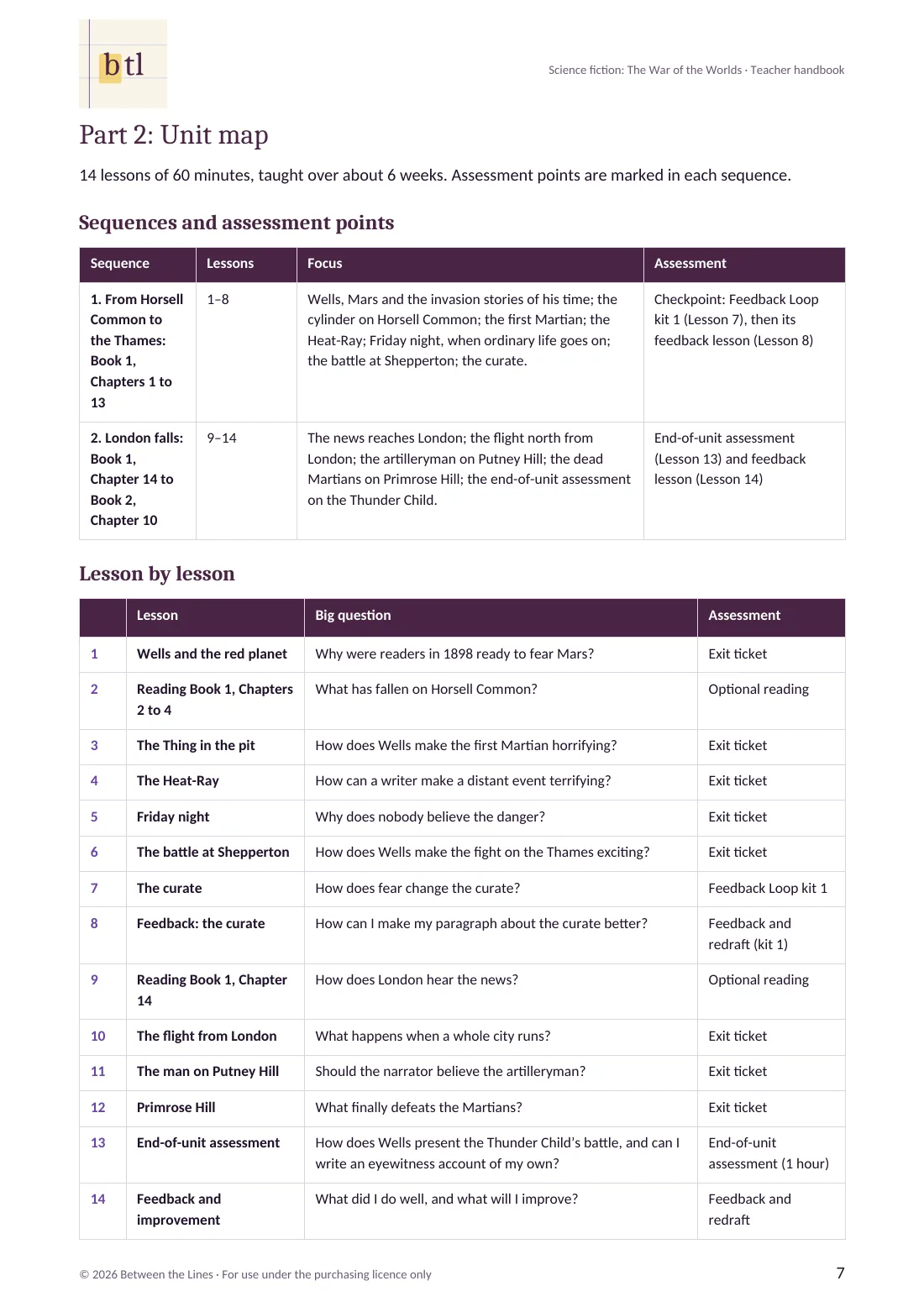 Lesson notesLesson 3 in the teacher handbook
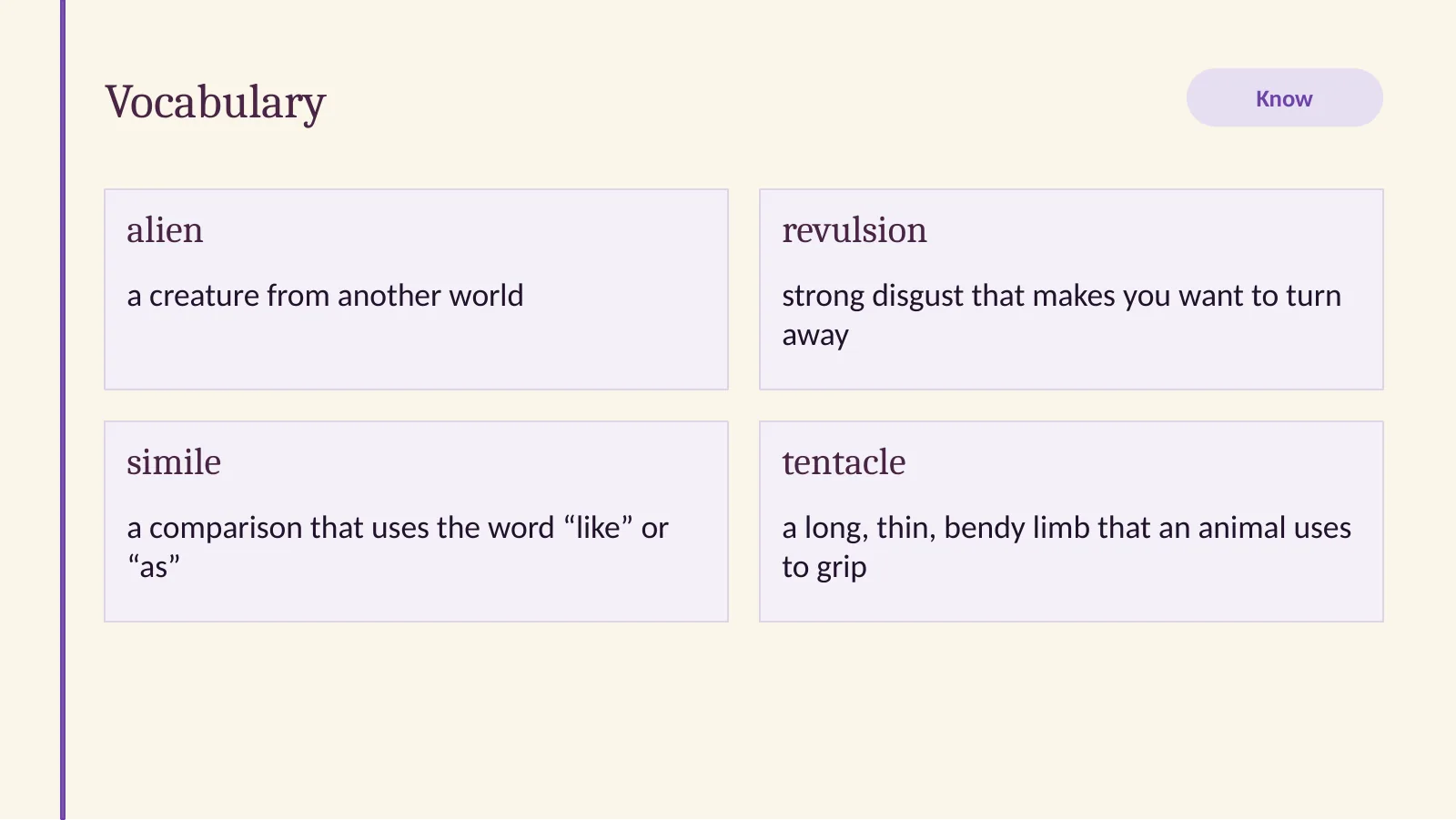 SlidesLesson 3: The Thing in the pit
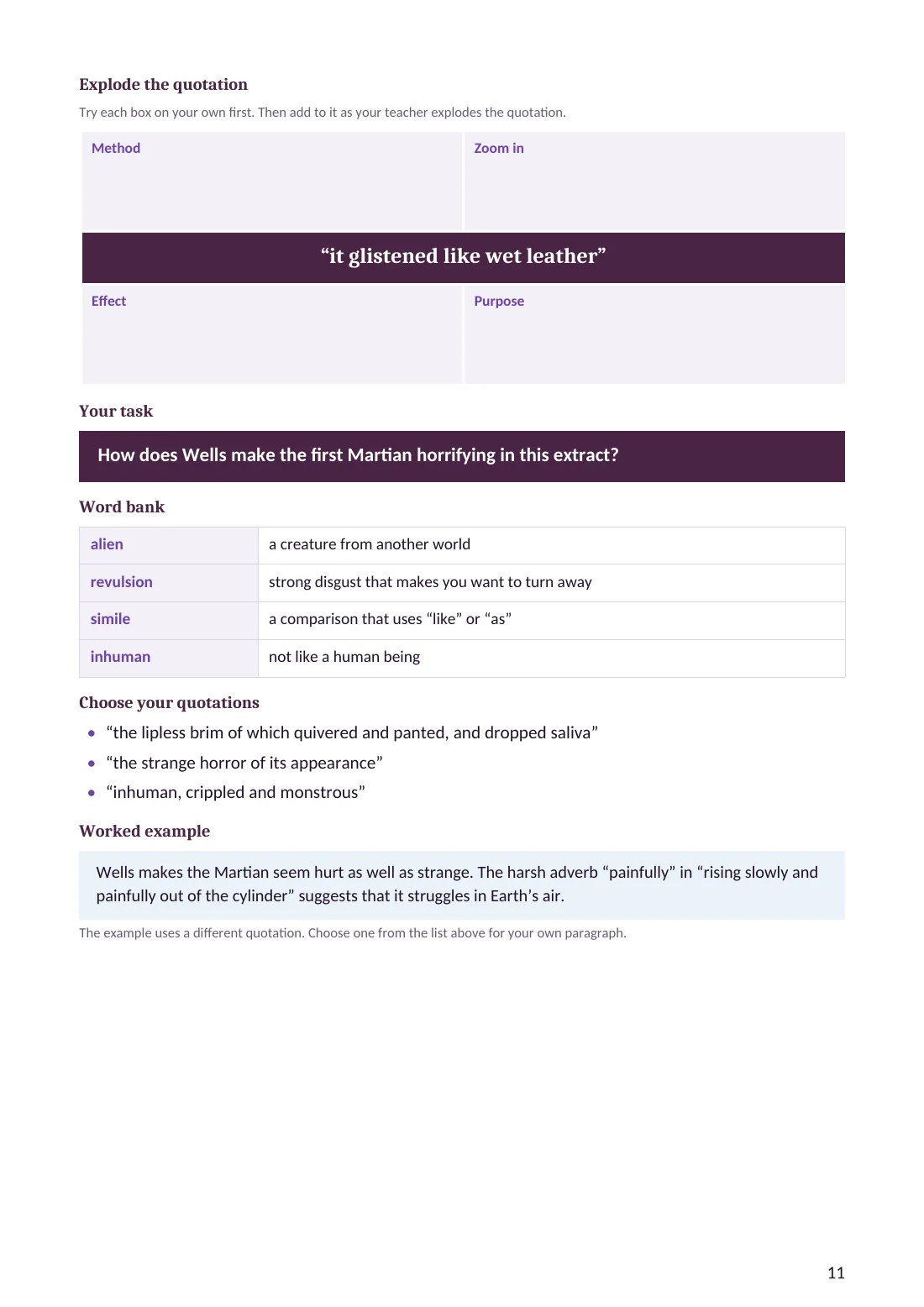 SecuringLesson 3 in the Securing student pack
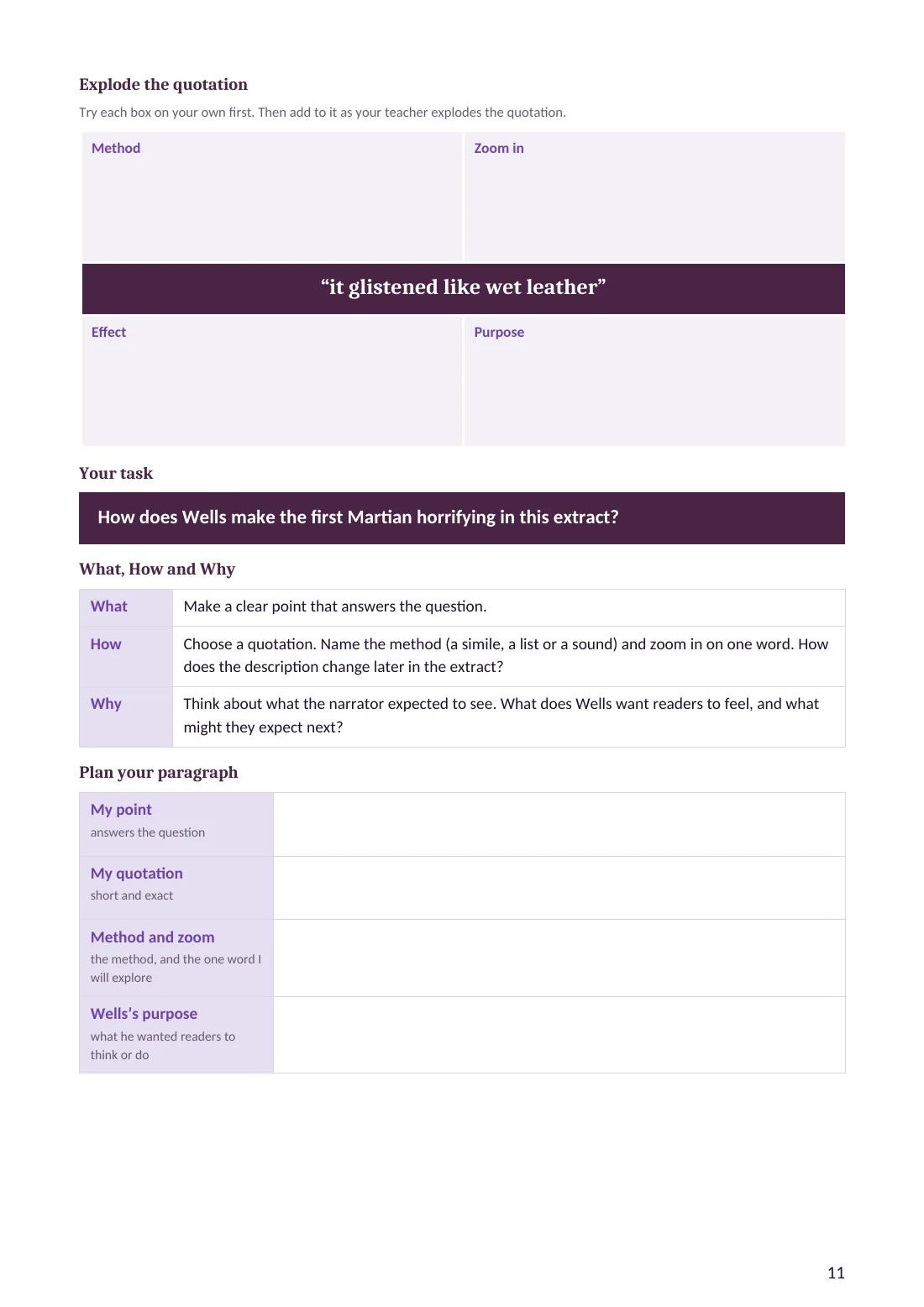 StrengtheningLesson 3 in the Strengthening student pack
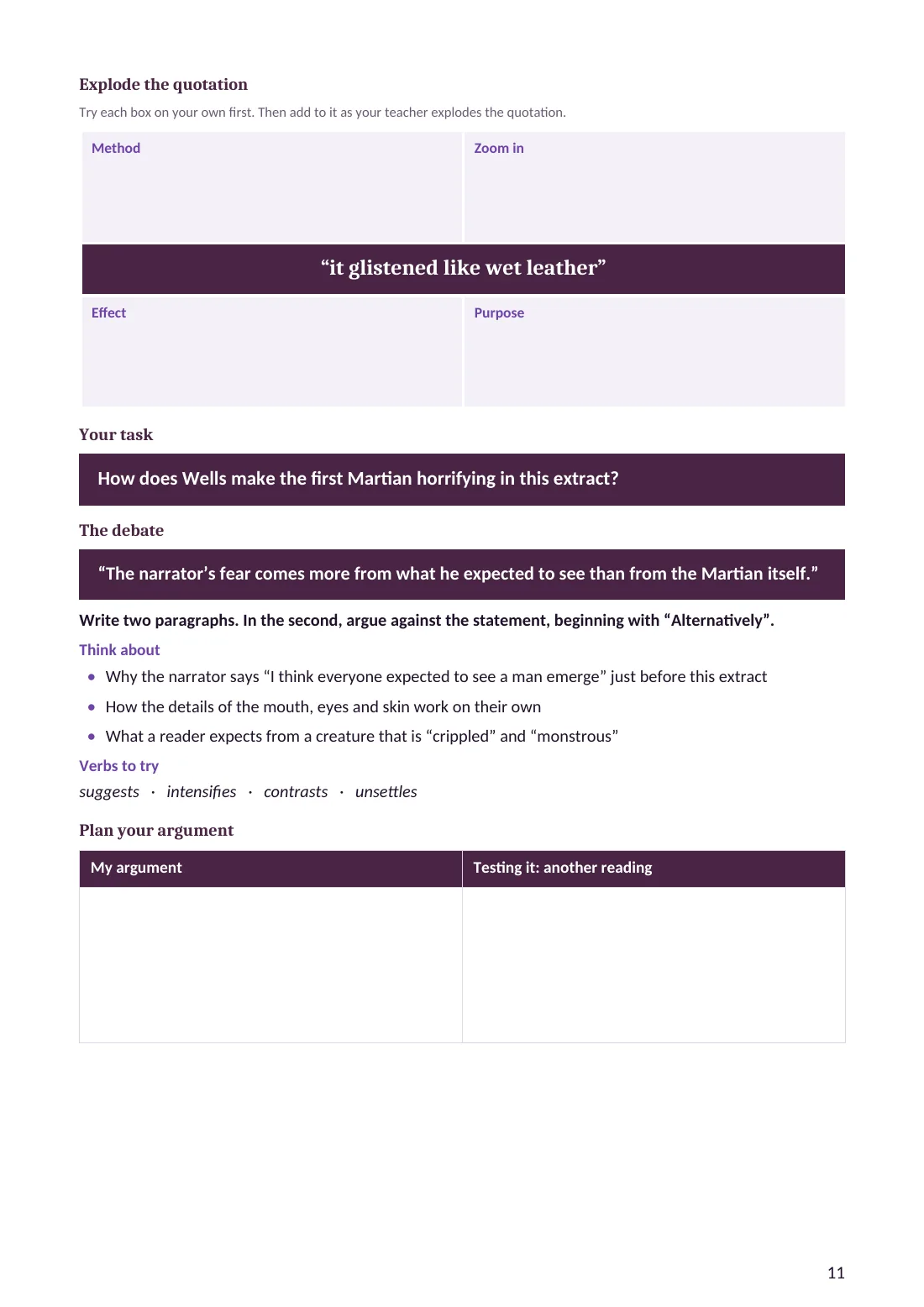 SoaringLesson 3 in the Soaring student pack
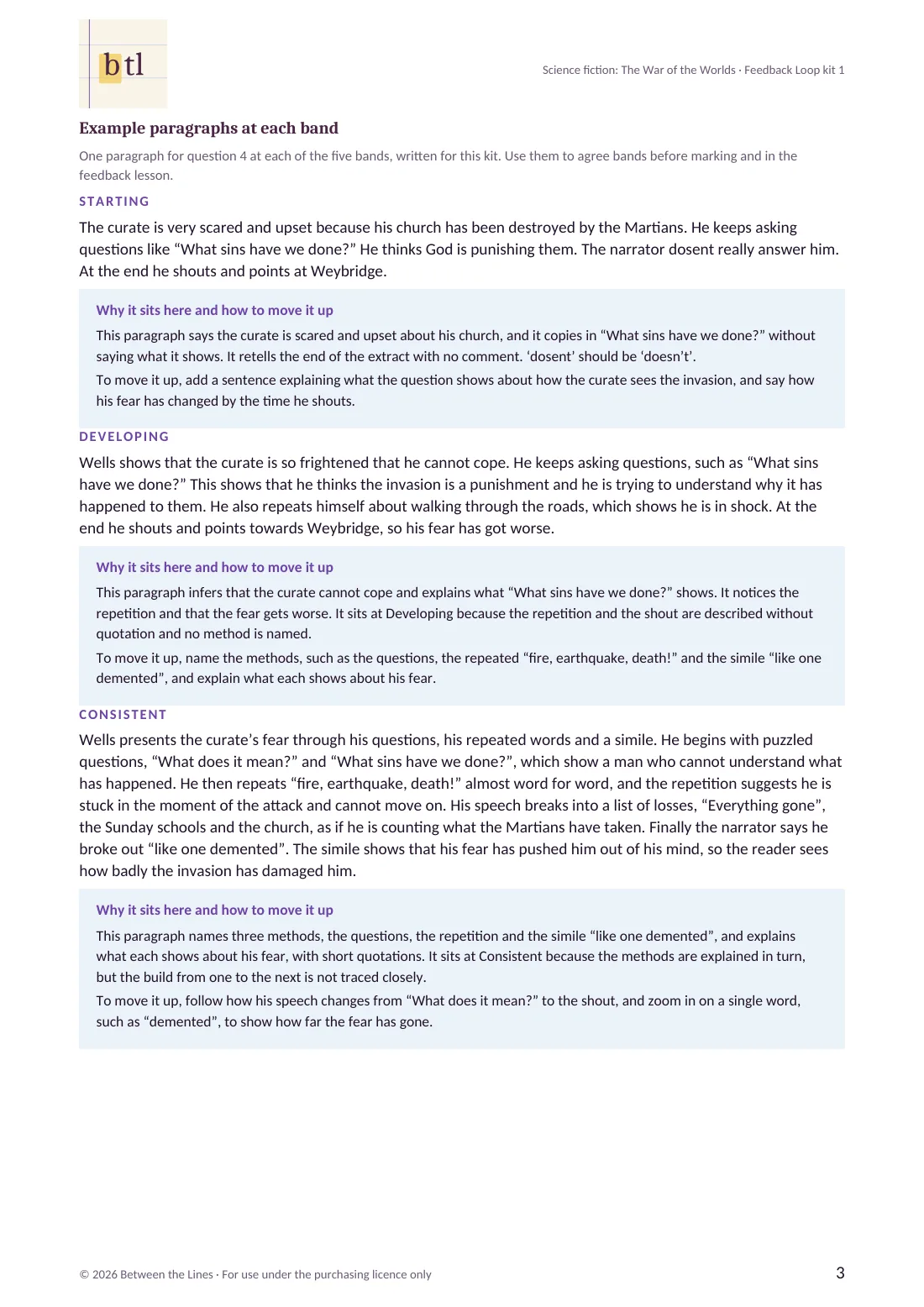 Feedback Loop kitThe checkpoint in Lesson 7
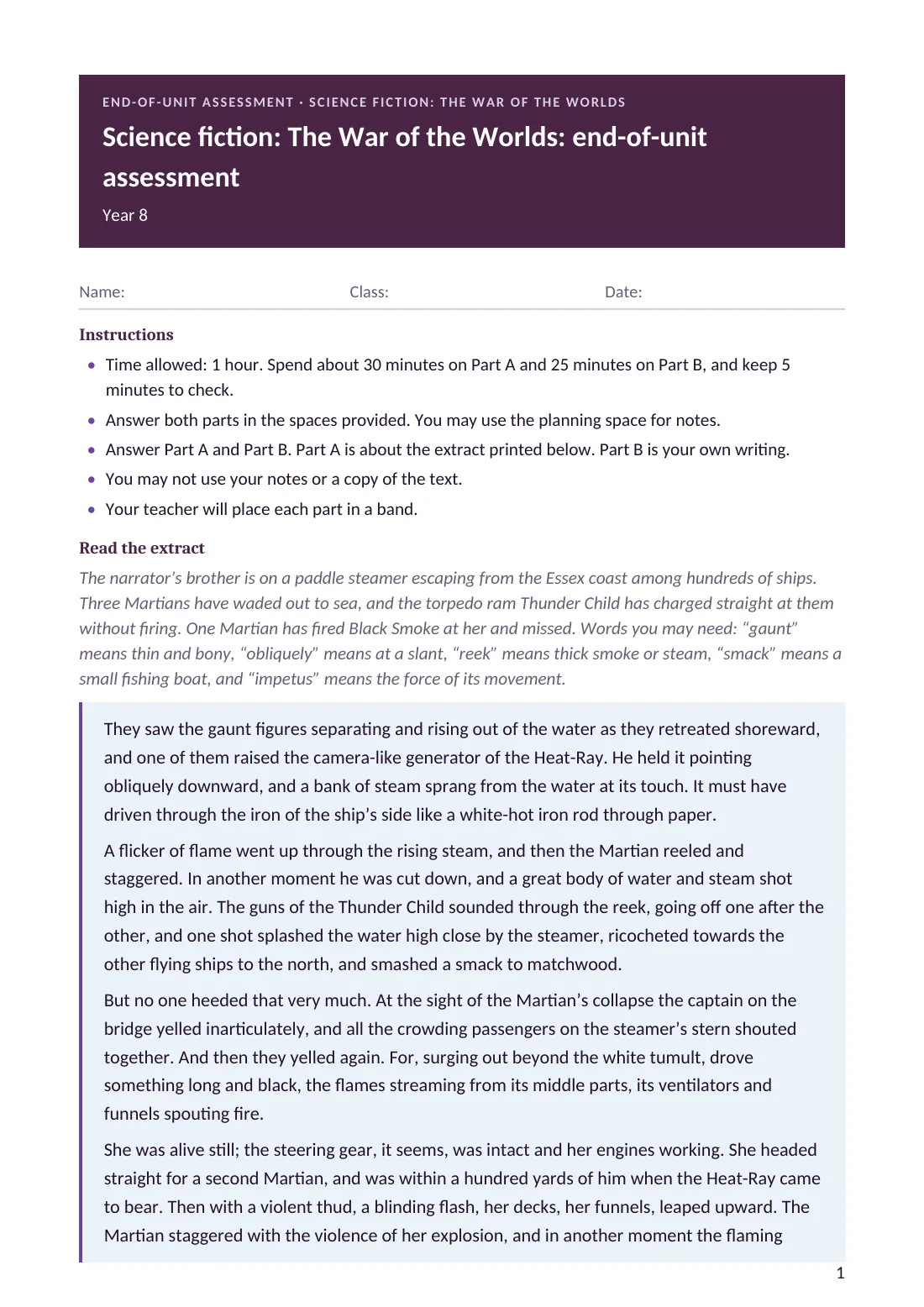 End-of-unit assessmentPart A reading, Part B writing
What students learn
Students read a whole novel together through a half-term and follow an invasion from the first falling star to the silence of a dead London. Wells tells it through an eyewitness: a writer in Woking who sees the first Martian crawl out of its cylinder, hides from the Heat-Ray in the Thames, shelters with a terrified curate and meets an artilleryman with a plan to live in the drains. His brother’s story carries the flight from London and the last fight of the Thunder Child. Students keep asking the big question: what happens when humans are no longer in charge of the Earth? They learn how Wells’s training in science, the talk of canals on Mars and the invasion stories of the 1870s to 1890s shaped the book, and how his first chapter asks British readers to see conquest from the other side. Close-study lessons follow how Wells builds horror, panic and hope across a passage, and the writing tasks move from a description to a newspaper report and an eyewitness account for a newspaper, the form of the end-of-unit assessment.
By the end of the unit, students can
- Explain how Wells’s science training, the Martian canals and the invasion stories of the 1890s shaped The War of the Worlds
- Retell the main events of the novel in order, from the falling star on Horsell Common to the dead Martians on Primrose Hill
- Analyse how Wells builds an effect such as horror, panic or hope across an extract, using short exact quotations
- Write What–How–Why paragraphs that follow how an extract changes and zoom in on single words
- Write a description, a newspaper report and an eyewitness account for a newspaper, shaped for their readers
Where it fits
Builds on: Year 7 study of Treasure Island: reading a whole novel together through a half-term, a first-person narrator who tells the story years later, and suspense built chapter by chapter. Year 7 Journeys: eyewitness accounts of real danger by Shackleton and Scott, written in the first person, and the journal or log as a form. In this unit students meet a narrator who reports an invasion as an eyewitness, and they write eyewitness accounts of their own.
Leads to: The Time Machine in Year 9, where Wells imagines the far future and the fate of the human race; Victorian journalism and reporting in Year 9; nineteenth-century novels in Years 10 and 11; paragraphs that follow how an effect builds across a passage; descriptive and narrative writing, and writing for a newspaper, with a clear viewpoint.
Two sequences, 14 lessons
The checkpoint, its feedback lesson and the end-of-unit assessment are planned into the sequence. Open a sequence to see its lessons. Lesson 3 is free.
From Horsell Common to the Thames: Book 1, Chapters 1 to 13Lessons 1 to 8
- 1Wells and the red planetWhy were readers in 1898 ready to fear Mars?
- 2Reading Book 1, Chapters 2 to 4Reading lessonWhat has fallen on Horsell Common?
- 3The Thing in the pitFreeHow does Wells make the first Martian horrifying?
- 4The Heat-RayHow can a writer make a distant event terrifying?
- 5Friday nightWhy does nobody believe the danger?
- 6The battle at SheppertonHow does Wells make the fight on the Thames exciting?
- 7The curateFeedback Loop kit 1How does fear change the curate?
- 8Feedback: the curateReview lessonHow can I make my paragraph about the curate better?
London falls: Book 1, Chapter 14 to Book 2, Chapter 10Lessons 9 to 14
- 9Reading Book 1, Chapter 14Reading lessonHow does London hear the news?
- 10The flight from LondonWhat happens when a whole city runs?
- 11The man on Putney HillShould the narrator believe the artilleryman?
- 12Primrose HillWhat finally defeats the Martians?
- 13End-of-unit assessmentEnd-of-unit assessmentHow does Wells present the Thunder Child’s battle, and can I write an eyewitness account of my own?
- 14Feedback and improvementFeedback lessonWhat did I do well, and what will I improve?
Assessment without grades
End-of-unit assessment (Lesson 13): Part A, a reading response to a printed extract; Part B, a piece of the student’s own writing. One hour.
Each part is placed in one of five bands that describe the work (Starting, Developing, Consistent, Confident, Assured), using the Year 8 reading and writing grids and our indicative content for the task. Nothing is scored. The checkpoint in Lesson 7 is one What–How–Why paragraph, placed in a band in the same way.
- Starting
- Developing
- Consistent
- Confident
- Assured
The bands describe the work, never the student. Key Stage 3 has no GCSE grades or marks in our schemes.
Buy the scheme
Both licences include every file in the scheme, as editable Word and PowerPoint files with a PDF copy of each.
One teacher
For your own classes
£40incl. VAT
- Print and adapt for your own students
- Put it on your school’s own secure learning platform
- Upgrade to a school licence for the difference before VAT
School
Every teacher and student at one school
£100+ VAT
- Print and adapt for every class in the school
- Put it on your school’s own secure learning platform
- Each further school in the same trust pays half
Planning the whole year? The Year 8 school bundle has all six schemes, the year plan and the end-of-year assessment for £480 + VAT.
Both licences include 10 folders: see what is in each
- 00Start here6 pages: how the scheme fits together
- 01Teacher handbook68 pages: intent, unit map, lesson notes and the assessment guide
- 02Slides14 PowerPoint decks with teacher notes, and a PDF copy of each
- 03Student bookletEvery lesson with the Securing, Strengthening and Soaring support side by side, 48 pages, plus one pack per level for set classes
- 04Independent practiceAll three levels in one booklet, 45 pages, plus one booklet per level
- 05Feedback Loop kitThe Lesson 7 checkpoint and its whole-class feedback lesson, 8 pages
- 06End-of-unit assessmentThe assessment paper and a teacher guide with the band grids
- 09Missed a lessonA catch-up sheet for every lesson
- 10InclusionNotes for students with SEND, students learning English and pupil premium students, and a key words list
- 11Talk routinesSixteen routines for spoken English in any lesson, with steps, sentence stems and a student sheet
To pay by invoice, to upgrade a teacher licence, or to license another school in your trust at half price, email hello@btl.education. Please don’t share the files outside your school or upload them to public websites. Licence terms
Extracts from The War of the Worlds are taken from the public-domain text of the novel (1898), in the free Standard Ebooks edition, which keeps Wells’s British spelling. The novel has two books, which the edition numbers in Roman numerals; we write Book 1, Chapter 12 and so on.
Teach Lesson 3 of Science fiction: The War of the Worlds, free
One complete lesson from every Key Stage 3 scheme: the slides with teacher notes, and the teacher notes and student pages at Securing, Strengthening and Soaring. Choose a scheme and we email you the files straight away.
The rest of Year 8
- Gothic short stories Autumn 1
- Poetry of the First World War Autumn 2
- Detective fiction: Sherlock Holmes Spring 1
- The Tempest Summer 1
- Voices of change Summer 2
Get our emails
About once a month: new free resources and the dates that matter for GCSE English.