

Teachers › Key Stage 3 › Year 8 › Voices of change
Voices of change
Key Stage 3 · Year 8 scheme of learning · Summer 2 in our Year 8 plan
A half-term scheme of learning for Year 8: 14 one-hour lessons across about six weeks, built around one big question: how do people without power make themselves heard? Every lesson has slides, teacher notes and a student booklet with three levels of support.
Douglass, Truth, Stanton, Pankhurst and others, 1775 to 1908. Every extract is printed in the booklets, so no class set of books is needed.
Three levels of support · a checkpoint in Lesson 7 with whole-class feedback · an end-of-unit assessment in Lesson 13, placed in five bands
Real pages from the scheme
Choose a page to see it larger. Lesson 3 is free: we email the full editable lesson.
 Teacher handbookCover
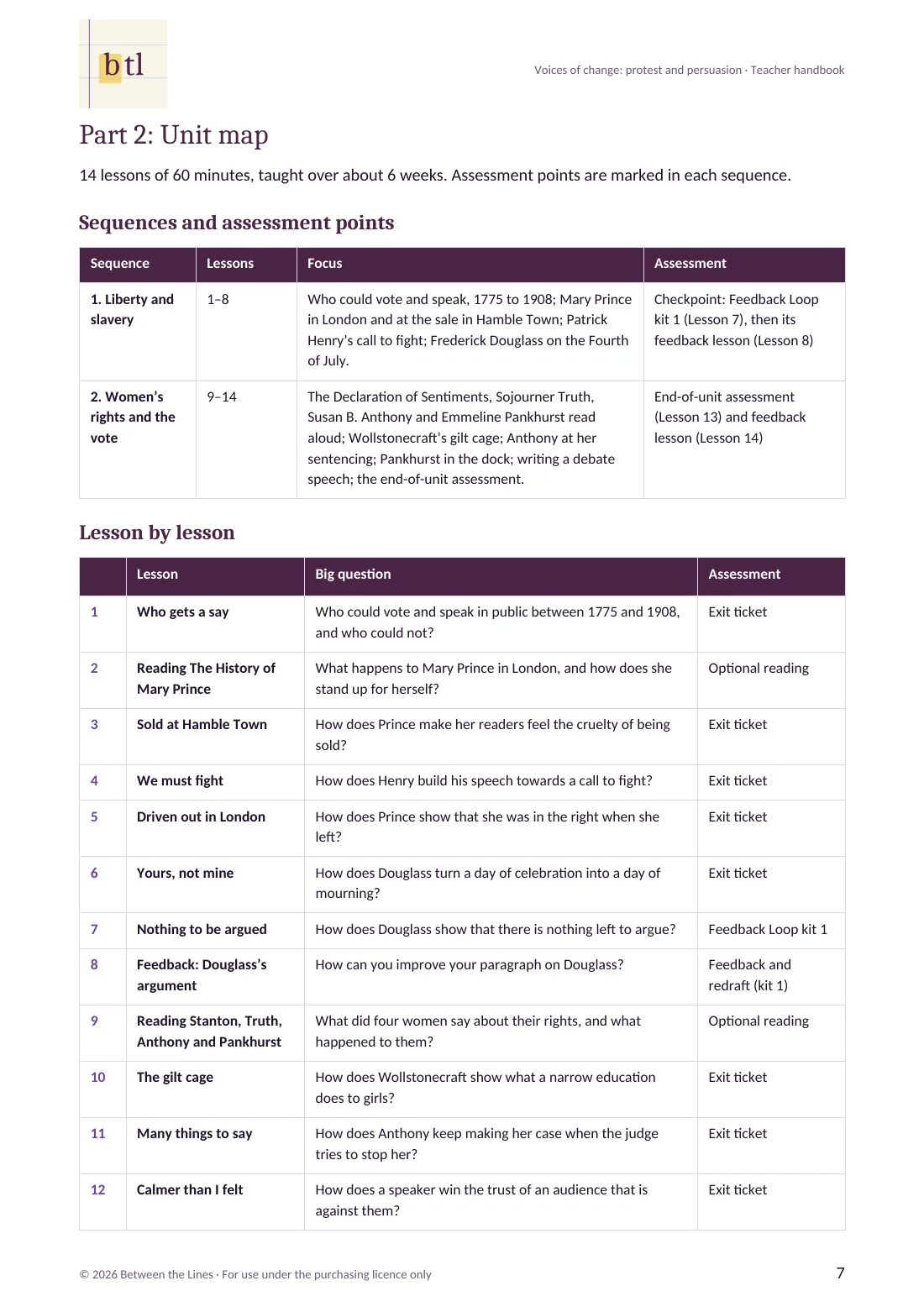 Lesson notesLesson 3 in the teacher handbook
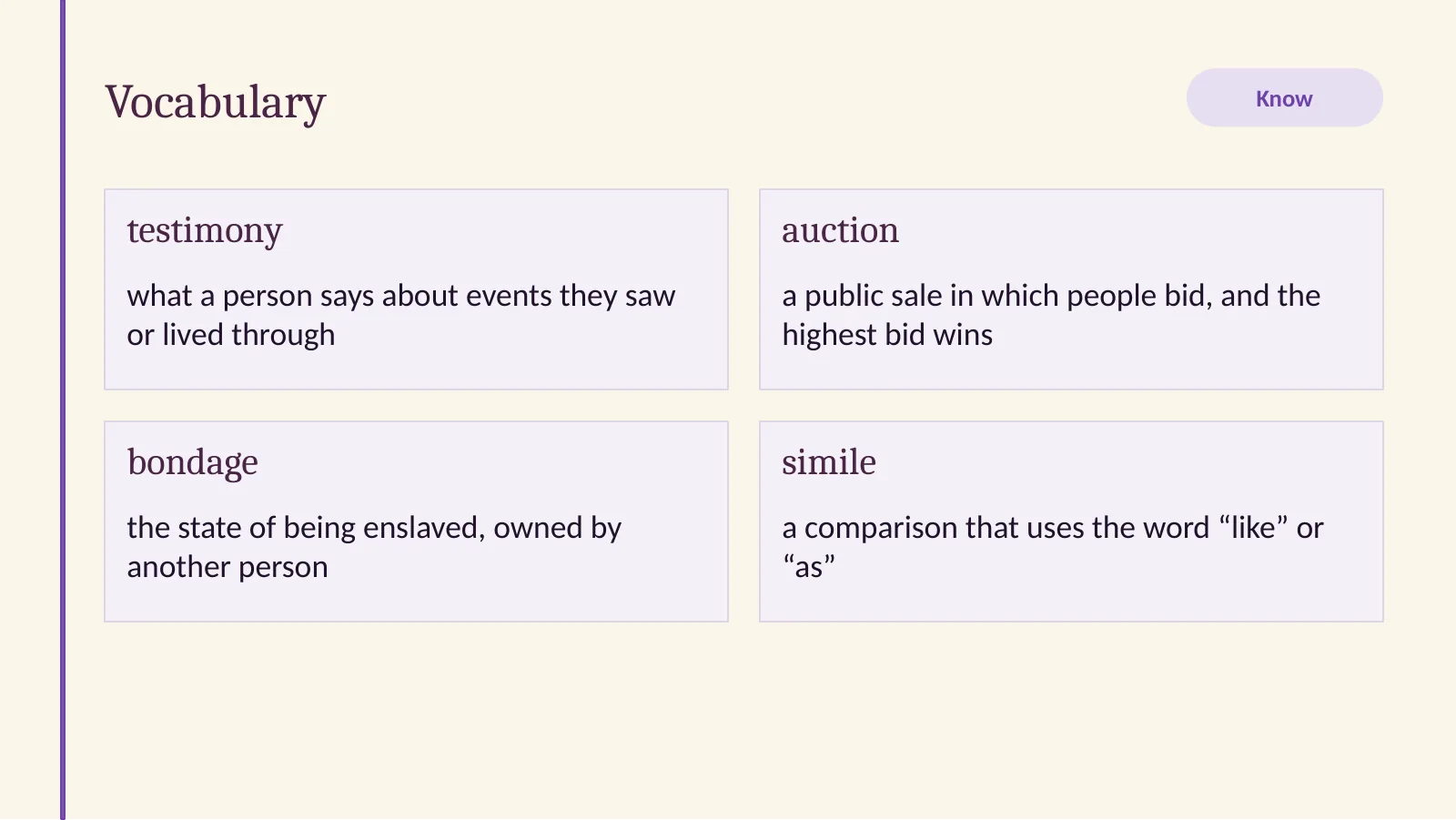 SlidesLesson 3: Sold at Hamble Town
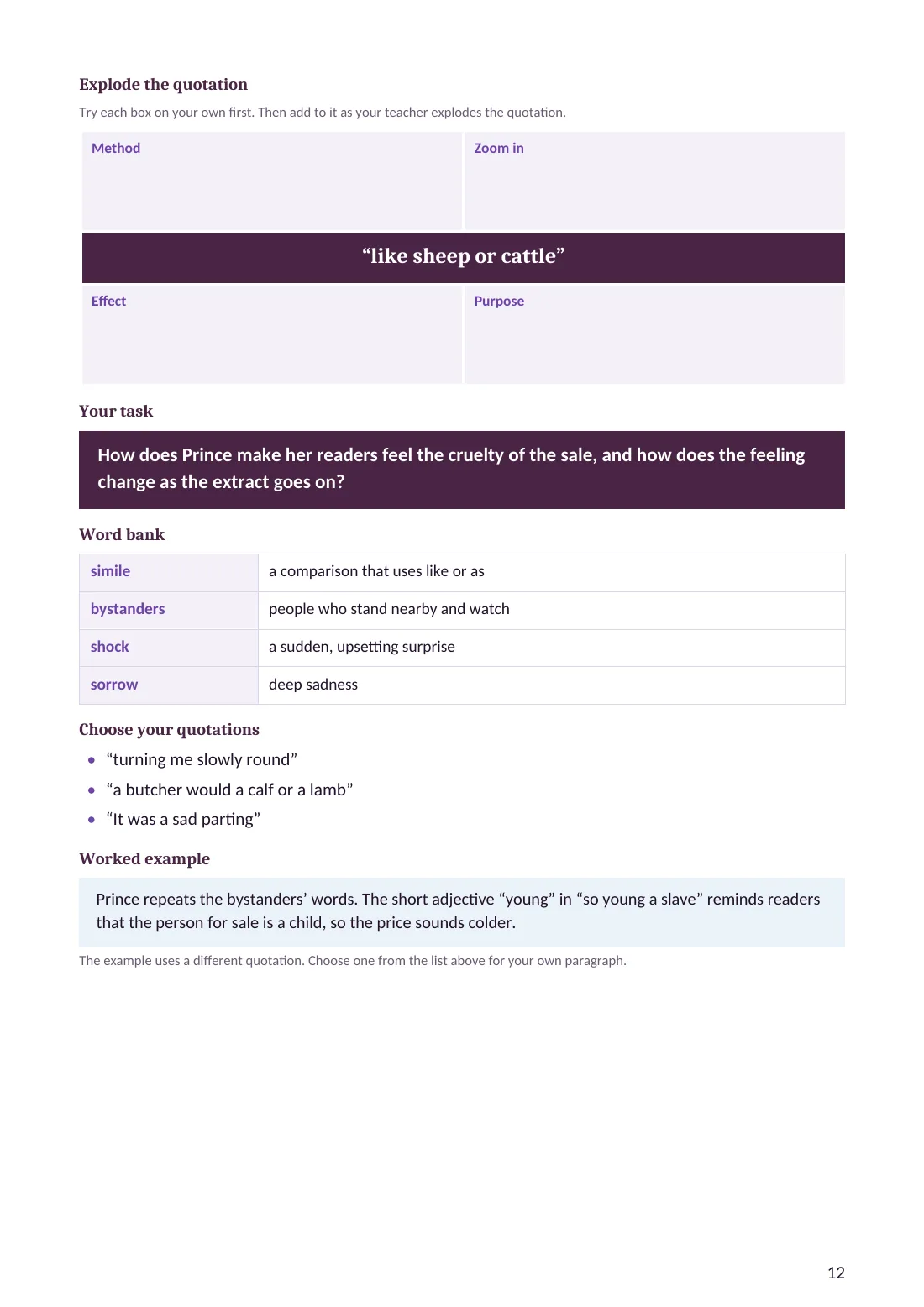 SecuringLesson 3 in the Securing student pack
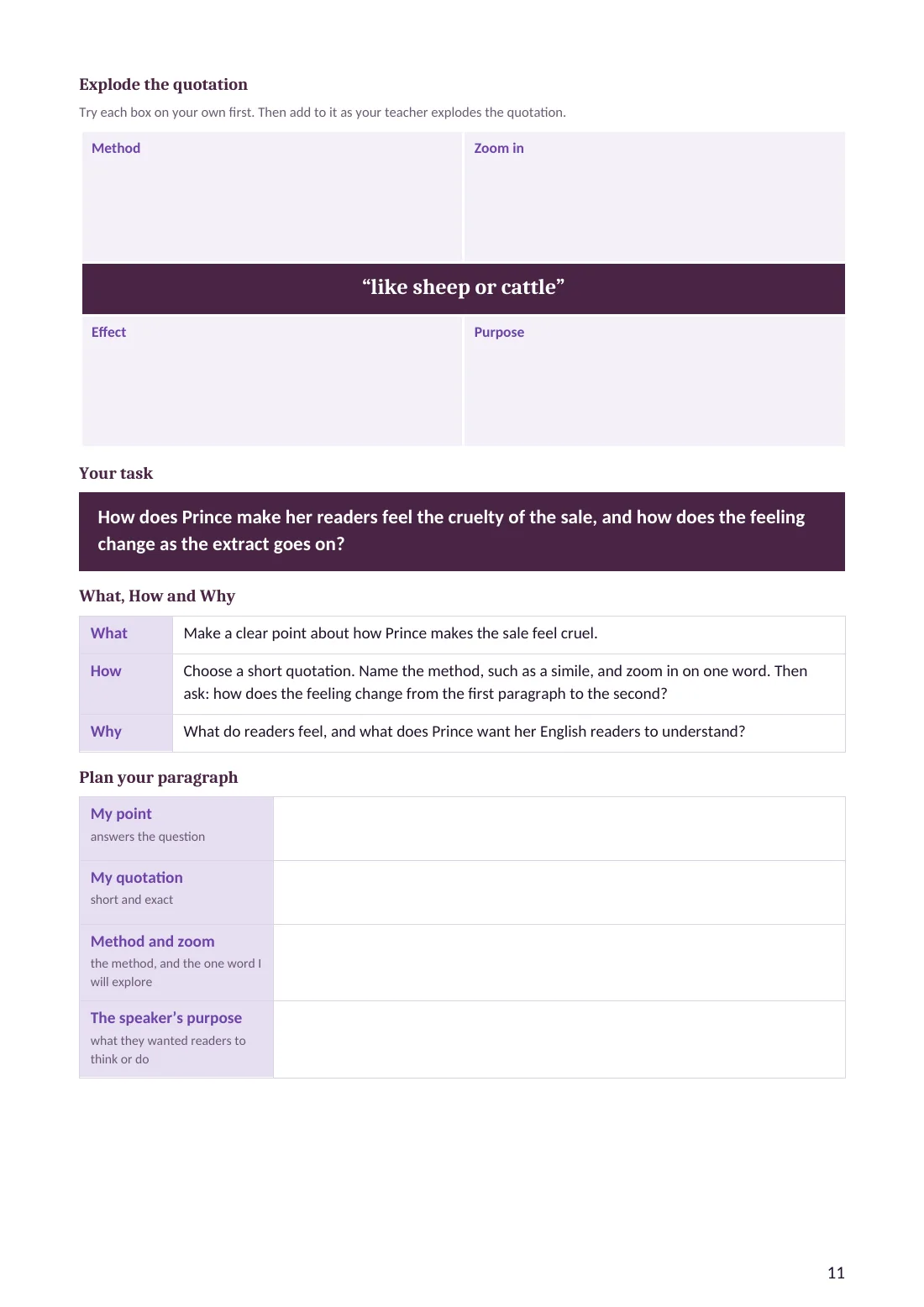 StrengtheningLesson 3 in the Strengthening student pack
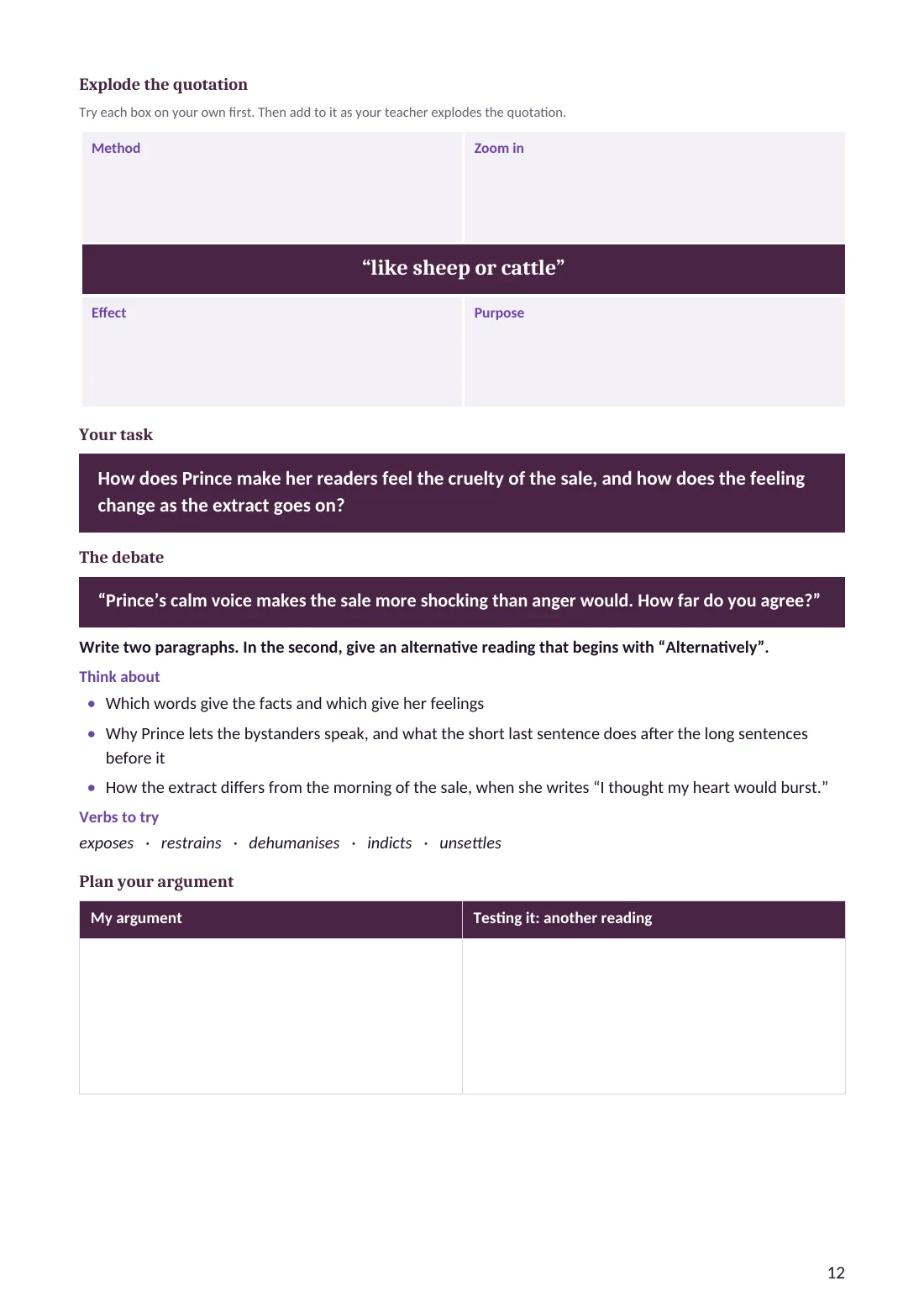 SoaringLesson 3 in the Soaring student pack
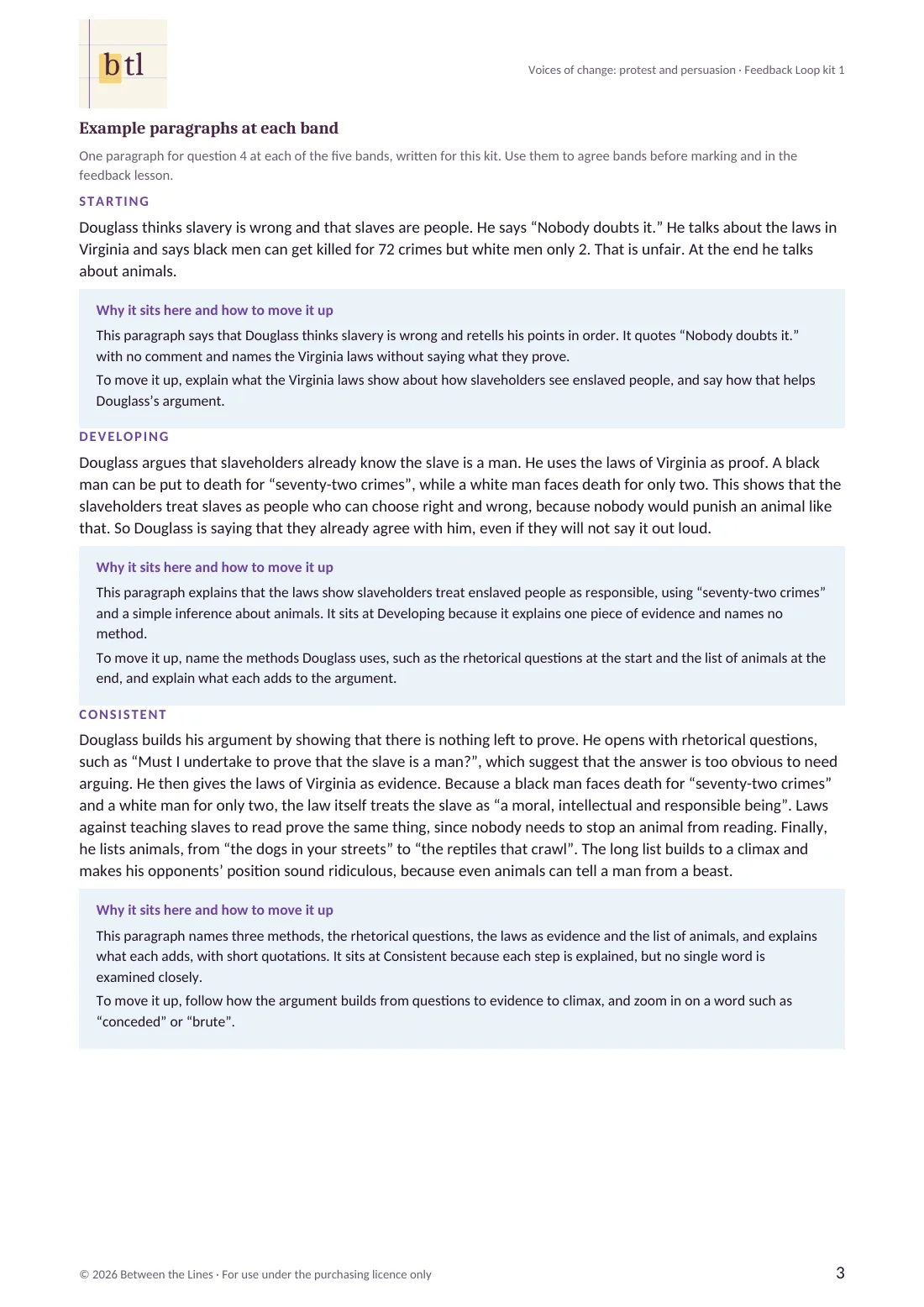 Feedback Loop kitThe checkpoint in Lesson 7
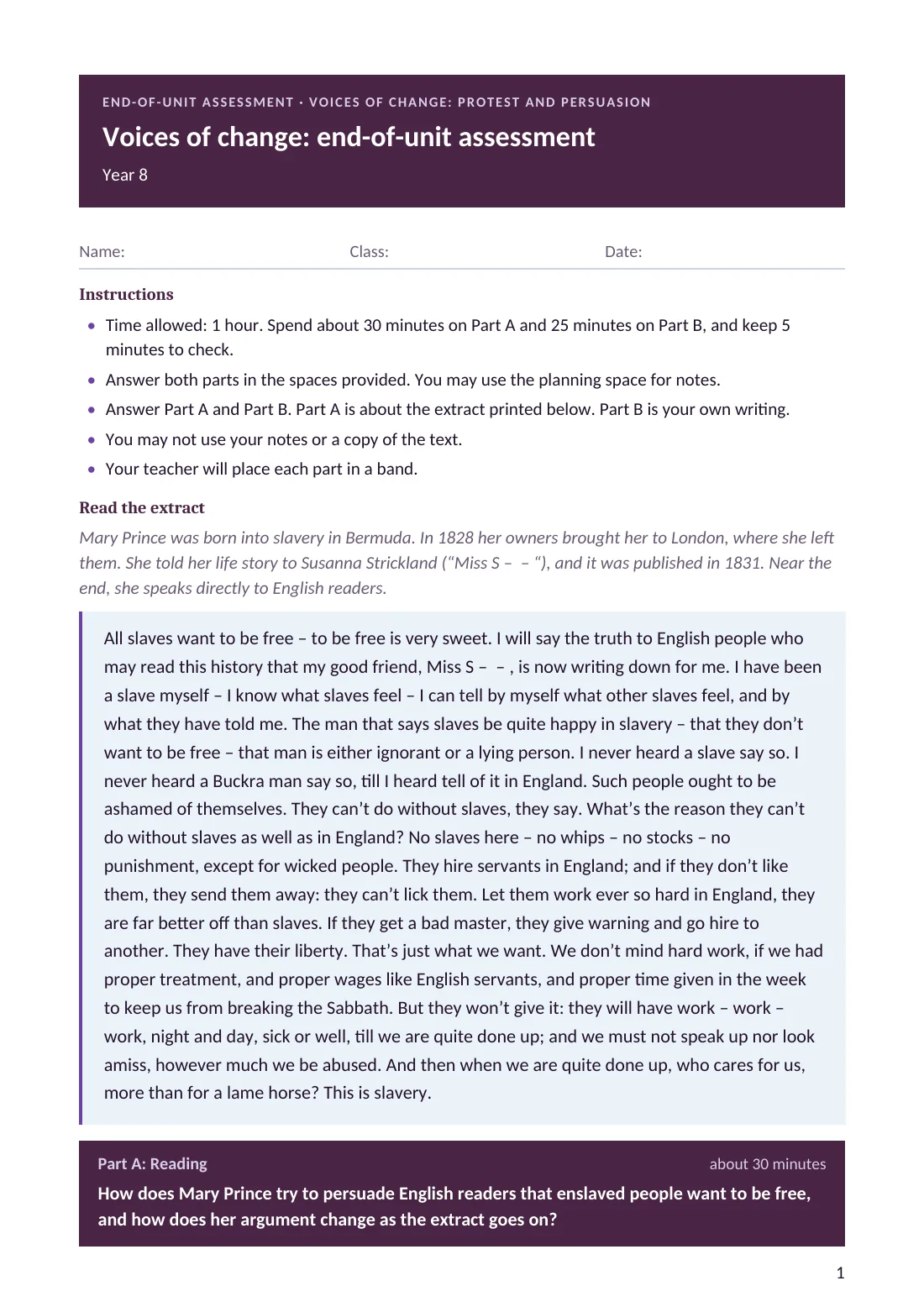 End-of-unit assessmentPart A reading, Part B writing
What students learn
Students read speeches and first-person writing by people who were refused a voice and spoke anyway, from Patrick Henry’s call to fight in 1775 to Emmeline Pankhurst in the dock in 1908. The first half of the unit is about liberty and slavery: Henry’s demand for freedom from Britain, Mary Prince’s own account of being sold as a girl and of walking out of her owners’ house in London, and Frederick Douglass asking what the Fourth of July means to an enslaved person. The second half is about women’s rights and the vote: Mary Wollstonecraft on girls’ education, the Declaration of Sentiments, Sojourner Truth, Susan B. Anthony answering the judge who convicted her, and Pankhurst’s speech from the dock. Students learn who could vote and speak in public between 1775 and 1908, and how each speaker made an audience listen: questions, lists and repetition, the speaker’s own story, and appeals to values the audience already held. In What–How–Why paragraphs they follow how an argument builds across a passage. They write a speech of their own three times, ending with a speech for a class debate in the end-of-unit assessment.
By the end of the unit, students can
- Explain who could vote and speak in public in Britain and the United States between 1775 and 1908, and why each speaker in the unit spoke out
- Retrieve and explain the main argument of each speech or extract, and what the speaker wanted the audience to think or do
- Analyse how speakers use methods such as rhetorical questions, lists, repetition, contrast and their own experience to persuade
- Write What–How–Why paragraphs that follow how an argument builds or changes across an extract, using short, exact quotations
- Write a speech and an open letter that argue a clear viewpoint for a named audience, answering the other side
Where it fits
Builds on: The Year 7 Journeys unit: reading true accounts written in the first person, asking why each writer wrote and who for, and explaining methods such as understatement and contrast in What–How–Why paragraphs. Students also bring the letters, descriptions and journal entries they wrote for a reader in Year 7.
Leads to: Victorian journalism and letters in Year 9, where students write to give a viewpoint, and the poetry of power and protest; in Years 10 and 11, reading nineteenth-century speeches, letters and accounts, comparing two writers’ viewpoints, and writing to argue and persuade.
Two sequences, 14 lessons
The checkpoint, its feedback lesson and the end-of-unit assessment are planned into the sequence. Open a sequence to see its lessons. Lesson 3 is free.
Liberty and slaveryLessons 1 to 8
- 1Who gets a sayWho could vote and speak in public between 1775 and 1908, and who could not?
- 2Reading The History of Mary PrinceReading lessonWhat happens to Mary Prince in London, and how does she stand up for herself?
- 3Sold at Hamble TownFreeHow does Prince make her readers feel the cruelty of being sold?
- 4We must fightHow does Henry build his speech towards a call to fight?
- 5Driven out in LondonHow does Prince show that she was in the right when she left?
- 6Yours, not mineHow does Douglass turn a day of celebration into a day of mourning?
- 7Nothing to be arguedFeedback Loop kit 1How does Douglass show that there is nothing left to argue?
- 8Feedback: Douglass’s argumentReview lessonHow can you improve your paragraph on Douglass?
Women’s rights and the voteLessons 9 to 14
- 9Reading Stanton, Truth, Anthony and PankhurstReading lessonWhat did four women say about their rights, and what happened to them?
- 10The gilt cageHow does Wollstonecraft show what a narrow education does to girls?
- 11Many things to sayHow does Anthony keep making her case when the judge tries to stop her?
- 12Calmer than I feltHow does a speaker win the trust of an audience that is against them?
- 13End-of-unit assessmentEnd-of-unit assessmentCan you write about a persuasive text, and then write a debate speech of your own?
- 14Feedback and improvementFeedback lessonHow can you improve your reading response and your speech?
Assessment without grades
End-of-unit assessment (Lesson 13): Part A, a reading response to a printed extract; Part B, a piece of the student’s own writing. One hour.
Each part is placed in one of five bands (Starting, Developing, Consistent, Confident, Assured) using the Year 8 reading and writing grids and our indicative content for the task. The bands describe the work, and no score is given. The checkpoint in Lesson 7 is one What–How–Why paragraph, placed in a band in the same way.
- Starting
- Developing
- Consistent
- Confident
- Assured
The bands describe the work, never the student. Key Stage 3 has no GCSE grades or marks in our schemes.
Buy the scheme
Both licences include every file in the scheme, as editable Word and PowerPoint files with a PDF copy of each.
One teacher
For your own classes
£40incl. VAT
- Print and adapt for your own students
- Put it on your school’s own secure learning platform
- Upgrade to a school licence for the difference before VAT
School
Every teacher and student at one school
£100+ VAT
- Print and adapt for every class in the school
- Put it on your school’s own secure learning platform
- Each further school in the same trust pays half
Planning the whole year? The Year 8 school bundle has all six schemes, the year plan and the end-of-year assessment for £480 + VAT.
Both licences include 10 folders: see what is in each
- 00Start here6 pages: how the scheme fits together
- 01Teacher handbook69 pages: intent, unit map, lesson notes and the assessment guide
- 02Slides14 PowerPoint decks with teacher notes, and a PDF copy of each
- 03Student bookletEvery lesson with the Securing, Strengthening and Soaring support side by side, 46 pages, plus one pack per level for set classes
- 04Independent practiceAll three levels in one booklet, 45 pages, plus one booklet per level
- 05Feedback Loop kitThe Lesson 7 checkpoint and its whole-class feedback lesson, 8 pages
- 06End-of-unit assessmentThe assessment paper and a teacher guide with the band grids
- 09Missed a lessonA catch-up sheet for every lesson
- 10InclusionNotes for students with SEND, students learning English and pupil premium students, and a key words list
- 11Talk routinesSixteen routines for spoken English in any lesson, with steps, sentence stems and a student sheet
To pay by invoice, to upgrade a teacher licence, or to license another school in your trust at half price, email hello@btl.education. Please don’t share the files outside your school or upload them to public websites. Licence terms
Every speech and extract is copied exactly from a public-domain text, and the source is named under each one.
Teach Lesson 3 of Voices of change, free
One complete lesson from every Key Stage 3 scheme: the slides with teacher notes, and the teacher notes and student pages at Securing, Strengthening and Soaring. Choose a scheme and we email you the files straight away.
The rest of Year 8
- Gothic short stories Autumn 1
- Poetry of the First World War Autumn 2
- Detective fiction: Sherlock Holmes Spring 1
- Science fiction: The War of the Worlds Spring 2
- The Tempest Summer 1
Get our emails
About once a month: new free resources and the dates that matter for GCSE English.