

Knowledge hub › For students › Animal Farm: the story
Animal Farm: the story, chapter by chapter
The animals drive out their farmer to build a fairer world, and the pigs slowly turn into the masters they replaced. Read every chapter, then the characters and ideas.
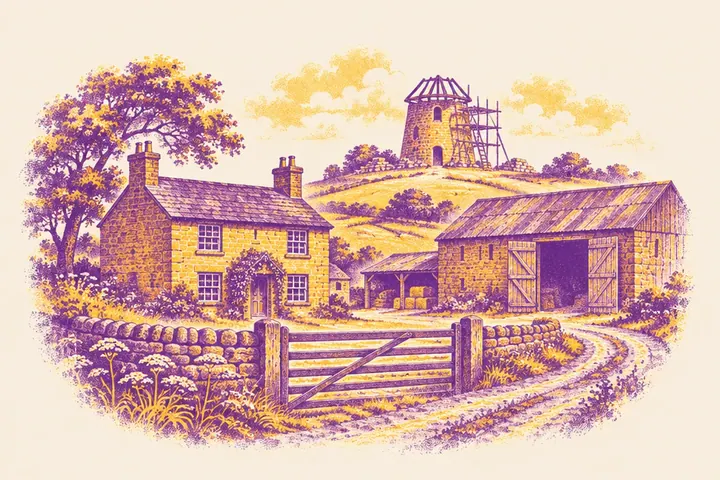
In George Orwell’s novella Animal Farm (1945), the animals of Manor Farm rebel, drive out the drunken farmer Mr Jones and promise that all animals will be equal. The pigs take charge, and their leader Napoleon slowly becomes a tyrant, until the pigs cannot be told apart from humans. It is Section A of AQA GCSE English Literature Paper 2, where you answer one of two essay questions with no extract.
Animal Farm is a short novel, or novella, by George Orwell, the pen name of Eric Blair. He was born in 1903 and died in 1950. The book was published in London by Secker and Warburg on 17 August 1945. It is a fable, a story with animals that teaches a lesson, based on the Russian Revolution and the rule of Joseph Stalin.
- 10chapters in the novellathe text we teach from
- 1945the year Animal Farm was published, on 17 AugustThe Orwell Foundation
- 30marks for the Animal Farm question, plus 4 for spelling, punctuation and grammarAQA specification
In the exam it is Section A of Literature Paper 2. There is no extract. You choose one of two questions and write about the whole novella from memory, so you need to know the story from start to finish.
Chapter 1: Old Major’s dream
Mr Jones, the owner of Manor Farm, staggers to bed drunk. As soon as his light goes out, all the animals gather in the big barn. Old Major, a much respected prize boar, wants to tell them about a dream.
First he gives a speech. He tells them that their lives are short and hard: “The life of an animal is misery and slavery”. Humans take their milk, eggs and work, and kill them when they are no longer useful. He says that “Man is the only creature that consumes without producing.” The answer is to get rid of Man.
Major warns them that “in fighting against Man, we must not come to resemble him.” Animals must never live in houses, sleep in beds, wear clothes, drink alcohol, trade or kill each other. “Weak or strong, clever or simple, we are all brothers”, and all animals are equal. Then he teaches them a song from his dream, Beasts of England. They sing it so loudly that Jones wakes and fires his gun into the dark.
Chapter 2: The Rebellion
Three nights later, Major dies in his sleep. The pigs, the cleverest animals, take up his ideas. The leaders are Napoleon, a fierce boar who says little and gets his own way, and Snowball, who is quicker and full of ideas. A third pig, Squealer, is a brilliant talker: the others say “he could turn black into white”.
The Rebellion comes sooner than anyone expects. One Midsummer’s Eve, Jones is drunk and the animals are not fed. They break into the store shed, and when Jones and his men come with whips, the animals chase them off the farm.
The animals burn the whips and the halters. They agree that no animal will ever live in the farmhouse. Snowball paints out the name Manor Farm and writes Animal Farm on the gate. On the barn wall he paints the Seven Commandments, the new laws of the farm. The last of them is “All animals are equal.”
Then the cows need milking. The pigs milk them, and the animals wonder what will happen to the milk. Napoleon says “Never mind the milk, comrades!” and sends them off to the harvest. When they come back that evening, the milk has gone.
Chapter 3: The harvest
The harvest is a great success. The pigs do not work. They supervise the others. Boxer, the huge and loyal cart-horse, works harder than anyone. His answer to every problem is “I will work harder!” Benjamin, an old donkey, refuses to say whether life is better now. All he says is “Donkeys live a long time. None of you has ever seen a dead donkey”.
At the Sunday meetings Snowball and Napoleon always disagree. Snowball starts reading classes, but most of the animals cannot learn more than a few letters, so he sums up the Seven Commandments in one maxim: “Four legs good, two legs bad.”
Napoleon takes away nine newborn puppies, saying he will educate them himself. Then the animals find out where the milk has gone. It goes to the pigs, with the windfall apples. Squealer explains that the pigs do all the thinking: “It is for YOUR sake that we drink that milk and eat those apples.” If the pigs failed, “Jones would come back!”
Chapter 4: The Battle of the Cowshed
The neighbouring farmers, Mr Pilkington of Foxwood and Mr Frederick of Pinchfield, are frightened by the news. In October, Jones and men from the two farms march on Animal Farm with sticks and a gun.
Snowball has planned for this, and the animals ambush the men and drive them off. Snowball is wounded, and a sheep is killed. Boxer kicks a stable lad, who lies still. Boxer is upset, because he thinks he has killed him: “I have no wish to take life, not even human life”. Snowball answers: “War is war. The only good human being is a dead one.” The animals give Snowball and Boxer a medal, Animal Hero, First Class, and name the fight the Battle of the Cowshed.
Chapter 5: Snowball is driven out
Mollie, a vain white mare who loves sugar and ribbons, disappears, and is later seen pulling a man’s trap, with a ribbon in her mane.
Snowball and Napoleon now argue about everything. Snowball has a plan to build a windmill that will make electricity and do the animals’ work for them, so they will only need to work three days a week. Napoleon is against it.
At the meeting where the animals will vote, Snowball makes a brilliant speech and wins them over. Napoleon gives a strange whimper. Nine enormous dogs, the puppies he took away, burst into the barn and chase Snowball off the farm. He escapes and is never seen again.
Napoleon announces that the Sunday meetings will end. When some animals object, the dogs growl and the sheep bleat “Four legs good, two legs bad”. Squealer warns: “Discipline, comrades, iron discipline!” Boxer adopts a second motto: “Napoleon is always right”.
Three weeks later, Napoleon announces that the windmill will be built after all. Squealer says the plan was Napoleon’s own all along, and that opposing it was a way of getting rid of Snowball: “Tactics, comrades, tactics!”
Chapter 6: The windmill
“All that year the animals worked like slaves.” They work a sixty-hour week, and Sunday afternoons too. Boxer works harder than ever.
Napoleon announces that the farm will trade with neighbouring farms. The animals remember that Major forbade trade, but Squealer tells them they must have dreamed it. A solicitor, Mr Whymper, starts to do business for Napoleon.
The pigs move into the farmhouse and sleep in the beds. Clover, a motherly mare, remembers a rule against beds, and asks Muriel the goat to read her the Fourth Commandment. It says: “No animal shall sleep in a bed with sheets”. Clover does not remember the last two words, but there they are.
In November a storm knocks the half-built windmill down. Napoleon blames Snowball. He says Snowball crept back in the night to wreck it. The animals start again.
Chapter 7: The confessions
The winter is bitterly cold and food runs short. To fool Whymper, Napoleon has the empty food bins filled with sand and topped with grain. He orders the hens to give up their eggs to be sold. The hens rebel and smash their eggs. “Napoleon acted swiftly and ruthlessly.” He stops their food, and nine hens die before the rest give in.
Now everything that goes wrong is blamed on Snowball. Squealer even claims that Snowball was Jones’s secret agent all along.
Napoleon calls a meeting. His dogs drag forward four pigs who protested when the Sunday meetings ended. The pigs confess that they have been in touch with Snowball, and the dogs tear their throats out. Then hens, a goose and some sheep confess to crimes, and they are all killed too. In the end there is “a pile of corpses lying before Napoleon’s feet”.
The animals huddle on a hillside. Clover looks down at the farm. This was not what Major had hoped for, but now “no one dared speak his mind”. They sing Beasts of England for comfort, and Squealer tells them the song is now banned.
Chapter 8: The Battle of the Windmill
Some animals remember that the Sixth Commandment said no animal should kill another. Muriel reads it out: “No animal shall kill any other animal without cause.” They had forgotten the last two words. Napoleon is now given grand titles such as Father of All Animals, and Squealer reads out lists of figures to prove that food production has gone up.
The windmill is finished. Napoleon sells a pile of timber to Mr Frederick, but Frederick pays with forged banknotes. The next morning Frederick and his men attack the farm with guns. They blow up the windmill. The animals drive the men off, but many are killed or wounded, Boxer among them. Squealer insists they have won: “That is our victory”.
The pigs find a case of whisky in the farmhouse cellar. One night the animals hear a crash. Squealer is lying by the barn wall next to a broken ladder and a pot of white paint. Shortly after, the Fifth Commandment reads “No animal shall drink alcohol to excess.” Only Benjamin seems to understand.
Chapter 9: Boxer
Boxer’s split hoof is slow to heal, but he works on, hoping to see the windmill rebuilt before he retires. Rations are cut again for everyone but the pigs and the dogs. The farm is declared a Republic, and Napoleon is elected President. He is the only candidate.
Moses the raven comes back with his stories of Sugarcandy Mountain, the happy land where animals go when they die.
One summer day Boxer collapses while hauling stone. Squealer says Napoleon will send him to hospital. A van comes to take him away. Benjamin shouts to the others to read the words on its side: “Horse Slaughterer and Glue Boiler”. Boxer is being sent to be killed. The animals cry “Don’t take your own brother to his death!” Boxer is too weak to kick his way out, and he is never seen again.
Squealer later tells them that Boxer died in hospital, praising Napoleon. He says the van had belonged to the knacker before the vet bought it, and the old name had not been painted out. Soon after, the pigs buy another case of whisky.
Chapter 10: Four legs good, two legs better
Years pass. Most of the animals who remember the Rebellion are dead. The new windmill is finished, but it is used for milling corn and makes money for the pigs, not electricity for the animals. It seems as if “the farm had grown richer without making the animals themselves any richer”, except the pigs and the dogs.
One evening Clover gives a terrified neigh. Squealer is walking on his hind legs. Then Napoleon comes out of the farmhouse on two legs too, carrying a whip. Before anyone can protest, the sheep start bleating: “Four legs good, two legs better!”
Clover asks Benjamin to read the barn wall. All the Commandments have gone. There is only one: “ALL ANIMALS ARE EQUAL BUT SOME ANIMALS ARE MORE EQUAL THAN OTHERS”. After that the pigs wear Jones’s clothes.
The pigs invite the neighbouring farmers to a dinner. Napoleon tells them that the farm will be called Manor Farm again. The animals watch through the window. Then a quarrel breaks out. Napoleon and Mr Pilkington have each played an ace of spades at cards. The animals look from the pigs to the men: “from pig to man, and from man to pig, and from pig to man again”. They can no longer tell which is which.
The main characters
- Old Major: a prize boar whose speech starts the Rebellion. Often read as Karl Marx, or as Marx and Lenin together.
- Napoleon: a large boar who says little and takes power with the dogs he has raised in secret. Often read as Joseph Stalin.
- Snowball: a clever pig who leads the defence of the farm and plans the windmill, until Napoleon’s dogs chase him away. Often read as Leon Trotsky.
- Squealer: a brilliant talker who explains every new privilege and lie. Often read as the Soviet state’s propaganda.
- Boxer: a huge, strong cart-horse, loyal and hard-working. When his strength fails, the pigs sell him to be killed.
- Clover: a motherly mare who protects the smaller animals. She senses that the Commandments have changed but cannot read them.
- Benjamin: the oldest animal, a cynical donkey who can read but will not use it, until he reads the words on Boxer’s van.
- Mollie: a vain white mare who loves sugar and ribbons and runs away to a human owner.
- Moses: Mr Jones’s tame raven, who tells the animals about Sugarcandy Mountain. Often read as the Church.
- The sheep and the dogs: the sheep bleat slogans to drown out debate, and Napoleon’s nine dogs enforce his orders.
- Mr Jones: the drunken, neglectful farmer driven out in the Rebellion. Often read as Tsar Nicholas II.
- Mr Pilkington and Mr Frederick: the neighbouring farmers. Napoleon deals with each in turn, and Frederick cheats him and attacks the farm.
The main ideas and context
Power and corruption. The pigs start as leaders of a fair revolution and end as masters worse than Jones. Each change is small, so the other animals hardly notice until it is too late.
Language and propaganda. Propaganda is information, often false, used to control what people think. Squealer twists facts and figures, the sheep drown out debate, and the Commandments are quietly rewritten.
Equality. Major’s dream is a farm where all animals are equal. By the end, the only Commandment left says that some are more equal than others.
Class and education. The pigs can read, and most other animals cannot, which gives the pigs power. Benjamin can read too, but does nothing until it is too late.
The Russian Revolution. In 1917, revolutions in Russia ended the rule of Tsar Nicholas II and brought the Bolsheviks, led by Lenin, to power. After Lenin died in 1924, Joseph Stalin and Leon Trotsky struggled to succeed him. Stalin won. In the show trials of 1936 to 1938, leading Bolsheviks confessed to crimes they had not committed and were shot. Encyclopaedia Britannica calls the novella a political fable based on the Bolshevik revolution and its betrayal by Stalin.
Orwell and the war. Orwell fought in the Spanish Civil War and saw communists backed by Stalin turn on their own side. He wrote Animal Farm in 1943 and 1944, while the Soviet Union was Britain’s ally against Hitler, and several publishers turned it down for that reason.
Myths about Animal Farm
Myth Animal Farm is a children’s story about animals.
What the evidence says
It is a fable, written for adults. Orwell gave it the subtitle A Fairy Story, but it is about real events: the Russian Revolution and Stalin’s rule. Encyclopaedia Britannica calls it a political fable.
Source: Encyclopaedia Britannica, Animal Farm
Myth Napoleon changes the Commandments all at once.
What the evidence says
The changes are small and come one at a time, often by adding a few words at the end, such as “with sheets” and “without cause”. The animals cannot be sure they remember the old rules, so they cannot prove anything has changed.
Source: George Orwell, Animal Farm, Chapters 6 and 8
Myth Orwell was against all revolution and socialism.
What the evidence says
Orwell called himself a democratic socialist. The book attacks the way Stalin betrayed the revolution, not the hope of a fairer society.
Source: George Orwell, Animal Farm, Chapters 1 and 10
Animal Farm in the exam
Animal Farm is one of the modern texts on AQA Literature Paper 2. Paper 2 lasts 2 hours 15 minutes. Section A is on your modern prose or drama text, and Sections B and C are on poetry.
In Section A there is no extract. You choose one of two questions on Animal Farm and write about the novella as a whole. It is worth 30 marks, plus 4 marks for AO4: using a range of vocabulary and sentence structures, with accurate spelling and punctuation. Spend about 45 minutes on it. The exam is closed book, so every quotation and every detail has to come from memory.
Read both questions before you choose, and pick the one you can answer with the most quotations and the clearest argument.
What to do next
Learn the quotations on Animal Farm: quotations to learn, and plan your argument with How to start with a thesis. For the history behind the book, see Using context in your answers.
Frequently asked questions
How many chapters are there in Animal Farm?
There are 10 chapters. The Rebellion happens in Chapter 2, Snowball is driven out in Chapter 5 and Boxer is taken away in Chapter 9.
What is Animal Farm really about?
It is a fable about the Russian Revolution and Joseph Stalin’s rule. More widely, it shows how power can corrupt a revolution.
Who does Napoleon represent in Animal Farm?
Napoleon is often read as Joseph Stalin, who ruled the Soviet Union. Like Stalin, he drives out his rival, here Snowball, and rules through fear, secret police and false confessions.
How does Animal Farm end?
The pigs walk on two legs, wear clothes and carry whips, and the farm is renamed Manor Farm. At a dinner with the neighbouring farmers, the animals look through the window and can no longer tell the pigs from the men.
Is there an extract for Animal Farm in the exam?
No. Animal Farm is on AQA Literature Paper 2, Section A. You choose one of two essay questions and write about the whole novella from memory, for 30 marks plus 4 for spelling, punctuation and grammar.
Sources
- The Orwell Foundation, George Orwell and the Battle for Animal Farm (published by Secker and Warburg on 17 August 1945)
- Encyclopaedia Britannica, Animal Farm
- AQA, GCSE English Literature 8702 specification