

Knowledge hub › For students › Great Expectations: the story
Great Expectations: the story, part by part
A blacksmith’s boy helps an escaped convict, meets a strange jilted bride and is told he will become a gentleman. The novel is retold in eight parts, with the characters and ideas.
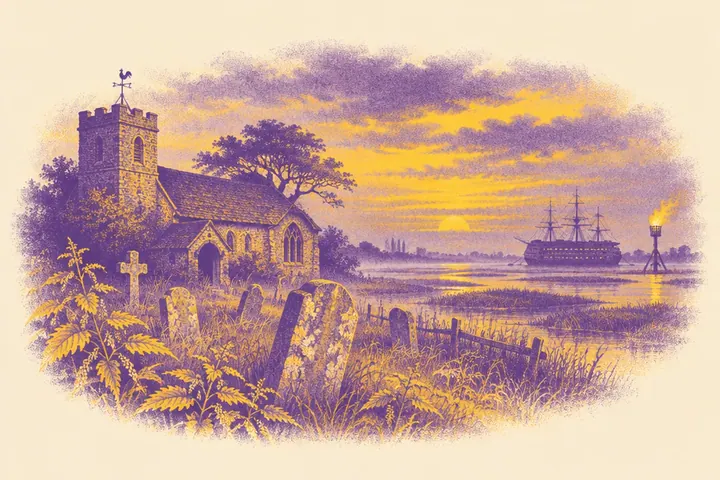
In Charles Dickens’s novel Great Expectations (1861), an orphan called Pip helps an escaped convict, falls in love with the cold Estella and is given money to become a gentleman in London. He grows ashamed of his loving home, then learns that his money comes from the convict, and has to learn what a true gentleman is. It is Section B of AQA GCSE English Literature Paper 1.
Great Expectations is a long novel by Charles Dickens, who was born in Portsmouth in 1812 and died in 1870. It first came out in weekly parts in Dickens’s own magazine, All the Year Round, from 1 December 1860 to 3 August 1861, and then as a book in 1861. Pip tells the story himself, as a grown man looking back.
- 59chapters in the novel, in three stagesProject Gutenberg text
- 36weekly parts in All the Year Round, from December 1860 to August 1861The Victorian Web
- 30marks for the Great Expectations question, with no marks for spelling, punctuation and grammarAQA specification
Dickens divided the novel into three stages. The first ends when Pip leaves for London, and the second when the convict comes back. The exam question prints an extract, then asks about the novel as a whole, so you need the whole story.
Part 1: The convict on the marshes
This part covers Chapters 1 to 6. Pip is a small orphan boy who lives with his bad-tempered older sister, Mrs Joe, and her kind husband, Joe Gargery, the village blacksmith, on the Kent marshes. One cold Christmas Eve he is looking at his parents’ graves in the churchyard when a man in leg-irons grabs him: “Keep still, you little devil, or I’ll cut your throat!” The man is an escaped convict. He scares Pip into bringing him food and a file the next morning.
Terrified, Pip steals bread, cheese, brandy and a pork pie from the pantry, and a file from Joe’s forge. On the misty marsh he first meets a different convict, a younger man with a scar, who runs away. Then he finds his own convict, who eats like a starving dog.
At Christmas dinner, Pip waits in dread for his sister to find the pie missing. Uncle Pumblechook, a pompous corn merchant, bullies him at the table. Just as Mrs Joe goes to fetch the pie, soldiers arrive with handcuffs, hunting the escaped men. Joe and Pip go with them. They find the two convicts fighting in a ditch. Pip’s convict says he stole “some wittles, up at the willage over yonder”, so that Pip will not be blamed. The convicts are taken back to the prison ship. Pip never tells Joe the truth, because he is afraid of losing his good opinion.
Part 2: Satis House
This part covers Chapters 7 to 12. Miss Havisham, a rich, strange lady in the nearby town, asks for a boy to come and play. Pumblechook takes Pip to her house, Satis House. A proud, beautiful girl, Estella, lets him in.
Miss Havisham is “the strangest lady I have ever seen, or shall ever see”. She sits in a dark room in a yellowed wedding dress, with one shoe on. All the clocks have stopped at twenty minutes to nine. Pip sees that “the bride within the bridal dress had withered like the dress”. She makes Pip play cards with Estella, who mocks him: “Why, he is a common laboring boy!” She sneers at his “coarse hands” and “thick boots”. Pip cries and kicks a wall. For the first time he feels ashamed of how he has been brought up.
At the inn one evening a stranger stirs his drink with Joe’s file and gives Pip two one-pound notes. On later visits Pip sees a long table with a rotting wedding cake, covered in spiders. Miss Havisham was jilted on her wedding day and stopped everything at that moment. A pale young gentleman challenges Pip to a fight in the garden and loses. Afterwards Estella lets Pip kiss her cheek. For months Pip pushes Miss Havisham’s chair round the rooms, and she watches him fall for Estella.
Part 3: The forge and the expectations
This part covers Chapters 13 to 19. Miss Havisham pays for Pip to be apprenticed to Joe. Pip should be pleased, but he is miserable. He writes: “It is a most miserable thing to feel ashamed of home.”
Joe’s surly workman, Orlick, hates Pip. One night Pip comes home to find that Mrs Joe has been struck on the back of the head by an unknown attacker. Beside her lies a convict’s leg-iron that has been filed through. She never fully recovers. Biddy, a clever, kind village girl, comes to look after the house. Pip tells Biddy, “I want to be a gentleman on her account”, meaning Estella.
In Pip’s fourth year as an apprentice, a London lawyer, Mr Jaggers, arrives. He says that Pip is “a young fellow of great expectations”. An unnamed person will give him a fortune and pay for him to be educated as a gentleman. Pip must keep the name Pip and must never ask who it is. Pip is sure it is Miss Havisham, who must want him to marry Estella.
Pip buys new clothes and starts to look down on Joe and Biddy. On the morning he leaves, he breaks down in tears once out of the village, and thinks that “we need never be ashamed of our tears”. The first stage ends here.
Part 4: Learning to be a gentleman
This part covers Chapters 20 to 27. Pip arrives in London, a dirty, crowded city. He sees Jaggers at work and meets his clerk, Wemmick. He lodges at Barnard’s Inn with Herbert Pocket, who turns out to be the pale young gentleman he fought. Herbert is cheerful and kind, and he nicknames Pip Handel. Herbert tells him Miss Havisham’s story: a showy man won her heart, took her money and failed to turn up at the wedding. Herbert’s father says a true gentleman is one at heart, since “no varnish can hide the grain of the wood”.
Pip studies with Herbert’s father, Matthew Pocket, in Hammersmith. He meets two other pupils, the friendly Startop and the sulky, rich Bentley Drummle. Wemmick invites Pip to his home in Walworth, a tiny wooden house built like a castle, with a drawbridge and a cannon. He lives there with his deaf old father, the Aged. He is warm at home and dry and hard at work, because “the office is one thing, and private life is another”. Jaggers asks Pip to dinner, where he shows his guests the strong wrists of his housekeeper, Molly.
Joe comes to visit Pip in London. Pip is embarrassed by him, and the meeting goes badly. Joe gently says that “life is made of ever so many partings welded together”, and that they belong in different places. He brings news that Estella is home.
Part 5: Estella and the cost of money
This part covers Chapters 28 to 35. Pip travels home, but he stays at the inn instead of with Joe. At Satis House he finds Estella grown up and more beautiful than ever, and Orlick working there as a porter. Miss Havisham whispers fiercely to him, “Love her, love her, love her!” Estella warns him that she has no heart. Pip gets Orlick dismissed. In the town, Trabb’s boy, a tailor’s lad, follows Pip down the street mocking his fine airs.
Back in London, Pip tells Herbert that he loves Estella, and Herbert admits that he is secretly engaged to a girl called Clara. Wemmick shows Pip round Newgate Prison. Afterwards Pip meets Estella off the coach and feels ashamed of the prison dust on him. He takes her to live in Richmond, where she is to be introduced to society.
Pip and Herbert run up debts and join an expensive dining club. Then a letter tells Pip that Mrs Joe has died. He goes to the funeral and promises Biddy he will visit Joe often.
Part 6: The return of the convict
This part covers Chapters 36 to 39. At twenty-one, Pip is given five hundred pounds a year, but still not his benefactor’s name. He secretly uses some of his money to buy Herbert a partnership in a shipping business, Clarriker’s.
At Satis House, Estella and Miss Havisham quarrel. Miss Havisham accuses her of being cold, and Estella answers, “I am what you have made me.” In London, Drummle courts Estella, and she encourages him.
One stormy night, when Pip is twenty-three and alone in his rooms, a rough, grey-haired man climbs the stairs. It is the convict from the marshes. He is Abel Magwitch, and he was sent to Australia, where he worked hard and grew rich. He is Pip’s secret benefactor: “Yes, Pip, dear boy, I’ve made a gentleman on you!” He explains, “I lived rough, that you should live smooth”. Pip is horrified. Miss Havisham never meant him for Estella. If Magwitch is caught in England, he will be hanged. The second stage ends here.
Part 7: The truth comes out
This part covers Chapters 40 to 51. Pip hides Magwitch under the name Provis, as his uncle. He no longer wants the money, but he will not abandon him. Magwitch tells his story: “In jail and out of jail, in jail and out of jail”. His partner in crime was Compeyson, a swindler who looked like a gentleman. When they were caught, Compeyson got a lighter sentence because of his manners. Herbert realises that Compeyson is the man who jilted Miss Havisham.
Pip goes to Satis House and tells Miss Havisham he knows she let him believe a lie. Estella is to marry Drummle. Pip tells her, “You are part of my existence, part of myself”, and leaves heartbroken. Wemmick warns Pip that his rooms are being watched, so Magwitch is moved to a house by the river where Clara lives. Pip starts rowing on the Thames every day, so that a boat on the river will not look strange when they try to escape.
At another of Jaggers’s dinners, Pip notices that Molly’s hands and eyes are like Estella’s. He works out that Molly is Estella’s mother. Herbert then tells him that Magwitch once had a daughter, who he thought was dead. Estella is Magwitch’s child. Jaggers admits the truth: he took the baby to Miss Havisham, who wanted a girl to adopt.
Pip visits Miss Havisham one last time. She gives him money for Herbert and begs his forgiveness. She admits, “I stole her heart away, and put ice in its place.” As Pip leaves, her dress catches fire. He smothers the flames and burns his hands badly.
Part 8: The river and the forge
This part covers Chapters 52 to 59. A letter lures Pip to a lonely sluice-house on the marshes. Orlick ties him up and plans to kill him. He boasts that he attacked Mrs Joe. Herbert, Startop and Trabb’s boy arrive just in time.
Pip, Herbert and Startop row Magwitch down the Thames to meet a steamer bound abroad. A police boat with Compeyson on board stops them. Magwitch and Compeyson fight in the water. Compeyson drowns. Magwitch is badly injured and captured, and his money is taken by the Crown. Magwitch is sentenced to death but dies in prison first. Pip holds his hand and tells him that his daughter is alive, a lady, and that Pip loves her. Pip prays for him: “O Lord, be merciful to him a sinner!”
Pip falls ill with a fever and is arrested for debt. When he wakes, Joe is nursing him. Joe has paid his debts. Pip whispers, “O God bless this gentle Christian man!” Miss Havisham has died. Pip goes home to ask Biddy to marry him, and arrives on the day she marries Joe. He asks their forgiveness and goes abroad to work with Herbert at Clarriker’s.
Eleven years later Pip returns. Joe and Biddy have a little boy called Pip. Pip visits the ruins of Satis House and meets Estella, now a widow. Drummle treated her cruelly and has died. She says, “I have been bent and broken, but … into a better shape”. They leave the ruined garden hand in hand, and Pip sees “no shadow of another parting from her.”
The main characters
- Pip (Philip Pirrip): the narrator, an orphan who is raised to be a blacksmith and is given money to become a gentleman.
- Joe Gargery: the blacksmith, Pip’s brother-in-law and best friend. He is gentle, loyal and slow with words.
- Mrs Joe Gargery: Pip’s harsh older sister, who brought him up. She is attacked and later dies.
- Abel Magwitch (Provis): the convict Pip helps, who grows rich in Australia and becomes Pip’s secret benefactor. He is Estella’s father.
- Miss Havisham: a rich woman jilted on her wedding day, who stops her clocks and raises Estella to break men’s hearts.
- Estella: Miss Havisham’s adopted daughter, beautiful, proud and cold, whom Pip loves.
- Biddy: a kind, clever village girl who sees Pip clearly. She marries Joe.
- Herbert Pocket: Pip’s cheerful friend in London, who calls him Handel.
- Mr Jaggers: a feared London lawyer who handles Pip’s money and acts for Miss Havisham and Magwitch.
- John Wemmick: Jaggers’s clerk, hard at work and warm at home with his father, the Aged.
- Compeyson: a swindler who looks like a gentleman. He jilted Miss Havisham and led Magwitch into crime.
- Orlick: Joe’s surly workman, who attacks Mrs Joe and tries to kill Pip.
- Bentley Drummle: a rich, sulky young man who marries Estella and treats her cruelly.
The main ideas and context
Class and the gentleman. In Dickens’s time a gentleman usually lived on money from land or investments and did not work with his hands. Pip thinks money and manners will make him one. The novel shows that Joe, the blacksmith, is the truest gentleman in it, and that Compeyson, who looks like one, is a criminal.
Ambition. Pip’s great expectations bring him money and fine clothes, but cost him his home and his honesty with himself. The adult Pip who narrates is ashamed of how he treated Joe and Biddy.
Guilt and conscience. From the stolen pie on Christmas Eve to his snobbery towards Joe, Pip feels guilty all through the novel. He only finds peace when he learns gratitude.
Crime and justice. Old warships called hulks held convicts on the rivers, and many convicts were transported to Australia. Coming back meant death. Compeyson gets a lighter sentence because he looks like a gentleman, while Magwitch is punished harshly. Public hangings took place outside Newgate Prison until 1868.
Love and rejection. Miss Havisham turns her broken heart into a weapon and raises Estella to have no heart at all. Pip loves where he cannot be loved back.
Dickens’s own life. When Dickens was twelve, his father was sent to prison for debt, and Charles had to leave school to work in a factory. He knew what it felt like to be ashamed and to want to rise.
The ending. Dickens first wrote a sadder ending, in which Pip and Estella meet briefly and part. His friend, the novelist Edward Bulwer-Lytton, persuaded him to write a more hopeful one, which is the ending most editions print.
Myths about Great Expectations
Myth Miss Havisham is Pip’s secret benefactor.
What the evidence says
Pip believes this for most of the novel, and Miss Havisham lets him. In Chapter 39 the convict Magwitch reveals that the money is his.
Source: Charles Dickens, Great Expectations (1861), Chapter 39 (Project Gutenberg text)
Myth Estella is Miss Havisham’s real daughter.
What the evidence says
Miss Havisham adopted her. Pip works out in Chapters 48 to 51 that Estella’s mother is Molly, Jaggers’s housekeeper, and her father is Magwitch.
Source: Charles Dickens, Great Expectations (1861), Chapters 48 to 51 (Project Gutenberg text)
Myth The novel ends with a happy wedding.
What the evidence says
The last chapter ends with Pip and Estella leaving the ruins together, but no wedding is described. Dickens’s first ending had them part for good.
Source: Charles Dickens, Great Expectations (1861), Chapter 59 (Project Gutenberg text); Encyclopaedia Britannica
Great Expectations in the exam
Great Expectations is one of the 19th-century novels you can study for Section B of AQA’s Literature Paper 1. Paper 1 lasts 1 hour 45 minutes, and Section A is on your Shakespeare play.
You answer one question. It prints an extract from the novel, then asks you to write about the extract and about the novel as a whole. It is worth 30 marks. There are no marks for spelling, punctuation and grammar in this section. Spend about 50 minutes on it. The exam is closed book, so anything you say about the rest of the novel comes from memory.
What to do next
Learn the quotations on Great Expectations: quotations to learn, and practise with How to answer the extract question. You can read the whole novel free on Project Gutenberg.
Frequently asked questions
How many chapters are there in Great Expectations?
There are 59 chapters, split into three stages. The first stage ends with Chapter 19, the second with Chapter 39 and the third with Chapter 59.
Who narrates Great Expectations?
Pip tells his own story in the first person, as a grown man looking back. The older Pip often judges the younger one, especially for the way he treated Joe.
Who is Pip’s benefactor?
Abel Magwitch, the convict Pip helped on the marshes as a boy. He made his fortune in Australia and paid for Pip to become a gentleman. Pip finds out in Chapter 39.
How does Great Expectations end?
Eleven years after Magwitch’s death, Pip meets Estella in the ruins of Satis House. Both have suffered and changed, and they leave together. Dickens first wrote a sadder ending in which they part.
Is Great Expectations on Paper 1 or Paper 2?
It is on AQA Literature Paper 1, Section B. You get one question on a printed extract and the whole novel, worth 30 marks.
Sources
- Project Gutenberg, Charles Dickens, Great Expectations (ebook 1400)
- Encyclopaedia Britannica, Great Expectations
- Encyclopaedia Britannica, Charles Dickens summary
- The Victorian Web, The serialisation of Great Expectations
- AQA, GCSE English Literature 8702 specification