
Knowledge hub › For students › Kamikaze
Kamikaze by Beatrice Garland: GCSE poem guide
A Japanese pilot sent to die turns back, and comes home to a family who act as if he no longer exists. What happens, how Garland tells it, and which poems to compare it with.
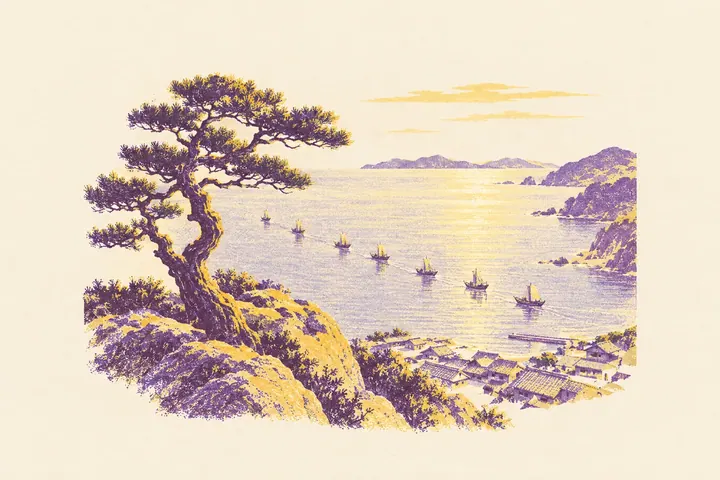
‘Kamikaze’ is by Beatrice Garland. It is one of the fifteen poems in AQA’s Power and Conflict cluster, and it is still in copyright, so we quote only short phrases here. Read the whole poem in your anthology.
In the Second World War, Japanese pilots were sent on kamikaze missions, in which each pilot was meant to die by crashing his plane into an enemy ship. The pilot in this poem turns back. The story comes to us through his daughter, who told it years later to her own children, and it is a story about the price he paid for choosing to live.
Read the transcript
This is ‘Kamikaze’ by Beatrice Garland, from the Power and Conflict cluster of the AQA anthology. I’m Hannah, and I teach English. The question we’ll answer: How does every part of ‘Kamikaze’ show a pilot caught between his duty and his love of life? We’ll go through the context, the poem section by section, one quotation explored closely and a model paragraph. First, the context.
Kamikaze pilots. In the Second World War, Japanese pilots were sent on kamikaze missions, in which each pilot was meant to die in the attack on an enemy ship. Honour and disgrace. Kamikaze pilots were honoured as heroes in Japan. A pilot who returned alive could be treated as a disgrace by the people around him.
Garland’s pilot. In Beatrice Garland’s ‘Kamikaze’ (2013), a pilot turns back. His family and neighbours then treat him as though he does not exist. Told years later. His daughter tells the story to her own children long after the war, weighing his survival against the silence he lived in.
‘Kamikaze’ is still in copyright, so I won’t read it here. Open your anthology at the poem and read it twice: once for what happens, once for who is speaking and what changes. Lines 1 to 6: The pilot sets out. “a samurai sword”. The samurai were Japan’s old warrior class, with a strict code of honour.
The sword ties the mission to that tradition of dying for duty. “full of powerful incantations”. The noun “incantations” suggests chants or spells. His head has been filled with words from outside, as if his thoughts are not fully his own. “journey into history”.
He carries only enough fuel to fly one way. The reader sees that he is expected to die and be remembered, and the plan leaves him no way home. Lines 7 to 18: The sea below. “recounting it later to her children”. A frame narrative: his daughter tells the story years later, and line 7 makes clear she is only imagining what he saw.
“strung out like bunting”. A simile: the fishing boats look like flags at a celebration. Life below seems bright and joyful, pulling him away from death. “like a huge flag”. The shoals of fish move together like a national flag, yet one waved first one way and then the other, perhaps his own mind turning.
“flashing silver”. Bright colour and movement fill these stanzas. The reader feels the beauty of the living world, which makes his mission of death harder to accept. “like a huge flag”. A flag stands for the nation he is meant to die for.
Garland lets nature make its own flag, so loyalty to Japan meets love of the sea he grew up beside. Lines 19 to 30: Memories of childhood. “built cairns of pearl-grey pebbles”. He remembers waiting on the shore with his brothers for their father’s boat. Memories of family, and of safe return, start to pull him home.
“yes, grandfather’s boat”. Dashes break into the line as the daughter’s own voice interrupts. The word safe, repeated before and after this phrase, stresses the idea of coming home alive. “the dark prince, muscular, dangerous”. Personification makes the tuna a royal, threatening figure.
The list of the catch is full of life, and this full stop ends a single sentence of thirty lines. “the dark prince, muscular, dangerous”. The long, flowing sentence follows his thoughts away from the mission. Garland suggests that family life and nature, more than duty to the nation, decide his choice. And lines 31 to 42.
“my mother never spoke again”. The voice shifts into the first person: the daughter now speaks for herself. The adverb “never” makes his wife’s silence total and lasting. “as though he no longer existed”. A pilot who returned could be treated as a disgrace in wartime Japan.
The neighbours act as if he had died on the mission, the death expected of him. “as though he no longer existed”. Only the children still laugh with him at first, until they learn the silence too. The reader feels the loss spread through the whole family. “the better way to die”.
The ending is ambiguous: he survived the mission, yet his life became a kind of death. The reader is left asking whether choosing to live was worth the cost. So, to sum it up in one sentence: Garland shows a pilot drawn back to life by the beauty of the sea and memories of home, then shut out by a family and a society that saw survival as disgrace, so we pity him and question that idea of honour. One quotation, explored closely: “as though he no longer existed”. Try it yourself first: method, zoom in, effect, and the context or purpose.
Method: A simile in the daughter’s account of how the neighbours treated her father. Zoom in: “existed” goes further than ignored. The pilot is alive, yet the people around him act as if he has gone. Effect: The father becomes a ghost in his own home. The reader feels how lonely his life is after he chose to live.
Context: Kamikaze pilots were seen as heroes in Japan, and a pilot who returned could be treated as a disgrace. The community punishes him with silence. And here’s a model What–How–Why paragraph for the question: How does Garland present the cost of the pilot’s choice to turn back? Garland presents the pilot’s choice to live as one that costs him his place in his own family. The neighbours treated him “as though he no longer existed”.
The simile makes him a ghost in his own home: alive, yet unseen. The daughter’s own voice then admits that the children learned silence too, until he “was no longer the father we loved”. The repetition of “no longer” shows the family shutting him out step by step. In Japan kamikaze pilots were seen as heroes, and a pilot who returned could be treated as a disgrace. The final line, “which had been the better way to die”, makes the reader see the family’s silence as a second, slower death, and question the idea of honour that caused it.
Everything in this video comes from our Power and Conflict poetry scheme of learning for schools. If you’re a teacher, Lesson 3 of every scheme is free at btl.education. If this helped, give the video a like and subscribe, so the next poem turns up in your feed. There’s another video on screen now to watch next. Thank you for watching.
What happens
The poem has seven stanzas, and the pilot never speaks. A narrator retells what the pilot’s daughter told her own children, so most of the poem is in the third person, and much of it is what the daughter imagines her father saw and felt.
The pilot sets off at sunrise with a samurai sword and only enough fuel to fly one way. His head is full of the words he has been taught about duty and honour.
Halfway there, he looks down at the sea. The fishing boats below look like strings of bunting at a celebration. The water is clear and green-blue, and shoals of fish flash silver as they turn. He remembers his childhood by the shore, waiting with his brothers for their father’s boat to come home safely. The memories are full of light, colour and life.
Then he turns back. The poem never tells us exactly why.
In the last two stanzas the daughter’s own words come through, in the first person. Her mother never spoke to him again or looked him in the eye. The neighbours treated him as though he had never come back. At first the children still talked and laughed with him, but they learned to be silent too. The poem ends with the narrator reporting that her father must have wondered which was the better way to die: the death he turned away from, or the long silence he came home to.
The main ideas
Honour and duty. The pilot is expected to die for his country. Garland questions an idea of honour that asks a person to throw away his life.
The pull of life. The sea, the fish and his memories of family draw him back towards living. Nature and childhood win over the mission.
Rejection and silence. Coming home costs him everything. His family and community punish him by acting as though he does not exist, which is a kind of death too.
Family and memory. The story passes down three generations: the pilot, his daughter and her children. It shows how a choice made in war shapes a family for years.
Language, form and structure
Symbol of tradition. The pilot carries “a samurai sword”. The samurai were Japan’s old warrior class, with a strict code of honour. The word samurai ties his mission to that tradition of dying for duty.
Metaphor. The mission is a “journey into history”. The word history shows that he is expected to die and be remembered as a hero. The plan leaves no way home.
Simile. The fishing boats are “strung out like bunting”. Bunting is a string of small flags hung up for a party. The word bunting makes life below look bright and joyful, pulling him away from death.
Colour imagery. The sea is “a green-blue translucent sea”. Translucent means letting light through. The word makes the water clear and beautiful, and the reader feels the beauty of the living world he is about to leave.
Change of voice. Near the end the daughter speaks in the first person: “my mother never spoke again”. The word never makes his wife’s silence total and lasting.
Simile. The neighbours treated him “as though he no longer existed”. The word existed goes further than ignored. He is alive, yet everyone around him acts as if he died on the mission.
The ending. The last line wonders which had been “the better way to die”. The word die is a shock: he survived. The line suggests that his life after the war was a slow death, and leaves the reader to decide.
Form and structure. The poem has seven six-line stanzas with no regular rhyme. It is a frame narrative: a story told inside another story, so we only hear the pilot through his daughter. The first part of the poem is one long sentence that flows across the stanzas, following his thoughts away from the mission and back towards home. The ending is open.
Context
Kamikaze means divine wind in Japanese. The name recalls a typhoon that scattered a Mongol fleet invading Japan in 1281. Kamikaze attacks were used by Japan from October 1944 until the end of the Second World War in 1945. Each pilot was expected to give his life for his country.
In the poem, his family and neighbours treat his return as a disgrace. They do not hurt him or punish him by law. They punish him with silence, which is the community’s own kind of power.
Poems to compare it with
The Emigrée. Both poems show people cut off from the home they knew. The émigrée is shut out by borders; the pilot is shut out by his own family. Both use bright images of a place to show what has been lost.
Poppies. Both show war through a family, and both are full of silence. In ‘Poppies’ love is held back; in ‘Kamikaze’ silence is used as a punishment.
Bayonet Charge. Both soldiers lose faith in the ideals that sent them to fight, and both see nature in the middle of battle: a suffering hare, a beautiful sea.
For how to plan the comparison, read How to compare two poems.
Lines to learn
- “journey into history” (the narrator, stanza 1). He is sent to die and be remembered as a hero.
- “strung out like bunting” (the narrator, the middle). Life below looks bright and joyful.
- “a green-blue translucent sea” (the narrator, the middle). The beauty of the living world draws him back.
- “my mother never spoke again” (the daughter, the ending). The daughter’s own voice, and her mother’s lasting silence.
- “as though he no longer existed” (the daughter, the ending). The neighbours act as if he died on the mission.
- “the better way to die” (the narrator, stanza 7). The open last line.
Test yourself
6 quotations from this page. For each one, choose who says it and where it comes from. Ten at a time, in a new order every round.
Who says it, and where? Open each quotation to check your answer.
“journey into history”
The narrator, stanza 1
“strung out like bunting”
The narrator, the middle
“a green-blue translucent sea”
The narrator, the middle
“my mother never spoke again”
The daughter, the ending
“as though he no longer existed”
The daughter, the ending
“the better way to die”
The narrator, stanza 7
Myths about Kamikaze
Myth The pilot tells his own story.
What the evidence says
He never speaks. A narrator retells the story his daughter told her own children years later, and much of the flight is what she imagines he saw.
Source: Beatrice Garland, Kamikaze
Myth His family were glad he came home.
What the evidence says
His wife never spoke to him again, the neighbours ignored him, and in the end his children learned to be silent too. The poem shows his survival as a disgrace in their eyes.
Source: Beatrice Garland, Kamikaze
Frequently asked questions
What is Kamikaze by Beatrice Garland about?
A Japanese pilot in the Second World War is sent on a kamikaze mission, meant to die in the attack. Halfway there, the beauty of the sea and memories of his childhood make him turn back. At home his family and neighbours treat him as though he no longer exists.
Who is the speaker in Kamikaze?
A narrator retells the story that the pilot’s daughter told her own children years later, so most of it is in the third person. Near the end the daughter’s own words come through, about her mother and the family’s silence.
Why does the pilot turn back in Kamikaze?
The poem never says exactly. It suggests that the beauty of the sea and his memories of family and home draw him back towards life. Treat these as suggestions, not proof.
What does the ending of Kamikaze mean?
The last line says the pilot must have wondered which was the better way to die. He survived the mission, yet his life at home became a kind of death, because the people he loved shut him out. The reader is left to decide.
What poem goes well with Kamikaze?
‘The Emigrée’ is a strong partner for people cut off from home. ‘Poppies’ works for family and silence, and ‘Bayonet Charge’ for a soldier who loses faith in his ideals.
Sources
- AQA, GCSE English Literature 8702 specification (Paper 2, Section B)
- Encyclopaedia Britannica, Kamikaze