Knowledge hub › For students › Tissue
Tissue by Imtiaz Dharker: GCSE poem guide
A poem with no story: one long thought about paper that grows from a family book to buildings, maps and, at last, human skin. How it moves, how Dharker does it, and what to compare it with.
‘Tissue’ is by Imtiaz Dharker. It was published in 2006 in her collection The Terrorist at My Table. It is one of the fifteen poems in AQA’s Power and Conflict cluster, and it is still in copyright, so we quote only short phrases here. Read the whole poem in your anthology.
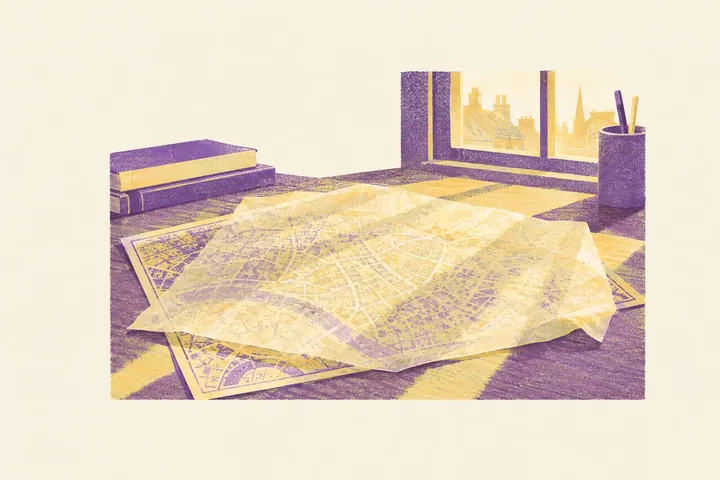
Most poems in the cluster tell a story. ‘Tissue’ does not. A speaker thinks aloud about paper: how thin it is, how it lets light through, and how much of our lives is written on it. Step by step, the thought grows until paper stands for everything people build, including power, and then for people themselves.
Read the transcript
This is ‘Tissue’ by Imtiaz Dharker, from the Power and Conflict cluster of the AQA anthology. I’m Hannah, and I teach English. The question we’ll answer: How does every part of ’Tissue’ show that what people build is as thin as paper? We’ll go through the context, the poem section by section, one quotation explored closely, a model paragraph and the quotations to learn. First, the context.
Imtiaz Dharker. Dharker was born in Pakistan and grew up in Glasgow. She is a poet, an artist and a film- maker. The collection. ’Tissue’ was published in 2006 in a collection called The Terrorist at My Table.
A poem about paper. The poem is about paper: maps, receipts, holy books, even buildings. Paper is thin and lets the light through. Fragile borders. Dharker suggests that the things people build, including borders, are just as fragile as paper, and that this may be no bad thing.
‘Tissue’ is still in copyright, so I won’t read it here. Open your anthology at the poem and read it twice: once for what happens, once for who is speaking and what changes. Lines 1 to 12: Paper people keep. “Paper that lets the light”. The poem opens on the noun paper and on light.
Thinness sounds like a gift, because light can pass through, and that idea grows through the whole poem. “what could alter things”. A quiet, bold claim: something as weak as paper might change the world. The reader is asked to rethink what strength means. “the back of the Koran”.
Dharker, born in Pakistan, chooses the holy book of Islam, where a family has written who was born and who died. Faith and family history sit on fragile pages. “smoothed and stroked”. A list of tender verbs joined by and. The pages have turned see-through from love and use: attention, over many years, has worn them thin.
Lines 13 to 16: If buildings were paper. “If buildings were paper”. A conditional clause shifts the poem from real paper to imagined paper. The extended metaphor now reaches the solid things people build. “fall away on a sigh”.
Buildings collapse as gently as a breath. The image is calm, almost peaceful, so the reader sees how easily human structures could go. “If buildings were paper”. The booklet says Dharker sees the things people build as fragile. Here even buildings, made to look permanent, drift and shift in the wind like paper.
Lines 17 to 24: Maps and receipts. “their borderlines”. People in power draw borders on maps. Dharker, born in Pakistan and raised in Glasgow, lets the sun shine through them, so borders look thin and open to change. “their borderlines”.
A list follows: rivers, roads, railtracks and mountainfolds. Natural marks sit beside human ones, and on paper every line looks equally thin. “fly our lives like paper kites”. Shop receipts and credit card slips seem to steer us. The simile makes people the kites, pulled about by small pieces of paper.
Lines 25 to 32: The architect’s design. “build again with brick”. Brick is heavy and solid, the opposite of paper. Enjambment carries the sentence across the stanza break, as if the walls themselves are giving way. “build again with brick”.
The architect is a hopeful figure, someone who could build differently. The reader is invited to imagine a world built from light and layers of paper. “the shapes that pride can make”. The abstract noun “pride” names the feeling behind grand buildings. Daylight breaking through them suggests that pride is thin too.
“the shapes that pride can make”. In the booklet, Dharker suggests that what people build to last is fragile. Huge buildings made from pride are shown as no stronger than borders on a map. And lines 33 to 37. “with living tissue”.
A pun on the title: tissue paper and the tissue of the body. The extended metaphor turns from paper to human life, a structure not built to last. “paper smoothed and stroked”. Repetition of line 11. The tender verbs that wore the family’s holy book thin now describe a person, linking those family records to living people.
“turned into your skin”. A single-line final stanza. Set apart, it lands with weight, and the possessive pronoun “your” speaks straight to the reader. “turned into your skin”. We are the paper: fragile, short-lived and precious.
The ending sounds calm, and the reader is asked to value people above what pride builds. So, to sum it up in one sentence: Dharker builds an extended metaphor of paper, from family records to maps, buildings and at last human skin, to show that what people build from pride is fragile and that thin, light-filled lives are worth more. One quotation, explored closely: “the shapes that pride can make”. Try it yourself first: method, zoom in, effect, and the context or purpose. Method: Abstract noun.
Dharker names the feeling that drives people to build, not the buildings themselves. Zoom in: “pride” suggests that huge buildings show off their makers. They are built to say: look how strong we are. Effect: The reader starts to doubt solid buildings. Something made from pride can fall, just as paper can.
Purpose: Dharker wants the reader to value what is fragile and open. She questions human power that tries to look permanent. And here’s a model What–How–Why paragraph for the question: How does Dharker show that the things people build are less permanent than they think? Dharker shows that the things people build to look strong are as fragile as paper, and she asks the reader to value that fragility. The extended metaphor grows from books and maps to buildings: “If buildings were paper”, they would fall in the wind.
Later the poem names “the shapes that pride can make”. The boastful abstract noun “pride” suggests that tall buildings show off their builders’ power. The architect then builds a structure “never meant to last”, so the poem praises what most builders fear. Dharker ends with a single line, “turned into your skin”, which turns all the paper into a human body. The reader is left feeling that people and their power are short-lived, and that the light that shines through us matters more than walls or borders.
The quotations from ‘Tissue’ worth learning by heart. “Paper that lets the light / shine through”. The opening metaphor: fragile things can be beautiful and honest. Everything in this video comes from our Power and Conflict poetry scheme of learning for schools. If you’re a teacher, Lesson 3 of every scheme is free at btl.education.
If this helped, give the video a like and subscribe, so the next poem turns up in your feed. There’s another video on screen now to watch next. Thank you for watching.
What happens
The poem moves through a series of ideas, each growing out of the one before.
It opens with paper that is thin enough to let light shine through. That thinness sounds like a gift. The speaker suggests that something as fragile as paper could change things.
Next comes paper that people keep. Old books are worn thin by years of handling. In the back of a family Koran, someone has written down who was born and who died, so a family’s history sits on fragile pages.
Then the speaker imagines buildings made of paper. They would shift and fall in the wind, gently, as if on a breath.
Maps come next. The sun shines through them, and the borders drawn on them look thin. Then come shop receipts and credit card slips, which seem to steer our lives, as if we were kites on strings.
Later stanzas imagine an architect who could build with light and layers of paper, and who would never want to build with brick again. Daylight would break through the grand shapes that people’s pride makes.
The poem ends with a single line on its own, which turns all the paper into human skin.
The main ideas
Human power is fragile. Buildings, borders and money look solid and permanent. Dharker suggests they are as thin as paper, and that this may be no bad thing.
Borders are made by people. On a map, a border is a line someone drew. Light shines straight through it.
What matters is human life. The poem ends on skin. People are fragile and short-lived, and that makes them precious.
Openness against pride. Thin paper lets light in. Solid buildings made from pride shut it out. The poem prefers the first.
Language, form and structure
Opening image. The poem begins “Paper that lets the light”. The word light is the important one. From the first line, thinness lets something good through, and light comes back again and again.
Religious and family history. The speaker describes “the back of the Koran”, where a family has recorded births and deaths. The word Koran, the holy book of Islam, joins faith and family on the same fragile pages.
Conditional clause. “If buildings were paper” moves the poem from real paper to imagined paper. The word if opens up a different world, where even buildings can move and fall.
Simile. Receipts “fly our lives like paper kites”. The word fly makes people the kites, pulled about by small pieces of paper. Dharker asks who is really in control.
Abstract noun. The speaker names “the shapes that pride can make”. The word pride names the feeling behind huge buildings: they are built to show off strength. If daylight can break through them, pride is thin too.
Extended metaphor. The whole poem is one extended metaphor of paper. The architect builds a structure “never meant to last”, so the poem praises what most builders fear.
The pun in the title. Tissue means thin paper, and it also means living tissue, the material bodies are made of. The ending brings the two meanings together.
Form and structure. The poem is free verse, in four-line stanzas, with no regular rhyme. Sentences often run across the gaps between stanzas, so the poem has no solid walls, like the structures it describes. The last stanza is a single line, “turned into your skin”. Set apart, it lands with weight, and the pronoun your speaks straight to the reader.
Context
Imtiaz Dharker grew up in Glasgow in a family from Lahore, in Pakistan. She is a poet, an artist and a film-maker.
The poem’s list of paper things (holy books, maps, receipts, buildings) moves from the private to the political. Dharker does not name a country or a conflict. She asks the reader to think about all the things people build to show power, from cities to borders, and to see how fragile they are.
Poems to compare it with
Ozymandias. Both poems show that human power does not last. Shelley shows a king’s statue broken by time; Dharker shows buildings and borders as thin as paper.
The Emigrée. Both poems question borders. In ‘The Emigrée’ borders keep the speaker from her city; in ‘Tissue’ the sun shines through them as if they barely exist.
Checking Out Me History. Both are about who writes things down. Agard’s speaker attacks a written history that left his heroes out; Dharker’s family writes its own history in the back of a holy book.
For how to plan the comparison, read How to compare two poems.
Lines to learn
- “Paper that lets the light” (the speaker, stanza 1). The opening: thin paper lets light through.
- “If buildings were paper” (the speaker, stanza 4). The poem moves from real paper to the things people build.
- “fly our lives like paper kites” (the speaker, the middle). Small bits of paper steer our lives.
- “the shapes that pride can make” (the speaker, the ending). Grand buildings made from pride, and just as fragile.
- “turned into your skin” (the speaker, stanza 10). The single-line ending: the paper becomes a human body.
Test yourself
5 quotations from this page. For each one, choose who says it and where it comes from. Ten at a time, in a new order every round.
Where is it? Open each quotation to check your answer.
“Paper that lets the light”
The speaker, stanza 1
“If buildings were paper”
The speaker, stanza 4
“fly our lives like paper kites”
The speaker, the middle
“the shapes that pride can make”
The speaker, the ending
“turned into your skin”
The speaker, stanza 10
Frequently asked questions
What is Tissue by Imtiaz Dharker about?
The speaker thinks about paper: old books, a family record in a Koran, maps, receipts and imagined paper buildings. Paper is thin and lets light through. Dharker suggests that the things people build to show power are just as fragile, and the poem ends by turning the paper into human skin.
What does the title Tissue mean?
It is a pun. Tissue is very thin paper, and it is also living tissue, the material that bodies are made of. The poem moves from the first meaning to the second.
Why does Tissue end with a single line?
The last stanza is one line on its own, so it stands out. It turns all the paper in the poem into human skin and speaks directly to the reader as you.
Is Tissue about power?
Yes. Buildings, borders and money are all forms of human power, and the poem shows them as thin and fragile. That is why it pairs well with ‘Ozymandias’.
What poem can I compare Tissue with?
‘Ozymandias’ is a strong partner for power that does not last. ‘The Emigrée’ works for borders, and ‘Checking Out Me History’ for who writes history down.
Sources
- AQA, GCSE English Literature 8702 specification (Paper 2, Section B)
- Bloodaxe Books, Imtiaz Dharker (The Terrorist at My Table, 2006; grew up in Glasgow; poet, artist and film-maker)