

Teachers › Key Stage 3 › Year 9 › Gothic novel: Dracula
Gothic novel: Dracula
Key Stage 3 · Year 9 scheme of learning · Autumn 1 in our Year 9 plan
A half-term scheme of learning for Year 9: 14 one-hour lessons across about six weeks, built around one big question: what makes Dracula so frightening, and how do ordinary people stand against him? Every lesson has slides, teacher notes and a student booklet with three levels of support.
Bram Stoker, 1897. Every extract is printed in the booklets, so no class set of books is needed.
Three levels of support · a checkpoint in Lesson 7 with whole-class feedback · an end-of-unit assessment in Lesson 13, placed in five bands
Real pages from the scheme
Choose a page to see it larger. Lesson 6 is free: we email the full editable lesson.
 Teacher handbookCover
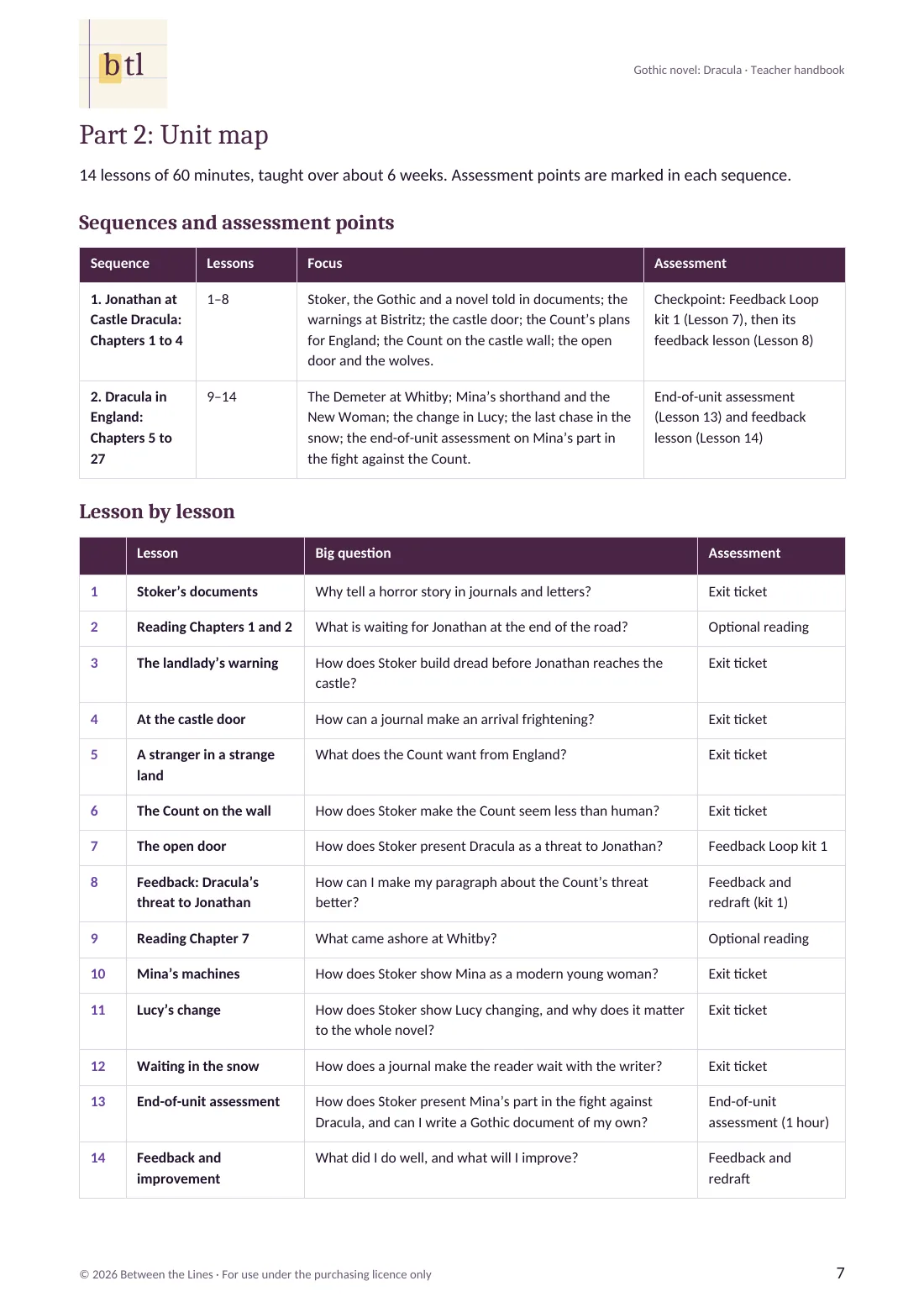 Lesson notesLesson 6 in the teacher handbook
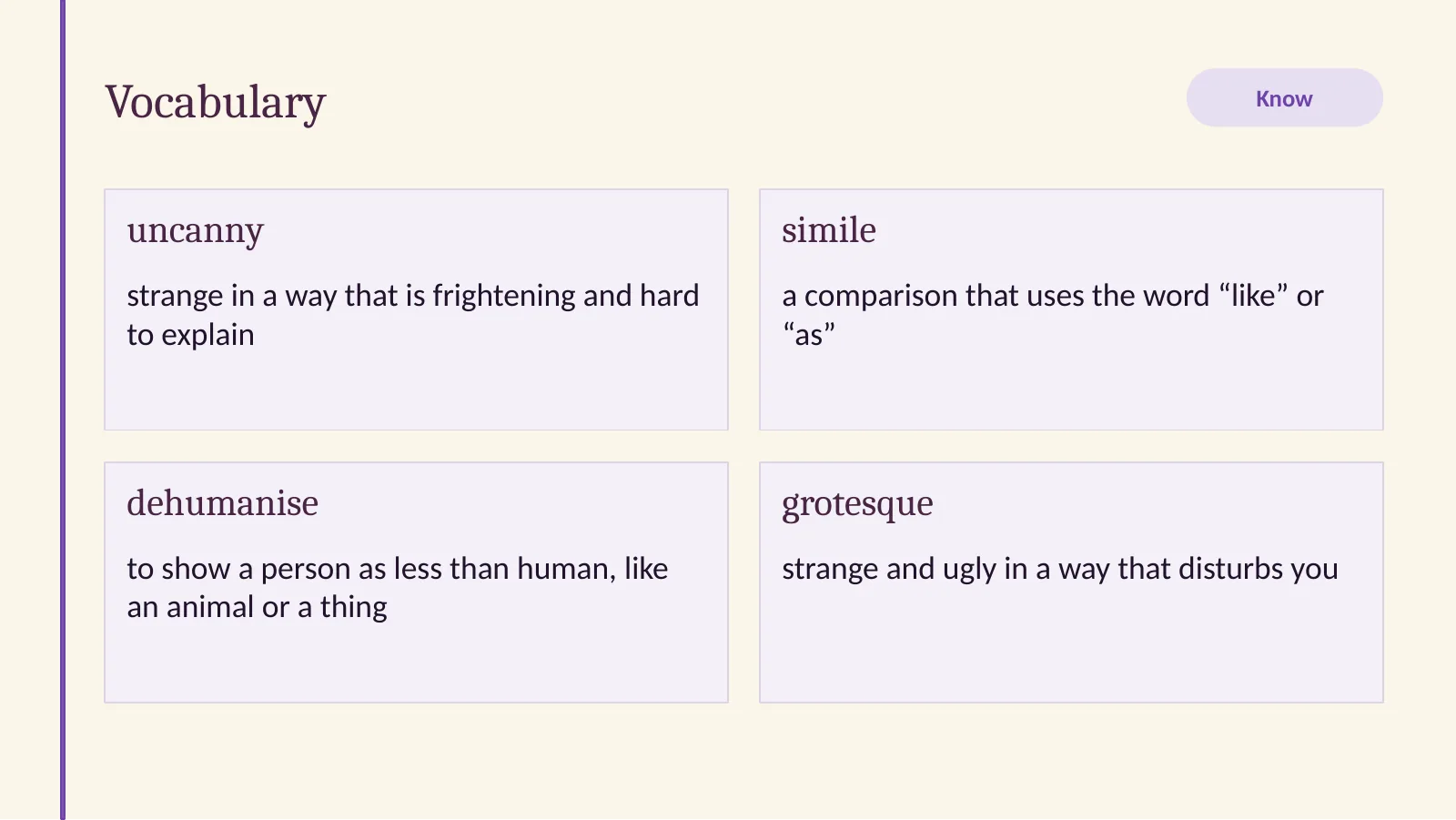 SlidesLesson 6: The Count on the wall
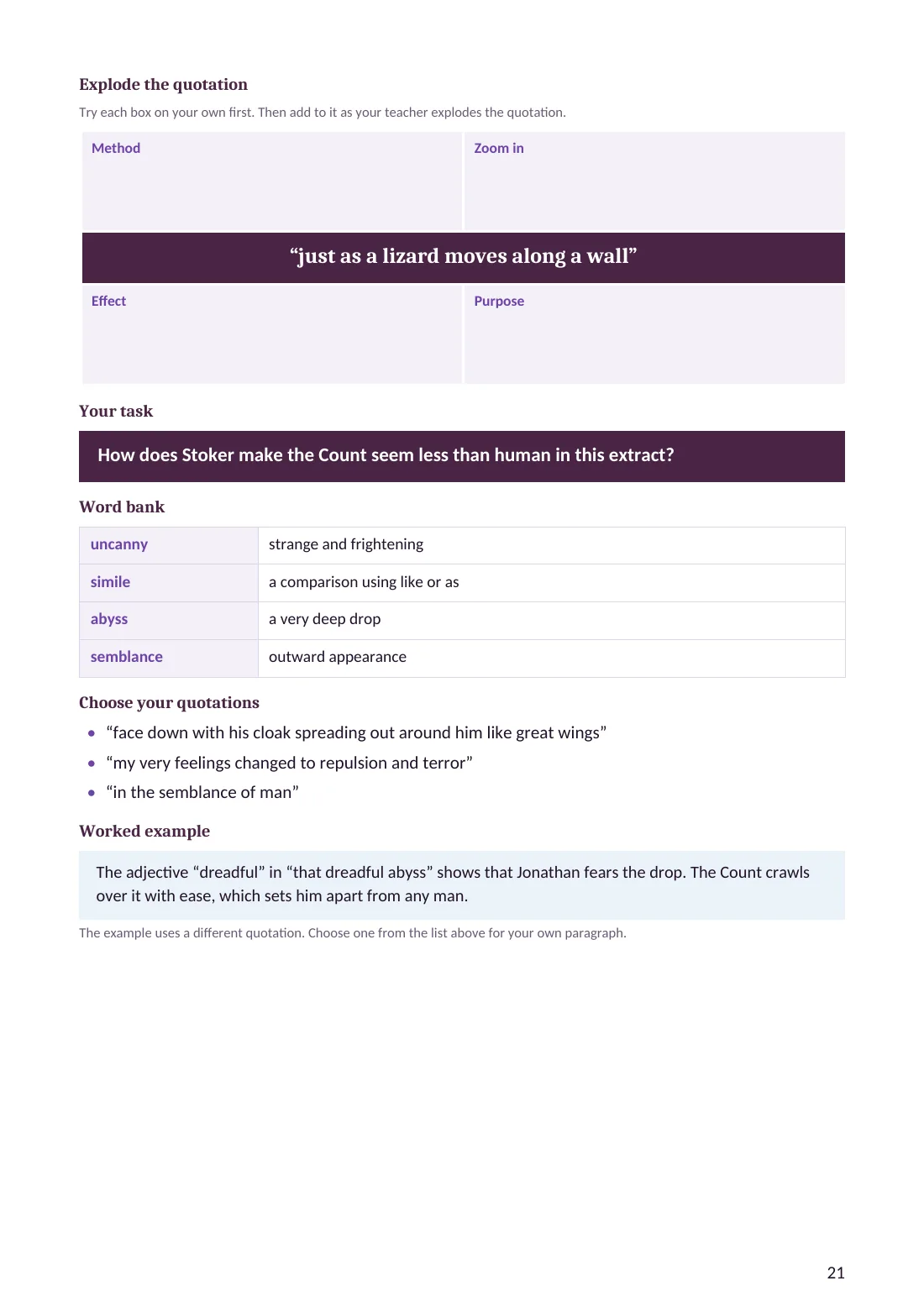 SecuringLesson 6 in the Securing student pack
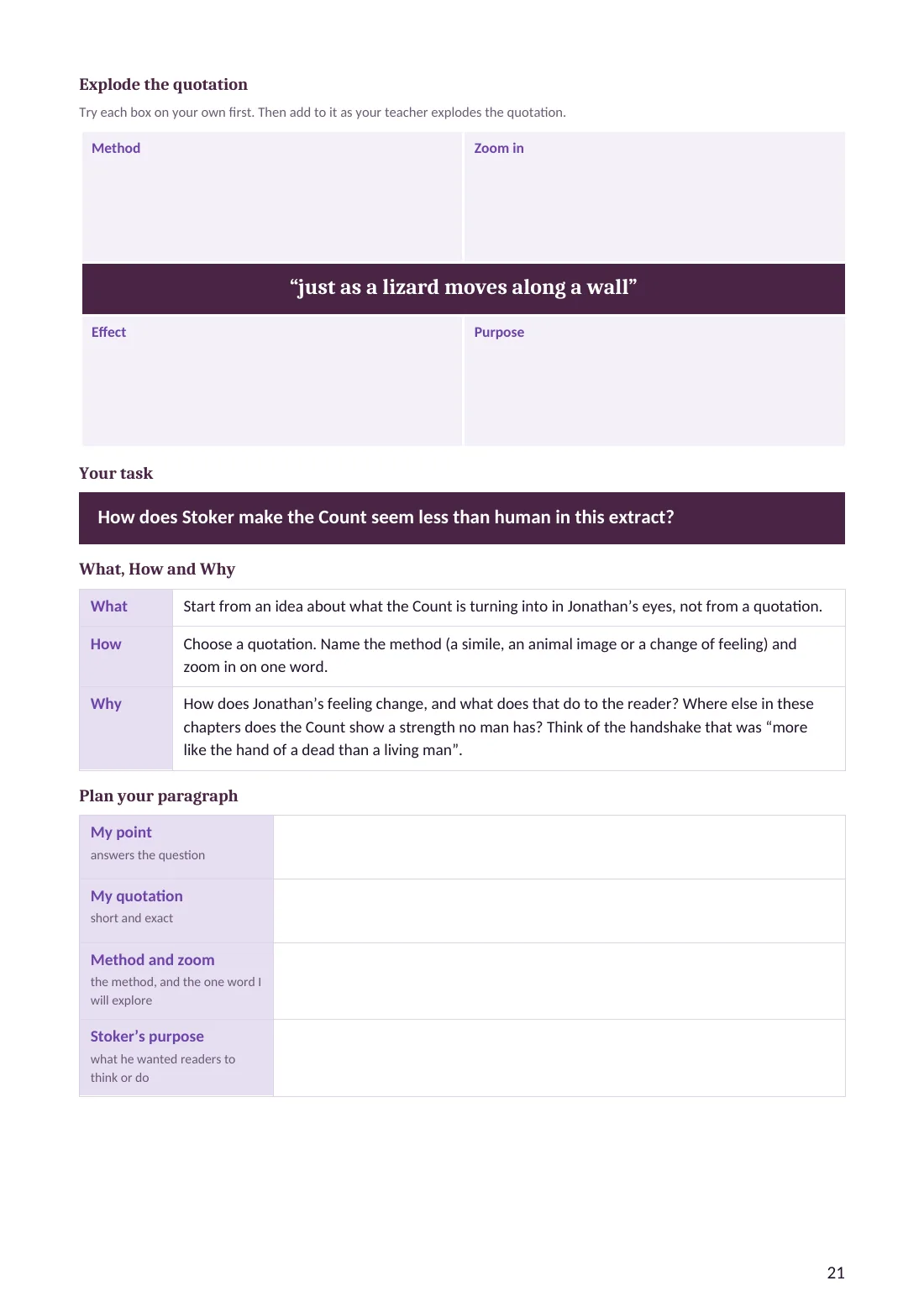 StrengtheningLesson 6 in the Strengthening student pack
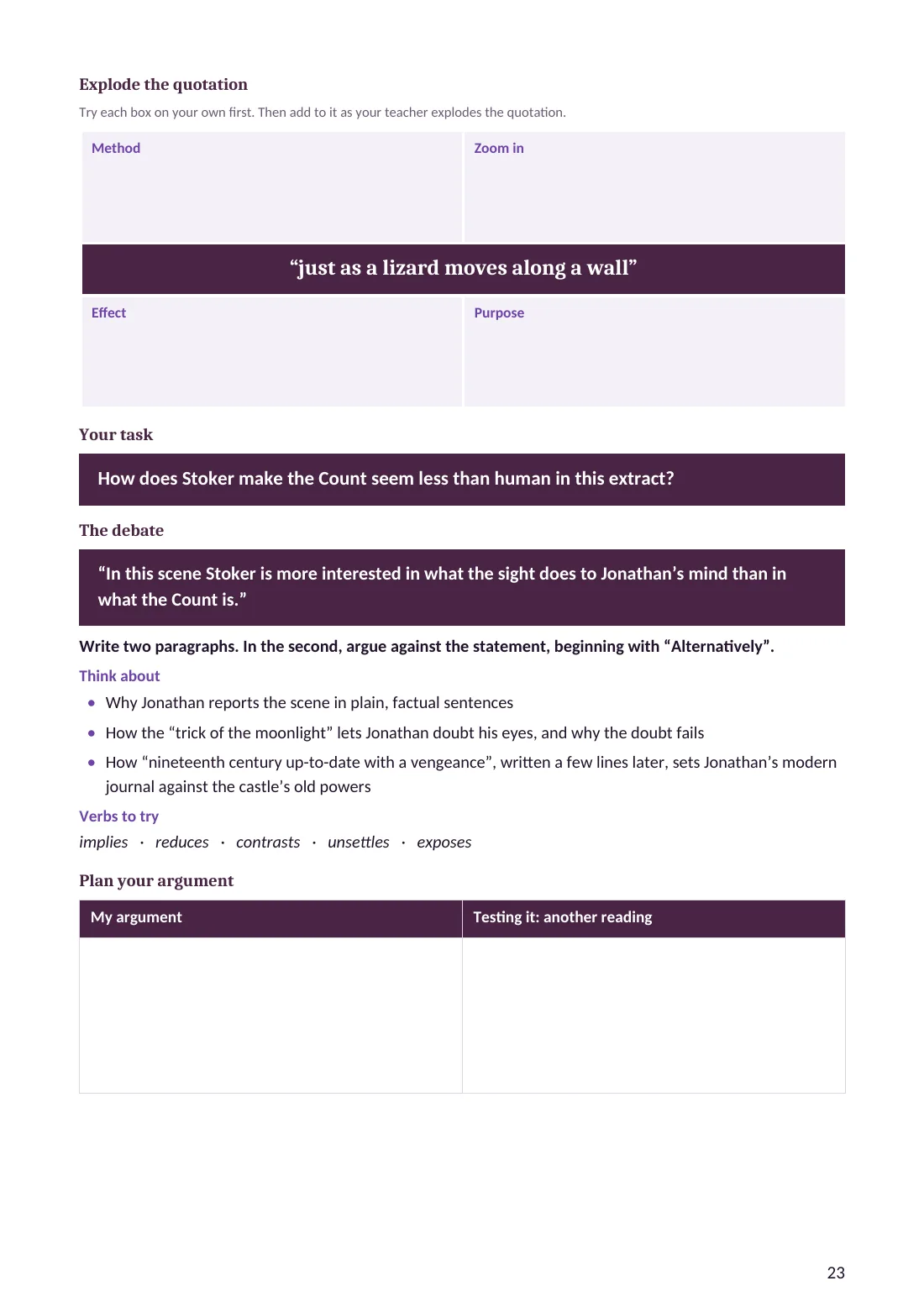 SoaringLesson 6 in the Soaring student pack
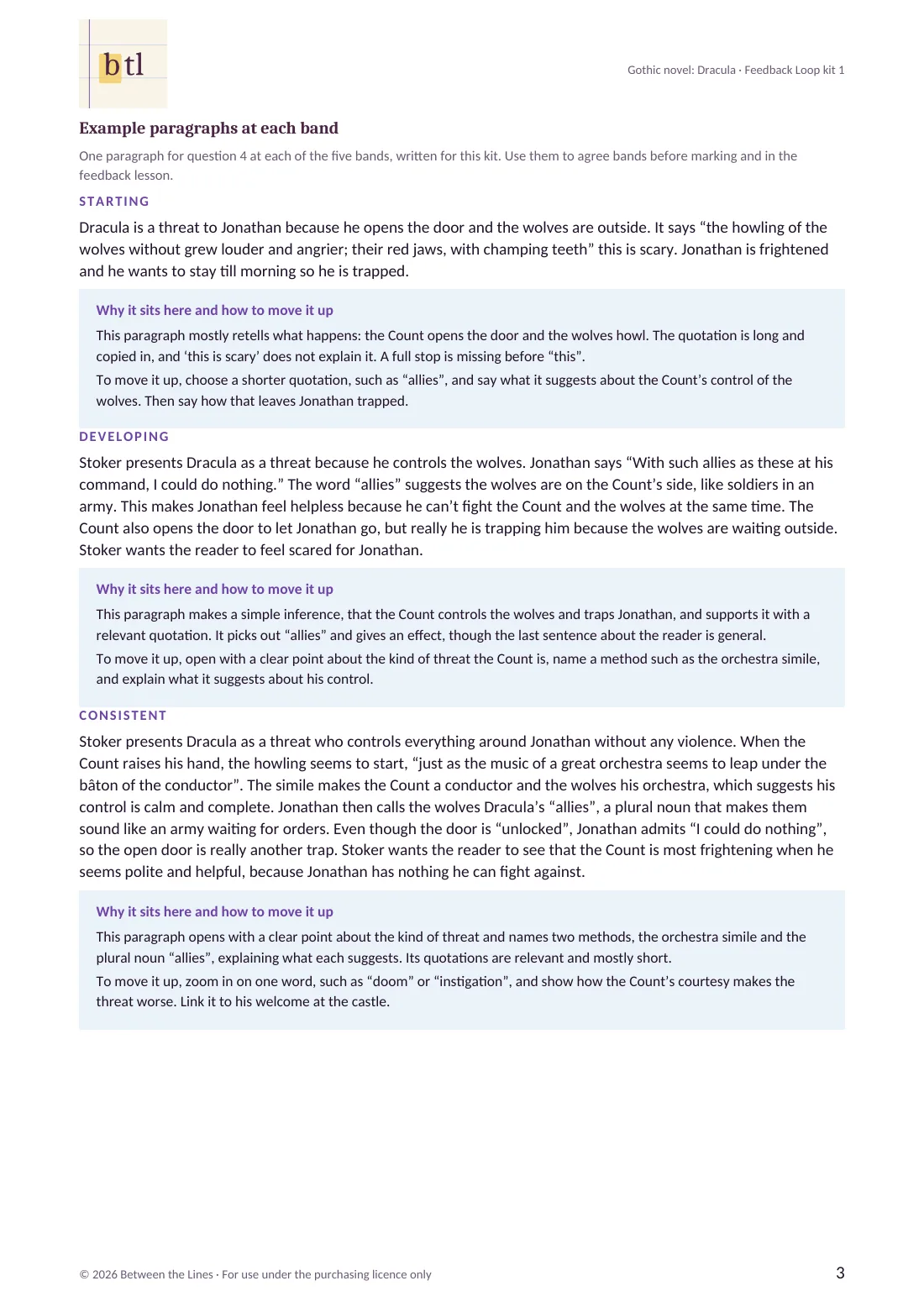 Feedback Loop kitThe checkpoint in Lesson 7
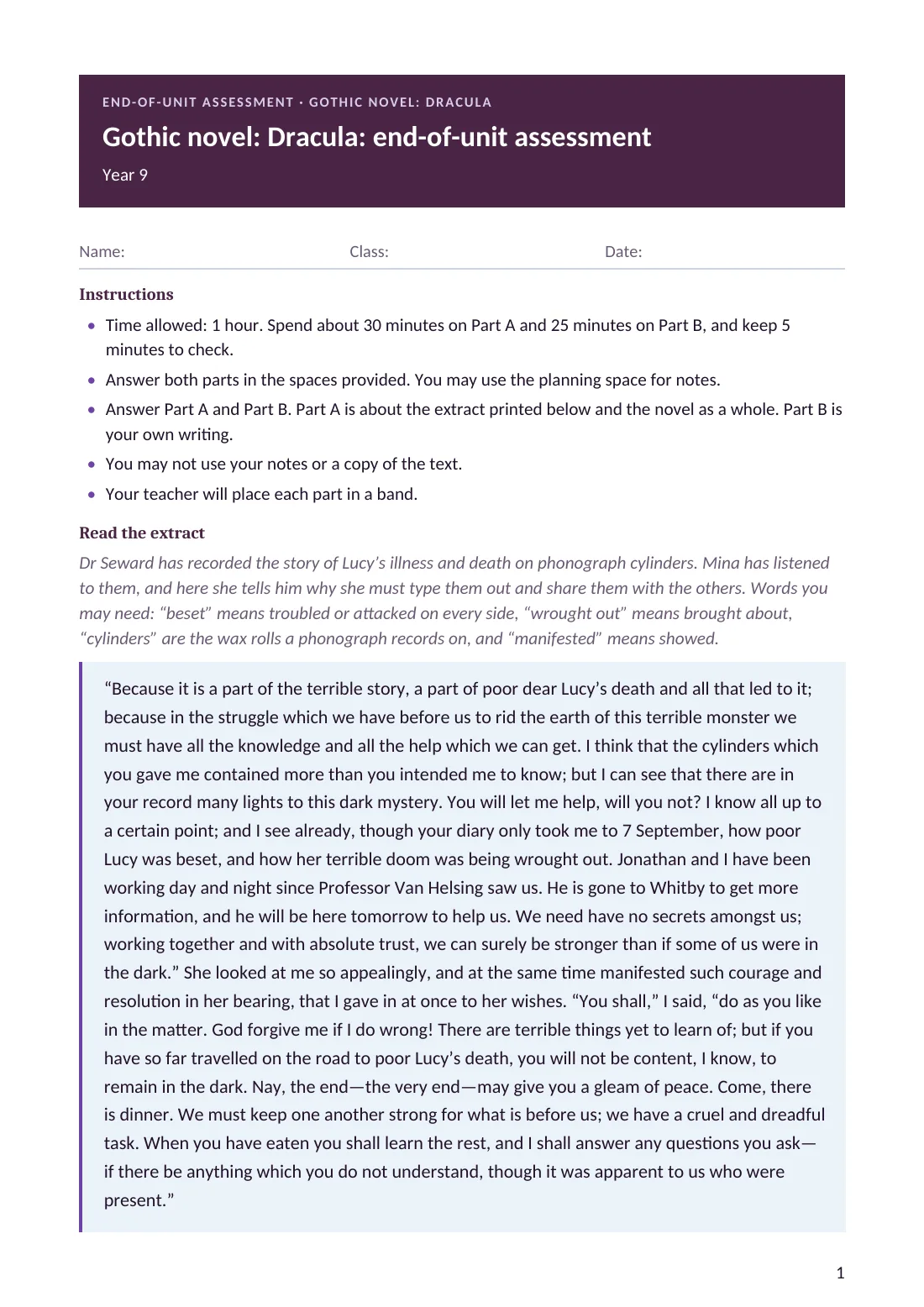 End-of-unit assessmentPart A reading, Part B writing
What students learn
Students study Dracula through its most important passages and short summaries of the rest, without reading all 160,000 words. They begin where Stoker begins, with Jonathan Harker’s journal on the road to Castle Dracula, and stay with him until he is a prisoner who cannot leave by the open door. The second half moves to England: the wreck of the Demeter at Whitby, Mina’s shorthand and typewriter, the change in Lucy, and the last chase through the snow. All the way through, students ask what makes the Count frightening and how a group of ordinary people, armed with diaries, letters and machines, stand against him. They learn how the Gothic novel works, why Stoker tells the story in documents and what the 1890s feared. Close-study lessons alternate concept-led What–How–Why paragraphs with Stoker’s own forms, the journal and the letter, so students practise both the reading and the writing the end-of-unit assessment asks for, and Lesson 11 rehearses writing about the novel as a whole.
By the end of the unit, students can
- Explain what makes a Gothic novel and why Stoker tells Dracula through journals, letters and newspaper cuttings
- Trace the main events of the novel, from Jonathan’s arrival at the castle to the Count’s end in the snow
- Analyse how Stoker presents Dracula, Lucy and Mina, starting from a concept and using short exact quotations
- Write about an extract and the novel as a whole in one answer, weaving in the fears of the 1890s
- Write a journal entry and a letter in Stoker’s documentary manner that tell a Gothic event
Where it fits
Builds on: Year 8 Gothic short stories: first-person narrators who doubt what they see in ‘The Signal-Man’ and ‘The Red Room’, suspense built across a whole story, and the supernatural left open or explained. Students bring What–How–Why paragraphs that follow how an effect builds across an extract, a short evaluation of a reader’s view, and the opening of a Gothic story of their own. This unit takes those conventions to novel length and asks for an argument about the whole text.
Leads to: Nineteenth-century novels studied in Years 10 and 11, with essays that start from an extract and move out to the whole text; reading context as part of a writer’s purpose; descriptive and narrative writing in Years 10 and 11, where a first-person voice, a date and a place, and a slow build of fear are all useful.
Two sequences, 14 lessons
The checkpoint, its feedback lesson and the end-of-unit assessment are planned into the sequence. Open a sequence to see its lessons. Lesson 6 is free.
Jonathan at Castle Dracula: Chapters 1 to 4Lessons 1 to 8
- 1Stoker’s documentsWhy tell a horror story in journals and letters?
- 2Reading Chapters 1 and 2Reading lessonWhat is waiting for Jonathan at the end of the road?
- 3The landlady’s warningHow does Stoker build dread before Jonathan reaches the castle?
- 4At the castle doorHow can a journal make an arrival frightening?
- 5A stranger in a strange landWhat does the Count want from England?
- 6The Count on the wallFreeHow does Stoker make the Count seem less than human?
- 7The open doorFeedback Loop kit 1How does Stoker present Dracula as a threat to Jonathan?
- 8Feedback: Dracula’s threat to JonathanReview lessonHow can I make my paragraph about the Count’s threat better?
Dracula in England: Chapters 5 to 27Lessons 9 to 14
- 9Reading Chapter 7Reading lessonWhat came ashore at Whitby?
- 10Mina’s machinesHow does Stoker show Mina as a modern young woman?
- 11Lucy’s changeHow does Stoker show Lucy changing, and why does it matter to the whole novel?
- 12Waiting in the snowHow does a journal make the reader wait with the writer?
- 13End-of-unit assessmentEnd-of-unit assessmentHow does Stoker present Mina’s part in the fight against Dracula, and can I write a Gothic document of my own?
- 14Feedback and improvementFeedback lessonWhat did I do well, and what will I improve?
Assessment without grades
End-of-unit assessment (Lesson 13): Part A, a reading response to a printed extract and the novel as a whole; Part B, a piece of the student’s own writing. One hour.
Each part is placed in one of five bands that describe the work (Starting, Developing, Consistent, Confident, Assured), using the Year 9 reading and writing grids and our indicative content for the task. Nothing is scored. The checkpoint in Lesson 7 is one What–How–Why paragraph, placed in a band in the same way.
- Starting
- Developing
- Consistent
- Confident
- Assured
The bands describe the work, never the student. Key Stage 3 has no GCSE grades or marks in our schemes.
Buy the scheme
Both licences include every file in the scheme, as editable Word and PowerPoint files with a PDF copy of each.
One teacher
For your own classes
£40incl. VAT
- Print and adapt for your own students
- Put it on your school’s own secure learning platform
- Upgrade to a school licence for the difference before VAT
School
Every teacher and student at one school
£100+ VAT
- Print and adapt for every class in the school
- Put it on your school’s own secure learning platform
- Each further school in the same trust pays half
Planning the whole year? The Year 9 school bundle has all six schemes, the year plan and the end-of-year assessment for £480 + VAT.
Both licences include 10 folders: see what is in each
- 00Start here6 pages: how the scheme fits together
- 01Teacher handbook67 pages: intent, unit map, lesson notes and the assessment guide
- 02Slides14 PowerPoint decks with teacher notes, and a PDF copy of each
- 03Student bookletEvery lesson with the Securing, Strengthening and Soaring support side by side, 47 pages, plus one pack per level for set classes
- 04Independent practiceAll three levels in one booklet, 48 pages, plus one booklet per level
- 05Feedback Loop kitThe Lesson 7 checkpoint and its whole-class feedback lesson, 8 pages
- 06End-of-unit assessmentThe assessment paper and a teacher guide with the band grids
- 09Missed a lessonA catch-up sheet for every lesson
- 10InclusionNotes for students with SEND, students learning English and pupil premium students, and a key words list
- 11Talk routinesSixteen routines for spoken English in any lesson, with steps, sentence stems and a student sheet
To pay by invoice, to upgrade a teacher licence, or to license another school in your trust at half price, email hello@btl.education. Please don’t share the files outside your school or upload them to public websites. Licence terms
Extracts from Dracula are taken from the public-domain text of the novel (1897), in the free Standard Ebooks edition. It keeps Stoker’s British spelling and prints "tonight", "today" and "tomorrow" as single words; we copy every extract as printed.
Teach Lesson 6 of Gothic novel: Dracula, free
One complete lesson from every Key Stage 3 scheme: the slides with teacher notes, and the teacher notes and student pages at Securing, Strengthening and Soaring. Choose a scheme and we email you the files straight away.
The rest of Year 9
- Poetry of power and protest Autumn 2
- Victorian voices Spring 1
- Othello Spring 2
- Visions of the future: The Time Machine Summer 1
- Writing to describe and narrate Summer 2
Get our emails
About once a month: new free resources and the dates that matter for GCSE English.