

Teachers › Key Stage 3 › Year 9 › Victorian voices
Victorian voices
Key Stage 3 · Year 9 scheme of learning · Spring 1 in our Year 9 plan
A half-term scheme of learning for Year 9: 14 one-hour lessons across about six weeks, built around one big question: why did Victorian writers want their readers to see what they had seen? Every lesson has slides, teacher notes and a student booklet with three levels of support.
Mayhew, Dickens, Nightingale, Seacole and Russell, 1836 to 1877. Every extract is printed in the booklets, so no class set of books is needed.
Three levels of support · a checkpoint in Lesson 7 with whole-class feedback · an end-of-unit assessment in Lesson 13, placed in five bands
Real pages from the scheme
Choose a page to see it larger. Lesson 5 is free: we email the full editable lesson.
 Teacher handbookCover
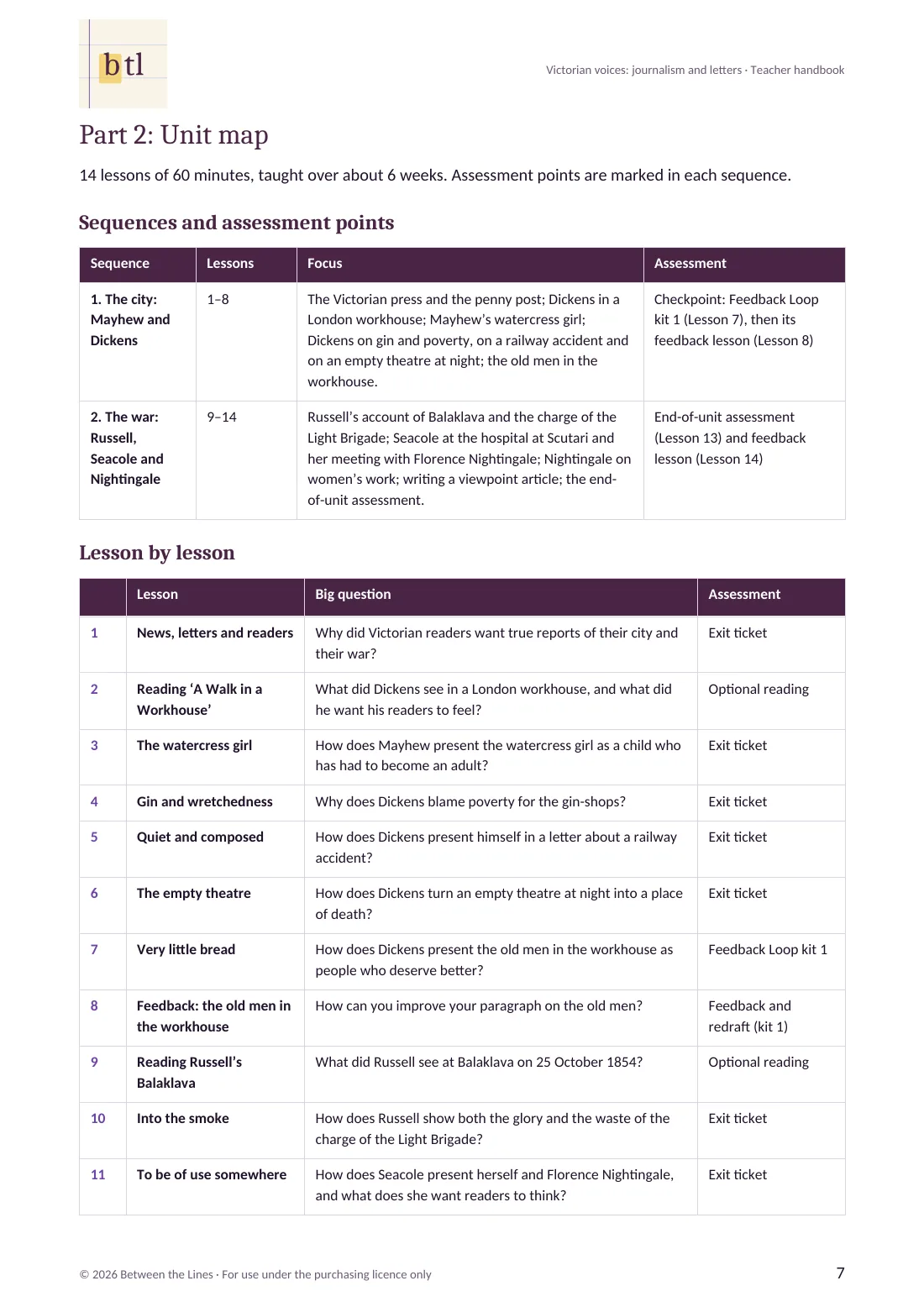 Lesson notesLesson 5 in the teacher handbook
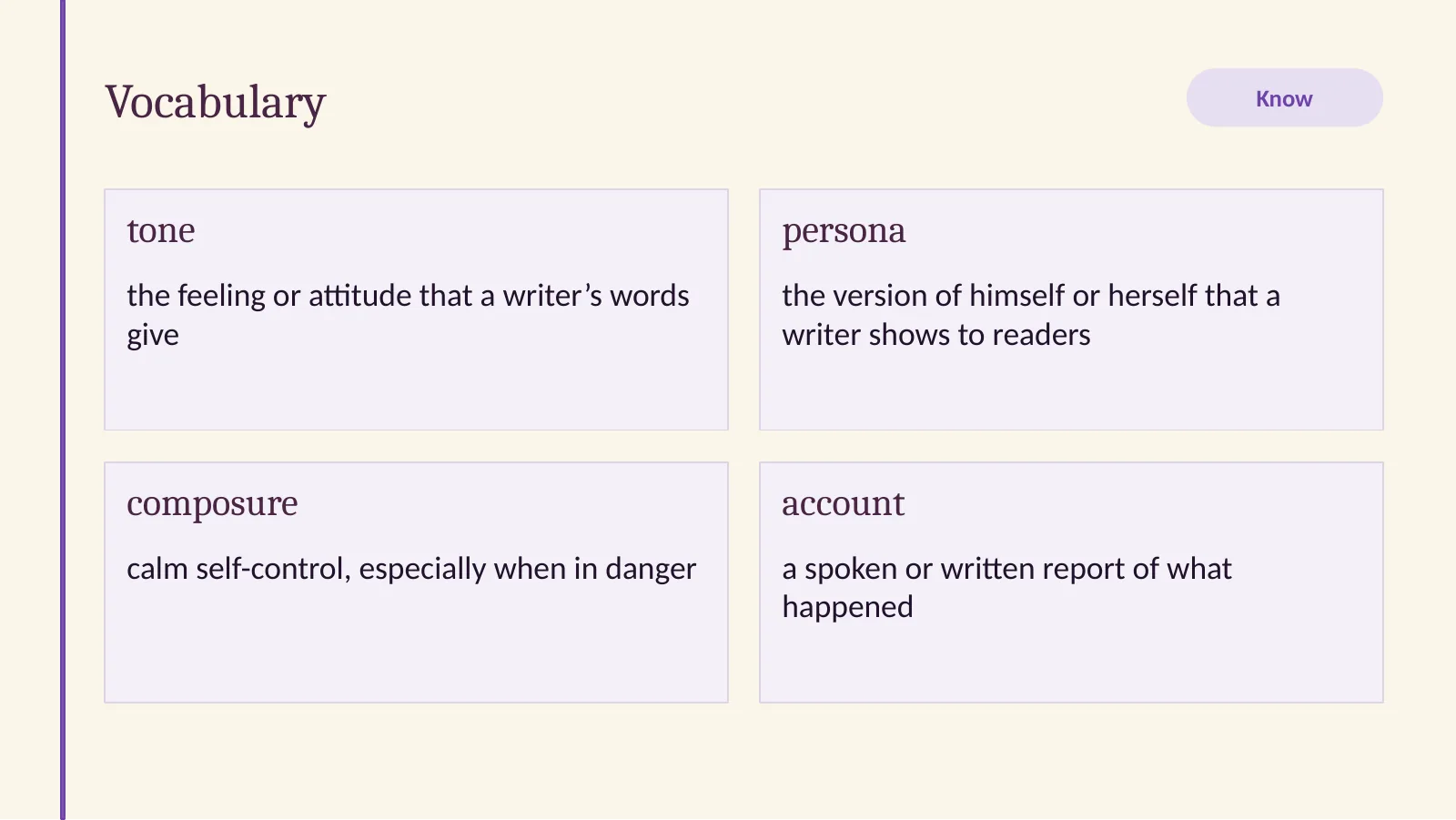 SlidesLesson 5: Quiet and composed
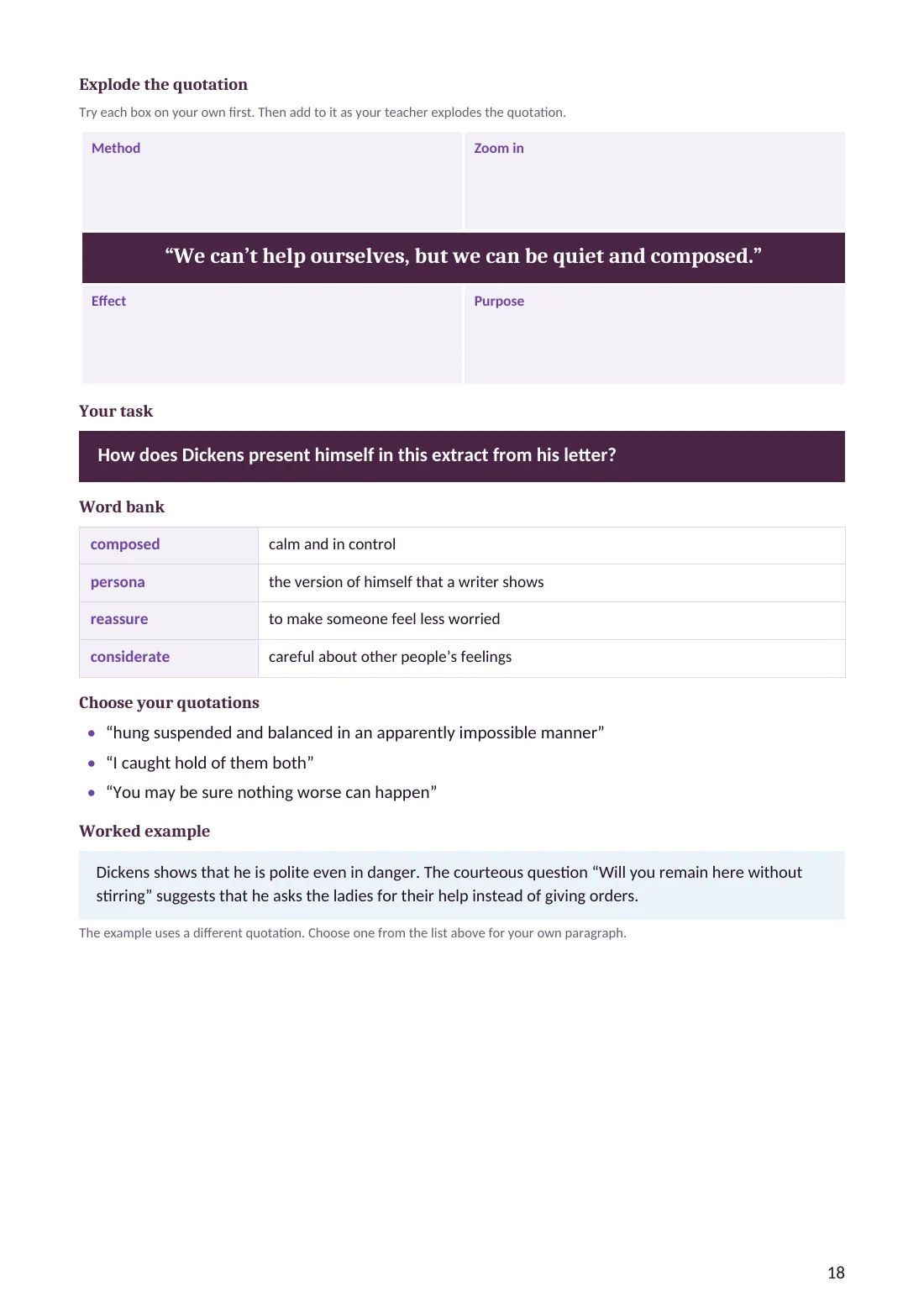 SecuringLesson 5 in the Securing student pack
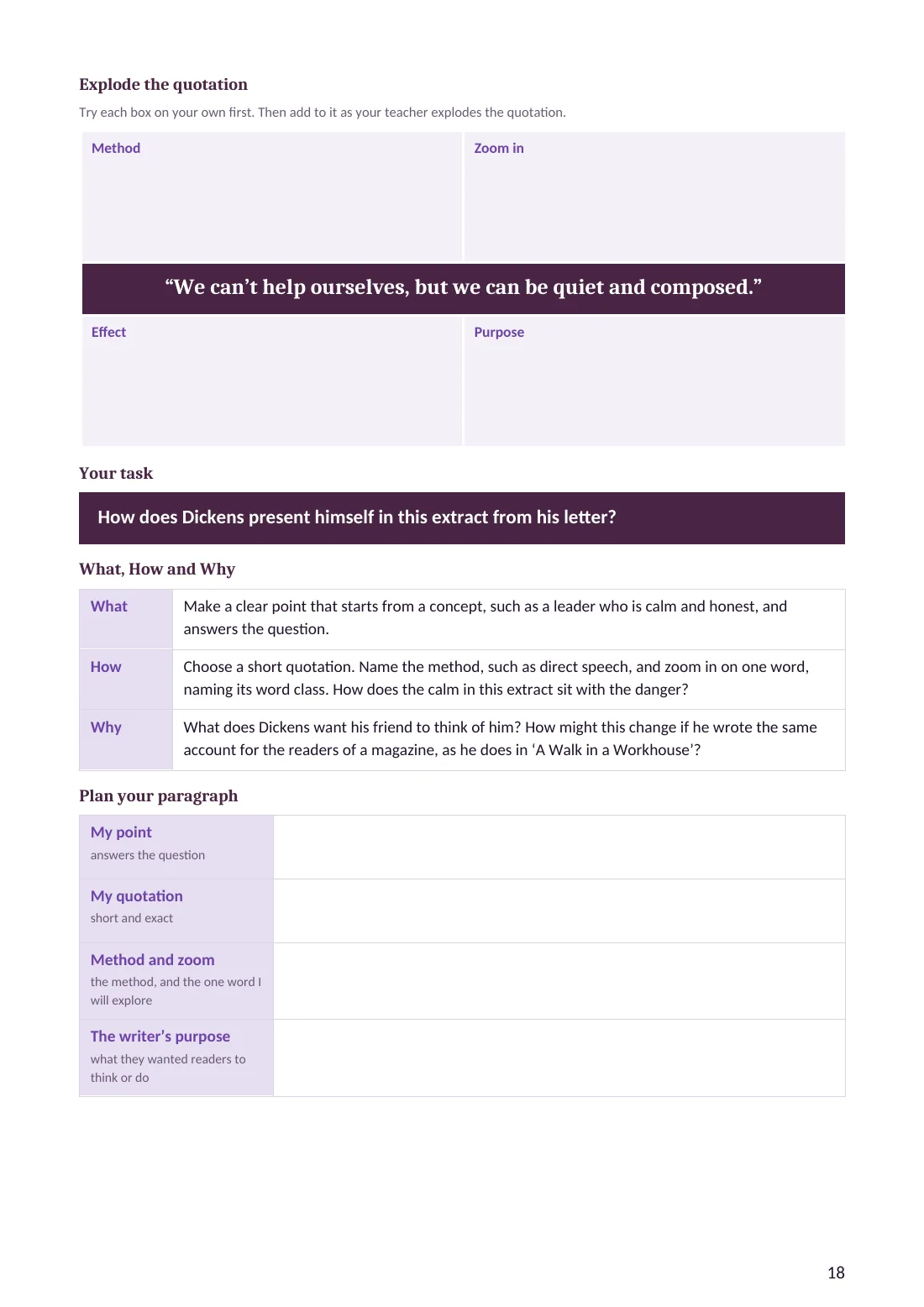 StrengtheningLesson 5 in the Strengthening student pack
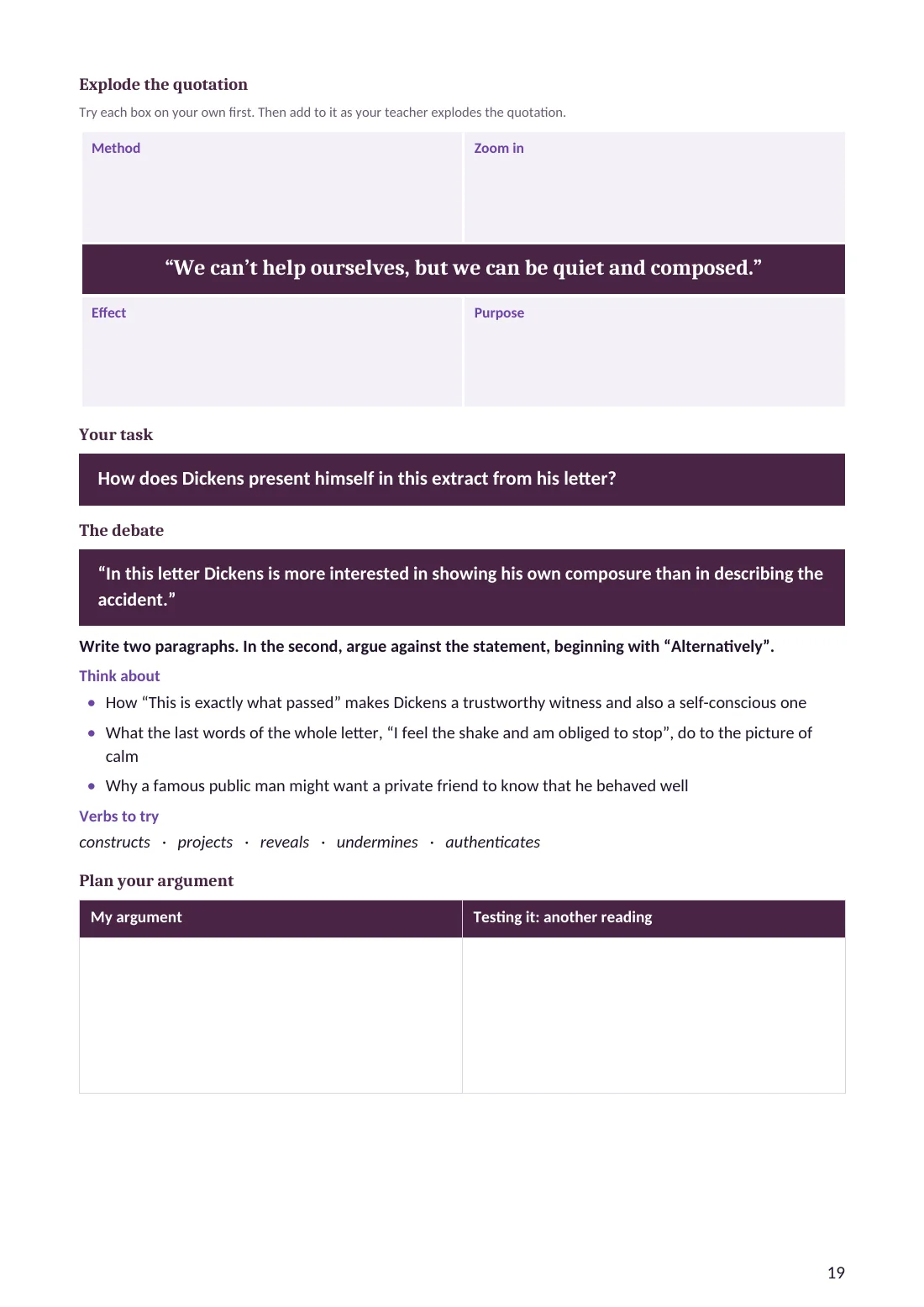 SoaringLesson 5 in the Soaring student pack
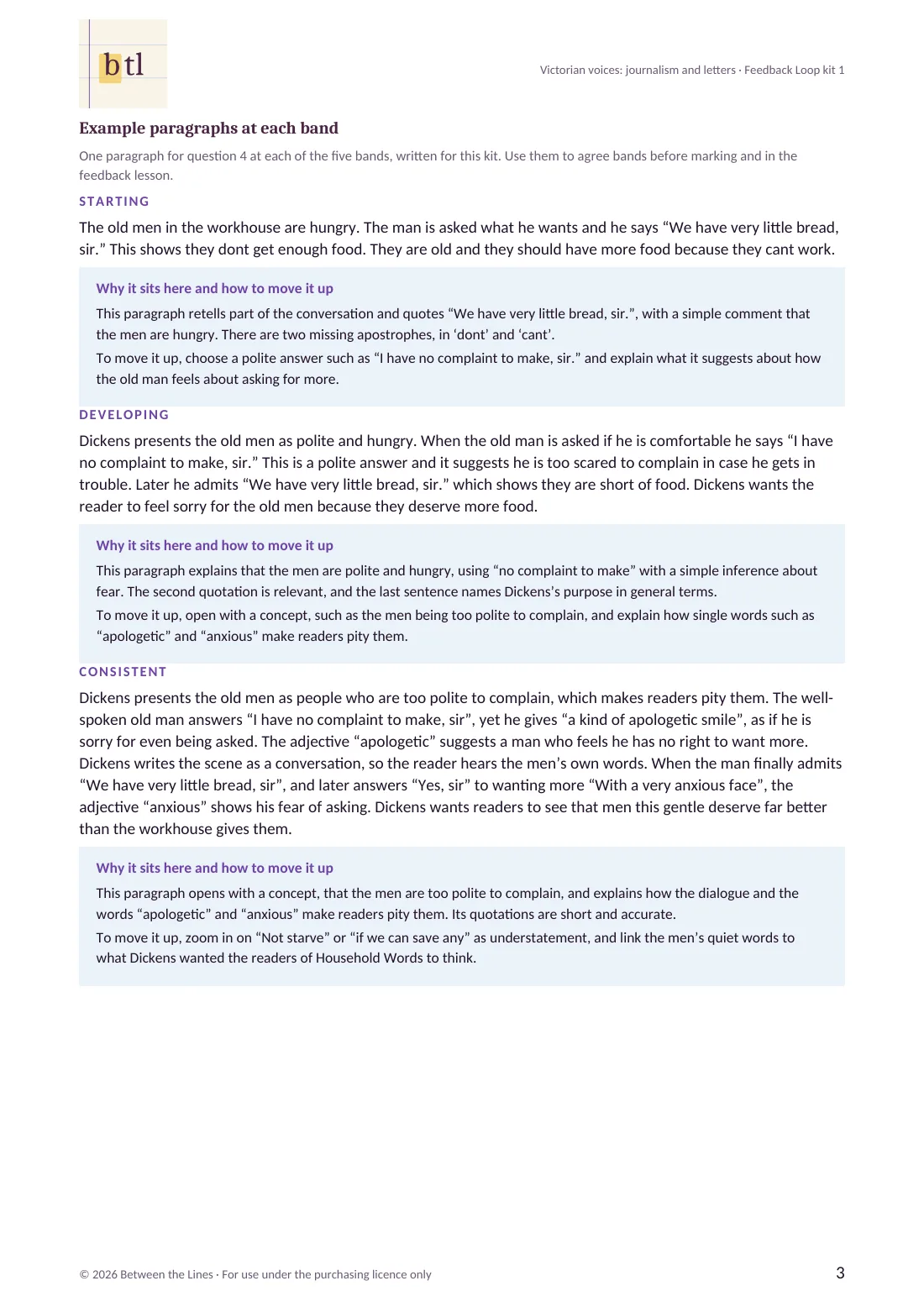 Feedback Loop kitThe checkpoint in Lesson 7
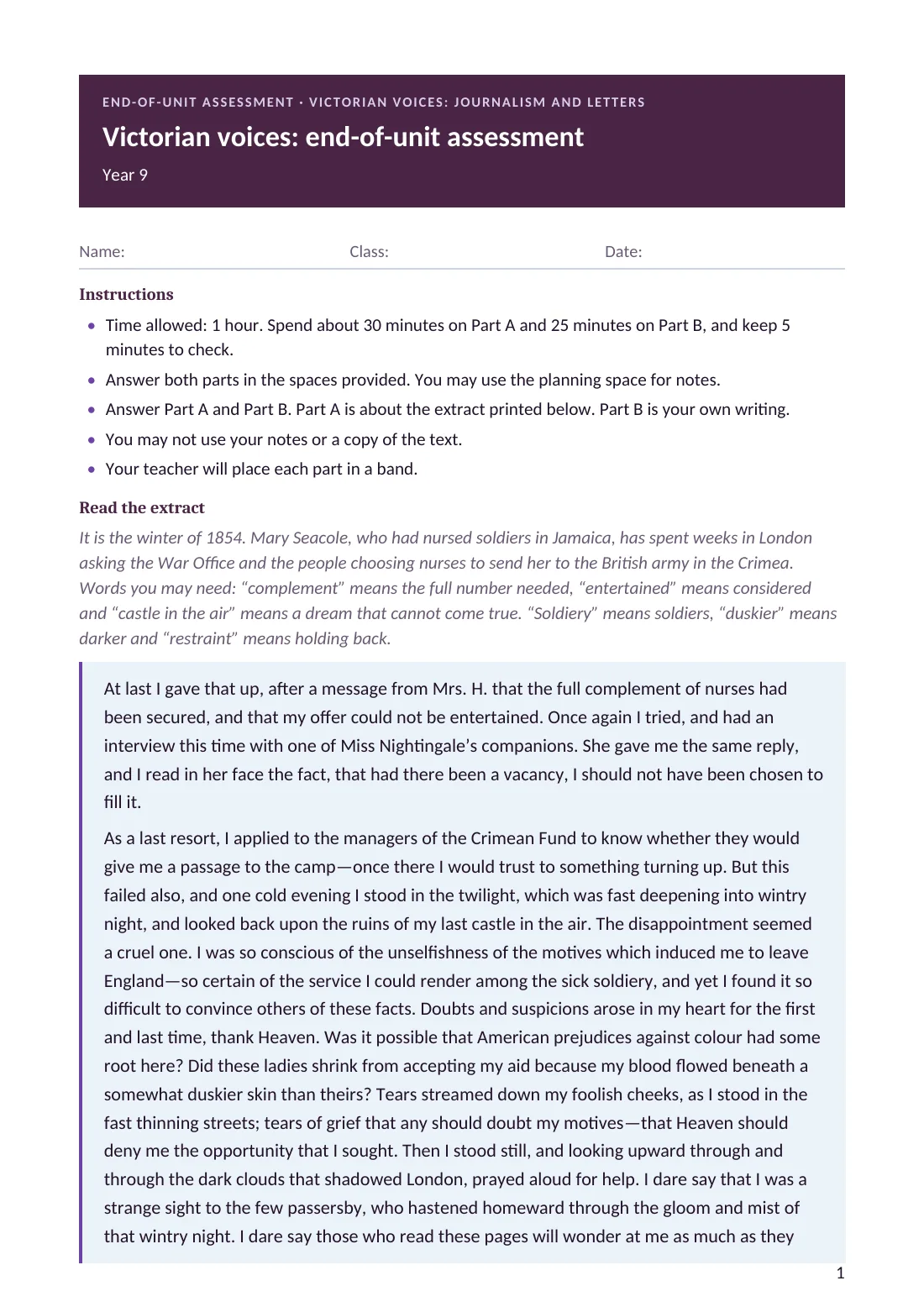 End-of-unit assessmentPart A reading, Part B writing
What students learn
Students read the people who showed Victorian Britain to itself: Henry Mayhew, who wrote down the words of London’s street-sellers; Charles Dickens as journalist, sketch-writer and letter-writer; William Howard Russell, who watched the Battle of Balaklava for The Times; Mary Seacole, who paid her own way to the Crimea after she was turned away in London; and Florence Nightingale, who argued for nursing as skilled work. The first half of the unit stays in the city, with poverty seen through an interview, a sketch, a workhouse visit, a night walk and a private letter. The second half follows the Crimean War from the battlefield to the hospital. In every lesson students ask what the writer wants readers to think, and how the writing makes them think it: viewpoint, purpose, tone, dialogue, imagery and the persona a writer builds. Lessons pair two writers on the same subject (poverty, war, nursing), so students compare viewpoints as well as methods. Alongside the reading they write as Victorian and modern journalists: a letter commissioning a writer, a letter to an editor and two viewpoint articles, which prepare the article in the end-of-unit assessment.
By the end of the unit, students can
- Explain who the five writers were, the forms they wrote in (interview, sketch, report, letter, memoir and advice) and why each one wrote
- Analyse how each writer presents a subject and builds a viewpoint, using terms such as tone, imagery, dialogue, juxtaposition and persona accurately
- Compare how two writers present the same subject, such as poverty, war or nursing
- Write an argued response to an extract that opens with a clear answer and follows the writer’s purpose through the whole extract
- Write a letter and an article that present a viewpoint on a statement, shaped for a reader, with a deliberate opening and ending
Where it fits
Builds on: Year 8 study of speeches and persuasive writing in Voices of change (Douglass, Truth, Stanton and Pankhurst: purpose, audience and rhetoric, and a speech for a class debate) and of Victorian London in Detective fiction: Sherlock Holmes. Students bring What–How–Why paragraphs that follow how an effect builds across a passage, and some practice in comparing two speakers.
Leads to: Reading nineteenth-century non-fiction in Years 10 and 11: letters, reports and journalism, read for the writer’s viewpoint and purpose and compared with modern writing; and writing articles, letters and speeches that present a viewpoint with control.
Two sequences, 14 lessons
The checkpoint, its feedback lesson and the end-of-unit assessment are planned into the sequence. Open a sequence to see its lessons. Lesson 5 is free.
The city: Mayhew and DickensLessons 1 to 8
- 1News, letters and readersWhy did Victorian readers want true reports of their city and their war?
- 2Reading ‘A Walk in a Workhouse’Reading lessonWhat did Dickens see in a London workhouse, and what did he want his readers to feel?
- 3The watercress girlHow does Mayhew present the watercress girl as a child who has had to become an adult?
- 4Gin and wretchednessWhy does Dickens blame poverty for the gin-shops?
- 5Quiet and composedFreeHow does Dickens present himself in a letter about a railway accident?
- 6The empty theatreHow does Dickens turn an empty theatre at night into a place of death?
- 7Very little breadFeedback Loop kit 1How does Dickens present the old men in the workhouse as people who deserve better?
- 8Feedback: the old men in the workhouseReview lessonHow can you improve your paragraph on the old men?
The war: Russell, Seacole and NightingaleLessons 9 to 14
- 9Reading Russell’s BalaklavaReading lessonWhat did Russell see at Balaklava on 25 October 1854?
- 10Into the smokeHow does Russell show both the glory and the waste of the charge of the Light Brigade?
- 11To be of use somewhereHow does Seacole present herself and Florence Nightingale, and what does she want readers to think?
- 12Suitable for a womanHow does Nightingale argue against what people say women should and should not do?
- 13End-of-unit assessmentEnd-of-unit assessmentCan you explain a writer’s viewpoint, and then give your own in an article?
- 14Feedback and improvementFeedback lessonHow can you improve your reading response and your article?
Assessment without grades
End-of-unit assessment (Lesson 13): Part A, a reading response to a printed extract; Part B, a piece of the student’s own writing. One hour.
Each part is placed in one of five bands (Starting, Developing, Consistent, Confident, Assured) using the Year 9 reading and writing grids and our indicative content for the task. The bands describe the work, and no score is given. The checkpoint in Lesson 7 is one What–How–Why paragraph, placed in a band in the same way.
- Starting
- Developing
- Consistent
- Confident
- Assured
The bands describe the work, never the student. Key Stage 3 has no GCSE grades or marks in our schemes.
Buy the scheme
Both licences include every file in the scheme, as editable Word and PowerPoint files with a PDF copy of each.
One teacher
For your own classes
£40incl. VAT
- Print and adapt for your own students
- Put it on your school’s own secure learning platform
- Upgrade to a school licence for the difference before VAT
School
Every teacher and student at one school
£100+ VAT
- Print and adapt for every class in the school
- Put it on your school’s own secure learning platform
- Each further school in the same trust pays half
Planning the whole year? The Year 9 school bundle has all six schemes, the year plan and the end-of-year assessment for £480 + VAT.
Both licences include 10 folders: see what is in each
- 00Start here6 pages: how the scheme fits together
- 01Teacher handbook71 pages: intent, unit map, lesson notes and the assessment guide
- 02Slides14 PowerPoint decks with teacher notes, and a PDF copy of each
- 03Student bookletEvery lesson with the Securing, Strengthening and Soaring support side by side, 47 pages, plus one pack per level for set classes
- 04Independent practiceAll three levels in one booklet, 46 pages, plus one booklet per level
- 05Feedback Loop kitThe Lesson 7 checkpoint and its whole-class feedback lesson, 8 pages
- 06End-of-unit assessmentThe assessment paper and a teacher guide with the band grids
- 09Missed a lessonA catch-up sheet for every lesson
- 10InclusionNotes for students with SEND, students learning English and pupil premium students, and a key words list
- 11Talk routinesSixteen routines for spoken English in any lesson, with steps, sentence stems and a student sheet
To pay by invoice, to upgrade a teacher licence, or to license another school in your trust at half price, email hello@btl.education. Please don’t share the files outside your school or upload them to public websites. Licence terms
Extracts from London Labour and the London Poor, Sketches by Boz, ‘A Walk in a Workhouse’, ‘Night Walks’, The Letters of Charles Dickens, The British Expedition to the Crimea, Wonderful Adventures of Mrs. Seacole in Many Lands and Notes on Nursing are taken from public-domain texts.
Teach Lesson 5 of Victorian voices, free
One complete lesson from every Key Stage 3 scheme: the slides with teacher notes, and the teacher notes and student pages at Securing, Strengthening and Soaring. Choose a scheme and we email you the files straight away.
The rest of Year 9
- Gothic novel: Dracula Autumn 1
- Poetry of power and protest Autumn 2
- Othello Spring 2
- Visions of the future: The Time Machine Summer 1
- Writing to describe and narrate Summer 2
Get our emails
About once a month: new free resources and the dates that matter for GCSE English.