Videos › Inside a scheme of learning
Inside a scheme of learning: A Christmas Carol
26 minutes · captions available
Every folder in the A Christmas Carol scheme: the teacher handbook, the slides, the student packs at three levels, the Feedback Loop kits, the end-of-unit essay, the stretch booklet and the catch-up and inclusion sheets.
Chapters
Transcript
Introduction
This is Between the Lines, and I'm here today to talk to you about everything that you get when you download one of our schemes of learning. So I've got here for you A Christmas Carol.
What is in the scheme
So, start here. A good place to start. So this is the overview of what you're getting. It's for English Literature, Paper 1, and we're in Section B. And it tells you how long that you're spending on this. So we've got 34 lessons, which is about 7 to 9 weeks. And with all our schemes, we've got three different levels of support. So what is in this scheme? We've got the start here, which is the guide that I'm talking you through right now. We've got the teacher handbook.
Teacher handbook
Now the teacher handbook gives us our unit's intent and outcomes. The lesson map, lesson by lesson notes with timings, answers, and adaptations that you may wish to do. It's got the assessment guide and also the knowledge bank. Because as teachers, we need to know what we're talking about. And all of that is included for you.
Slides with teacher notes
We then move on to the slides. Now all of our PowerPoint decks are editable and they've got teacher notes on every single slide. So when you have your slides deck up in presenter mode, you can see the knowledge that the students need to acquire for every single slide.
Student packs at three levels
We've also got student packs. These are the three booklets at different levels. So we have Securing, Strengthening and Soaring as we do with every scheme of work. They've got within those packs, every lesson has the do now, the key vocabulary, the reading task that they're doing in there, the planning support for their mastery task at different levels, writing space and also their exit ticket. You can download those in Word and also available as a PDF.
Independent practice
There is independent practice booklet for every scheme of learning. So there are six weeks of homework and these are context and the bigger ideas. Again, we're doing this at three different levels, Securing, Strengthening and Soaring. So you can choose which students in the room are having which homework tasks. We've then got your end of unit assessment, which is that exam style essay
End-of-unit assessment
paper, the teacher guide for that and level guidance, model answers and a feedback lesson is all there for you. We've got also we have a Soaring stretch booklet.
Soaring stretch booklet
So this is for those students who are looking for those grades seven to nines. They've got their independent practice booklet already at that Soaring level. But this one here is that stretching them even further is reading beyond the set text for students who are aiming for those eights and nines with questions that link back to the text, but really developing that wider critical thinking that they need to access that level five on the mark scheme. We've also got we know that attendance can sometimes be an issue and can
Missed a lesson
actually have massive effect on students grades and outcomes. So if they miss a lesson, there is a printable catch up sheet for every single lesson. It shows us what was missed, keywords, a quotation, three short steps and a check question for you to make sure that they have understood that core knowledge of a lesson that they've missed. Now, my suggestion is that if a student has missed a lesson, then the next lesson you give them that Mr. And instead of doing the do now, they are doing it then. And we've also got an inclusion guide.
Inclusion guide
Now, this is showing this is for our students with send additional needs and also students as English as an additional language. We've adapted resources for those students and there's a guide for them and notes for every scheme of learning.
Start here: Getting started in four steps
So getting started in four steps, you need to obviously know what you're teaching. So read the teacher handbook to start with for the unit's intent, the exam, how the lesson works and how the scheme of learning fits together. You need to print the student packs at the three levels. So you need to decide which students in your classroom are accessing which packs or you can share them as PDFs if they're working on devices. They can move between levels at any point. So if a student starts on Securing, there's no reason why they cannot move up to that Strengthening if they are acquiring that knowledge and they are mastering those tasks. You need to make sure that you look ahead to those feedback loops. So there are four Feedback Loop points within each scheme of learning before we get to that overall exam assessment at the end. So those in Christmas Carol, they appear at lesson six, 12, 20 and 28. And the feedback for those comes the next lesson in place of the do now. Now you will note that everything uses Calibri for reading and Cambria
Start here: Fonts and printing
for headings. Now these fonts come in Microsoft Office for Windows and also Google Docs and Slides. So you don't need to install anything. It's not going to do that annoying thing where you have to reformat everything because you're moving it between two different platforms. Pages are white. So your printing can be printed on black and white. So it is cheaper to print. We all know budgets are an issue and everything on our slide decks is in that same tones of cream pale blue or pale lilac. And we do know that obviously some of our students do prefer to read off those different colours. So if they do not have an overlay, you can print it on those colours. You can print on pale blue for that access arrangements as well. All of our schemes work in exactly the same way that we look at every lesson,
Every lesson: Know, Apply, Master
know, apply and master. So we are knowing, we are Securing that understanding and we are doing those retrieval questions to make sure that we have got that. We're looking at the vocabulary. So we have four key words from every extract in every lesson. We're not overloading them by giving them 12 new words a lesson. It's four new words. And then there's some short texts, either an extract from the text that you are reading or it could be a bit of context. But it's only a short thing that they are reading every lesson in that apply section. And then we need to master. So everyone is doing the same task, no matter what level they are on. If they are on Securing, Strengthening or Soaring, they're answering the same question because that's exactly what they will be doing in the exam. However, the levels of support and scaffolding are different at those levels. So it's usually a what, how, why paragraph. However, some lessons we are writing a letter, a diary, a speech or a piece of creative writing. So we're bringing in those skills from language and putting them into literature. Because we know that actually we have to spend more time on literature than language in our lesson times because of the amount of content that we've got to get through. So actually practicing those English Language skills within our literature schemes of work are really showing us that success that students can have across both of those GCSEs. And we always have model answers for those master tasks and then they give you an exit ticket. Now across the scheme of learning, it's up to you how you approach the reading.
Optional: Reading lessons
We know that actually this is very time consuming, so it's up to you and it is built into the independent practice that students are doing that flip learning and doing the reading before they come to lessons. However, we have also put them in as optional reading lessons. So for A Christmas Carol, we are reading in one, two, three, four, five, six, six lessons. So there's six lessons that are built in purely for reading and these are sort of quick reads because you are doing all that analysis during the actual rest of the scheme. So we have got the whole stave. You are, as a teacher, you are reading that aloud, you are modelling what confident, fluent reading looks like. Students are using their reading ruler and all that guidance is built into those schemes of learning and within those slide decks so you can really see how they are doing. There's a few little pause points within those reading lessons but the majority of that time should be spent on just reading the text. We've also got feedback lessons after each of those feedback loops and there's
After each kit: Feedback lessons
three levels of support, not just in the actual task itself but also in the feedback. So looking at what level those students have... Have secured and then looking at what is the next step for them that are even better when it's not even better if Because this is not about if that happens. This is when we are making progress all of our assessments within those feedback loops are without raw marks, so if you give a student a
Assessment: No raw marks, AQA levels
6 out of 30 or a 24 out of 30 all they are doing is looking at that number So what we are doing is we are using AQA We are using the mark schemes and we are putting them in those levels Now by doing that what we can do is we can show them very very clearly How they are moving up to that level above it So that is the overview I'm just going to show you very quickly now as well.
Slides: Lesson 1, slide by slide
What one of our slide deck looks like So this is a slide deck that you would have each lesson has its own one You can see that all of these are fully editable so if you did want to change some of your do now's because actually you know that your Students have different misconceptions than the ones that are built in here You absolutely can do that and we definitely would encourage that as well So each of our lessons is split between our three stages. So we have our know Where we have our do now's the answers the key vocabulary and then the reading Then we move on to our apply section and you can see that they are students are applying that knowledge to explain a quotation all of this is printed in their student booklets and Hinge question which is where students are responding on a mini whiteboard so you can do some really nice quickly AFL see where students are at now as a teacher Not only are we giving you the correct answer but we were also showing you what misconceptions there are if they have chosen one of those other ones and Then the mastery task now all tasks every mastery task is the same for all students We know they have to answer the same question in the exam Here We have got a bit of a more creative task. This is lesson one of Christmas Carol and students are writing a letter to the editor of a newspaper and you can see that we've got those three levels of support there Model answer as always and an exit ticket as well. Now, you'll see that our We have completely reduced that cognitive overload and in terms of the design we've got cream backgrounds Which is easier for students to read there's no wizzy sort of flying around here there and everywhere and pictures everywhere Everything is really clear really clean and really accessible for all students. I Am now just going to show you a Example of
Student pack: Securing
The student pack so you can see those three different levels So this is a student pack for the Securing So this is students who are aiming for a grade 4 And you can see that everything is in there we've got those most lessons follow those steps students know what it looks like And then every lesson is really really clearly in there Now with the student packs once you've printed these there's no additional printing to do So you have this done at the start of a scheme of learning and you are not running to a photocopier on 25 past 8 on a Tuesday morning You don't have to do that everything that you need is all in these packs what you do it once and then it's done You can see all the do now's are in there the vocabulary is in there reading is in there and Then there is space for them to answer those mastery tasks as well So That's the Securing Just to show you what if I show you
Student pack: Strengthening
The Strengthening. Okay, and you can see how that's been differentiated. So the Obviously the do now is the same The vocabulary is the same the reading is the same. It's then when they get onto the mastery that we then have that That differentiation here. So here we've students have a plan to do And whereas in the first one they had sentence starters, there's also the
Student pack: Soaring
Soaring one and again, you can see that the Do now the vocabulary and the reading is the same but then when we move on to the task the mastery task Actually, we're challenging them. We're thinking about Dickens's own childhood. We're bringing that context thinking about actually what was Dickens's message And also that key idea here of really bringing in some of those language skills as well So, how do we sound angry but still reasonable and that's the tone that is Quite nuanced and can really like push up those grades on the English language paper to section B So bringing in those language skills as well. I'm just going to show you now the food Feedback loop.
Feedback Loop kit: Student sheet
So I'll show you an example of one of those kits So as I said, we've got four Feedback Loop pause points within each scheme of learning And again, these are really really clear students are Here writing. How does Dickens present Scrooge in save one? The writing in what how why so you've got the whole pack here. They've got instructions for teachers It's telling us what actually you need to be looking for and what you need to be ensuring students have This is what the student gets There's four common misconceptions at the start of every one Because we know in our teaching we know actually what are those misconceptions students are likely to make and instead of not just Addressing them afterwards. Let's front-load front-load that so let's give them those misconceptions to start with and go Actually, I've been teaching for ten years. I know that when people write about Scrooge in stave one They are thinking about Retelling the plot they're saying Scrooge is lonely because nobody likes him And that Marley is one of the three spirits. So we know there's misconceptions Let's tell students them to start with so that they can make sure that they're not including them We also give them a tip. So not just what not to do, but what to do So things like keeping quotations short. We know that they have to remember these quotes So getting them to really think about those really long quotations is not helpful three four three to six words are Brilliant and they can remember them solitary is an oyster. It's easy to remember and it's easier to explain We want to say a lot about a little So each Feedback Loop, we've got three questions which build up to then the what how why and so what? how and why and This is really their planning and their thinking stage first, so they're taking those ideas and then when they move on to the paragraph They're bringing those ideas that they've done for those build-up questions. We've also got Words to describe and terms to analyze so we're looking at our tier two and our tier three vocabulary and we're making sure that that is really clear for students and they know that they should be including that and Then the space for them to write and before they hand it in there is a checklist as well So once they have completed that task you are then bringing taking that in as the teacher and you are giving whole class feedback Now whole class feedback
Feedback Loop kit: Whole-class feedback sheet
means that actually you can turn this around really really quickly. You're reading their work But you are thinking about actually what went well overall What was it that the students across your classroom were doing? Well, was it that they are using those short precise quotations was it that they are Analyzing specific word choices really zooming in and drilling into those and then an even better when Remember, we always say even better when because we are going to make that change. We are making that progress and So it could be context linking it to purpose not just bolting on at the end And also this was written in Victorian times isn't helpful. The examiner knows that doesn't need to hear it Okay, actually why? Think about Thomas Malthus What does what was Dickens trying to think trying to get people to think okay? Remember he was trying to change people's minds and their outlooks and we need to make sure our students know that Common mistakes. So again, these are all editable. So we have pre-populated them with common mistakes that Students could make however, you know your class is best when you go through these actually It could be that these mistakes of these misconceptions weren't the same. So you change those depending on your class How many students? Actually, is it that 30 out of 30 of them retold you the plot. Now, this sheet is really useful for your students, but also for you as the teacher, because it's informing your teaching. If you're looking at it and going, well, actually half the class didn't use a quote, then you know that that needs to be your main focus for the next Feedback Loop. There's also a level spread, so you are putting this in. Again, so where were students generally placed? Now, obviously, if you're a mixed attainment setting, then it might be that you have got a very even spread. If you are streamed or set, it might be that actually the majority of your students are at level three, but really, if they're on Strengthening, we need to be moving them up to that level four. And if most of your students are in Soaring and they're hitting that level four, how are we pushing them up to those level fives and sixes? Your students to praise, and obviously we're not just looking at those students who are hitting those higher levels. It's not just that Billy got level six again. Actually, did Johnny move from a level one on his first Feedback Loop, and now he's at a level three? He's a student that needs to be in there. And then who do you need to support? Is it that a student hasn't moved up a level since the last time? Those are your targets. Is it that somebody's moved down a level, and why is that? So you can have, as a teacher, really clear, really concise way of tracking your whole class. And it's just on one sheet. So you put that in your mark book, and instead of having to write down all those individuals, you've got one sheet that is telling you where your whole class is at. It's really straightforward, and it's really easy to read. It's also looking at what is your reteach points. So for you, as a teacher, it's making you think, and it's making you reflect on, actually, what is it that I need to reteach? Is it that I need to go back to those basics of how am I constructing a paragraph? Is it that they need to be including quotations? Is it that they're not drilling in on those specific words? And then this is the student-facing sheet here.
Feedback Loop kit: Improvement task
So students will see what level they are at. Remember, at these points, in the Feedback Loop points, we're not giving them a mark out of 30. This is all indicative. At this point, they're not writing a whole essay. They've only read Stave 1. So we can't give them a true reflection, and giving them a mark out of 30 at this point isn't useful. So we're placing them in the indicative content in terms of the AQA leveling, and we're using exactly the words that AQA use in their mark schemes. Now, depending on what level students are at, it gives them a feedback task. Now, quite often, we've all seen it, where it's time to feed back, up-level your work, and students have no idea where to start. Then all they do is look for spelling mistakes and add in some full stops. No. We need to make sure they are making specific progress based on what they need to improve. So having these levels and then having the task link to those levels, how are you moving yourself up to the next one? It's really straightforward. It's really easy for students to see, and it's really great for you to be able to track their progress. And then what students are doing? They're not rewriting the whole task. We're not looking at that. We're actually looking at what is their improvement, so we're reducing that to just simply one paragraph. So that's our feedback loops, and we have, as I said, we have four of those in every scheme of learning before you get to the end of unit assessment, which
Assessment: End-of-unit essay
is exactly what you'd expect. It's an exam-cell question. And it's in exam conditions, in the exam timing, it's giving you an extract, just like you would have in AQA's literature exams, a little bit of planning space, and then the space for their answer. So it's exactly mirroring what AQA are looking for. I'm just going to show you quickly the, well, let's have a look at the Soaring stretch booklet.
Stretch: Soaring stretch booklet
Right, we've all got those students in our classes who absolutely adore literature, and we know that we've got them already primed for A-level. And actually, what are we doing to make sure that we are really stretching those students? So this here is our booklet on, obviously, A Christmas Carol, which is the unit I'm talking you through. And it's thinking about those wider texts and actually getting students to understand what was Dickens' world like. It's not just those simple sort of, the Poor Law, and Thomas Malthus, and Bentham. Actually, what else was going on, and really, why was it important, and why did it influence Dickens? So we've got this here. This is an extract by an essay from Malthus. But actually, we're asking students to think about it properly, and linking it to the text. So actually, here, how does Dickens use a Cratchit family to make readers doubt these points that Malthus was making? So not just bolting on context at the end, but really weaving it through their whole essays. And this is going to be really, really useful for those students who really want to stretch themselves. This is our Mr. Lesson.
Catch-up: Missed a lesson sheets
So we've got one of these for every lesson in a scheme of work. So you can see that we've got all 34 lessons there, and then that's the answer check at the end. So if they miss a lesson, instead of doing the Do Now after the lesson that they've missed, they've got this sheet here. Now, you could have them do the Do Now and join in with the lesson, and then this is their additional homework task. Or you can have them, students who perhaps their attendance isn't so great, so you don't necessarily have that much faith in the fact that they are going to complete this at home. Have them do that instead of the Do Now. Actually, they're just picking up those key ideas that you missed. So what you missed, the keywords you missed, the key quotation, and then those catch up in 15 minutes. And then the teacher check-in. Did they catch up? Did you talk it through? Do they need to come back and catch up even further? Now, we all know as well that Ofsted love looking at our books, don't they? So actually having this in your students' books or stapled into their student booklet is really showing actually what we are doing about the students who are missing learning. We're making sure that they have caught up. We're making sure they don't have all those gaps in their knowledge. And it's all done for you. It's all here. We've also got our sort of inclusion.
Inclusion: SEND, EAL and pupil premium
So this is thinking about our students with SEND and our students with EAL. And also thinking about our pupil premium. So we've got here chunked learning, missed lessons as I've already talked through, what we need to pre-teach, thinking about, so this is really great for your teachers, your teacher handouts, actually what do they need to do, looking at things like pictures, so dual coding to making sure that students are aware of what's going on. And a really useful document for your teaching. And that is everything that you get with every single scheme of learning at Between the Lines. Lesson three of every scheme of learning is free to download so you can try it out yourself. You can get it in with your classes and see how they feel. They are going to love it. And it's all available to download at btl.education.
More videos
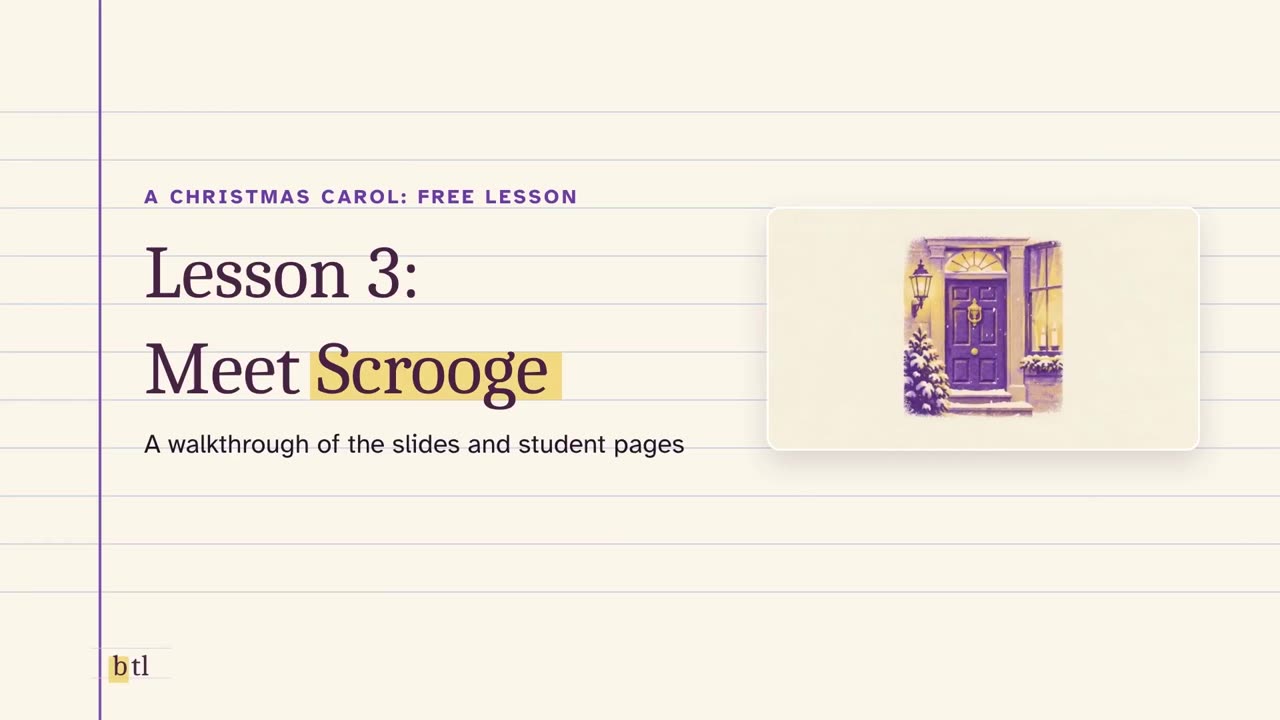
Hannah teaches through the free Lesson 3, Meet Scrooge: the Do Now, the four key words, exploding a quotation, the hinge question and the same task at Securing, Strengthening and Soaring.
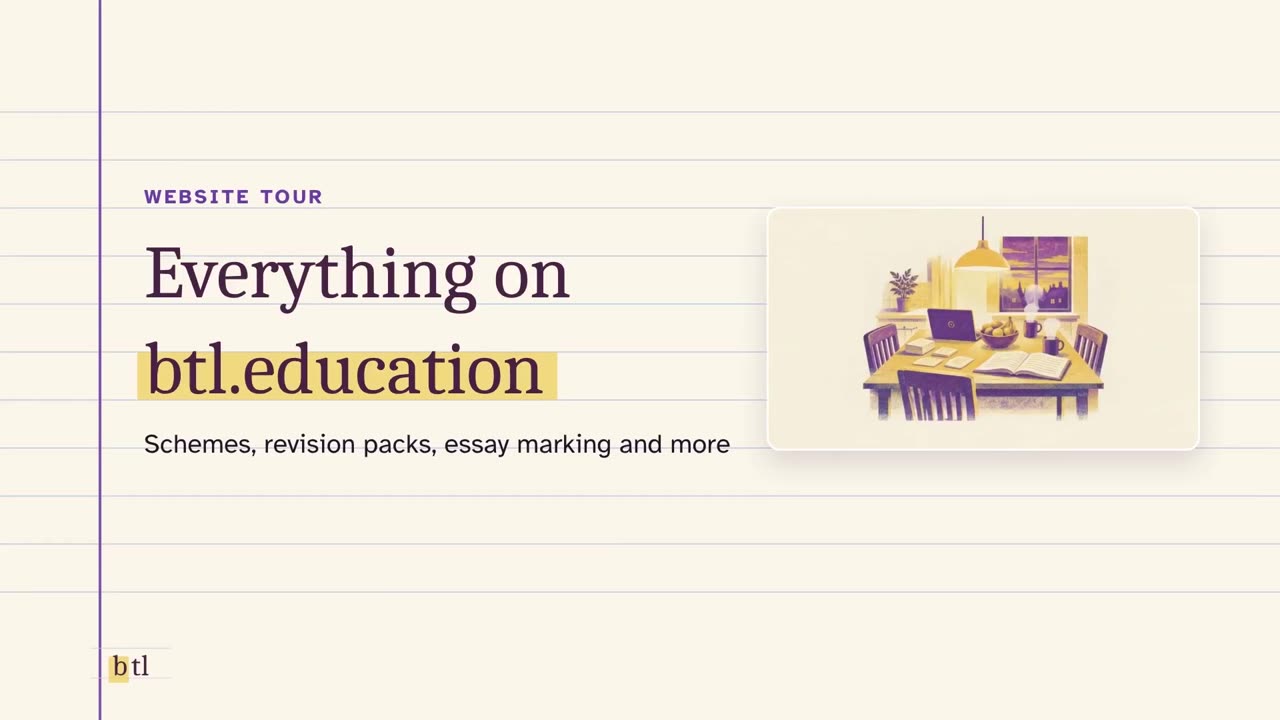
The schemes and licences, the free resources, revision packs for home, essay marking, the Knowledge hub and the display settings for reading on screen.
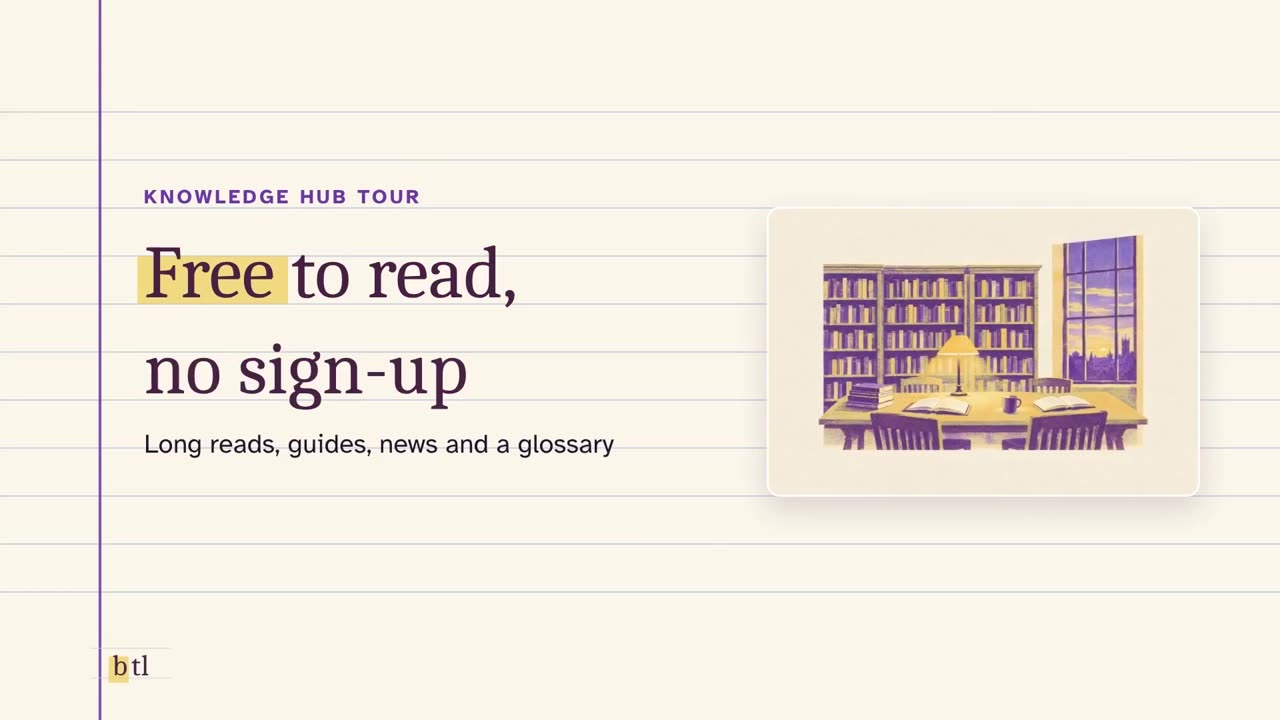
Long reads on the thinking behind the schemes, guides for teachers, students and parents and carers, education news and a glossary of 336 terms. Free to read, no sign-up.
Get our emails
About once a month: new free resources and the dates that matter for GCSE English.