

Knowledge hub › For students › Great Expectations: quotations
Great Expectations: quotations to learn
Thirty quotations from across the novel, checked word for word against the text. Each one comes with who says it, where it is and what it shows.
For Great Expectations, Section B of AQA GCSE English Literature Paper 1, learn a short list of exact quotations, with who says each one and the chapter. This page gives thirty, copied from Dickens’s text and grouped by character and theme. The question prints an extract, so lines from the rest of the novel come from memory.
The Great Expectations question on Literature Paper 1 prints an extract. Everything you say about the rest of the novel has to come from memory, because the exam is closed book: you cannot take your copy in.
These are the quotations to learn, grouped by character and theme. We have copied each one exactly from the text. Learn the exact words, who says them and which chapter they come from. Exact words are worth the effort, and a close reference counts too. AQA’s examiners wrote in their 2024 report on Paper 1 that “this exam is not a memory test” and “If you can’t remember the actual moment word for word, that doesn’t matter.” If a line will not come, describe the moment precisely in your own words and analyse that.
Test yourself
29 quotations from this page. For each one, choose who says it and where it comes from. Ten at a time, in a new order every round.
Who says it, and where? Open each quotation to check your answer.
“the small bundle of shivers growing afraid of it all and beginning to cry, was Pip”
Pip, Chapter 1
“I was always treated as if I had insisted on being born”
Pip, Chapter 4
“It is a most miserable thing to feel ashamed of home”
Pip, Chapter 14
“I want to be a gentleman on her account”
Pip, Chapter 17
“Keep still, you little devil, or I’ll cut your throat!”
Magwitch, Chapter 1
“a wretched warmint hunted as near death and dunghill”
Magwitch, Chapter 3
“I took some wittles, up at the willage over yonder”
Magwitch, Chapter 5
“Yes, Pip, dear boy, I’ve made a gentleman on you!”
Magwitch, Chapter 39
“I lived rough, that you should live smooth”
Magwitch, Chapter 39
“In jail and out of jail, in jail and out of jail”
Magwitch, Chapter 42
“a mild, good-natured, sweet-tempered, easygoing, foolish, dear fellow”
Pip, Chapter 2
“life is made of ever so many partings welded together”
Joe, Chapter 27
“O God bless this gentle Christian man!”
Pip, Chapter 57
“the strangest lady I have ever seen, or shall ever see”
Pip, Chapter 8
“I saw that the bride within the bridal dress had withered like the dress”
Pip, Chapter 8
“Love her, love her, love her!”
Miss Havisham, Chapter 29
“I stole her heart away, and put ice in its place”
Miss Havisham, Chapter 49
“Why, he is a common laboring boy!”
Estella, Chapter 8
“And what coarse hands he has! And what thick boots!”
Estella, Chapter 8
“I have a heart to be stabbed in or shot in”
Estella, Chapter 29
“I am what you have made me”
Estella, Chapter 38
“You are part of my existence, part of myself”
Pip, Chapter 44
“I have been bent and broken, but … into a better shape”
Estella, Chapter 59
“a young fellow of great expectations”
Mr Jaggers, Chapter 18
“Heaven knows we need never be ashamed of our tears”
Pip, Chapter 19
“the office is one thing, and private life is another”
Wemmick, Chapter 25
“Take nothing on its looks; take everything on evidence”
Mr Jaggers, Chapter 40
“O Lord, be merciful to him a sinner!”
Pip, Chapter 56
“I saw no shadow of another parting from her.”
Pip, Chapter 59
Pip narrates the whole novel as a grown man, so when a line is description, the speaker is Pip. Chapters are numbered 1 to 59 straight through, as in most modern editions. Our text spells a few words the American way, such as “laboring”, and Magwitch’s and Joe’s speech is written as they say it, with “wittles” for victuals.
Pip as a child
- “the small bundle of shivers growing afraid of it all and beginning to cry, was Pip” (Pip, Chapter 1). The older narrator looks back at himself in the third person. The metaphor “bundle of shivers” makes the child tiny and helpless on the bleak marshes, and invites our sympathy from the first page.
- “I was always treated as if I had insisted on being born” (Pip, Chapter 4). Dry humour from the adult narrator. The idea is absurd, which shows how unfairly the adults at Christmas dinner blame a small child for existing.
- “It is a most miserable thing to feel ashamed of home” (Pip, Chapter 14). After Satis House, Pip cannot love the forge any more. The older narrator states it like a general truth, and the adjective “miserable” shows his regret.
- “I want to be a gentleman on her account” (Pip, Chapter 17). Pip confides in Biddy. The phrase “on her account” shows that his ambition comes from Estella’s scorn, not from any wish to be a better person.
Magwitch
- “Keep still, you little devil, or I’ll cut your throat!” (Magwitch, Chapter 1). The novel opens with a violent threat. The imperative and the insult make the convict terrifying, and Dickens makes us fear him before we learn to pity him.
- “a wretched warmint hunted as near death and dunghill” (Magwitch, Chapter 3). Magwitch calls himself a hunted animal. Warmint is his way of saying vermin. The alliteration on d links death with dirt, and his dialect marks his class.
- “I took some wittles, up at the willage over yonder” (Magwitch, Chapter 5). Magwitch lies to protect Pip from blame. Dickens writes his dialect as it sounds, and the small act of kindness hints at the good man under the convict.
- “Yes, Pip, dear boy, I’ve made a gentleman on you!” (Magwitch, Chapter 39). The turning point of the novel. The exclamation shows his pride, and the phrase “made a gentleman” suggests that a gentleman can be bought, which Pip finds horrifying.
- “I lived rough, that you should live smooth” (Magwitch, Chapter 39). A balanced antithesis of rough and smooth. Magwitch’s hard life in Australia paid for Pip’s easy one, which shows the cost hidden behind Pip’s fine manners.
- “In jail and out of jail, in jail and out of jail” (Magwitch, Chapter 42). The start of Magwitch’s life story. The repetition shows a life trapped in a circle of poverty and punishment, which asks how much of his crime was his fault.
Joe and Biddy
- “a mild, good-natured, sweet-tempered, easygoing, foolish, dear fellow” (Pip, Chapter 2). A long list of gentle adjectives for Joe. The only flaw, “foolish”, is placed among words of love, and the list shows his goodness before anyone else is introduced.
- “life is made of ever so many partings welded together” (Joe, Chapter 27). Joe uses a metaphor from his own trade as a blacksmith. He understands, better than Pip, that the two of them now belong in different worlds.
- “O God bless this gentle Christian man!” (Pip, Chapter 57). Joe nurses Pip through his fever and pays his debts. The adjective “gentle” echoes the word gentleman, and Pip at last sees that Joe is the true gentleman.
Miss Havisham and Satis House
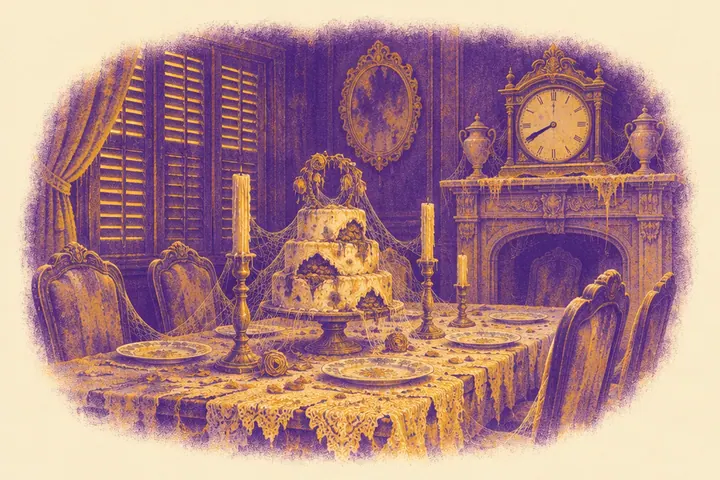
- “the strangest lady I have ever seen, or shall ever see” (Pip, Chapter 8). Pip’s first sight of Miss Havisham. The adult narrator says he will never see anyone stranger, which builds a Gothic atmosphere.
- “I saw that the bride within the bridal dress had withered like the dress” (Pip, Chapter 8). A simile that links the woman to her rotting clothes. Time has stopped in her room, but her body has gone on ageing, and the image shows how the past has destroyed her.
- “Love her, love her, love her!” (Miss Havisham, Chapter 29). Miss Havisham’s fierce whisper to Pip. The repetition sounds more like a curse than a blessing, because she has raised Estella to break his heart.
- “I stole her heart away, and put ice in its place” (Miss Havisham, Chapter 49). Miss Havisham’s confession. The metaphor of ice shows that she made Estella cold on purpose, and the verb “stole” admits it was a crime.
Estella
- “Why, he is a common laboring boy!” (Estella, Chapter 8). Estella’s first words about Pip. The adjective “common” is a judgement of class, and it sets off Pip’s shame and his ambition.
- “And what coarse hands he has! And what thick boots!” (Estella, Chapter 8). Two exclamations mock his body and clothes. Pip had never thought about his hands before, and from now on he sees himself through her eyes.
- “I have a heart to be stabbed in or shot in” (Estella, Chapter 29). Estella warns Pip honestly. The violent verbs show she means her heart works only as an organ in her body, with no feeling in it.
- “I am what you have made me” (Estella, Chapter 38). Estella answers Miss Havisham’s complaint that she is cold. The short sentence blames her upbringing and shows that Miss Havisham’s plan has turned against her.
- “You are part of my existence, part of myself” (Pip, Chapter 44). Pip’s declaration as Estella decides to marry Drummle. The repetition of “part of” shows that his love is bound up with who he is, even though she cannot return it.
- “I have been bent and broken, but … into a better shape” (Estella, Chapter 59). In the ruins of Satis House, Estella says suffering has changed her. The metaphor makes her like metal on Joe’s anvil, shaped by hard blows into something better.
Class and the gentleman
- “a young fellow of great expectations” (Mr Jaggers, Chapter 18). Jaggers brings the news that gives the novel its title. The phrase means Pip can expect a fortune. The irony is that his expectations turn out to be false.
- “Heaven knows we need never be ashamed of our tears” (Pip, Chapter 19). Pip cries as he leaves the village. Tears wash away his pride for a moment, and the older narrator approves of the feeling he soon forgets.
- “no varnish can hide the grain of the wood” (Herbert, quoting his father, Chapter 22). A metaphor: varnish is a shiny surface, and the grain is the real wood beneath. A true gentleman is one at heart, and polish cannot hide what someone really is.
- “the office is one thing, and private life is another” (Wemmick, Chapter 25). Wemmick keeps two selves, dry at work and warm at home. The balanced sentence shows how London’s hard world forces people to divide themselves.
- “Take nothing on its looks; take everything on evidence” (Mr Jaggers, Chapter 40). The lawyer’s rule, in two balanced halves. It is a warning the whole novel supports, because Pip judged his benefactor and the true gentleman by looks.
Guilt and forgiveness
- “O Lord, be merciful to him a sinner!” (Pip, Chapter 56). Pip prays beside the dying Magwitch, using words from a parable in the Bible. The man who once disgusted him is now someone he loves and forgives.
- “I saw no shadow of another parting from her.” (Pip, Chapter 59). The last line of the novel. The image of shadow and mist leaves it open whether Pip and Estella will stay together. It is hopeful, not certain.
Using them in the exam
Learn each quotation with its speaker and its chapter, so you can say where it fits in the story. Then look for pairs that answer each other across the novel. “Why, he is a common laboring boy!” in Chapter 8 is answered by “Yes, Pip, dear boy, I’ve made a gentleman on you!” in Chapter 39. “I stole her heart away, and put ice in its place” in Chapter 49 is answered by “I have been bent and broken, but … into a better shape” in Chapter 59. Pairs like these show the examiner that you know the whole text.
You can use part of a longer quotation, as long as every word you use is exact. For a method that makes them stick, see How to learn quotations so they stay learned. For the whole plot, see Great Expectations: the story, part by part, and for the exam question itself, How to answer the extract question.
Frequently asked questions
How many Great Expectations quotations do I need to learn?
This page has thirty, grouped by character and theme, and many of them work for more than one question. Short quotations are easier to remember. If one will not come in the exam, AQA’s examiners say you can describe the moment precisely in your own words and analyse that.
Do I have to quote Great Expectations word for word?
Exact words are best, and every word you put in quotation marks should be exact. A close reference to a moment also counts. You can use part of a longer quotation as long as the words you use are correct.
What is the best Great Expectations quotation about being a gentleman?
“no varnish can hide the grain of the wood” from Chapter 22 sums up the novel’s idea that a true gentleman is one at heart. Use it with Joe or Magwitch to show who the real gentlemen are.
Who says “Keep still, you little devil, or I’ll cut your throat!”?
Magwitch, the escaped convict, says it to Pip in the churchyard in Chapter 1. It is the first thing he says in the novel.
Do I need quotations if the exam gives me an extract?
Yes. The question asks about the extract and about the novel as a whole, and the rest of the novel is not printed. You need quotations from other chapters to write about the whole text.
Sources
- Project Gutenberg, Charles Dickens, Great Expectations (ebook 1400)
- AQA, GCSE English Literature 8702 specification
- AQA, Report on the examination: Paper 1, June 2024