Knowledge hub › For parents and carers › Talking about the texts
Talking about the set texts at home
You do not need to have read the books to ask good questions about them. Questions that get a teenager talking, versions to listen to or watch together, and how to keep it short.
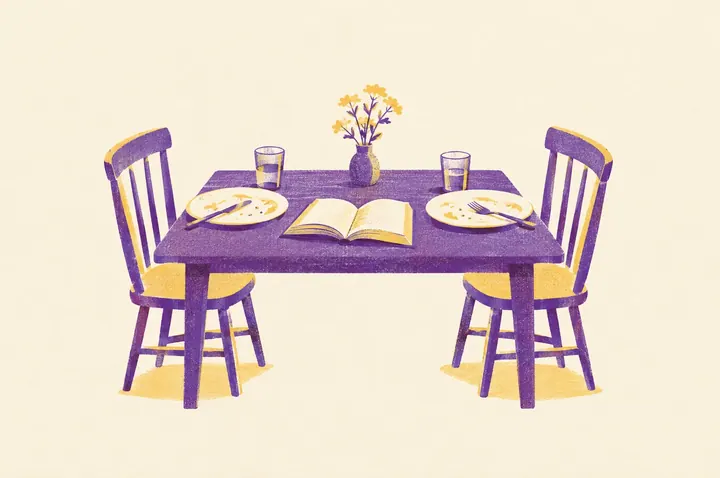
The English Literature exams are closed book: your child writes about the set texts from memory, so the plot, the characters and the quotations all have to be in their head. Explaining a book out loud to someone who has not read it shows quickly what they know and what needs another look. You can be that someone.
Questions that get them talking
Questions with no single right answer work best, because your child has to choose and then defend the choice.
- Who is most to blame for what happens? In Macbeth: Macbeth, Lady Macbeth or the witches? In An Inspector Calls: which of the Birlings, or Gerald?
- Which character changes the most, and where does the change start?
- If you had to cut one scene, which would you lose, and what would the story lose with it?
- What would Mr Birling, or Scrooge before the ghosts, make of something on the news tonight?
- Who are we meant to feel sorry for, and how does the writer make us feel it?
- Which quotation sums up this character best? Can you say it exactly?
- What happens just before and just after this moment?
The last question matters more than it looks. On Paper 1, each essay starts from a printed extract, one from the Shakespeare play and one from the 19th-century novel (Macbeth and A Christmas Carol, if those are your child’s texts), and then moves to the whole text, so your child needs to place any moment in the story. The extract question guide explains how that works.
Whatever the answer, follow it with two more questions: where does that happen, and what are the exact words? Then let your child check in the book.
Listen or watch together
- LibriVox publishes free recordings of books that are out of copyright, read by volunteers. Its A Christmas Carol has five readers, one for each stave, and runs for about 3 hours 15 minutes. The Tragedy of Macbeth is a dramatised reading with a full cast and runs for about 2 hours 10 minutes.
- The National Theatre Collection streams filmed productions, including a Macbeth. It is free for UK state schools and colleges, and students at UK state-funded schools can watch it at home, so ask the school whether it has signed up and how your child logs in.
For An Inspector Calls and the poems, ask the English teacher which recordings or productions the class has used. Afterwards, ask what that version changed, cut or added, then check it against the book. Your child will be writing about the text.
Use the story and quotation pages
The Knowledge hub has a page for each text that tells the story in plain English: A Christmas Carol, Macbeth, An Inspector Calls and the fifteen Power and Conflict poems. There are quotation pages for A Christmas Carol, Macbeth and An Inspector Calls.
A quick game: read out the first half of a quotation and ask for the rest, then who says it and when. Read “Fair is foul”, and your child should finish with “and foul is fair”, the witches’ chant from the first scene of Macbeth. In December, our free A Christmas Carol: a quotation a day gives one quotation and one question for each day from 1 to 24 December.
Keep it short
Ten minutes, two or three times a week, does more than an hour that ends in an argument. The car and the dinner table both work. Let your child do the explaining, and stop while it is still going well. If something is wrong, ask where it happens in the book and let them find it. For more on revision at home, see Helping with English revision when it isn’t your subject.
Sources
- LibriVox, About LibriVox
- LibriVox, A Christmas Carol and The Tragedy of Macbeth
- National Theatre, National Theatre Collection
- AQA, GCSE English Literature 8702 specification (version 1.3, 2022)