

Teachers › Key Stage 3 › Year 7 › A Midsummer Night’s Dream
A Midsummer Night’s Dream
Key Stage 3 · Year 7 scheme of learning · Spring 2 in our Year 7 plan
A half-term scheme of learning for Year 7: 14 one-hour lessons across about six weeks, built around one big question: does love make fools of everyone in the play? Every lesson has slides, teacher notes and a student booklet with three levels of support.
William Shakespeare, about 1595. Every extract is printed in the booklets, so no class set of books is needed.
Three levels of support · a checkpoint in Lesson 7 with whole-class feedback · an end-of-unit assessment in Lesson 13, placed in five bands
Real pages from the scheme
Choose a page to see it larger. Lesson 6 is free: we email the full editable lesson.
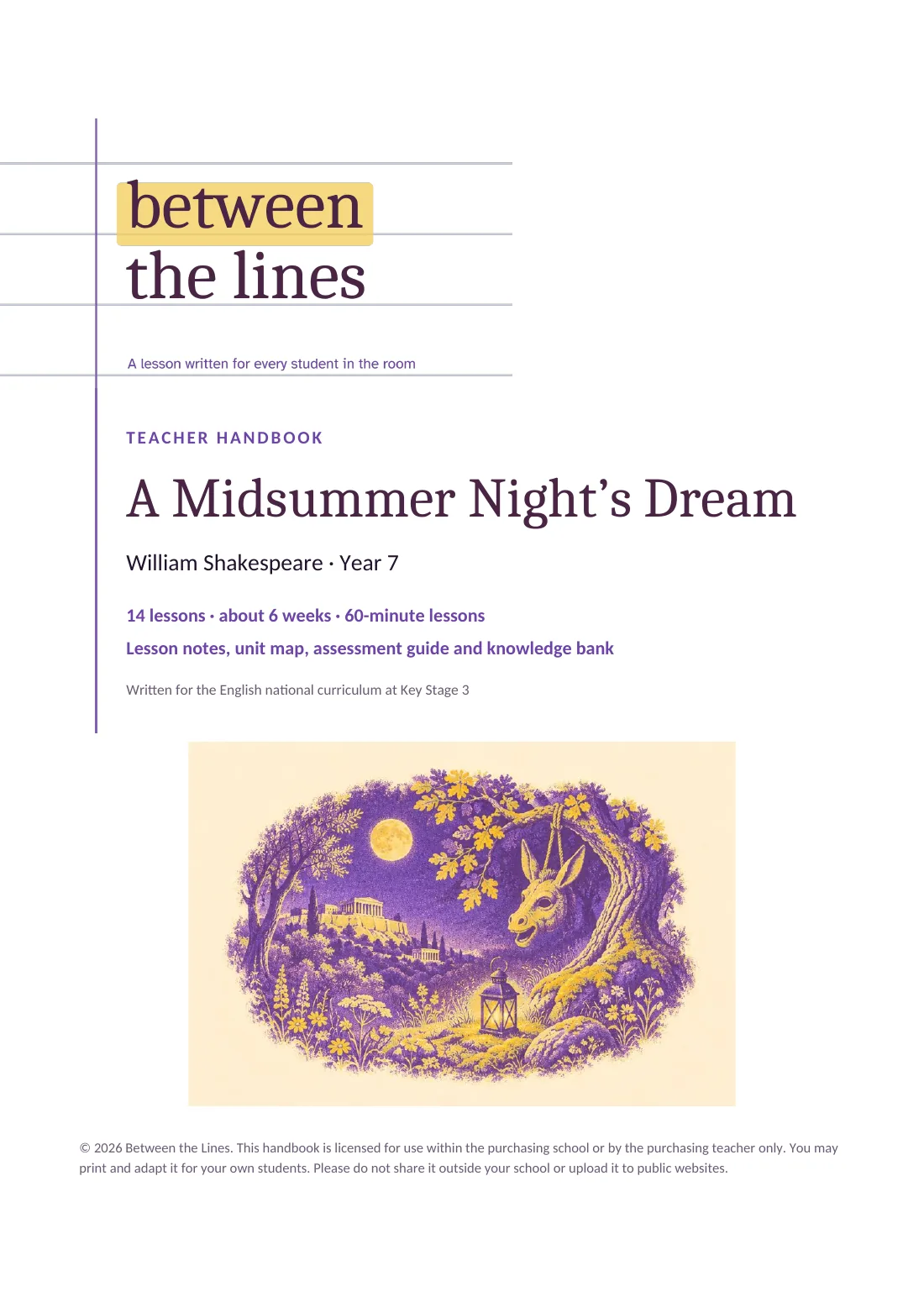 Teacher handbookCover
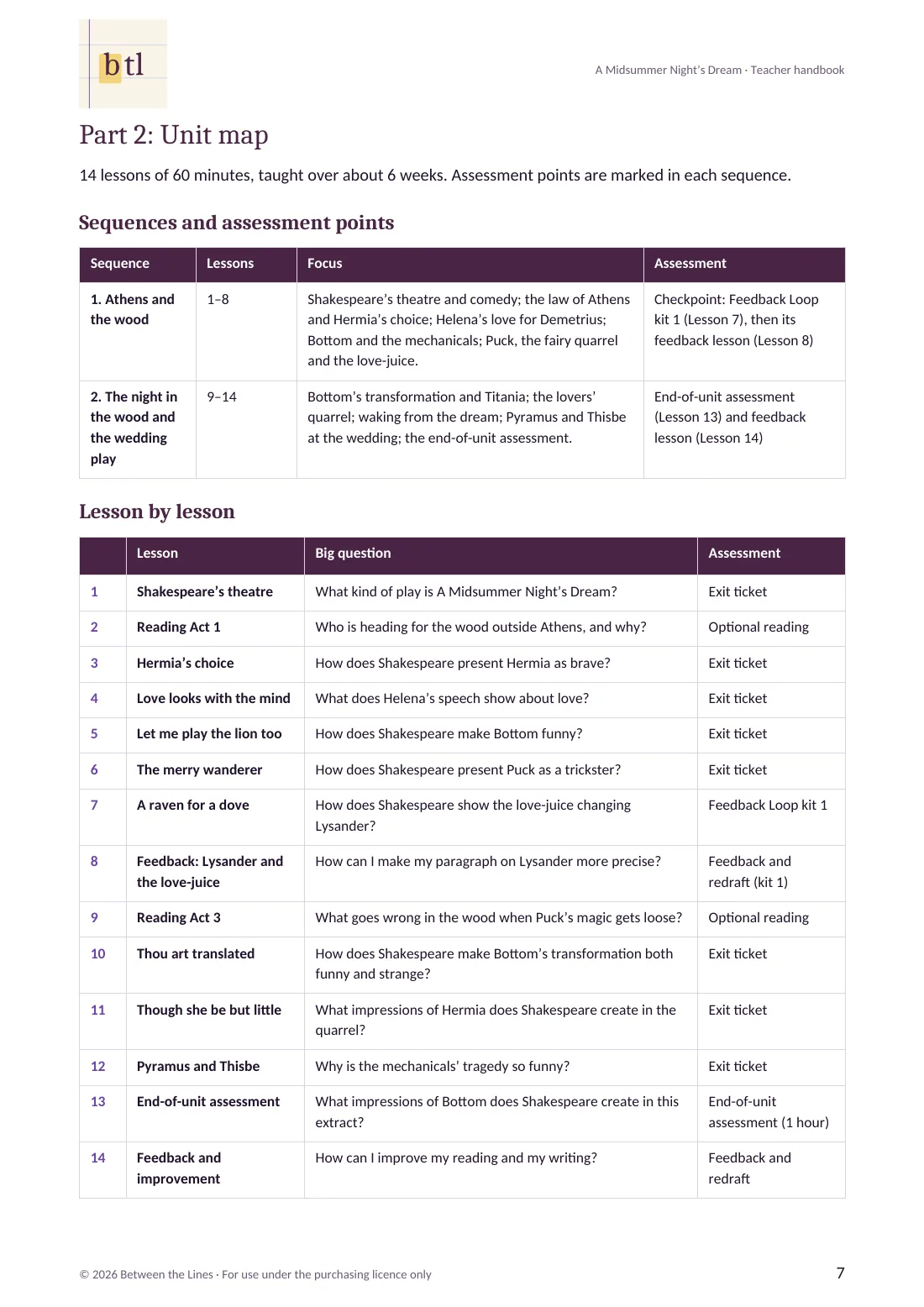 Lesson notesLesson 6 in the teacher handbook
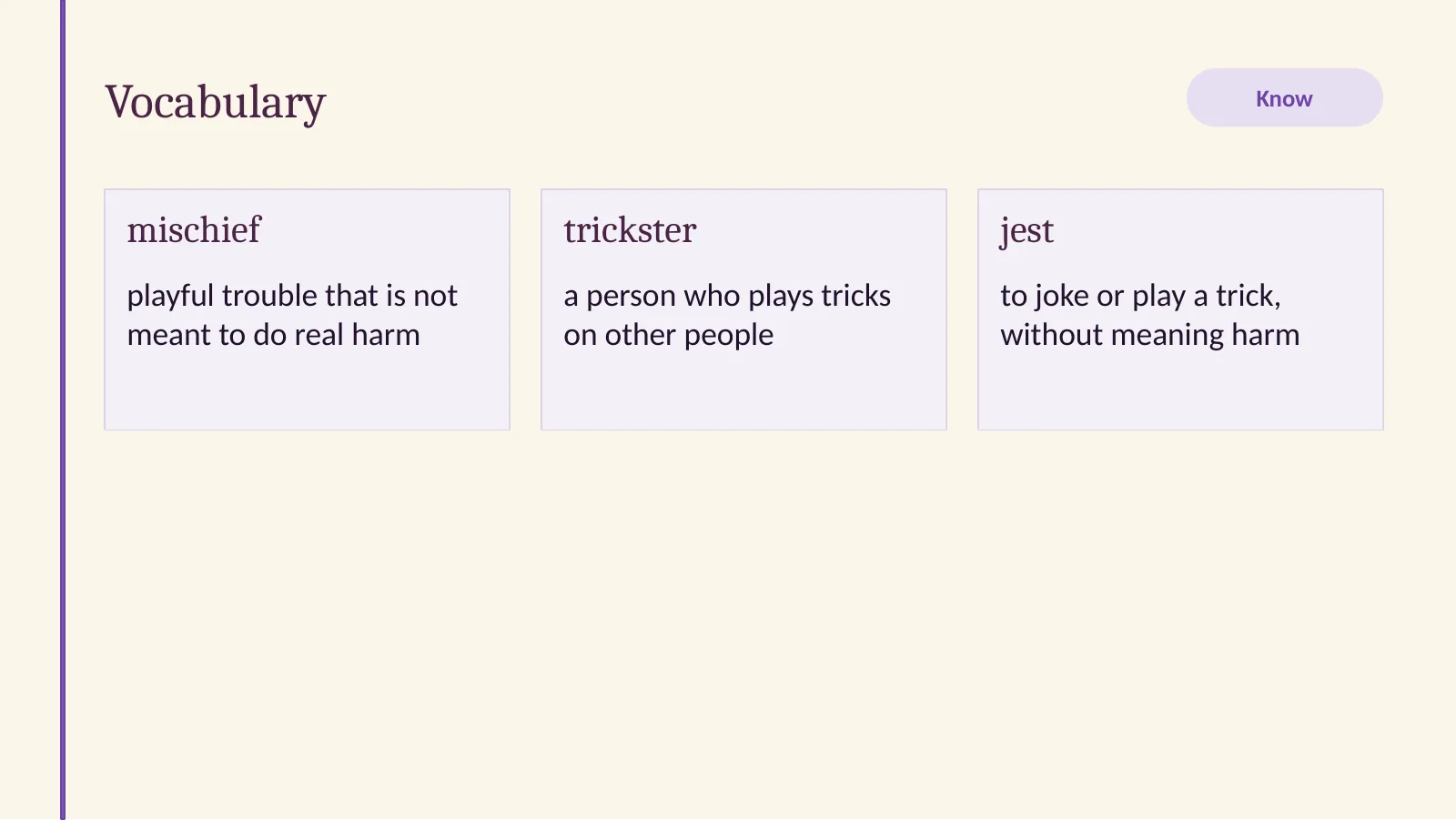 SlidesLesson 6: The merry wanderer
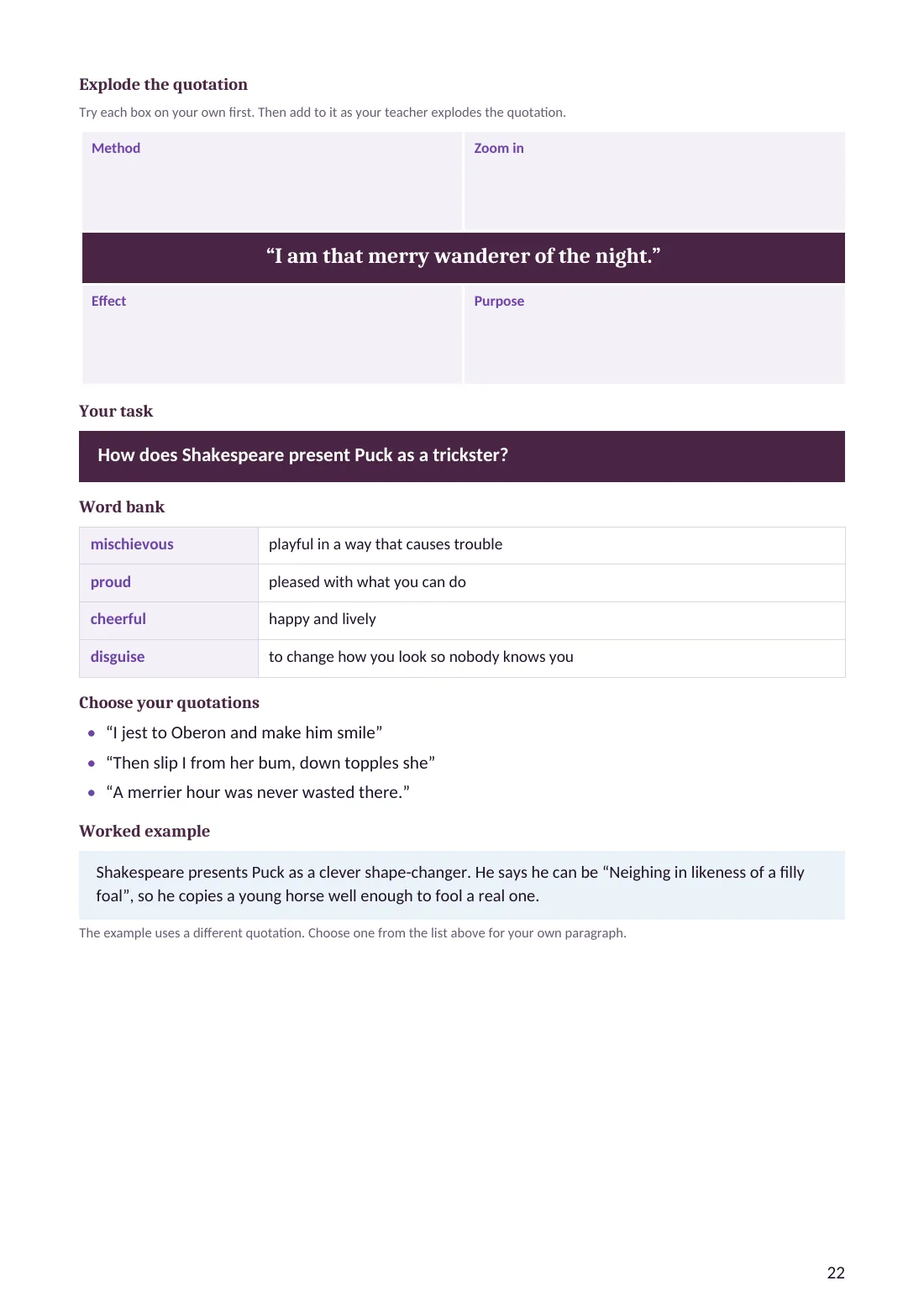 SecuringLesson 6 in the Securing student pack
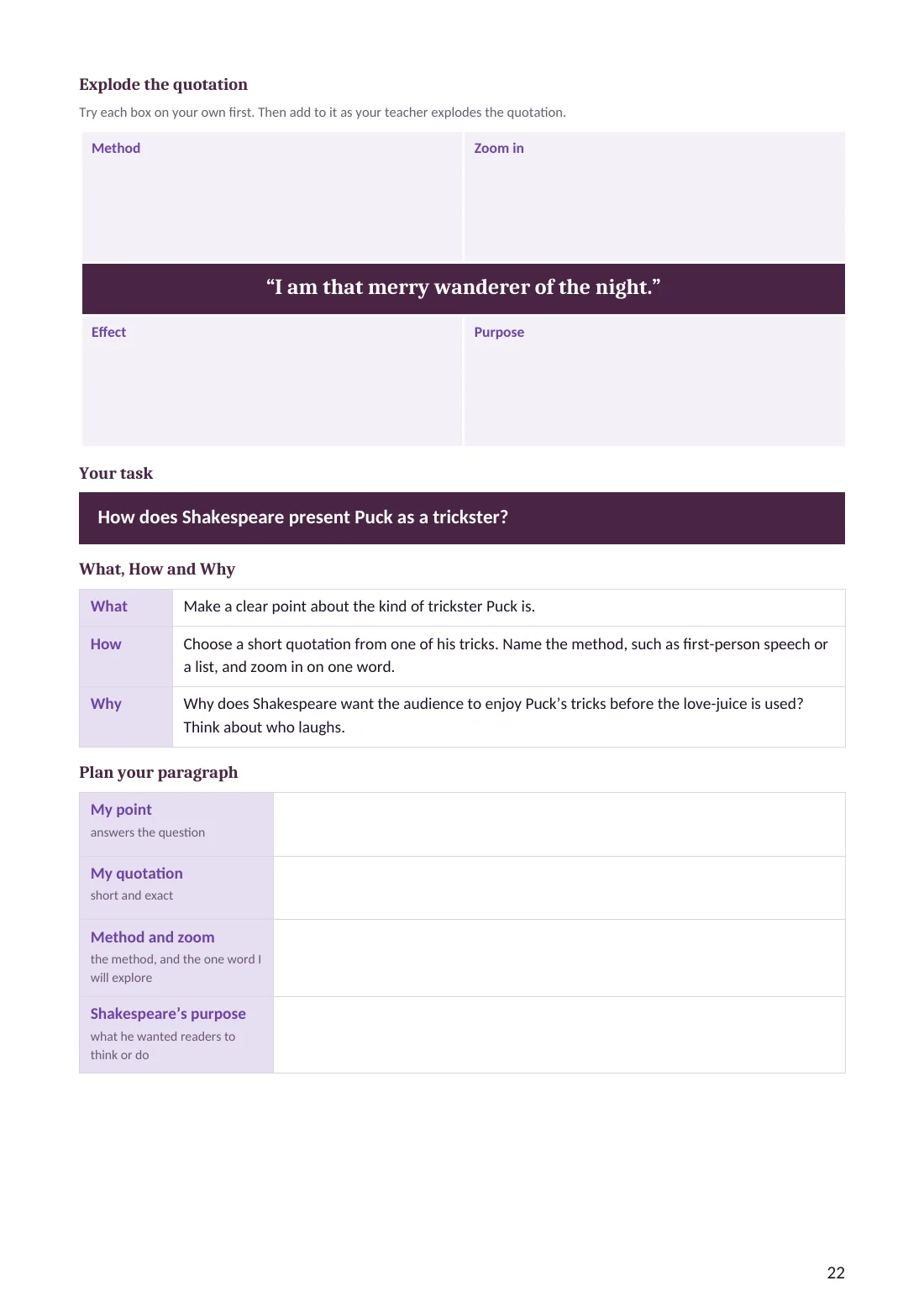 StrengtheningLesson 6 in the Strengthening student pack
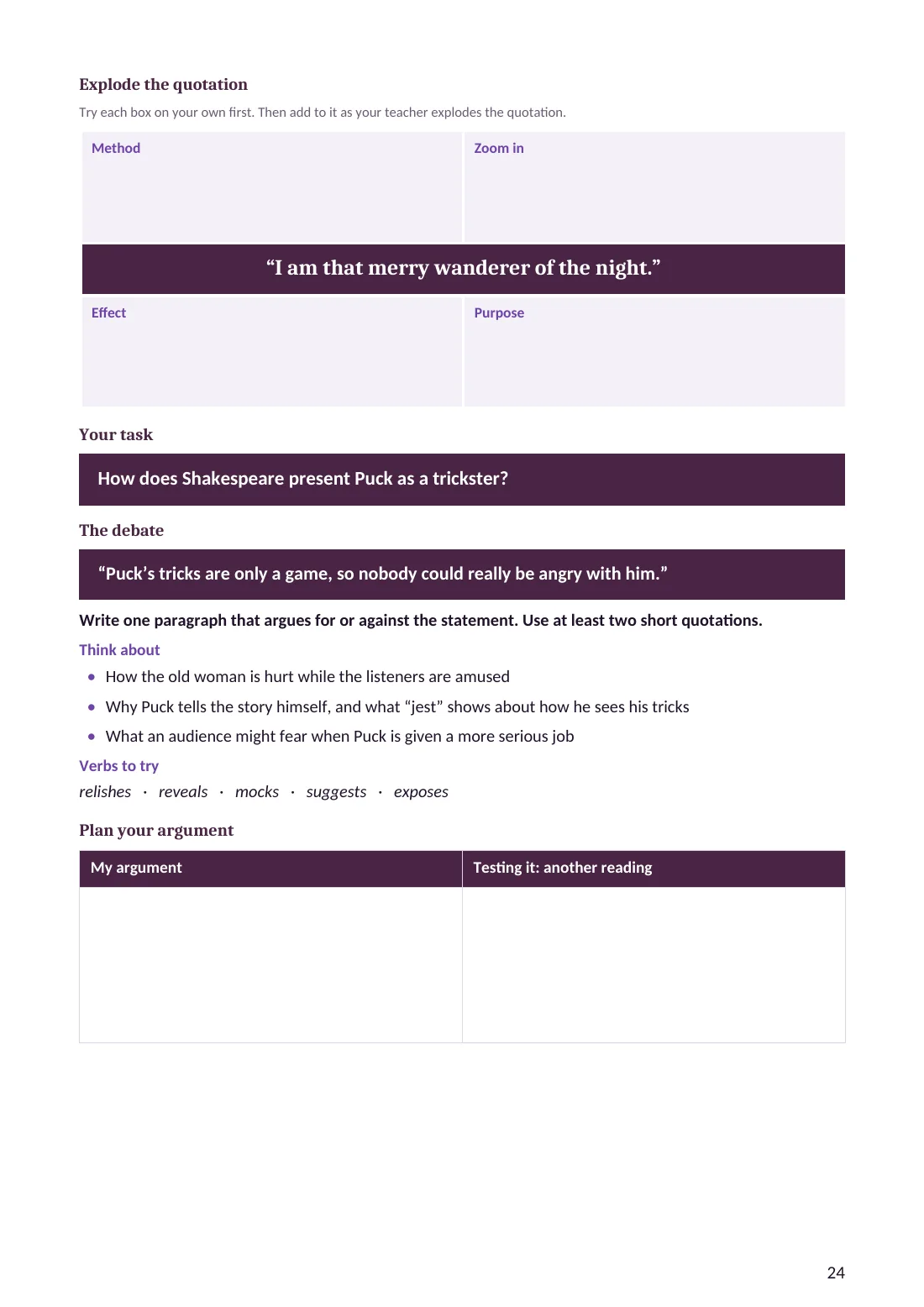 SoaringLesson 6 in the Soaring student pack
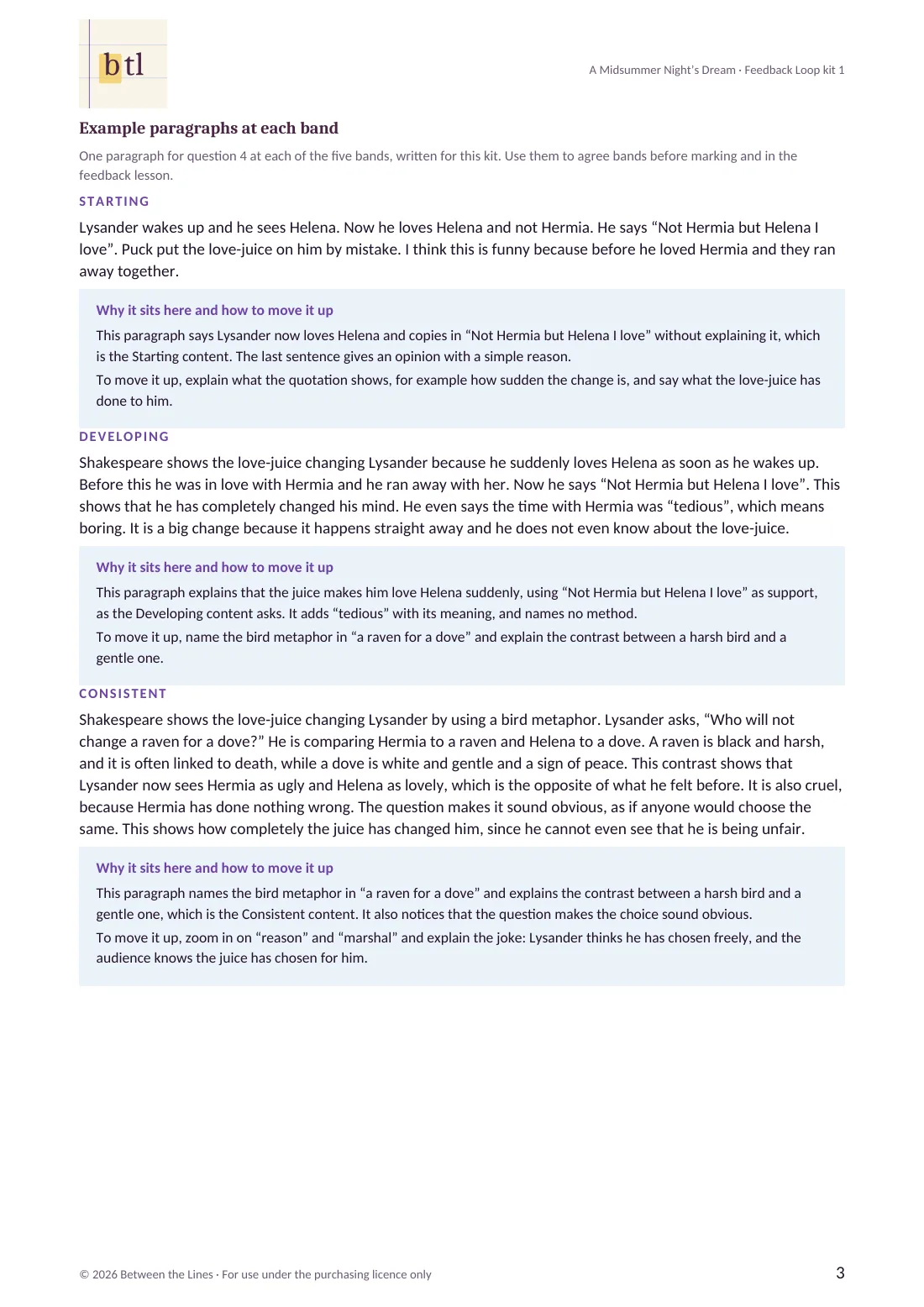 Feedback Loop kitThe checkpoint in Lesson 7
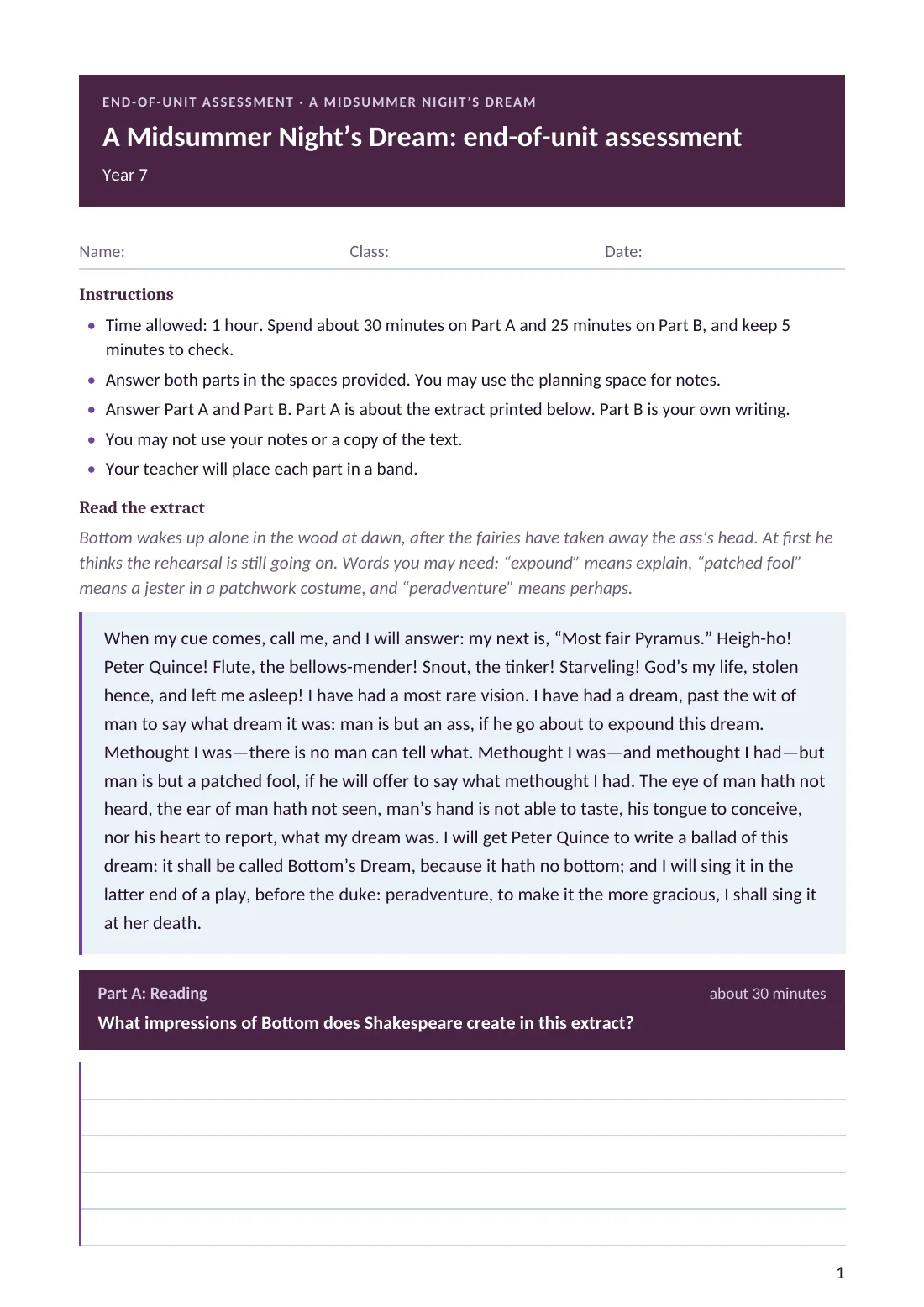 End-of-unit assessmentPart A reading, Part B writing
What students learn
Students read their first whole Shakespeare play, a comedy in which four young lovers, a group of working men rehearsing a play and the king and queen of the fairies all lose their way in one wood on one night. They learn how Shakespeare’s theatre worked and why the play needs its words to set every scene, then follow the story act by act, reading the opening and the night in the wood aloud. Close study shows them how Shakespeare makes characters brave, foolish or funny through single words, rhyme and the contrast between verse and prose. They write What–How–Why paragraphs, letters, a diary and story openings, and the unit ends with a reading response on an unseen extract and a story of their own set in the wood.
By the end of the unit, students can
- Describe Shakespeare’s theatre and the world of the play: Athens, the wood and the fairies
- Retell the four plots of the play in order and say how they meet
- Explain how Shakespeare presents Hermia, Helena, Bottom and Puck, using short quotations
- Write What–How–Why paragraphs that name a method and zoom in on a single word
- Write in role and write a story opening set in the world of the play
Where it fits
Builds on: Reading at primary school: retelling a story in order, finding evidence in a text, saying how a character feels and why, and reading playscripts and poems aloud. Some Year 7 students have met a Shakespeare story in primary school, but few have read a whole play in Shakespeare’s own words.
Leads to: Later Shakespeare study in Years 8 and 9, often a tragedy; longer What–How–Why answers that follow a character or an idea across a whole text; writing in role and writing for performance.
Two sequences, 14 lessons
The checkpoint, its feedback lesson and the end-of-unit assessment are planned into the sequence. Open a sequence to see its lessons. Lesson 6 is free.
Athens and the woodLessons 1 to 8
- 1Shakespeare’s theatreWhat kind of play is A Midsummer Night’s Dream?
- 2Reading Act 1Reading lessonWho is heading for the wood outside Athens, and why?
- 3Hermia’s choiceHow does Shakespeare present Hermia as brave?
- 4Love looks with the mindWhat does Helena’s speech show about love?
- 5Let me play the lion tooHow does Shakespeare make Bottom funny?
- 6The merry wandererFreeHow does Shakespeare present Puck as a trickster?
- 7A raven for a doveFeedback Loop kit 1How does Shakespeare show the love-juice changing Lysander?
- 8Feedback: Lysander and the love-juiceReview lessonHow can I make my paragraph on Lysander more precise?
The night in the wood and the wedding playLessons 9 to 14
- 9Reading Act 3Reading lessonWhat goes wrong in the wood when Puck’s magic gets loose?
- 10Thou art translatedHow does Shakespeare make Bottom’s transformation both funny and strange?
- 11Though she be but littleWhat impressions of Hermia does Shakespeare create in the quarrel?
- 12Pyramus and ThisbeWhy is the mechanicals’ tragedy so funny?
- 13End-of-unit assessmentEnd-of-unit assessmentWhat impressions of Bottom does Shakespeare create in this extract?
- 14Feedback and improvementFeedback lessonHow can I improve my reading and my writing?
Assessment without grades
End-of-unit assessment (Lesson 13): Part A, a reading response to a printed extract; Part B, a piece of the student’s own writing. One hour.
Each part is placed in one of five bands (Starting, Developing, Consistent, Confident, Assured) using the Year 7 reading and writing grids and our indicative content for the task. Nothing is scored or turned into a number. The checkpoint in Lesson 7 is one What–How–Why paragraph, placed in a band in the same way.
- Starting
- Developing
- Consistent
- Confident
- Assured
The bands describe the work, never the student. Key Stage 3 has no GCSE grades or marks in our schemes.
Buy the scheme
Both licences include every file in the scheme, as editable Word and PowerPoint files with a PDF copy of each.
One teacher
For your own classes
£40incl. VAT
- Print and adapt for your own students
- Put it on your school’s own secure learning platform
- Upgrade to a school licence for the difference before VAT
School
Every teacher and student at one school
£100+ VAT
- Print and adapt for every class in the school
- Put it on your school’s own secure learning platform
- Each further school in the same trust pays half
Planning the whole year? The Year 7 school bundle has all six schemes, the year plan and the end-of-year assessment for £480 + VAT.
Both licences include 10 folders: see what is in each
- 00Start here6 pages: how the scheme fits together
- 01Teacher handbook64 pages: intent, unit map, lesson notes and the assessment guide
- 02Slides14 PowerPoint decks with teacher notes, and a PDF copy of each
- 03Student bookletEvery lesson with the Securing, Strengthening and Soaring support side by side, 45 pages, plus one pack per level for set classes
- 04Independent practiceAll three levels in one booklet, 45 pages, plus one booklet per level
- 05Feedback Loop kitThe Lesson 7 checkpoint and its whole-class feedback lesson, 8 pages
- 06End-of-unit assessmentThe assessment paper and a teacher guide with the band grids
- 09Missed a lessonA catch-up sheet for every lesson
- 10InclusionNotes for students with SEND, students learning English and pupil premium students, and a key words list
- 11Talk routinesSixteen routines for spoken English in any lesson, with steps, sentence stems and a student sheet
To pay by invoice, to upgrade a teacher licence, or to license another school in your trust at half price, email hello@btl.education. Please don’t share the files outside your school or upload them to public websites. Licence terms
A Midsummer Night’s Dream is in the public domain. Every extract is copied exactly from a public-domain text of the play.
Teach Lesson 6 of A Midsummer Night’s Dream, free
One complete lesson from every Key Stage 3 scheme: the slides with teacher notes, and the teacher notes and student pages at Securing, Strengthening and Soaring. Choose a scheme and we email you the files straight away.
The rest of Year 7
- Heroes and monsters: The Odyssey Autumn 1
- Dickens’s London: Oliver Twist Autumn 2
- Ballads and story poems Spring 1
- Journeys Summer 1
- Adventure: Treasure Island Summer 2
Get our emails
About once a month: new free resources and the dates that matter for GCSE English.