

Teachers › Key Stage 3 › Year 7 › Dickens’s London: Oliver Twist
Dickens’s London: Oliver Twist
Key Stage 3 · Year 7 scheme of learning · Autumn 2 in our Year 7 plan
A half-term scheme of learning for Year 7: 14 one-hour lessons across about six weeks, built around one big question: why did Dickens want his readers to care about Oliver? Every lesson has slides, teacher notes and a student booklet with three levels of support.
Charles Dickens, 1838. Every extract is printed in the booklets, so no class set of books is needed.
Three levels of support · a checkpoint in Lesson 7 with whole-class feedback · an end-of-unit assessment in Lesson 13, placed in five bands
Real pages from the scheme
Choose a page to see it larger. Lesson 4 is free: we email the full editable lesson.
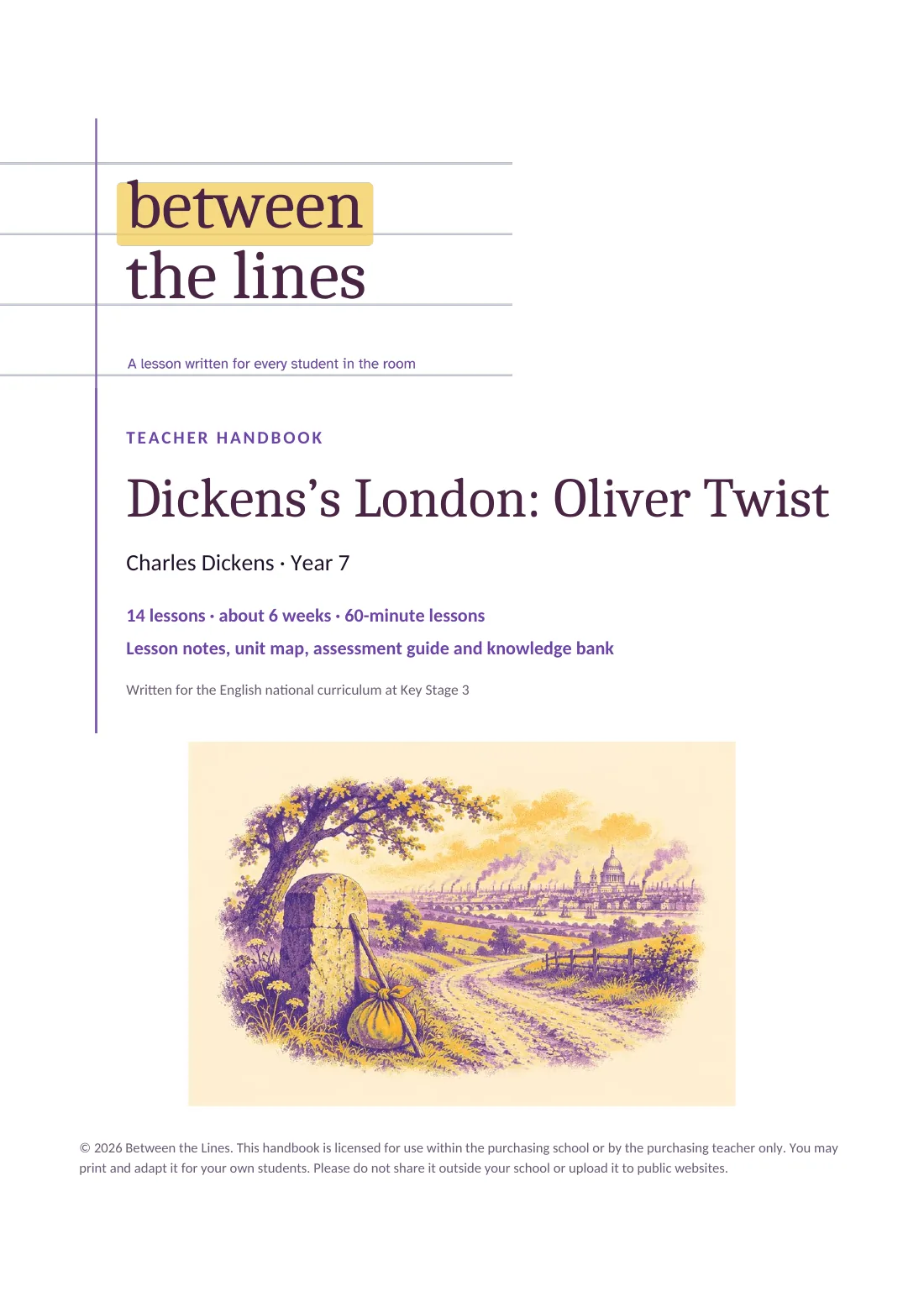 Teacher handbookCover
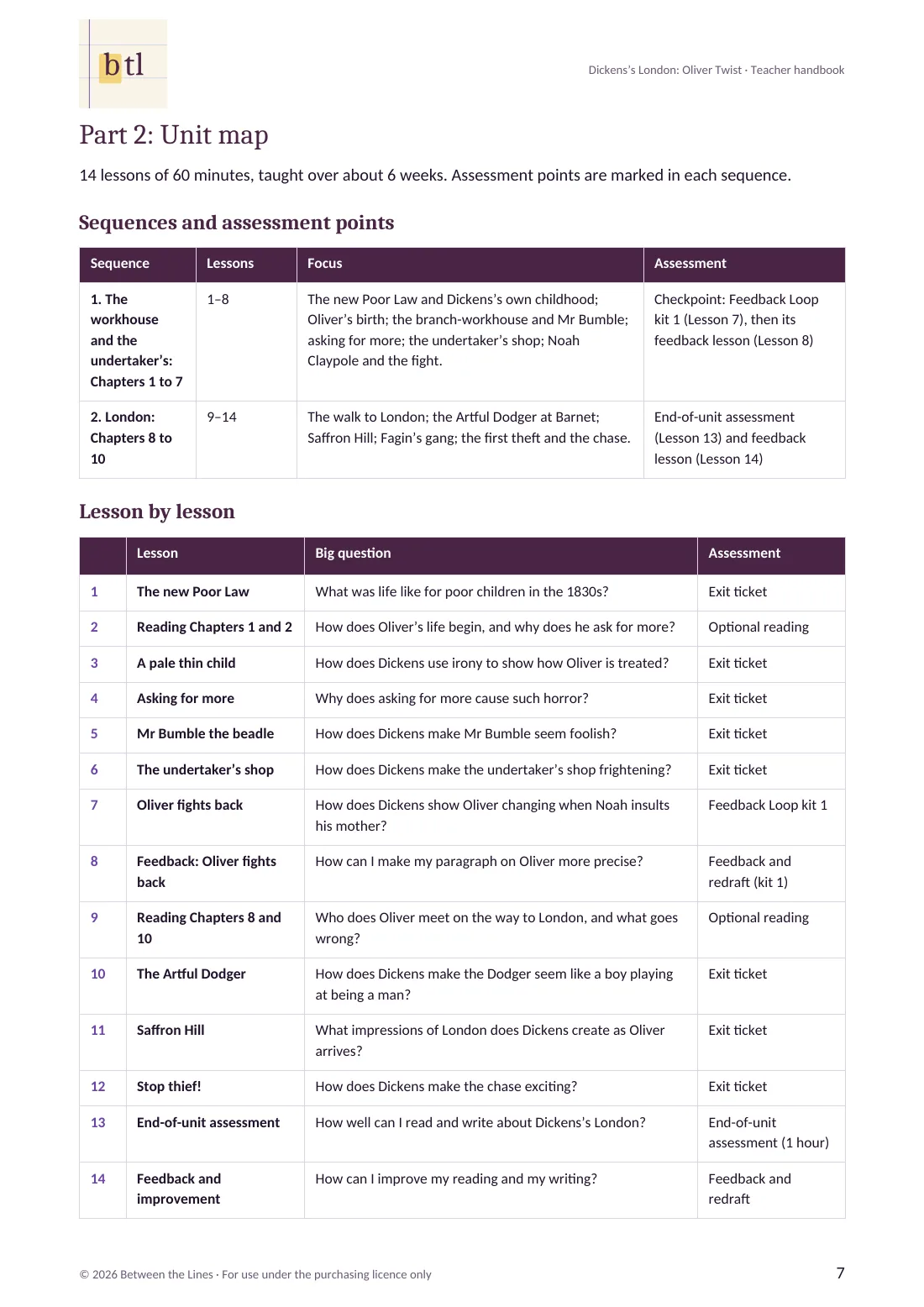 Lesson notesLesson 4 in the teacher handbook
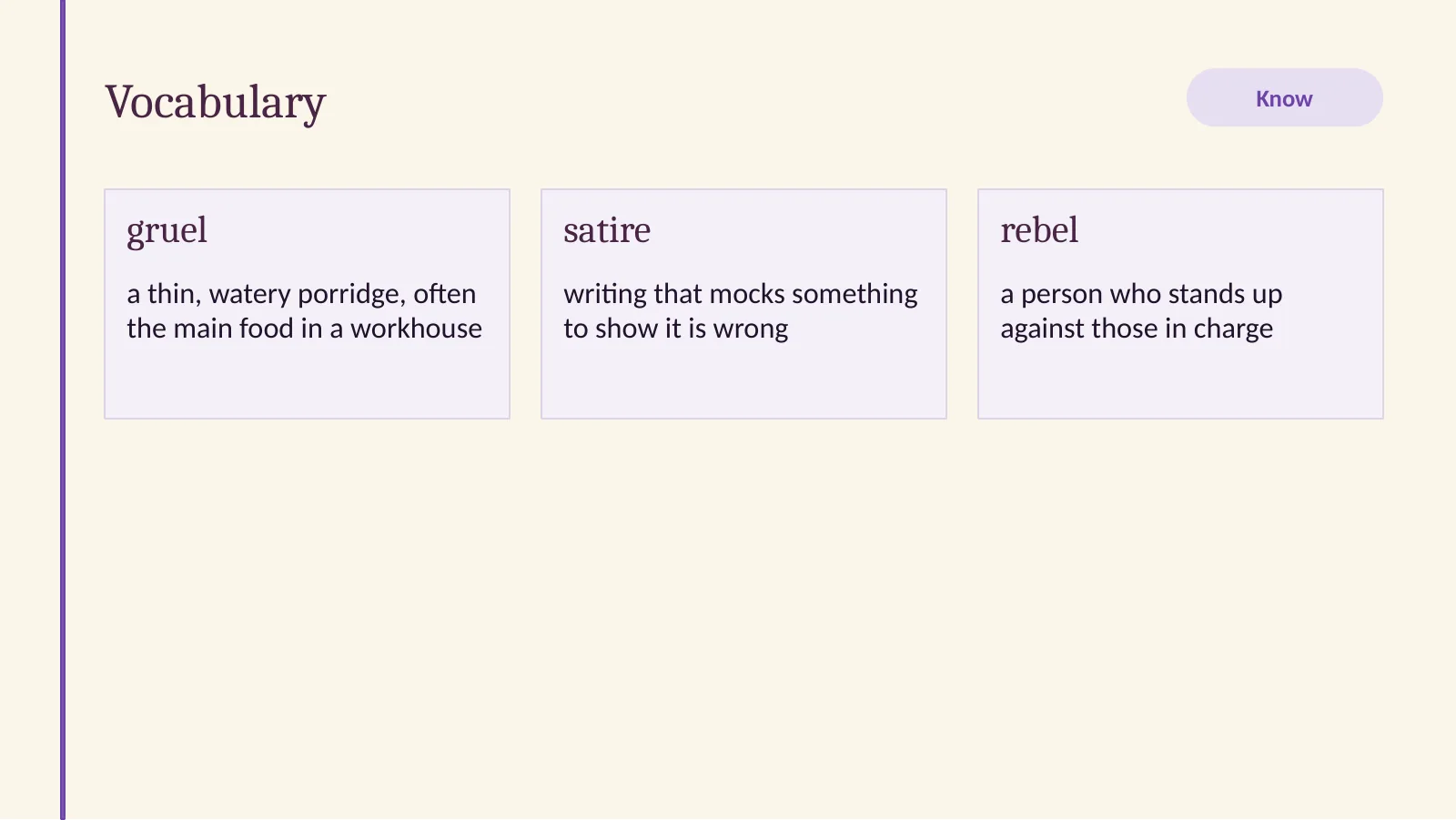 SlidesLesson 4: Asking for more
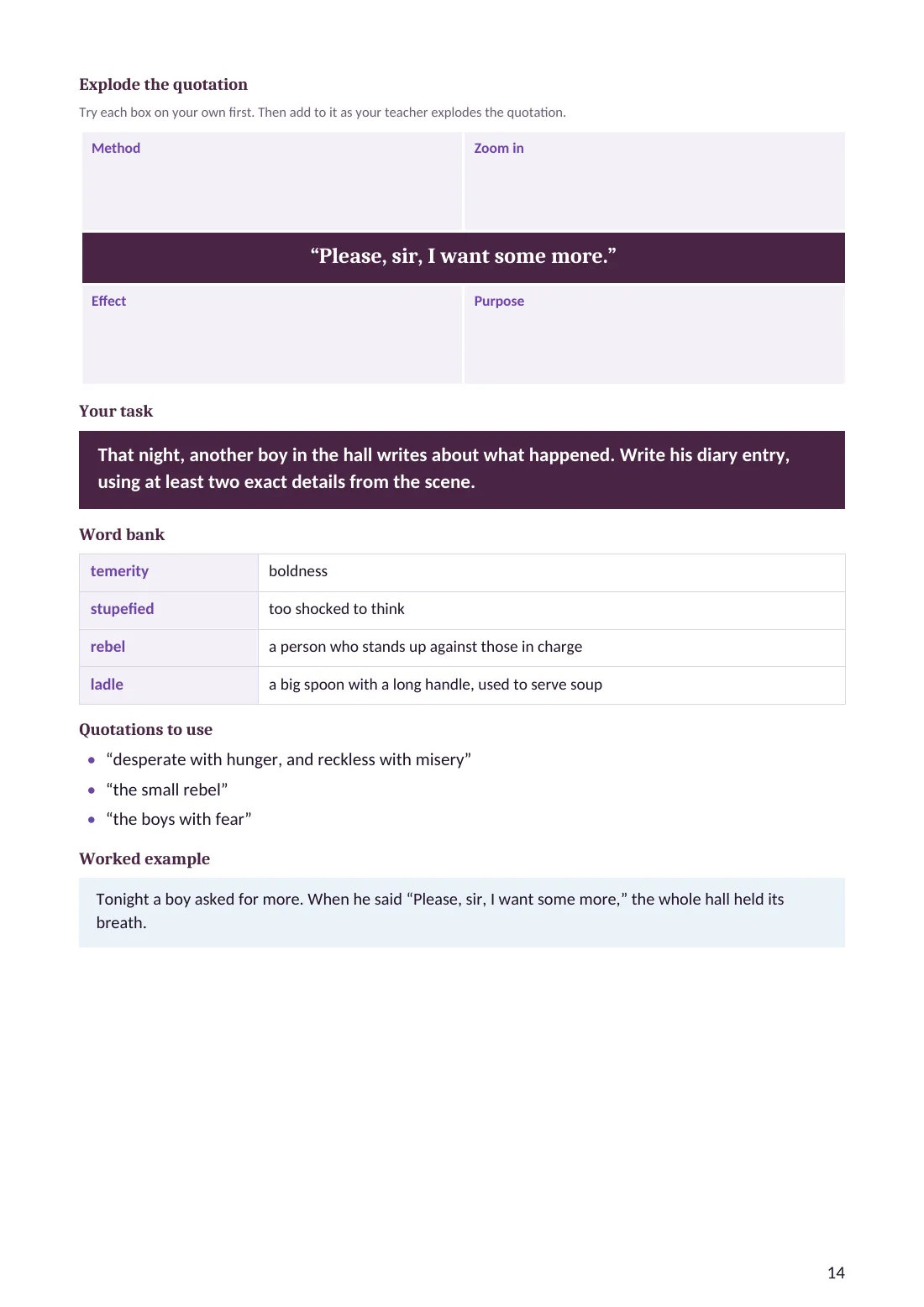 SecuringLesson 4 in the Securing student pack
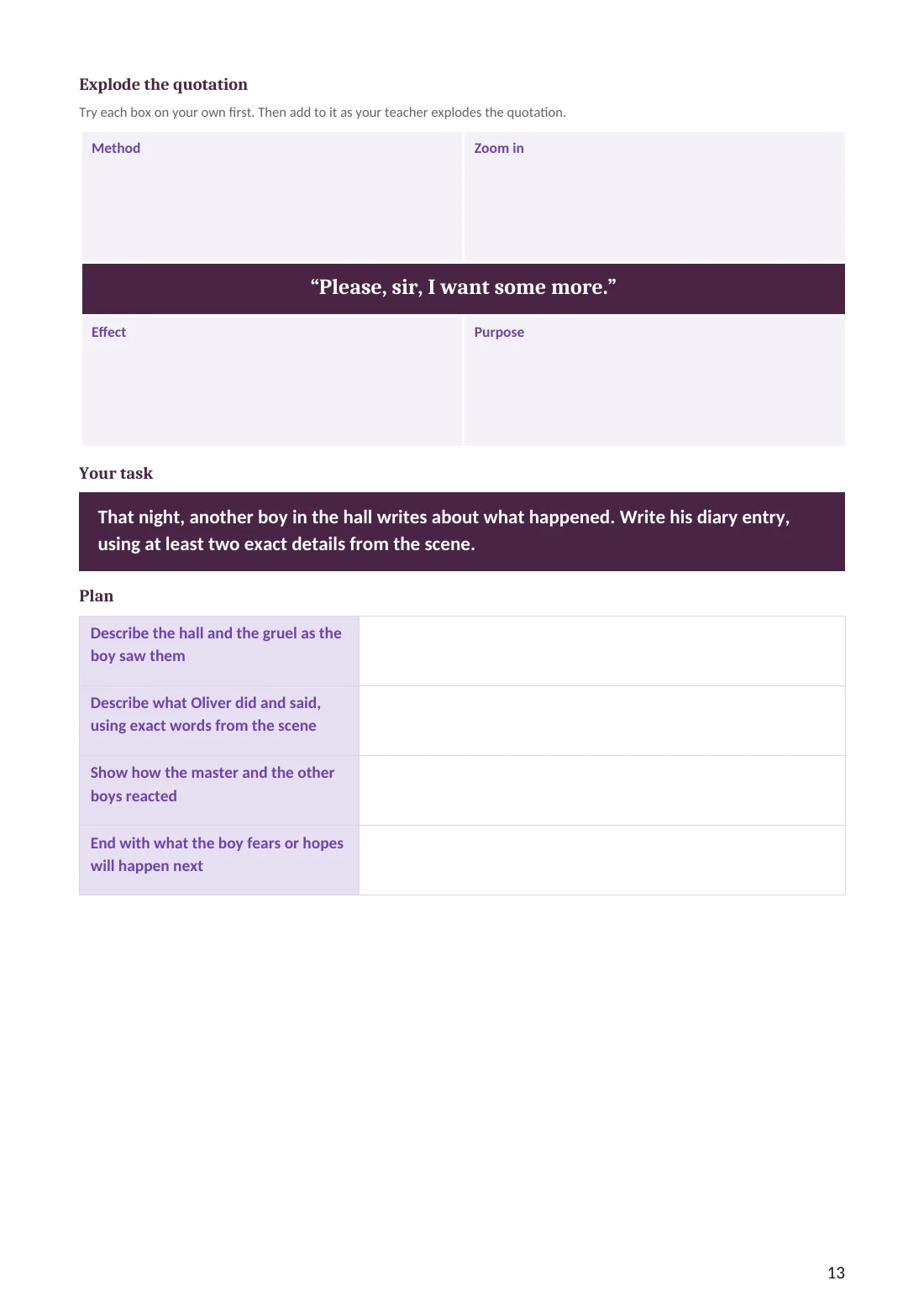 StrengtheningLesson 4 in the Strengthening student pack
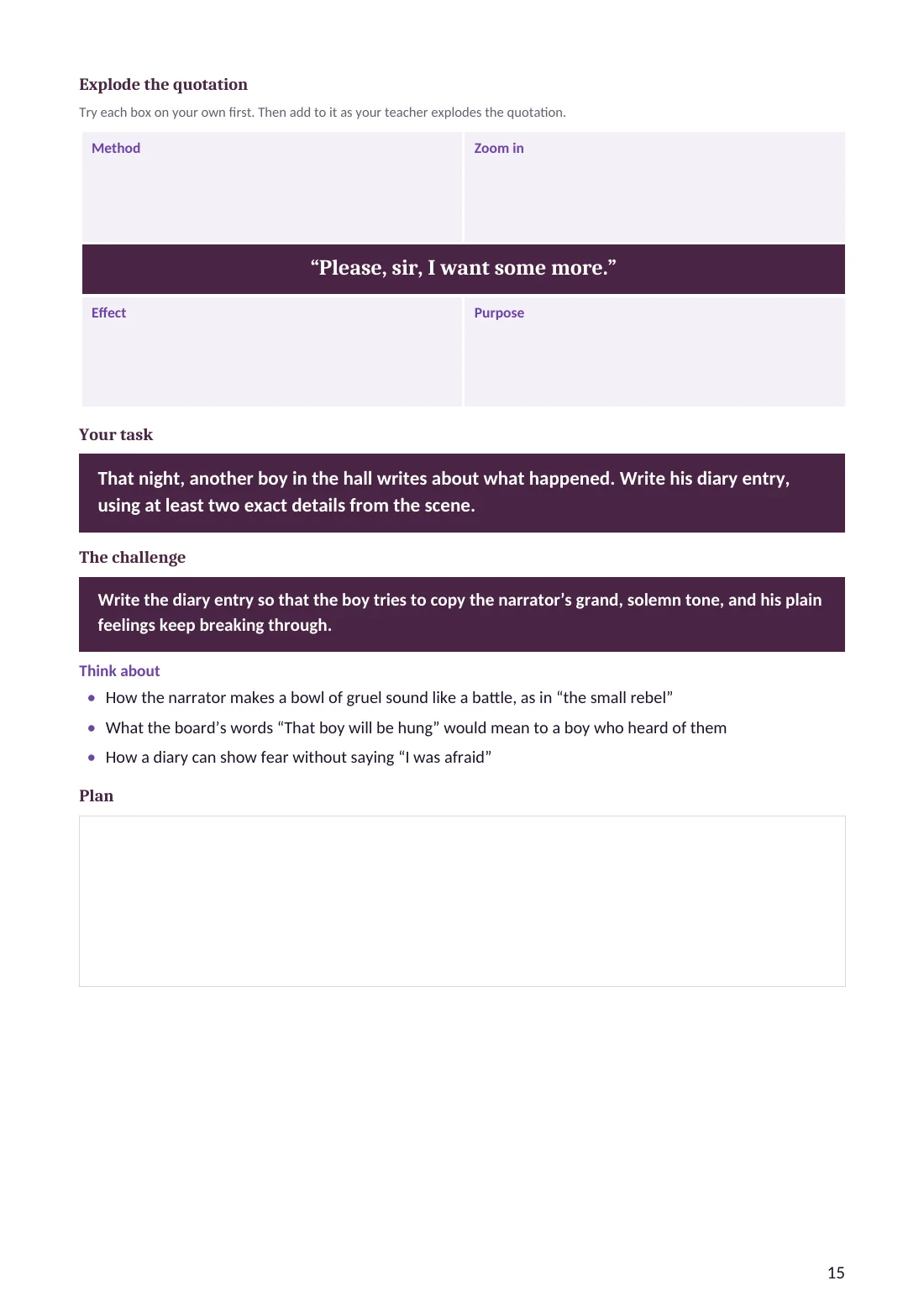 SoaringLesson 4 in the Soaring student pack
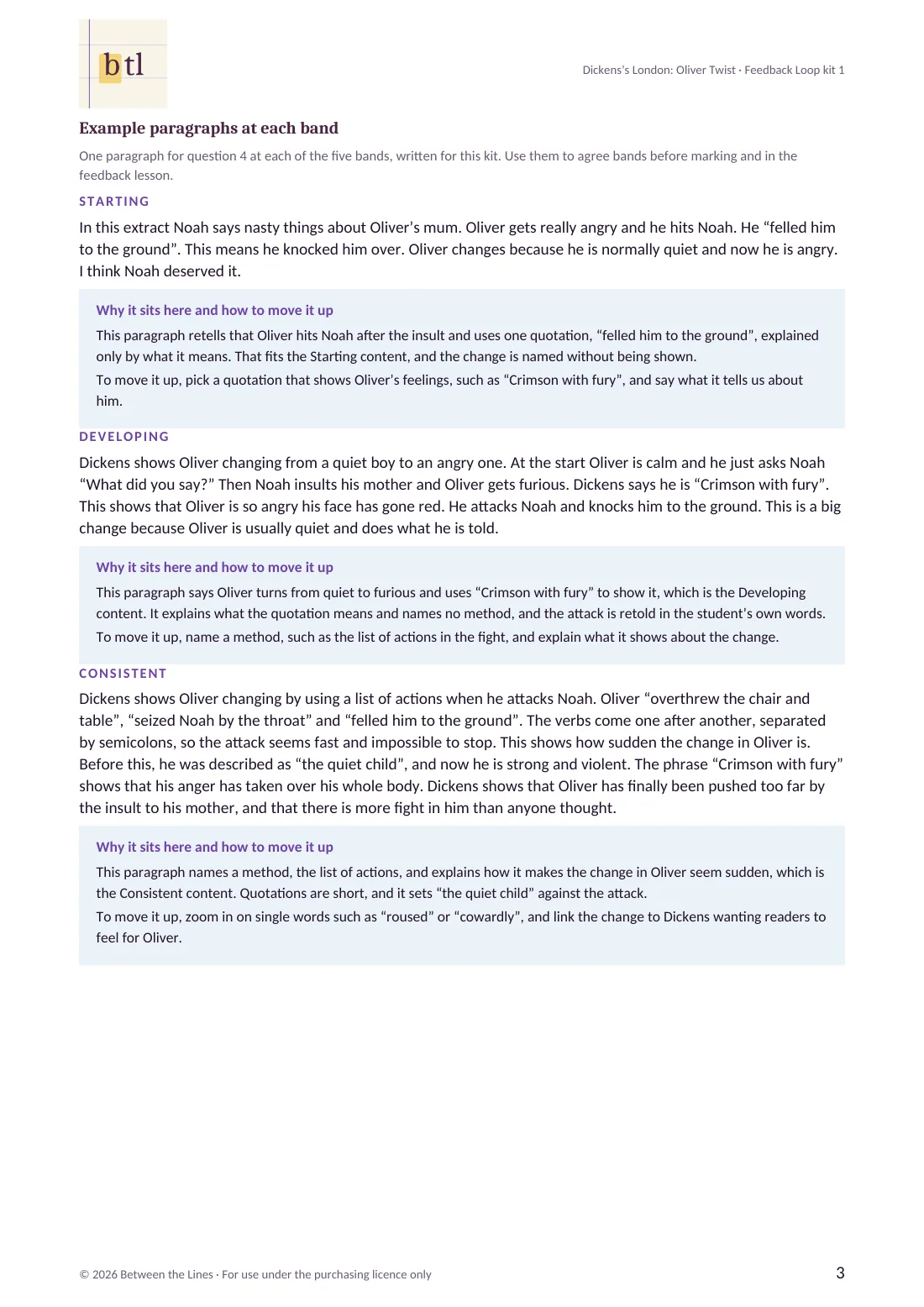 Feedback Loop kitThe checkpoint in Lesson 7
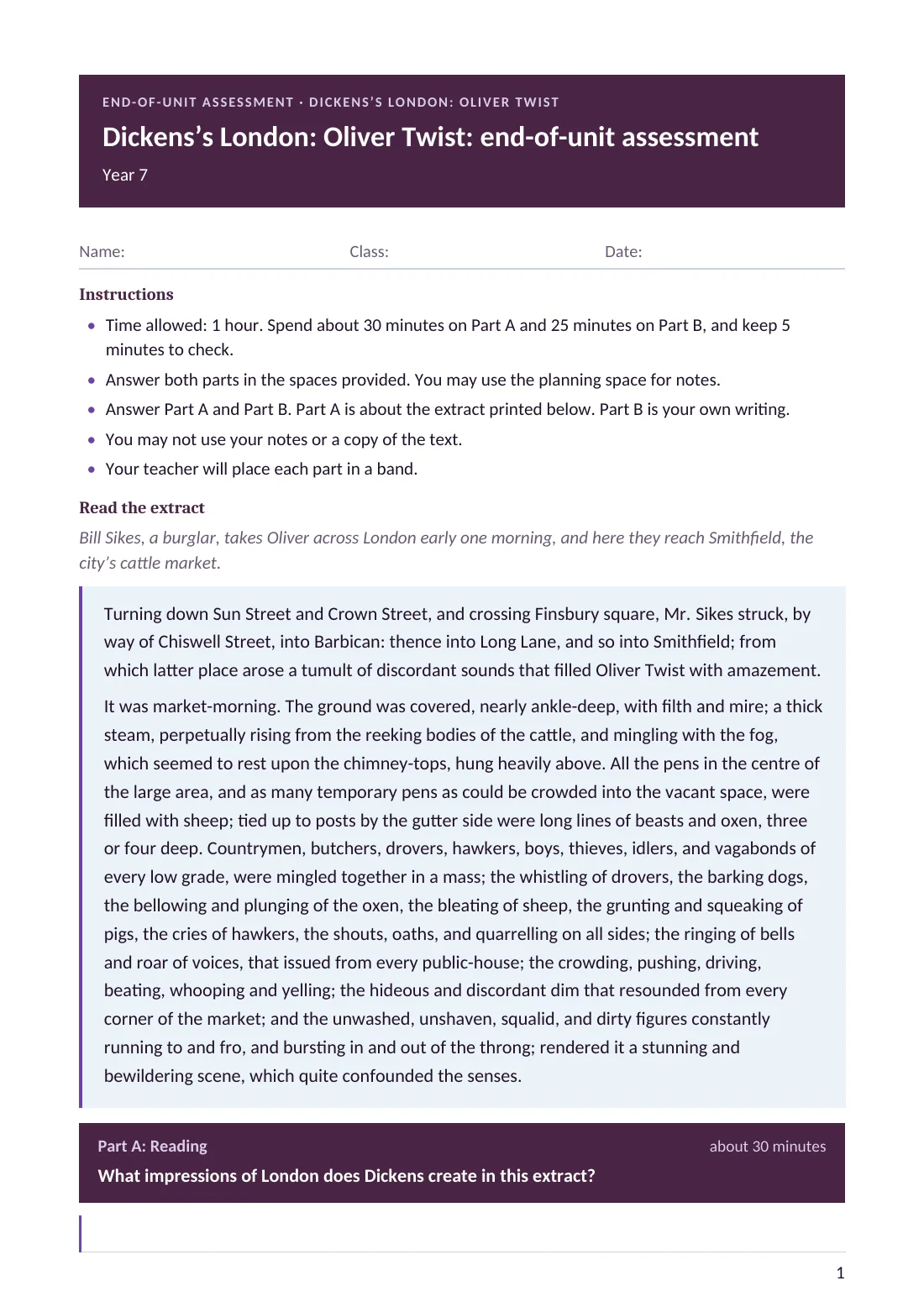 End-of-unit assessmentPart A reading, Part B writing
What students learn
Students meet Dickens through the opening chapters of Oliver Twist, read in short extracts with the facts of Victorian childhood beside them. They follow Oliver from his birth in a workhouse, through the gruel and the famous request for more, to the undertaker’s shop, his fight with Noah and his long walk to London, where the Artful Dodger leads him into Fagin’s gang and the cry of "Stop thief!" chases him through the streets. Along the way they learn about the new Poor Law of 1834, workhouses, child work and the poorest streets of London, and they keep asking the big question: why did Dickens want his readers to care about Oliver? Students practise What–How–Why paragraphs on short extracts, learn to hear Dickens’s irony, and write their own letters, diary entries, descriptions and story openings set in his world.
By the end of the unit, students can
- Explain how the new Poor Law, the workhouse and child work shaped the lives of poor children in the 1830s
- Identify how Dickens uses irony and humour to criticise the adults who run Oliver’s world
- Analyse how Dickens creates settings, from the undertaker’s shop to the streets of London
- Write What–How–Why paragraphs about a short extract, using short exact quotations
- Write a story opening set in Dickens’s London, using methods learned from his writing
Where it fits
Builds on: Primary school reading of longer stories, often alongside history lessons on the Victorians; retrieving and inferring from a passage with evidence; writing stories and descriptions in paragraphs. Many Year 7 students know the story of Oliver from a film or the stage musical, and this unit sets that story beside Dickens’s own words.
Leads to: Later study of Dickens and other nineteenth-century writers in Years 8 and 9, such as A Christmas Carol; reading longer extracts in older English with confidence; writing about a writer’s purpose and the world he wrote in; descriptive and narrative writing with control of setting, viewpoint and pace.
Two sequences, 14 lessons
The checkpoint, its feedback lesson and the end-of-unit assessment are planned into the sequence. Open a sequence to see its lessons. Lesson 4 is free.
The workhouse and the undertaker’s: Chapters 1 to 7Lessons 1 to 8
- 1The new Poor LawWhat was life like for poor children in the 1830s?
- 2Reading Chapters 1 and 2Reading lessonHow does Oliver’s life begin, and why does he ask for more?
- 3A pale thin childHow does Dickens use irony to show how Oliver is treated?
- 4Asking for moreFreeWhy does asking for more cause such horror?
- 5Mr Bumble the beadleHow does Dickens make Mr Bumble seem foolish?
- 6The undertaker’s shopHow does Dickens make the undertaker’s shop frightening?
- 7Oliver fights backFeedback Loop kit 1How does Dickens show Oliver changing when Noah insults his mother?
- 8Feedback: Oliver fights backReview lessonHow can I make my paragraph on Oliver more precise?
London: Chapters 8 to 10Lessons 9 to 14
- 9Reading Chapters 8 and 10Reading lessonWho does Oliver meet on the way to London, and what goes wrong?
- 10The Artful DodgerHow does Dickens make the Dodger seem like a boy playing at being a man?
- 11Saffron HillWhat impressions of London does Dickens create as Oliver arrives?
- 12Stop thief!How does Dickens make the chase exciting?
- 13End-of-unit assessmentEnd-of-unit assessmentHow well can I read and write about Dickens’s London?
- 14Feedback and improvementFeedback lessonHow can I improve my reading and my writing?
Assessment without grades
End-of-unit assessment (Lesson 13): Part A, a reading response to a printed extract; Part B, a piece of the student’s own writing. One hour.
Each part is placed in one of five bands that describe the work (Starting, Developing, Consistent, Confident, Assured), using the Year 7 reading and writing grids and our indicative content for the task. Nothing is scored. The checkpoint in Lesson 7 is one What–How–Why paragraph, placed in a band in the same way.
- Starting
- Developing
- Consistent
- Confident
- Assured
The bands describe the work, never the student. Key Stage 3 has no GCSE grades or marks in our schemes.
Buy the scheme
Both licences include every file in the scheme, as editable Word and PowerPoint files with a PDF copy of each.
One teacher
For your own classes
£40incl. VAT
- Print and adapt for your own students
- Put it on your school’s own secure learning platform
- Upgrade to a school licence for the difference before VAT
School
Every teacher and student at one school
£100+ VAT
- Print and adapt for every class in the school
- Put it on your school’s own secure learning platform
- Each further school in the same trust pays half
Planning the whole year? The Year 7 school bundle has all six schemes, the year plan and the end-of-year assessment for £480 + VAT.
Both licences include 10 folders: see what is in each
- 00Start here6 pages: how the scheme fits together
- 01Teacher handbook64 pages: intent, unit map, lesson notes and the assessment guide
- 02Slides14 PowerPoint decks with teacher notes, and a PDF copy of each
- 03Student bookletEvery lesson with the Securing, Strengthening and Soaring support side by side, 45 pages, plus one pack per level for set classes
- 04Independent practiceAll three levels in one booklet, 45 pages, plus one booklet per level
- 05Feedback Loop kitThe Lesson 7 checkpoint and its whole-class feedback lesson, 8 pages
- 06End-of-unit assessmentThe assessment paper and a teacher guide with the band grids
- 09Missed a lessonA catch-up sheet for every lesson
- 10InclusionNotes for students with SEND, students learning English and pupil premium students, and a key words list
- 11Talk routinesSixteen routines for spoken English in any lesson, with steps, sentence stems and a student sheet
To pay by invoice, to upgrade a teacher licence, or to license another school in your trust at half price, email hello@btl.education. Please don’t share the files outside your school or upload them to public websites. Licence terms
Extracts from Oliver Twist are taken from the public-domain text of the novel, first published as a book in 1838.
Teach Lesson 4 of Dickens’s London: Oliver Twist, free
One complete lesson from every Key Stage 3 scheme: the slides with teacher notes, and the teacher notes and student pages at Securing, Strengthening and Soaring. Choose a scheme and we email you the files straight away.
The rest of Year 7
- Heroes and monsters: The Odyssey Autumn 1
- Ballads and story poems Spring 1
- A Midsummer Night’s Dream Spring 2
- Journeys Summer 1
- Adventure: Treasure Island Summer 2
Get our emails
About once a month: new free resources and the dates that matter for GCSE English.