

Teachers › Key Stage 3 › Year 7 › Journeys
Journeys
Key Stage 3 · Year 7 scheme of learning · Summer 1 in our Year 7 plan
A half-term scheme of learning for Year 7: 14 one-hour lessons across about six weeks, built around one big question: why do travellers write about the worst days of their travels? Every lesson has slides, teacher notes and a student booklet with three levels of support.
Shackleton, Scott, Bird and Kingsley, 1879 to 1919. Every extract is printed in the booklets, so no class set of books is needed.
Three levels of support · a checkpoint in Lesson 7 with whole-class feedback · an end-of-unit assessment in Lesson 13, placed in five bands
Real pages from the scheme
Choose a page to see it larger. Lesson 4 is free: we email the full editable lesson.
 Teacher handbookCover
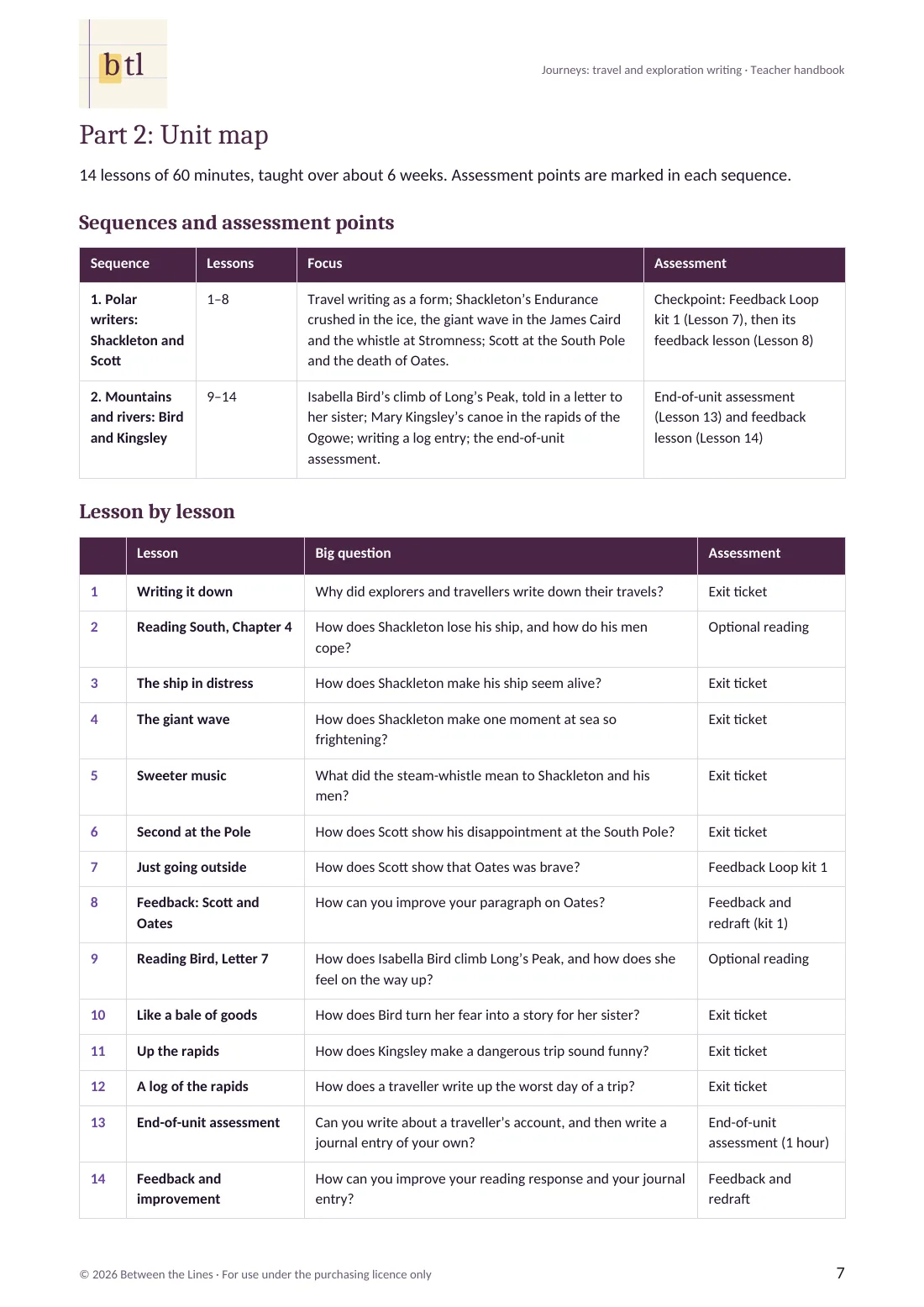 Lesson notesLesson 4 in the teacher handbook
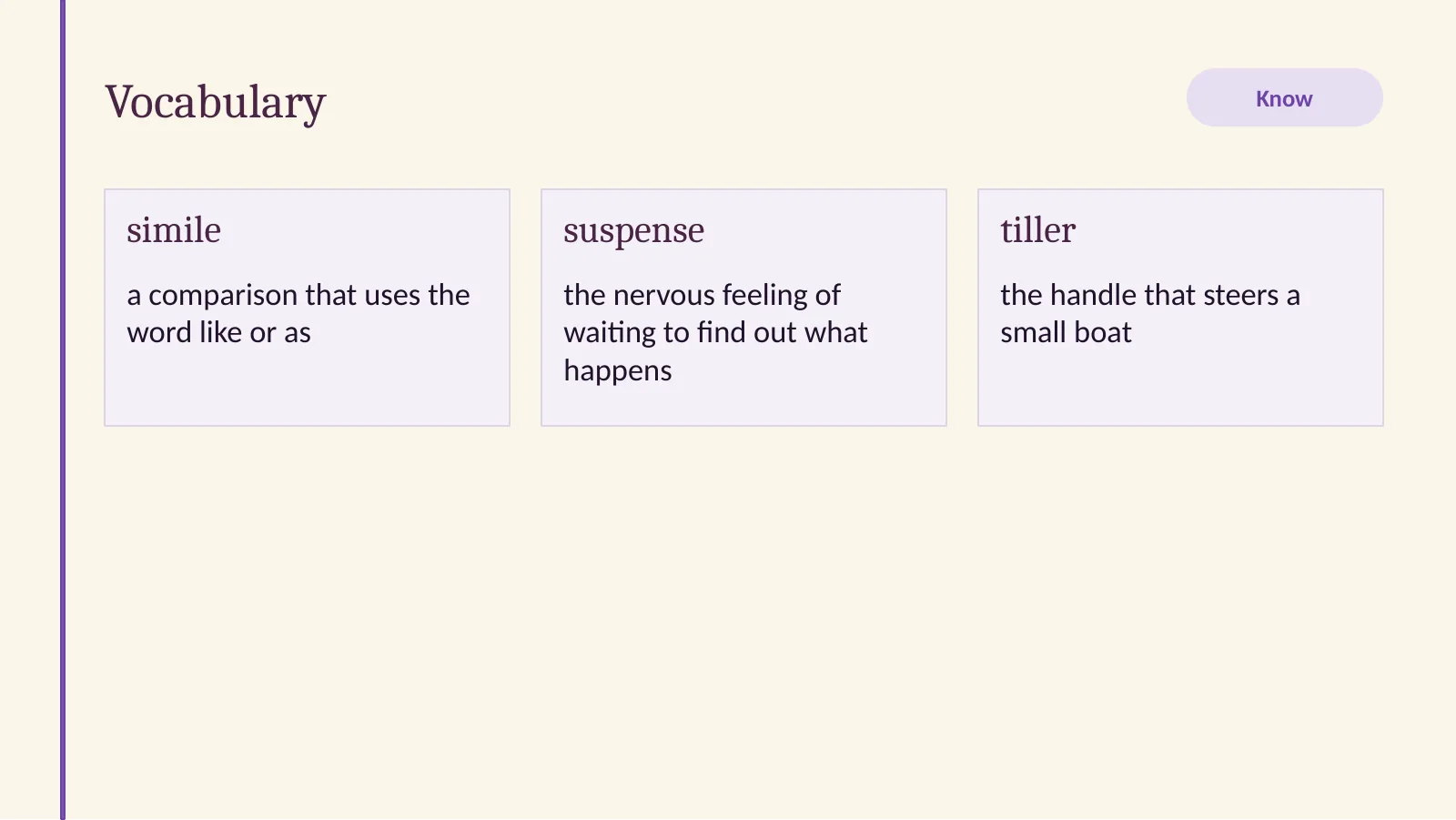 SlidesLesson 4: The giant wave
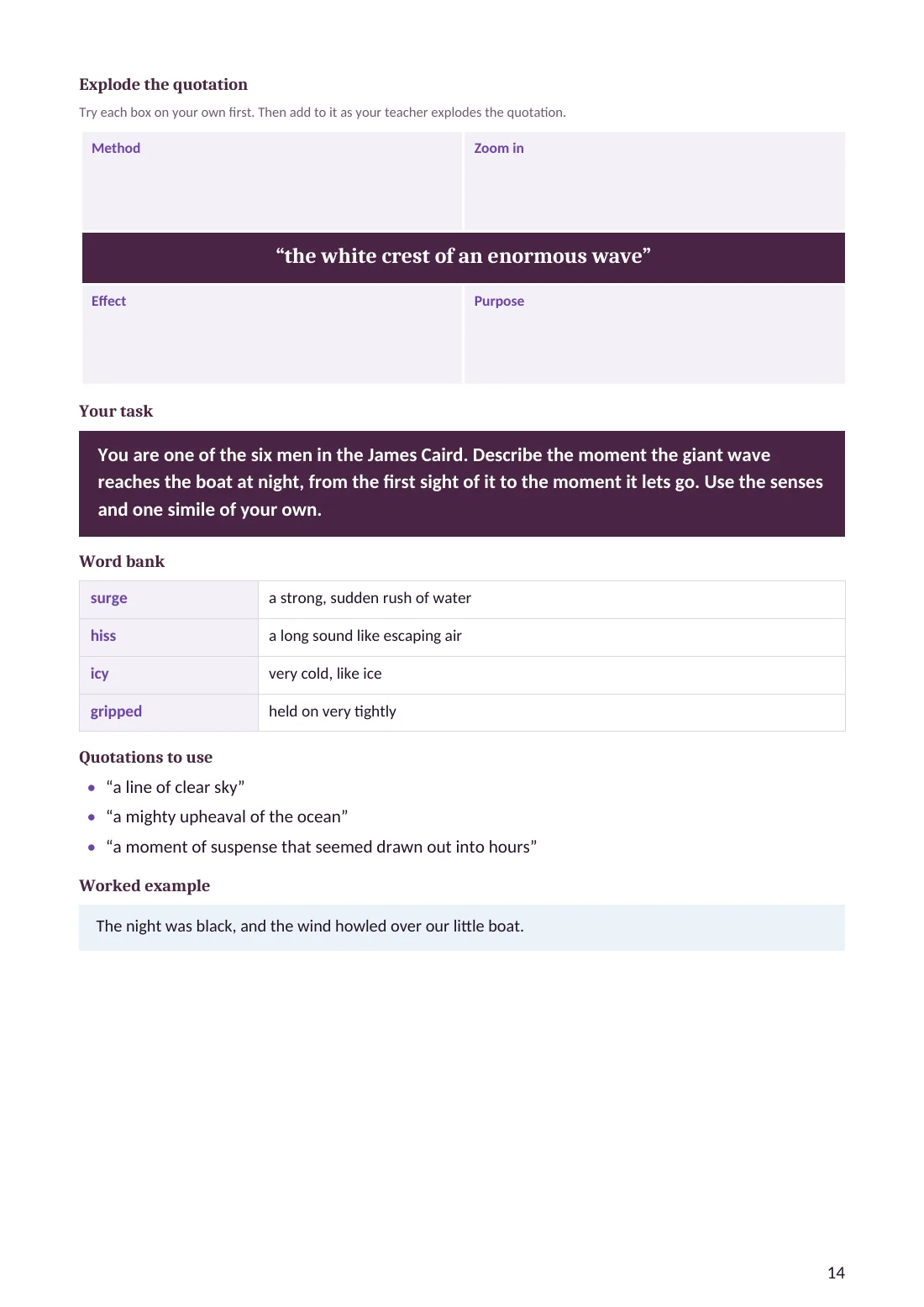 SecuringLesson 4 in the Securing student pack
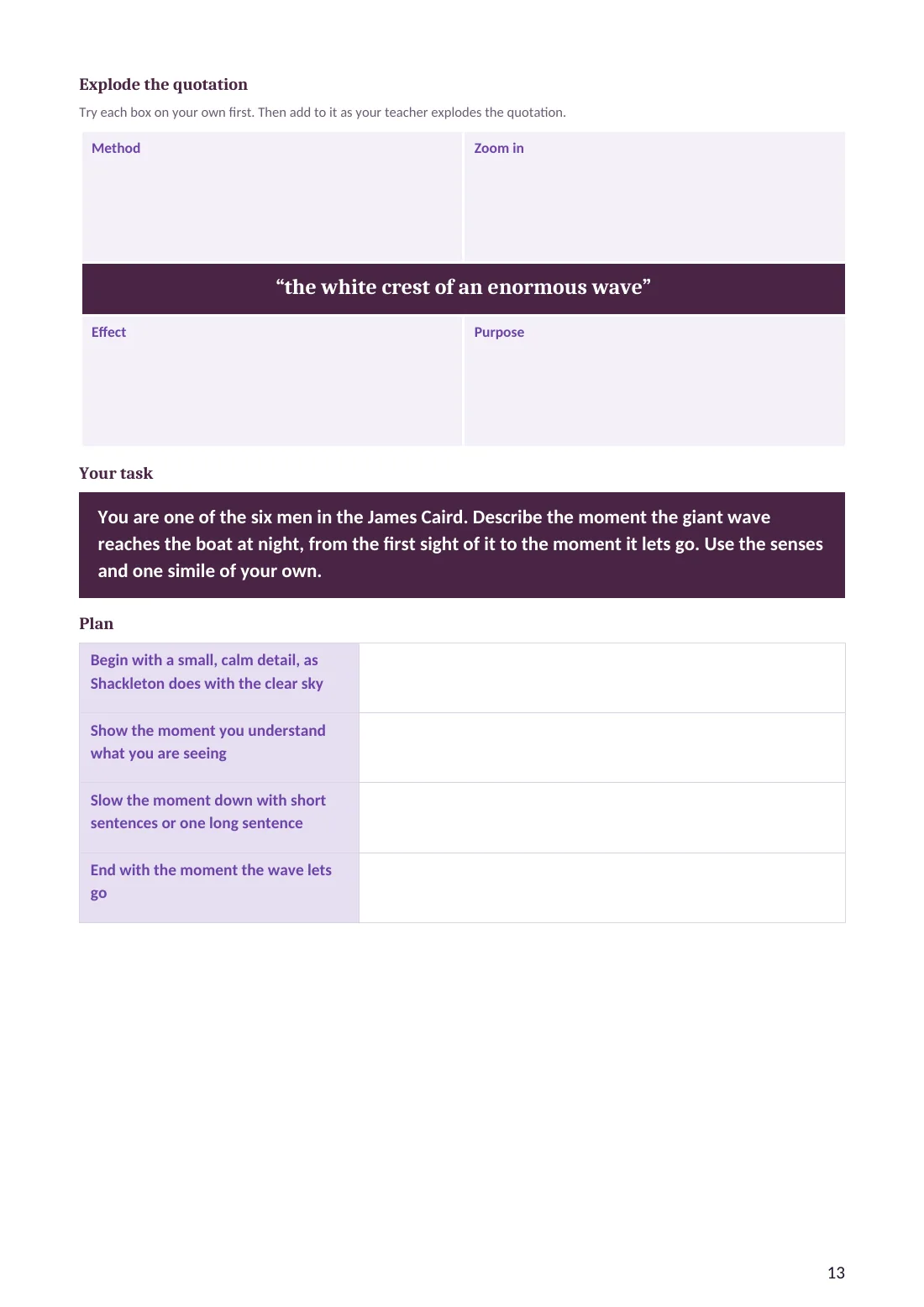 StrengtheningLesson 4 in the Strengthening student pack
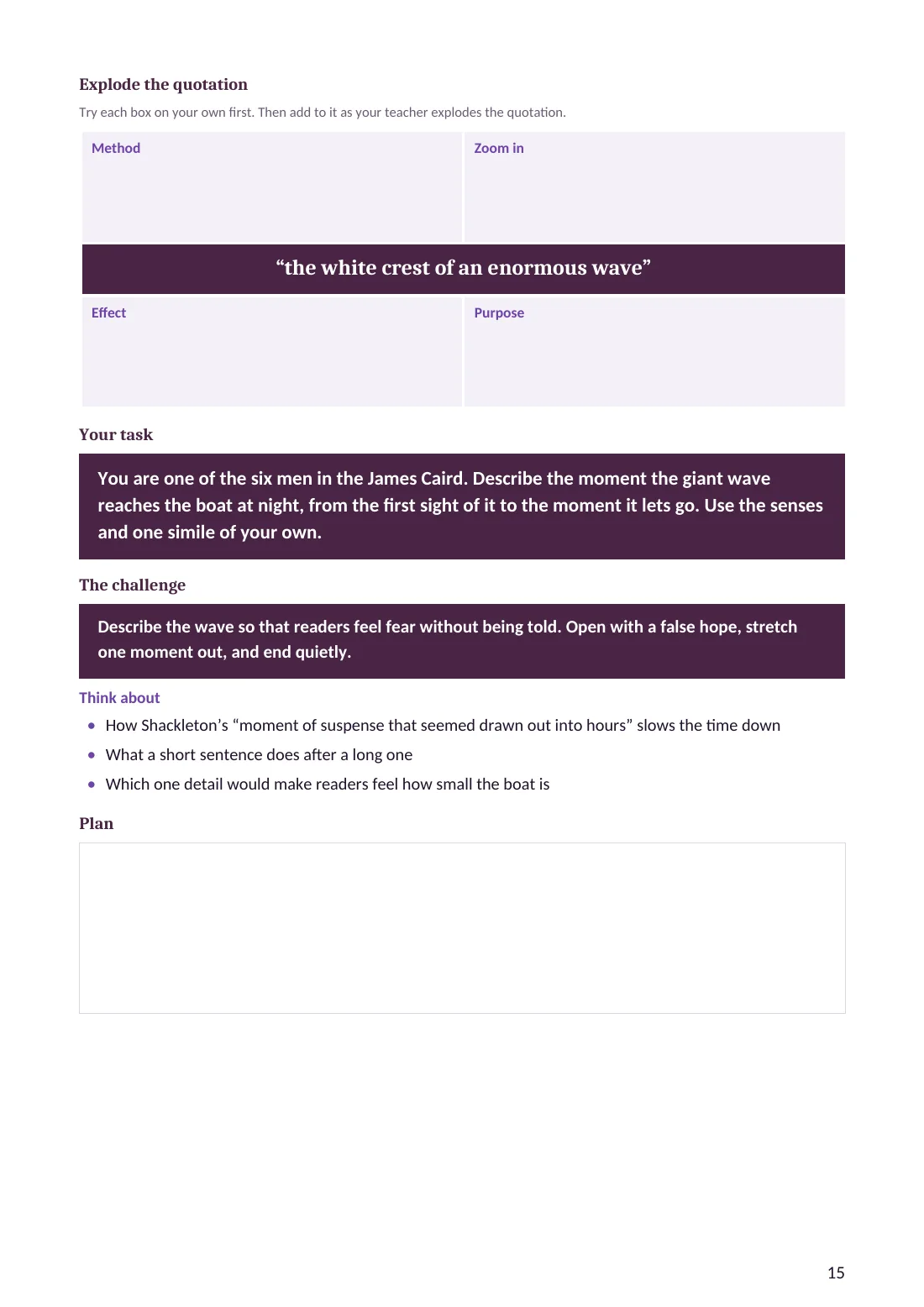 SoaringLesson 4 in the Soaring student pack
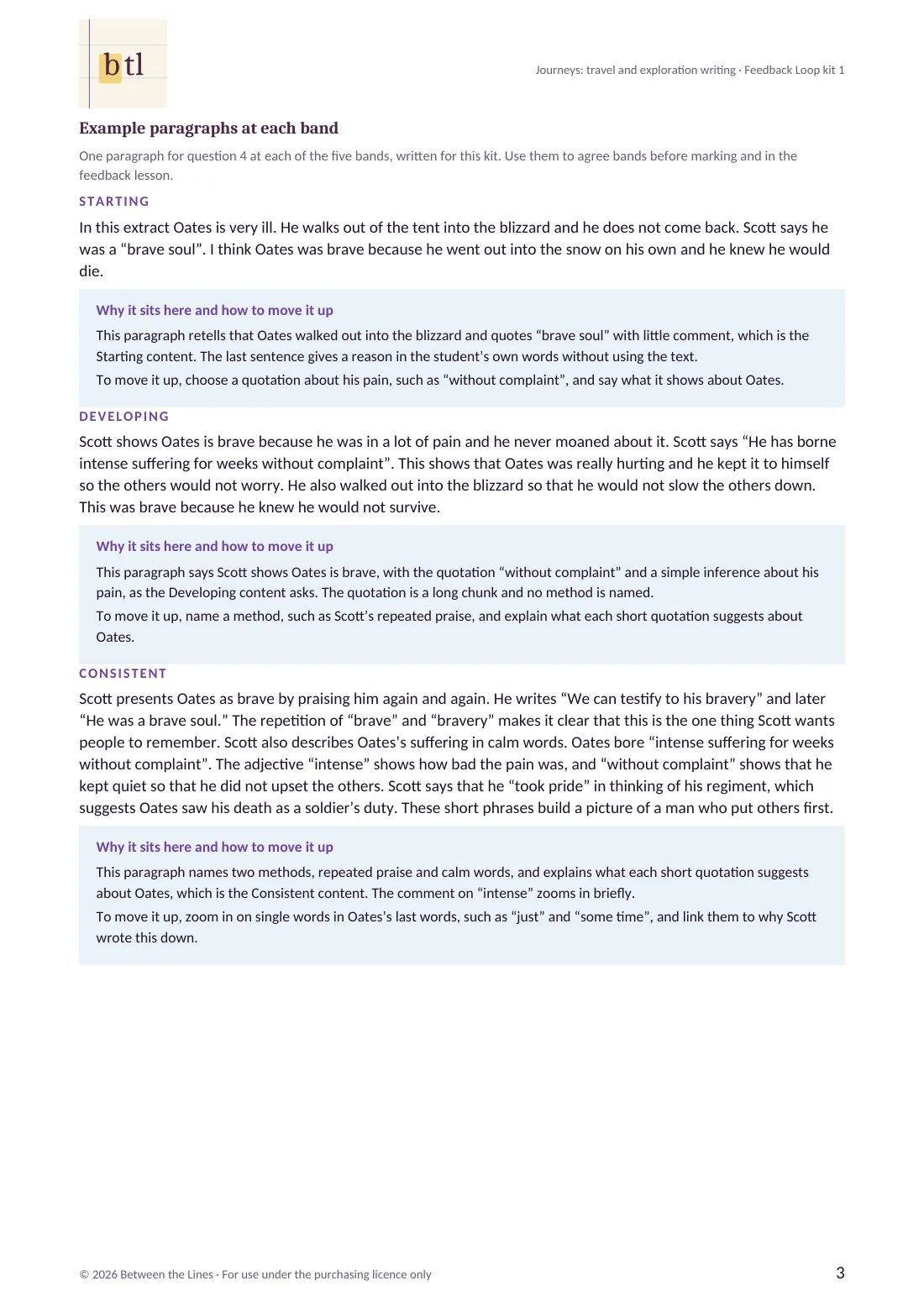 Feedback Loop kitThe checkpoint in Lesson 7
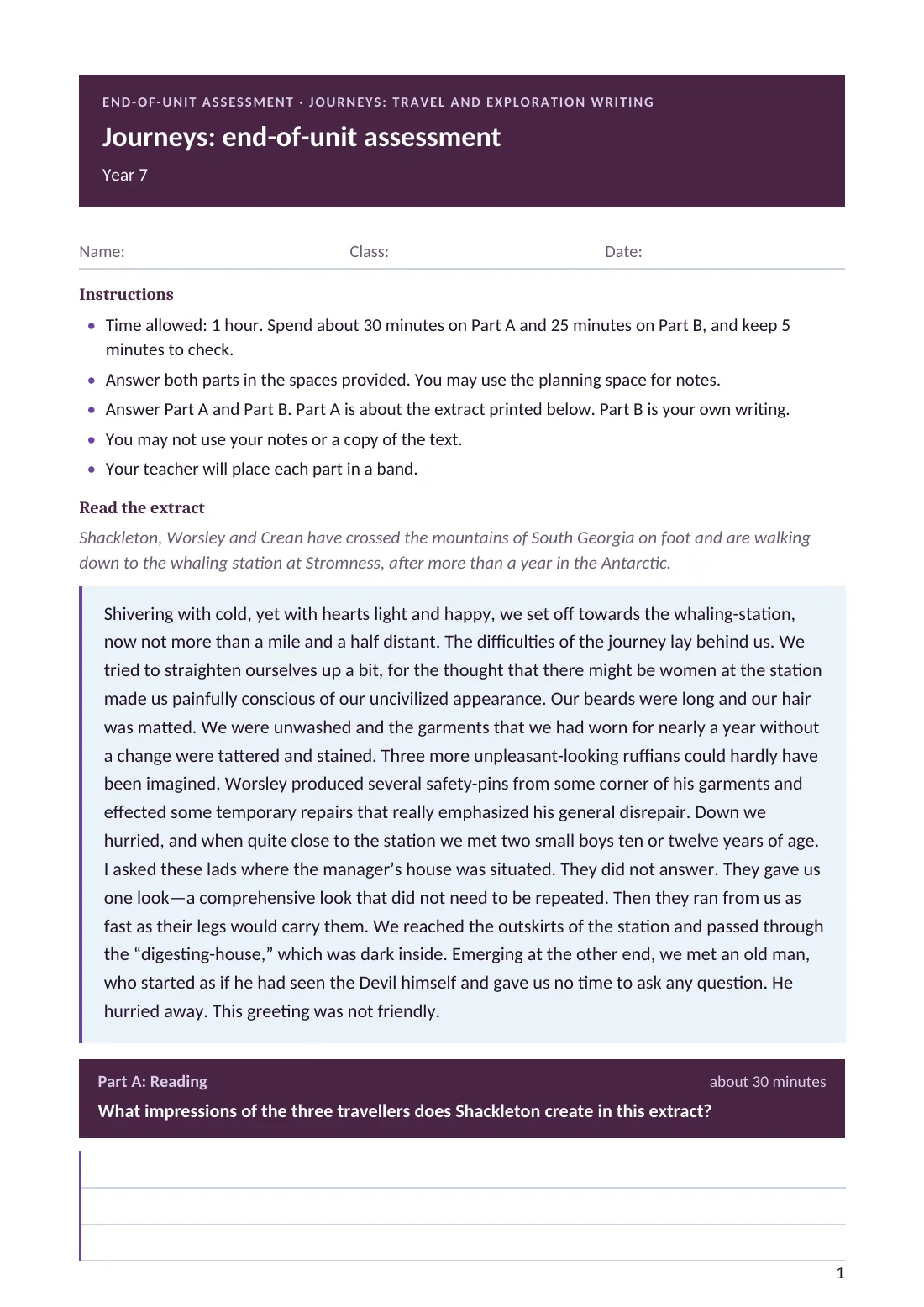 End-of-unit assessmentPart A reading, Part B writing
What students learn
Students read four true accounts of hard travel, written by the people who lived them: Ernest Shackleton losing his ship in the Antarctic ice and sailing a small boat to South Georgia, Robert Falcon Scott reaching the South Pole second and writing his last journal entries, Isabella Bird climbing Long’s Peak in the Rocky Mountains, and Mary Kingsley poling a canoe up the rapids of the Ogowe. They learn what travel writing is (journals, letters and accounts written in the first person) and why each writer wrote: to record, to explain, to entertain and to be remembered. Each lesson studies one short extract closely, so students meet weather, danger, scenery and humour in the writers’ own words, and learn to explain methods such as personification, simile, understatement and self-mocking humour in What–How–Why paragraphs. They also write as travellers themselves: a letter, a description, a letter home after a climb and a log entry, which prepares the journal entry in the end-of-unit assessment.
By the end of the unit, students can
- Explain what travel writing is, the forms it takes (journal, letter and account) and why each of the four writers wrote
- Retrieve and explain what happens in short extracts from Shackleton, Scott, Bird and Kingsley
- Analyse how the writers use methods such as personification, simile, understatement and humour to bring danger and weather to life
- Write What–How–Why paragraphs about an extract, using short, exact quotations
- Write a letter, a description and a journal entry in the voice of a traveller, with details that suit the place and the form
Where it fits
Builds on: Primary school reading of non-fiction, diaries and recounts; retrieving facts and making simple inferences; writing in the first person; using paragraphs, full stops and commas accurately.
Leads to: Non-fiction and viewpoint writing in Years 8 and 9; comparing how two writers see the same kind of experience; reading longer nineteenth-century prose; writing to describe and to explain with more control.
Two sequences, 14 lessons
The checkpoint, its feedback lesson and the end-of-unit assessment are planned into the sequence. Open a sequence to see its lessons. Lesson 4 is free.
Polar writers: Shackleton and ScottLessons 1 to 8
- 1Writing it downWhy did explorers and travellers write down their travels?
- 2Reading South, Chapter 4Reading lessonHow does Shackleton lose his ship, and how do his men cope?
- 3The ship in distressHow does Shackleton make his ship seem alive?
- 4The giant waveFreeHow does Shackleton make one moment at sea so frightening?
- 5Sweeter musicWhat did the steam-whistle mean to Shackleton and his men?
- 6Second at the PoleHow does Scott show his disappointment at the South Pole?
- 7Just going outsideFeedback Loop kit 1How does Scott show that Oates was brave?
- 8Feedback: Scott and OatesReview lessonHow can you improve your paragraph on Oates?
Mountains and rivers: Bird and KingsleyLessons 9 to 14
- 9Reading Bird, Letter 7Reading lessonHow does Isabella Bird climb Long’s Peak, and how does she feel on the way up?
- 10Like a bale of goodsHow does Bird turn her fear into a story for her sister?
- 11Up the rapidsHow does Kingsley make a dangerous trip sound funny?
- 12A log of the rapidsHow does a traveller write up the worst day of a trip?
- 13End-of-unit assessmentEnd-of-unit assessmentCan you write about a traveller’s account, and then write a journal entry of your own?
- 14Feedback and improvementFeedback lessonHow can you improve your reading response and your journal entry?
Assessment without grades
End-of-unit assessment (Lesson 13): Part A, a reading response to a printed extract; Part B, a piece of the student’s own writing. One hour.
Each part is placed in one of five bands (Starting, Developing, Consistent, Confident, Assured) using the Year 7 reading and writing grids and our indicative content for the task. The bands describe the work, and no score is given. The checkpoint in Lesson 7 is one What–How–Why paragraph, placed in a band in the same way.
- Starting
- Developing
- Consistent
- Confident
- Assured
The bands describe the work, never the student. Key Stage 3 has no GCSE grades or marks in our schemes.
Buy the scheme
Both licences include every file in the scheme, as editable Word and PowerPoint files with a PDF copy of each.
One teacher
For your own classes
£40incl. VAT
- Print and adapt for your own students
- Put it on your school’s own secure learning platform
- Upgrade to a school licence for the difference before VAT
School
Every teacher and student at one school
£100+ VAT
- Print and adapt for every class in the school
- Put it on your school’s own secure learning platform
- Each further school in the same trust pays half
Planning the whole year? The Year 7 school bundle has all six schemes, the year plan and the end-of-year assessment for £480 + VAT.
Both licences include 10 folders: see what is in each
- 00Start here6 pages: how the scheme fits together
- 01Teacher handbook64 pages: intent, unit map, lesson notes and the assessment guide
- 02Slides14 PowerPoint decks with teacher notes, and a PDF copy of each
- 03Student bookletEvery lesson with the Securing, Strengthening and Soaring support side by side, 45 pages, plus one pack per level for set classes
- 04Independent practiceAll three levels in one booklet, 45 pages, plus one booklet per level
- 05Feedback Loop kitThe Lesson 7 checkpoint and its whole-class feedback lesson, 8 pages
- 06End-of-unit assessmentThe assessment paper and a teacher guide with the band grids
- 09Missed a lessonA catch-up sheet for every lesson
- 10InclusionNotes for students with SEND, students learning English and pupil premium students, and a key words list
- 11Talk routinesSixteen routines for spoken English in any lesson, with steps, sentence stems and a student sheet
To pay by invoice, to upgrade a teacher licence, or to license another school in your trust at half price, email hello@btl.education. Please don’t share the files outside your school or upload them to public websites. Licence terms
Extracts from South, Scott’s Last Expedition, A Lady’s Life in the Rocky Mountains and Travels in West Africa are taken from public-domain texts.
Teach Lesson 4 of Journeys, free
One complete lesson from every Key Stage 3 scheme: the slides with teacher notes, and the teacher notes and student pages at Securing, Strengthening and Soaring. Choose a scheme and we email you the files straight away.
The rest of Year 7
- Heroes and monsters: The Odyssey Autumn 1
- Dickens’s London: Oliver Twist Autumn 2
- Ballads and story poems Spring 1
- A Midsummer Night’s Dream Spring 2
- Adventure: Treasure Island Summer 2
Get our emails
About once a month: new free resources and the dates that matter for GCSE English.