

Teachers › Key Stage 3 › Year 7 › Ballads and story poems
Ballads and story poems
Key Stage 3 · Year 7 scheme of learning · Spring 1 in our Year 7 plan
A half-term scheme of learning for Year 7: 14 one-hour lessons across about six weeks, built around one big question: what makes a story poem stay in your head? Every lesson has slides, teacher notes and a student booklet with three levels of support.
Coleridge, Tennyson, Keats, Carroll and Scott, 1798 to 1871. Every extract is printed in the booklets, so no class set of books is needed.
Three levels of support · a checkpoint in Lesson 7 with whole-class feedback · an end-of-unit assessment in Lesson 13, placed in five bands
Real pages from the scheme
Choose a page to see it larger. Lesson 5 is free: we email the full editable lesson.
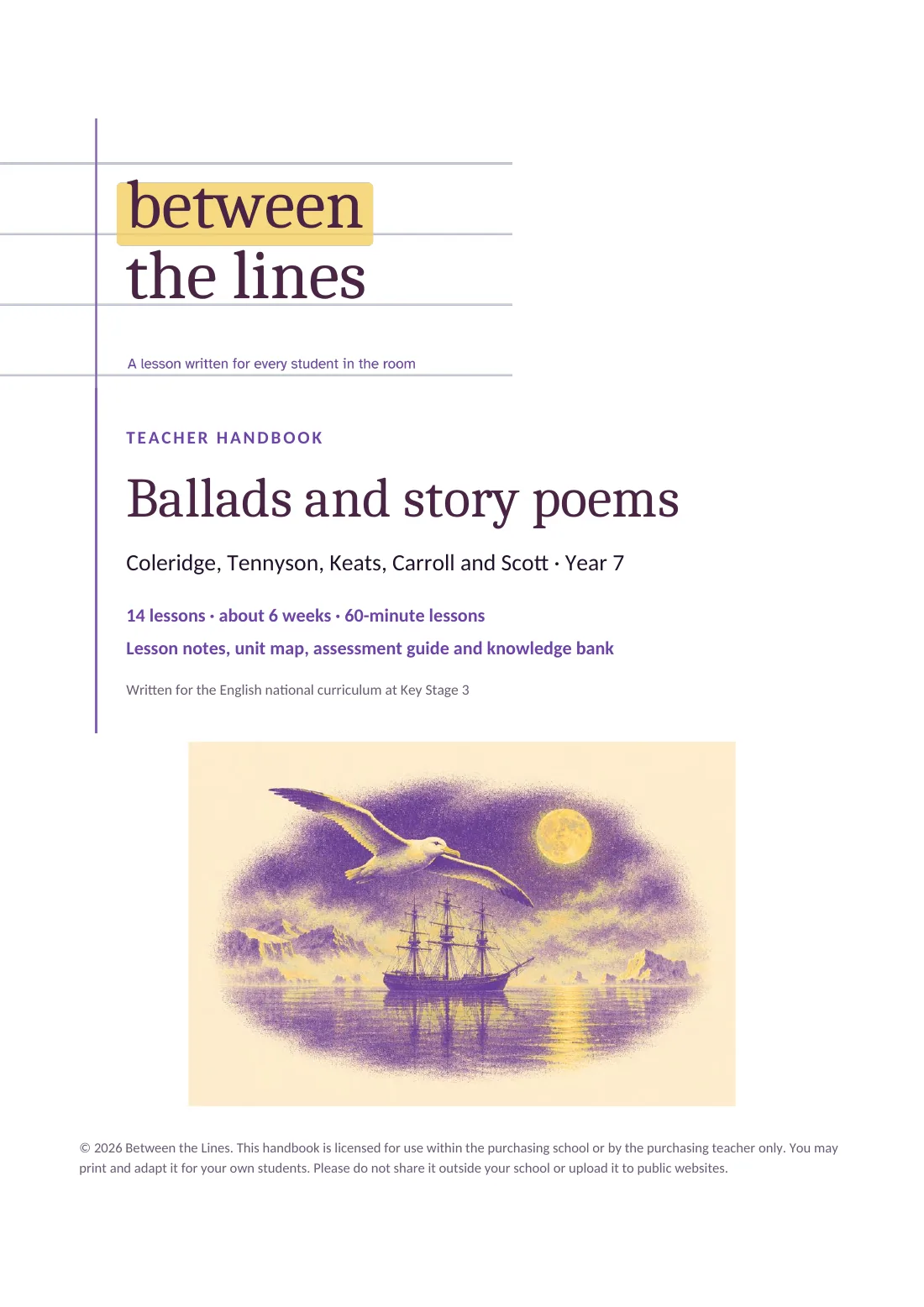 Teacher handbookCover
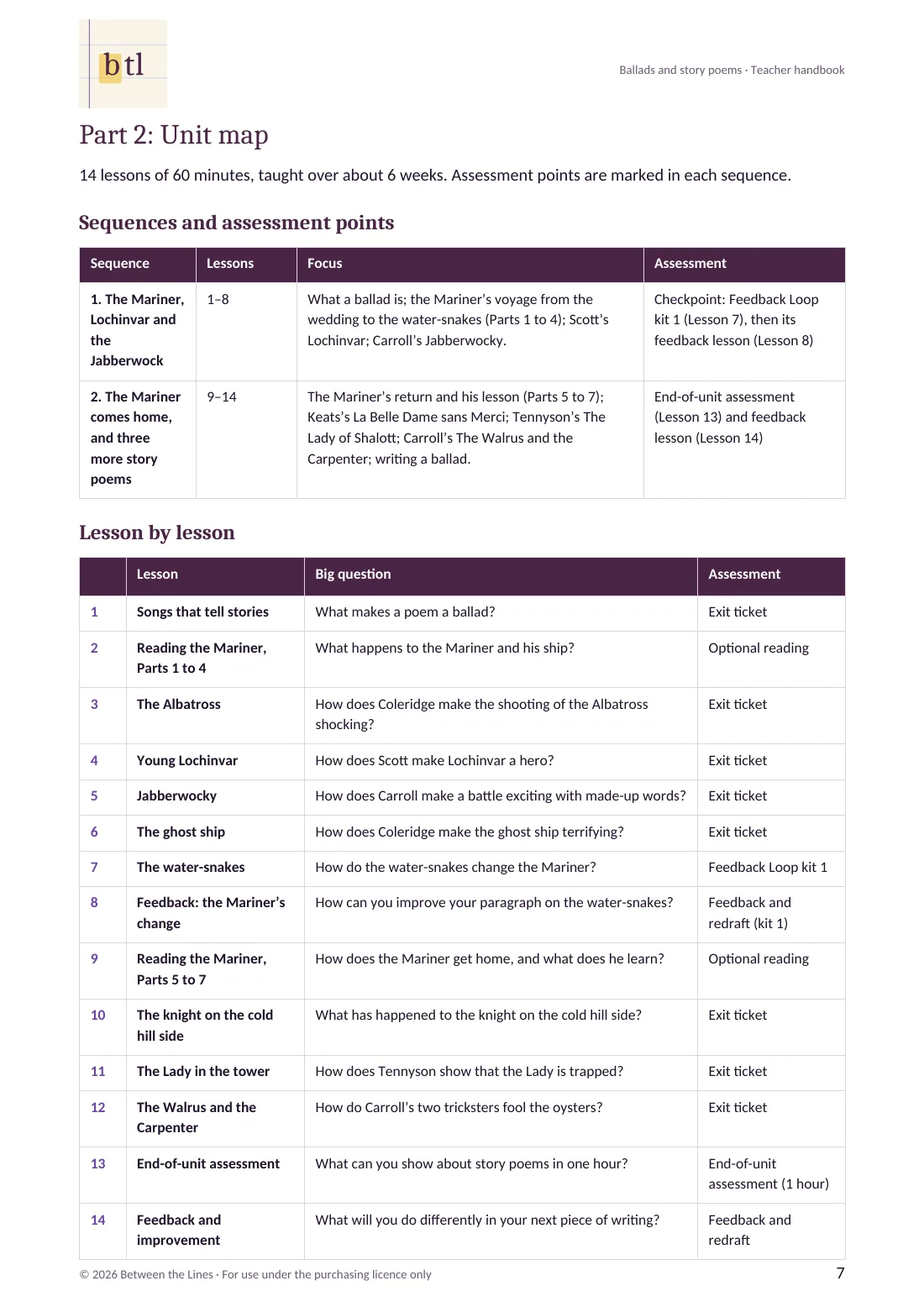 Lesson notesLesson 5 in the teacher handbook
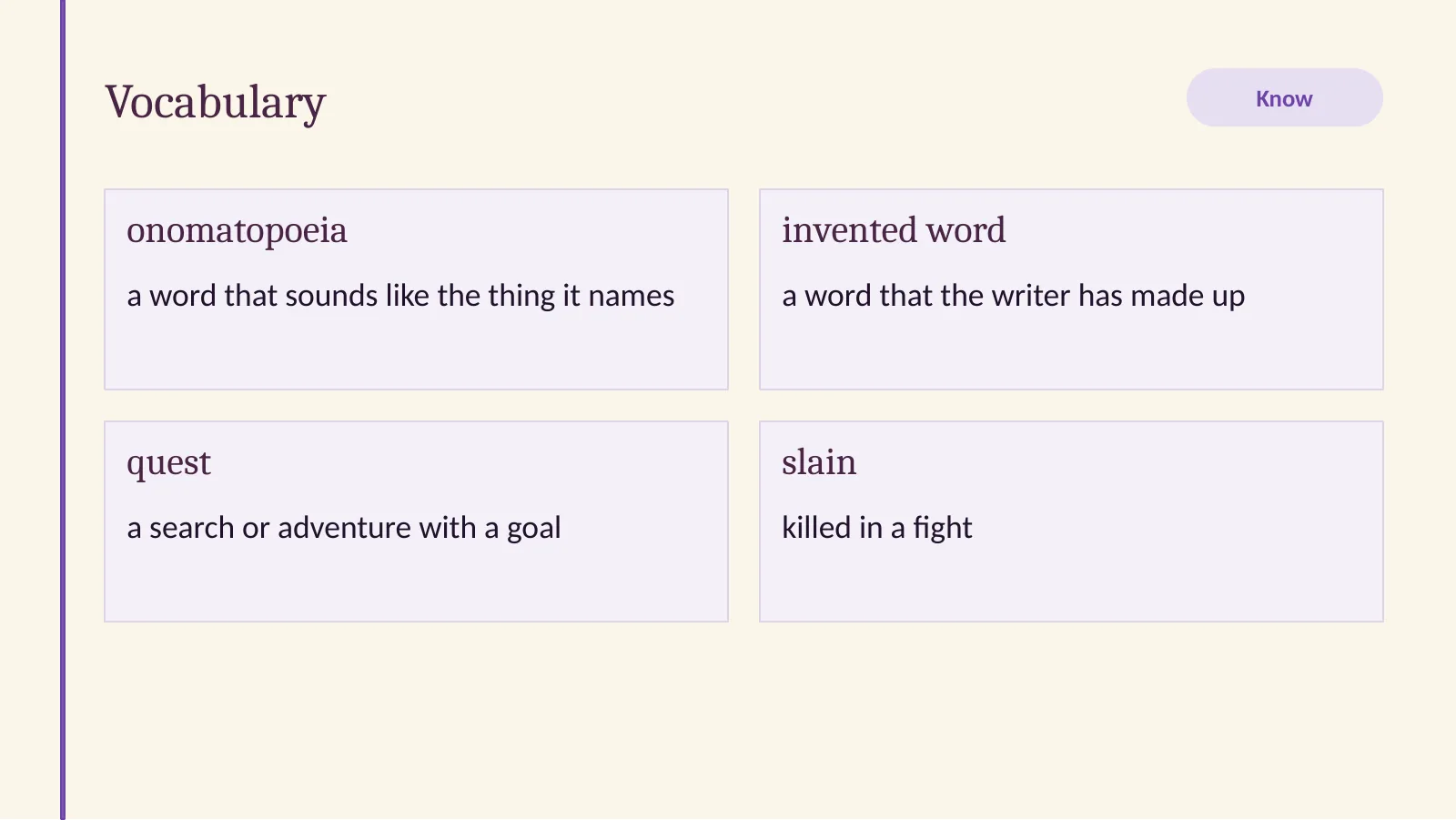 SlidesLesson 5: Jabberwocky
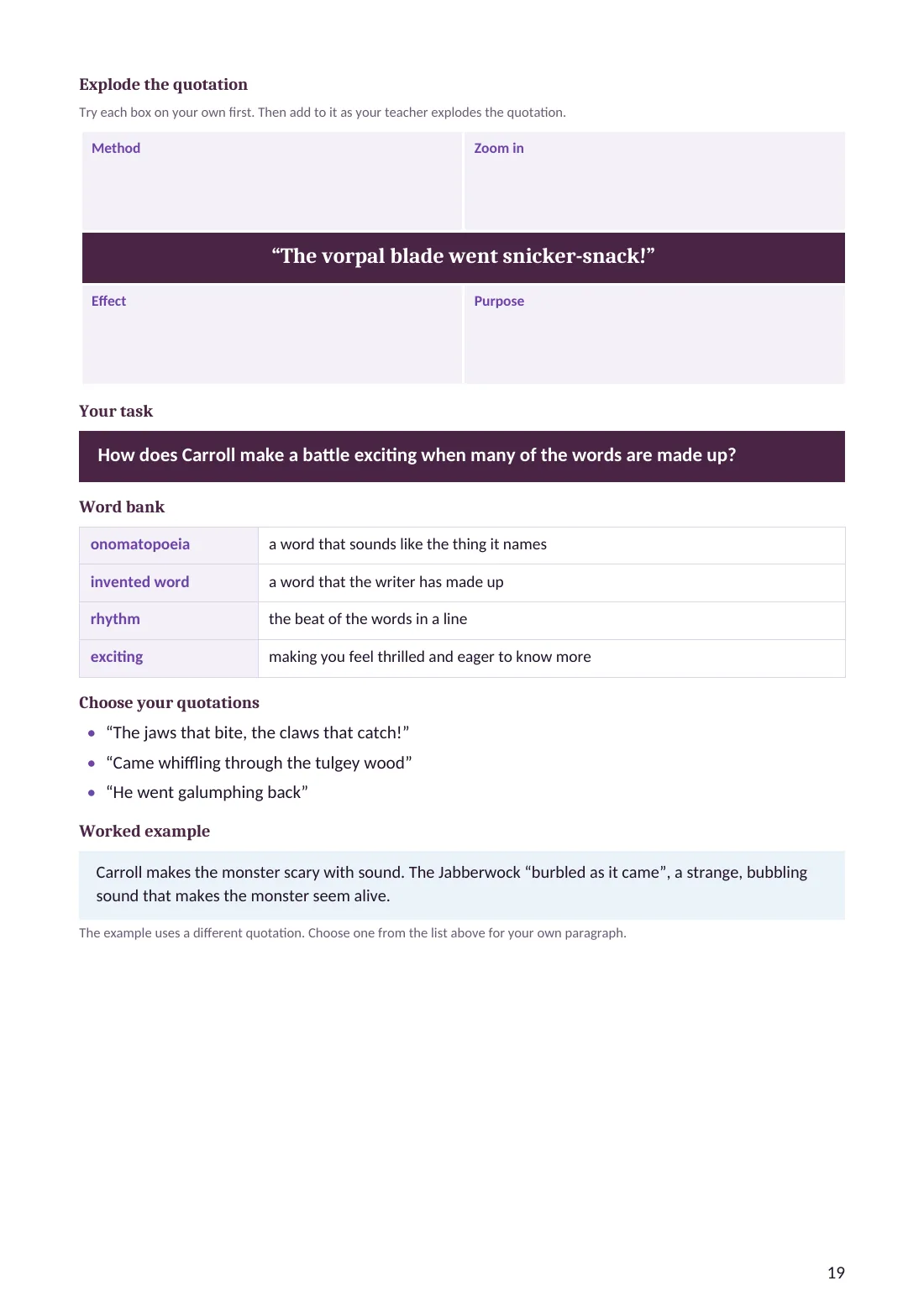 SecuringLesson 5 in the Securing student pack
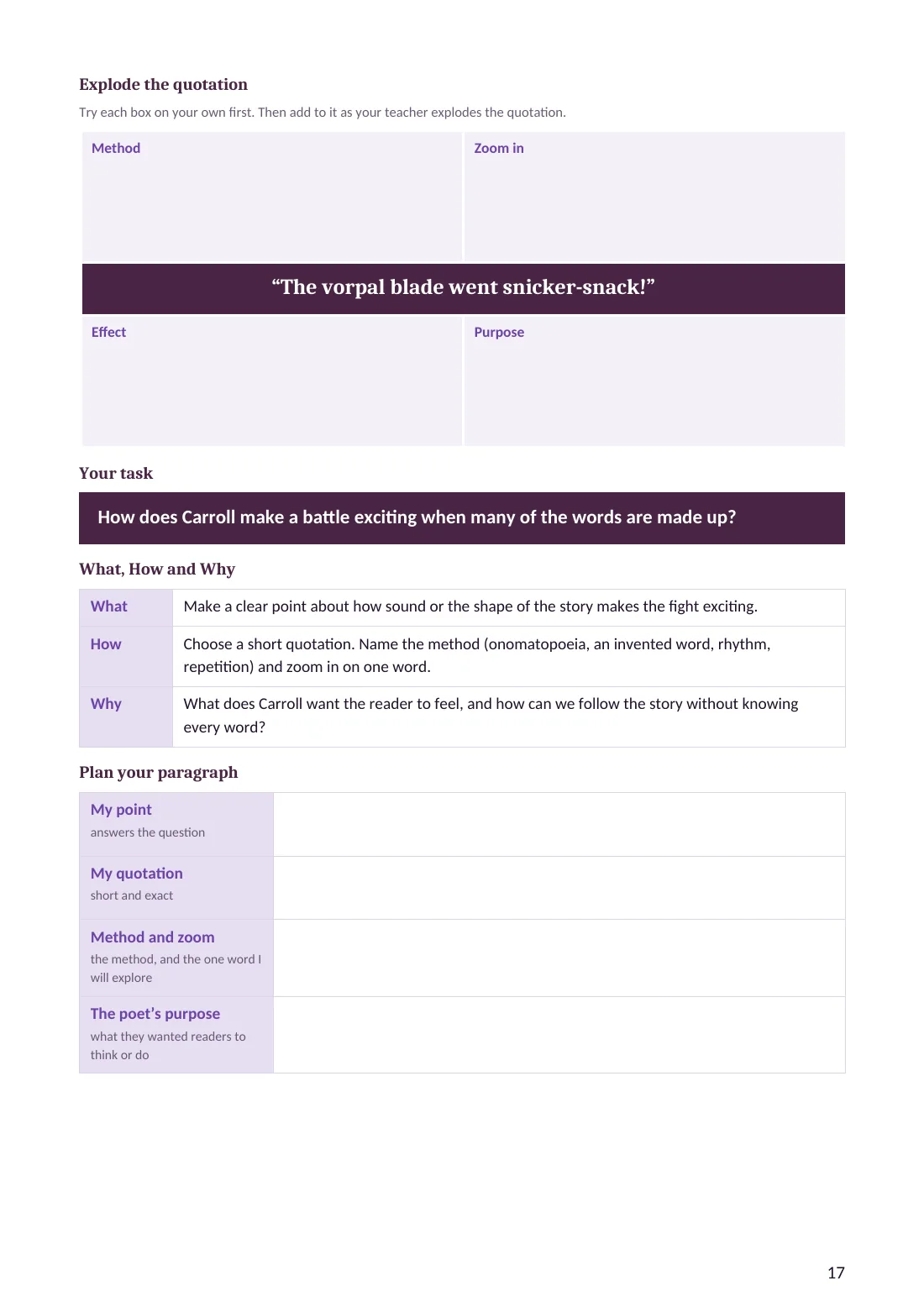 StrengtheningLesson 5 in the Strengthening student pack
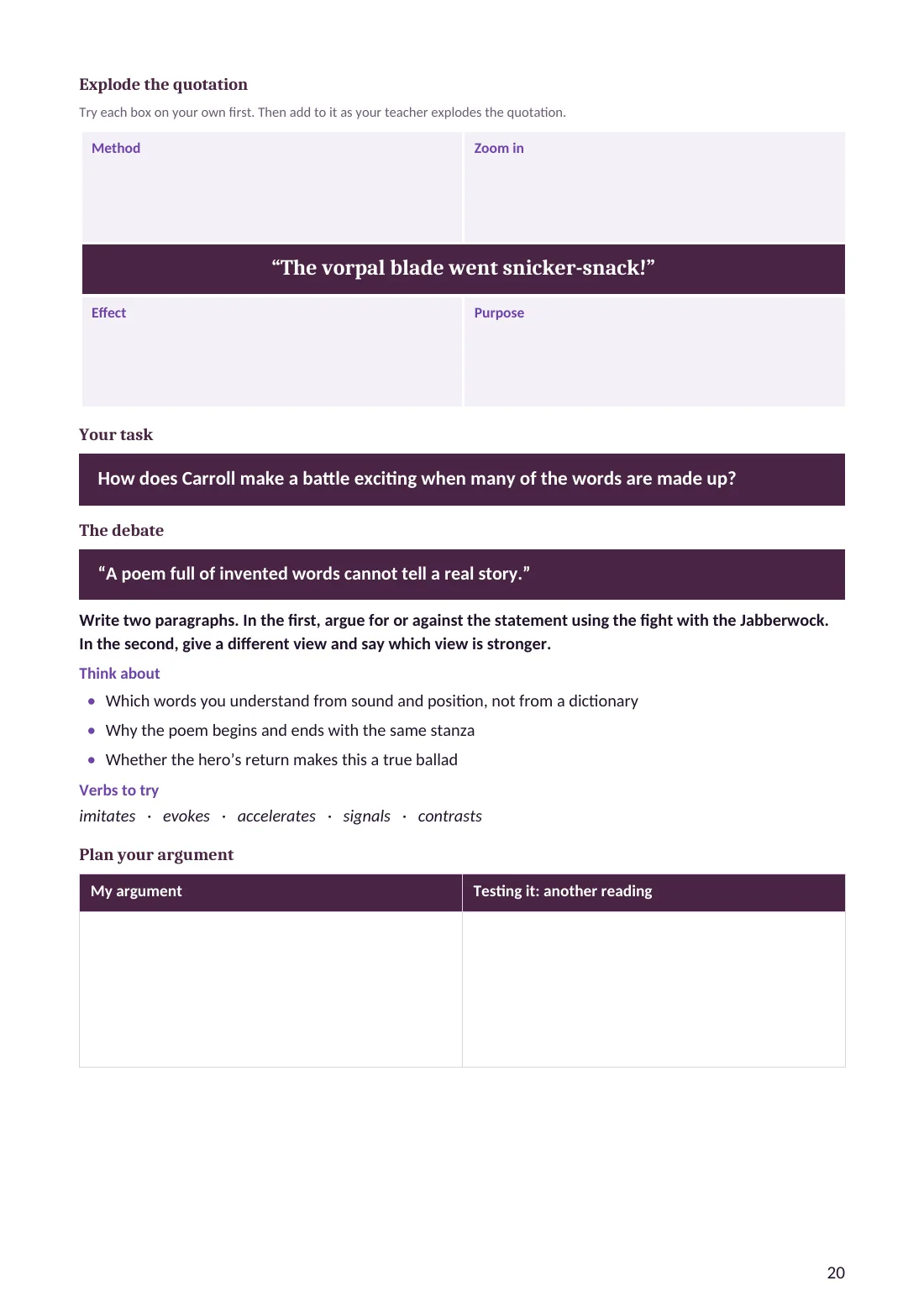 SoaringLesson 5 in the Soaring student pack
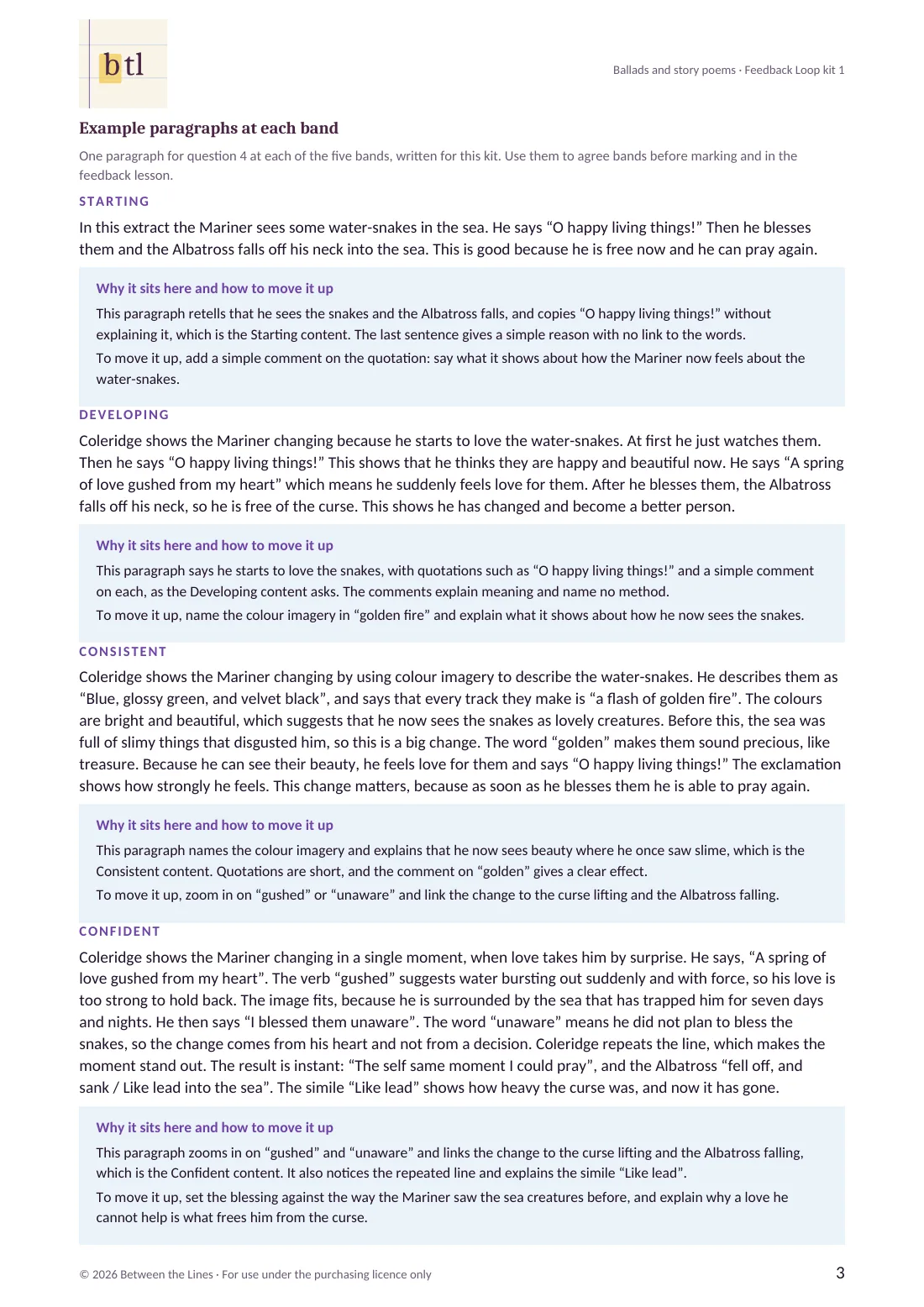 Feedback Loop kitThe checkpoint in Lesson 7
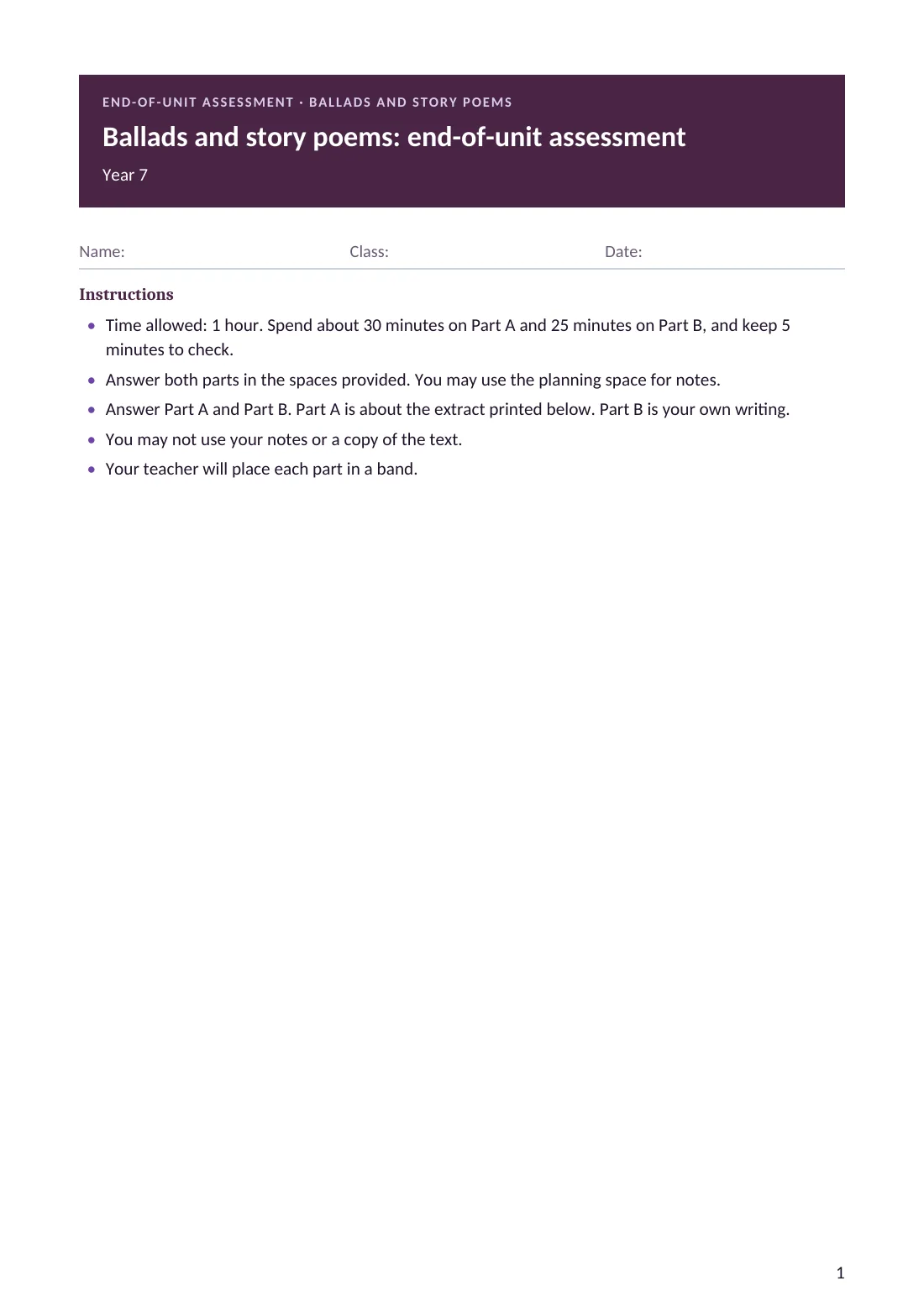 End-of-unit assessmentPart A reading, Part B writing
What students learn
Students meet the ballad as a story told in song: short stanzas, a strong beat, rhyme and repetition that help a tale stay in the memory. They read The Rime of the Ancient Mariner in full, with two optional lessons that read it aloud, and study five more story poems from 1808 to 1871, from Scott’s daring rider to Carroll’s nonsense. Each lesson asks how a poet makes a story frightening, exciting, sad or funny, and students write about it in What–How–Why paragraphs. The unit ends with students writing a ballad of their own.
By the end of the unit, students can
- Explain what makes a poem a ballad, from the old sung ballads to the literary ballads of the 1800s
- Retell the story of The Rime of the Ancient Mariner and explain why the Mariner must keep telling it
- Analyse how poets use rhythm, rhyme, repetition and imagery to tell a story
- Write What–How–Why paragraphs about a poem, with short quotations
- Write a ballad of your own in quatrains, with rhyme and a refrain
Where it fits
Builds on: Poetry in primary school: reading poems aloud, spotting rhyme and repetition, and retelling a story in order. Year 7 students bring confident retelling and their first What–How–Why paragraphs.
Leads to: Poetry in Years 8 and 9: older forms such as the sonnet, poems compared by theme, and longer What–How–Why answers on a poet’s methods.
Two sequences, 14 lessons
The checkpoint, its feedback lesson and the end-of-unit assessment are planned into the sequence. Open a sequence to see its lessons. Lesson 5 is free.
The Mariner, Lochinvar and the JabberwockLessons 1 to 8
- 1Songs that tell storiesWhat makes a poem a ballad?
- 2Reading the Mariner, Parts 1 to 4Reading lessonWhat happens to the Mariner and his ship?
- 3The AlbatrossHow does Coleridge make the shooting of the Albatross shocking?
- 4Young LochinvarHow does Scott make Lochinvar a hero?
- 5JabberwockyFreeHow does Carroll make a battle exciting with made-up words?
- 6The ghost shipHow does Coleridge make the ghost ship terrifying?
- 7The water-snakesFeedback Loop kit 1How do the water-snakes change the Mariner?
- 8Feedback: the Mariner’s changeReview lessonHow can you improve your paragraph on the water-snakes?
The Mariner comes home, and three more story poemsLessons 9 to 14
- 9Reading the Mariner, Parts 5 to 7Reading lessonHow does the Mariner get home, and what does he learn?
- 10The knight on the cold hill sideWhat has happened to the knight on the cold hill side?
- 11The Lady in the towerHow does Tennyson show that the Lady is trapped?
- 12The Walrus and the CarpenterHow do Carroll’s two tricksters fool the oysters?
- 13End-of-unit assessmentEnd-of-unit assessmentWhat can you show about story poems in one hour?
- 14Feedback and improvementFeedback lessonWhat will you do differently in your next piece of writing?
Assessment without grades
End-of-unit assessment (Lesson 13): Part A, a reading response to a printed extract; Part B, a piece of the student’s own writing. One hour.
Each part is placed in one of five bands (Starting, Developing, Consistent, Confident, Assured) using the Year 7 reading and writing grids and our indicative content for the task. Bands describe the work, never the student, and nothing is scored. The checkpoint in Lesson 7 is one What–How–Why paragraph, placed in a band in the same way.
- Starting
- Developing
- Consistent
- Confident
- Assured
The bands describe the work, never the student. Key Stage 3 has no GCSE grades or marks in our schemes.
Buy the scheme
Both licences include every file in the scheme, as editable Word and PowerPoint files with a PDF copy of each.
One teacher
For your own classes
£40incl. VAT
- Print and adapt for your own students
- Put it on your school’s own secure learning platform
- Upgrade to a school licence for the difference before VAT
School
Every teacher and student at one school
£100+ VAT
- Print and adapt for every class in the school
- Put it on your school’s own secure learning platform
- Each further school in the same trust pays half
Planning the whole year? The Year 7 school bundle has all six schemes, the year plan and the end-of-year assessment for £480 + VAT.
Both licences include 10 folders: see what is in each
- 00Start here6 pages: how the scheme fits together
- 01Teacher handbook66 pages: intent, unit map, lesson notes and the assessment guide
- 02Slides14 PowerPoint decks with teacher notes, and a PDF copy of each
- 03Student bookletEvery lesson with the Securing, Strengthening and Soaring support side by side, 47 pages, plus one pack per level for set classes
- 04Independent practiceAll three levels in one booklet, 45 pages, plus one booklet per level
- 05Feedback Loop kitThe Lesson 7 checkpoint and its whole-class feedback lesson, 8 pages
- 06End-of-unit assessmentThe assessment paper and a teacher guide with the band grids
- 09Missed a lessonA catch-up sheet for every lesson
- 10InclusionNotes for students with SEND, students learning English and pupil premium students, and a key words list
- 11Talk routinesSixteen routines for spoken English in any lesson, with steps, sentence stems and a student sheet
To pay by invoice, to upgrade a teacher licence, or to license another school in your trust at half price, email hello@btl.education. Please don’t share the files outside your school or upload them to public websites. Licence terms
Every poem in these resources is in the public domain. Poems and extracts are printed exactly from public-domain texts, with the poet and the date.
Teach Lesson 5 of Ballads and story poems, free
One complete lesson from every Key Stage 3 scheme: the slides with teacher notes, and the teacher notes and student pages at Securing, Strengthening and Soaring. Choose a scheme and we email you the files straight away.
The rest of Year 7
- Heroes and monsters: The Odyssey Autumn 1
- Dickens’s London: Oliver Twist Autumn 2
- A Midsummer Night’s Dream Spring 2
- Journeys Summer 1
- Adventure: Treasure Island Summer 2
Get our emails
About once a month: new free resources and the dates that matter for GCSE English.