Knowledge hub › For students › Remains
Remains by Simon Armitage: GCSE poem guide
A soldier tells the story of a shooting as if it were an everyday anecdote, and then finds he cannot stop telling it. What happens, how Armitage does it, and what to compare it with.
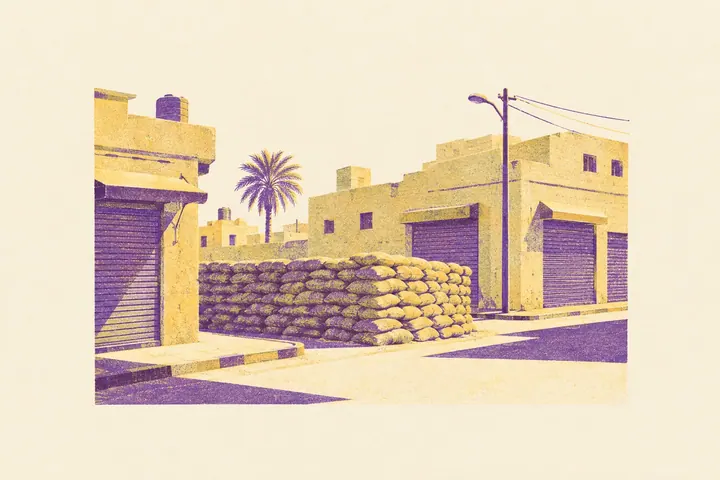
‘Remains’ is by Simon Armitage. It comes from The Not Dead, a set of poems Armitage wrote after listening to soldiers who had come back from war. It is one of the fifteen poems in AQA’s Power and Conflict cluster, and it is still in copyright, so we quote only short phrases here. Read the whole poem in your anthology.
A soldier tells us about a looter he and two other soldiers shot dead. At first he sounds casual, as if this is one story among many. Then the poem follows him home, and we see that the dead man has never left him.
Read the transcript
This is ‘Remains’ by Simon Armitage, from the Power and Conflict cluster of the AQA anthology. I’m Hannah, and I teach English. The question we’ll answer: How does every part of ‘Remains’ show a killing that will not stay in the past? We’ll go through the context, the poem section by section, one quotation explored closely, a model paragraph, the quotations to learn and which poems to compare it with. First, the context.
Wars since 1945. Since the Second World War ended in 1945, British soldiers have fought in many conflicts, including the wars in Iraq and Afghanistan, far from home. Soldiers’ own words. Simon Armitage interviewed soldiers who had come back from war, including the war in Iraq. From those interviews came The Not Dead (2008), and ‘Remains’ is one of its poems.
PTSD. Many of the soldiers had post-traumatic stress disorder (PTSD), in which memories of a terrible event return again and again. A memory that remains. A soldier tells the story of a shooting in a casual, spoken voice. The memory follows him home, and drink and drugs do not help.
Armitage became Poet Laureate in 2019. ‘Remains’ is still in copyright, so I won’t read it here. Open your anthology at the poem and read it twice: once for what happens, once for who is speaking and what changes. Lines 1 to 8: The shooting. “On another occasion”.
A casual opening, as if this is one story among many. The reader expects an everyday anecdote, which makes what follows more shocking. “legs it up the road”. Colloquial slang in the present tense. The chatty voice of a man telling a mate a story keeps the event at a distance, for now.
“probably armed, possibly not”. Armitage built the poem from interviews with soldiers back from Iraq. The doubt about whether the man was a threat is what the soldier will carry home. “Three of a kind”. A card-game idiom: three soldiers fire together, so the blame is shared.
The pronouns “we” and “us” spread the responsibility across the group. Lines 9 to 16: The body. “rips through his life”. The violent verb “rips” goes through a life, where we might expect a body. The soldier sees he is ending a life, and the pronoun “I” takes over.
“sort of inside out”. The hedge “sort of” shows the speaker struggling for words. The reader is horrified by the image and by his casual attempt to describe it. “tosses his guts back”. The careless verb “tosses” sounds like a soldier’s own account, the voice Armitage heard in his interviews.
Horror is spoken as if it were routine. Lines 17 to 20: End of story? “End of story, except not really.”. The volta, with a caesura after “End of story”. The soldier tries to close the anecdote and cannot: the poem turns from the street to his mind.
“His blood-shadow stays on the street”. The compound noun “blood-shadow” makes the stain a ghost of the man. The soldier walks over it on patrol, and the reader sees there is no escape. “home on leave”. PTSD brings a memory back again and again.
The soldier leaves the war zone, but the killing comes home with him, as it did for the soldiers Armitage met. And lines 21 to 30. “he bursts again through the doors”. A flashback in the present tense. The adverb “again” shows the shooting replaying whenever he blinks, sleeps or dreams.
“the drink and the drugs”. Many soldiers Armitage interviewed had PTSD. The verb “flush” shows the soldier trying to wash the memory out of himself, and failing. “dug in behind enemy lines”. A military metaphor: the dead man is now the enemy, entrenched in the soldier’s mind.
The war goes on inside him. “my bloody hands”. “bloody” is both literal blood and a swear word, so we hear guilt and anger together. The poem ends in the present, with the guilt still his. So, to sum it up in one sentence: Armitage moves from a casual story about a shooting to a mind that cannot let it go, to show that for a soldier with PTSD the killing goes on long after the war is over.
One quotation, explored closely: “his bloody life in my bloody hands”. Try it yourself first: method, zoom in, effect, and the context or purpose. Method: The last line of the poem, built on the repetition of one word. Zoom in: “bloody” has two meanings. It describes the real blood of the shooting, and it is also a swear word, so we hear the soldier’s anger and despair.
Effect: The dead man’s life ends up in the soldier’s hands, like blood that will not wash off, and the reader feels the weight of his guilt. Context: Armitage wrote the poem after interviewing soldiers back from war, including Iraq. Many had post-traumatic stress disorder, and the poem ends with the trauma still in the present. And here’s a model What–How–Why paragraph for the question: How does Armitage show that the soldier cannot leave the killing behind? Armitage shows that the killing moves from the street into the soldier’s mind, where he cannot escape it.
At first the soldier tells the story casually, and the line “End of story, except not really” sounds like a shrug. Yet the hesitant adjectival phrase “probably armed, possibly not” comes back near the end, now in his sleep. The repetition shows that his doubt has never gone away. By the final stanzas the dead man is “dug in behind enemy lines”. This military metaphor turns the soldier’s own head into a battlefield, and the looter now holds the ground.
Armitage wrote the poem after interviewing soldiers who came back from war, including Iraq, many with post-traumatic stress disorder. He wants readers to see that a soldier’s war does not end when he comes home. The quotations from ‘Remains’ worth learning by heart. “probably armed, possibly not”. Doubt that returns and will not let him rest.
“his bloody life in my bloody hands”. Guilt, like blood on the hands that will not wash off. In our scheme, ‘Remains’ is compared with ‘Poppies’. The question: How do Armitage and Weir present the lasting effects of conflict on one person? In the exam you choose your own second poem, so have two or three ready for each theme.
Everything in this video comes from our Power and Conflict poetry scheme of learning for schools. If you’re a teacher, Lesson 3 of every scheme is free at btl.education. If this helped, give the video a like and subscribe, so the next poem turns up in your feed. There’s another video on screen now to watch next. Thank you for watching.
What happens
The soldier starts as if he were chatting to a friend. He and two others were sent to deal with looters at a bank. One looter ran off up the road. The soldier is not sure whether the man was carrying a weapon. All three soldiers fired.
He describes what the bullets did to the man in close, horrible detail, and the casual voice makes it worse. One of the soldiers pushes the man’s insides back into his body, and the body is taken away in a lorry.
Halfway through, the soldier tries to close the story, and cannot. The stain of the man’s blood is still on the street, and the soldier walks over it on patrol, week after week.
Then he goes home on leave, and the memory comes with him. He sees the shooting again whenever he blinks, sleeps or dreams. He tries drink and drugs, and they do not help. By the end the dead man is lodged in the soldier’s head, and the guilt is still with him in the present.
The main ideas
War does not end when the fighting stops. The soldier leaves the street where it happened, but the killing goes home with him.
Guilt. Three soldiers fired, yet the soldier ends up carrying the man’s death alone. The doubt about whether the looter was armed will not let him rest.
Memory and trauma. The poem shows what we now call post-traumatic stress disorder (PTSD), where a terrible memory returns again and again.
The title has two meanings. Remains can mean a dead body. It also means what remains with the soldier: the memory.
Language, form and structure
A casual, spoken voice. The poem opens “On another occasion”, as if this is one more story from a long list. The word occasion makes a killing sound ordinary. Slang such as “legs it up the road” keeps the chatty tone. The voice is how the soldier keeps the event at a distance, and it does not last.
Doubt. The looter was “probably armed, possibly not”. The two adverbs probably and possibly cancel each other out. The word possibly is the one that haunts him: if the man was not armed, the shooting was wrong. The phrase comes back near the end, in his sleep.
Pronouns. In the first stanzas the soldier says we and us, so the blame is shared. Then the pronoun I takes over as he describes the man dying. The guilt narrows down to one person.
The turn. “End of story, except not really” is the volta, the point where the poem changes direction. The word except stops the story from ending. From here, the poem moves from the street into the soldier’s mind.
Military metaphor. Near the end the dead man is “dug in behind enemy lines”. The words dug in describe soldiers in a trench who cannot be moved. Now the enemy is in the soldier’s own head, and the war goes on inside him.
Repetition. The last line, “his bloody life in my bloody hands”, repeats bloody. It means real blood, and it is also a swear word, so we hear guilt and anger together.
Form. The poem is a dramatic monologue: one character speaks, and gives away more than he means to. It has seven four-line stanzas and a final couplet. The ending is in the present tense, so the guilt is not over.
Context
Since 1945 British soldiers have fought in many conflicts far from home. Armitage interviewed soldiers who had come back from recent wars for a Channel 4 documentary film, The Not Dead, shown in 2007. The poems were then published as a book of the same name. Many of the soldiers had post-traumatic stress disorder. Armitage became Poet Laureate in 2019.
The soldier in the poem is not Armitage. The poem is built from a real soldier’s account, which is why the voice sounds so much like speech.
Poems to compare it with
Poppies. The classic pairing: two memories that will not leave. The soldier remembers a killing; the mother in ‘Poppies’ remembers her son as a child. Both poems show that conflict damages people long after the event.
Bayonet Charge. Both show war from inside one soldier’s mind. Hughes shows terror in the moment; Armitage shows guilt that lasts for years.
War Photographer. Both men have seen death abroad and bring the memory home to a safe place where others do not understand. Both poems end with the memory still present.
For how to plan the comparison, read How to compare two poems.
Lines to learn
- “On another occasion” (the soldier, stanza 1). The casual opening that makes a killing sound like an everyday story.
- “probably armed, possibly not” (the soldier, stanza 1). The doubt that haunts him and returns in his sleep.
- “End of story, except not really” (the soldier, stanza 5). The volta: he tries to finish the story and cannot.
- “His blood-shadow stays on the street” (the soldier, stanza 5). The stain is like a ghost of the man, and the soldier walks past it every week.
- “his bloody life in my bloody hands” (the soldier, stanza 8). The last line: the guilt stays in his hands, in the present tense.
Test yourself
5 quotations from this page. For each one, choose who says it and where it comes from. Ten at a time, in a new order every round.
Where is it? Open each quotation to check your answer.
“On another occasion”
The soldier, stanza 1
“probably armed, possibly not”
The soldier, stanza 1
“End of story, except not really”
The soldier, stanza 5
“His blood-shadow stays on the street”
The soldier, stanza 5
“his bloody life in my bloody hands”
The soldier, stanza 8
Myths about Remains
Myth The looter was armed, so the soldier was right to shoot.
What the evidence says
The poem never settles whether the man had a weapon. The soldier says he was “probably armed, possibly not”, and that doubt is exactly what haunts him.
Source: Simon Armitage, Remains, in The Not Dead (2008)
Myth The soldier does not care, because he tells the story so casually.
What the evidence says
The chatty voice is how he keeps the memory at a distance. By the end he cannot sleep, drink and drugs do not help, and the dead man is inside his head.
Source: Simon Armitage, Remains, in The Not Dead (2008)
Frequently asked questions
What is Remains by Simon Armitage about?
A soldier describes how he and two others shot a looter who may or may not have been armed. He tries to treat it as a finished story, but the memory follows him home. Drink and drugs do not help, and the guilt stays with him.
What does the title Remains mean?
It has two meanings. Remains can mean a dead body, the looter’s remains. It also means what remains with the soldier afterwards: the memory and the guilt.
Is Remains about PTSD?
Armitage wrote the poems in The Not Dead after interviewing soldiers who had come back from war, and many had post-traumatic stress disorder. The poem shows a memory that returns again and again, in daylight and in dreams.
What is the volta in Remains?
The volta, or turn, comes with the words “End of story, except not really”. Before it, the poem tells the shooting. After it, the poem moves into the soldier’s life at home and inside his head.
What poem goes well with Remains?
‘Poppies’ is the most common partner, because both show a memory that will not leave. ‘Bayonet Charge’ and ‘War Photographer’ also work well.
Sources
- AQA, GCSE English Literature 8702 specification (Paper 2, Section B)
- Caught by the River, The Not Dead (poems first shown in a Channel 4 documentary film, summer 2007, drawing on the words of former soldiers)
- Academy of American Poets, Simon Armitage (named Poet Laureate of the United Kingdom in 2019)