
Knowledge hub › For students › War Photographer
War Photographer by Carol Ann Duffy: GCSE poem guide
A photographer develops his pictures of war in a quiet darkroom in England, knowing readers will glance at them and move on. What happens, how Duffy does it, and what to compare it with.
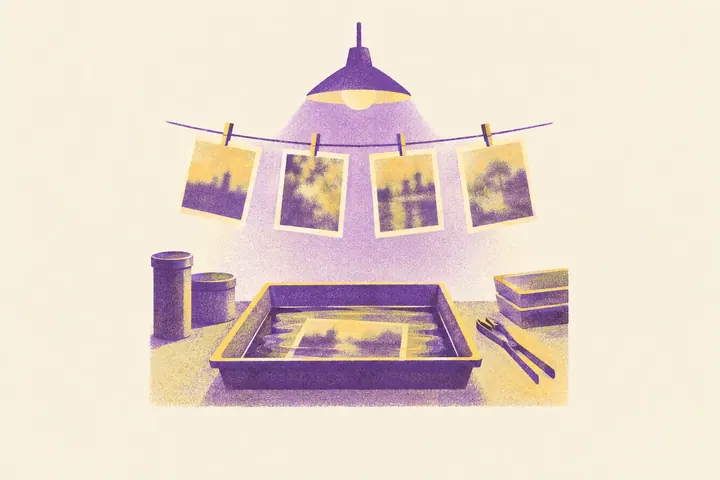
‘War Photographer’ is by Carol Ann Duffy. It was first published in 1985 in her collection Standing Female Nude. It is one of the fifteen poems in AQA’s Power and Conflict cluster, and it is still in copyright, so we quote only short phrases here. Read the whole poem in your anthology.
A photographer has come home from photographing wars. Alone in his darkroom, he develops his films and remembers what he saw. The poem asks a hard question: do the people who see his pictures in the newspaper really care?
Read the transcript
This is ‘War Photographer’ by Carol Ann Duffy, from the Power and Conflict cluster of the AQA anthology. I’m Hannah, and I teach English. The question we’ll answer: How does every part of ‘War Photographer’ show the gap between the suffering he records and the people who look at it? We’ll go through the context, the poem section by section, one quotation explored closely, a model paragraph and the quotations to learn. First, the context.
War in pictures. By the time of ‘War Photographer’ (1985), people at home saw war in photographs as well as words, in newspapers and the magazines that came with them. Duffy and photographers. Carol Ann Duffy was friends with war photographers and knew how hard their job was. She later became Poet Laureate, from 2009 to 2019.
Darkroom and editor. Film was developed by hand in a darkroom lit by a dim red light. Back in England, an editor would choose a few pictures to print. The question Duffy asks. Like Tennyson’s poem about Balaclava, ‘War Photographer’ asks what people at home really understand about a war they only read about.
‘War Photographer’ is still in copyright, so I won’t read it here. Open your anthology at the poem and read it twice: once for what happens, once for who is speaking and what changes. Lines 1 to 6: The darkroom as church. “spools of suffering”. Sibilance and a metaphor: the rolls of film hold people’s pain.
Setting them out in tidy rows shows a man trying to keep horror under control. “as though this were a church”. An extended simile: the darkroom becomes a church and the photographer a priest. Developing the film is treated as a sacred duty to the dead. “Belfast.
Beirut. Phnom Penh.”. Real places of conflict before 1985: Northern Ireland, Lebanon and Cambodia. The minor sentences suggest the wars have blurred into one long list for him. “All flesh is grass”.
A phrase from the Bible, as if the priest were speaking at a funeral. The reader is reminded that every life is short, wherever it is lived. Lines 7 to 12: Back in rural England. “which did not tremble then”. His hands were steady while he worked in the war zone, yet now they seem to shake.
The trauma catches up with him at home. “simple weather can dispel”. Contrast: English problems are small enough for sunshine to clear away. The verb “dispel” makes home troubles light and passing. “running children in a nightmare heat”.
Enjambment carries us from safe English fields to a minefield abroad. The noun “nightmare” suggests the scene comes back to him like a bad dream. “running children in a nightmare heat”. Duffy knew war photographers and the double life they led. Placing a minefield abroad beside safe English fields shows how far apart his two worlds are.
Lines 13 to 18: A face appears. “a half-formed ghost”. A metaphor for the image slowly appearing in the developing tray. The dead man seems to come back to haunt the photographer. “a half-formed ghost”.
In lines 15 to 17 he remembers the man’s wife crying, and how he asked, without words, if he could take the picture. He feels guilt as well as duty. “blood stained into foreign dust”. The stanza ends on a rhyming couplet, as each stanza does. The neat rhyme holds a violent image, as the photographer’s order holds back his feelings.
“blood stained into foreign dust”. The adjective “foreign” shows how the death is seen from England: far away and someone else’s. Duffy, a friend of war photographers, asks us to see it closer. And lines 19 to 24. “five or six”.
An editor chooses a handful of the hundred images for the Sunday supplement, the magazine that came with Sunday papers. Most of the suffering is never seen. “between the bath and pre-lunch beers”. Alliteration on the letter b makes the reader’s weekend sound cosy and trivial. Their tears are squeezed into a gap between comforts.
“they do not care”. A blunt ending: the readers’ sympathy lasts a moment. In line 23 he stares down from the plane without showing feeling, and the reader is left uneasy. “they do not care”. The final couplet closes the poem as neatly as the others, but its message is bleak.
The pronoun “they” could mean the readers at home or the people below. So, to sum it up in one sentence: Duffy shows a photographer who carries the pain of the people he photographed, while readers at home glance at a few chosen pictures and forget, so she asks us whether we really care. One quotation, explored closely: “spools of suffering set out in ordered rows”. Try it yourself first: method, zoom in, effect, and the context or purpose. Method: Sibilance and a metaphor in the first stanza.
The films become rows of human pain. Zoom in: “ordered” shows the photographer keeping control. The suffering is lined up neatly, as graves are in a war cemetery. Effect: The soft s sounds make the darkroom hushed, like a church. The reader senses a man holding chaos at arm’s length.
Purpose: Duffy was friends with war photographers. The regular stanzas and rhyme copy his order, and the poem shows how hard that control is to keep. And here’s a model What–How–Why paragraph for the question: How does Duffy present the gap between the photographer and the people who look at his photographs? Duffy presents a gap between the photographer, who has seen suffering up close, and the readers at home, who glance at it and move on. He has “A hundred agonies in black and white”, yet his editor will print only five or six.
The anguished abstract noun “agonies” turns each photograph into a person in pain, and the number shows how much is thrown away. The readers’ tears come “between the bath and pre-lunch beers”. The alliteration makes the moment sound light and quick, squeezed in between comforts. Duffy, who was friends with war photographers, wants readers to share the photographer’s frustration. The blunt closing clause, “they do not care”, then turns the accusation on us: we are the people looking at the pictures.
The quotations from ‘War Photographer’ worth learning by heart. “Belfast. Beirut. Phnom Penh.”. Three places of conflict, each a short sentence: suffering everywhere.
“All flesh is grass”. A line from a funeral service: every life is short, and the photographer knows it. Everything in this video comes from our Power and Conflict poetry scheme of learning for schools. If you’re a teacher, Lesson 3 of every scheme is free at btl.education. If this helped, give the video a like and subscribe, so the next poem turns up in your feed.
There’s another video on screen now to watch next. Thank you for watching.
What happens
The poem has four stanzas, and each one moves the story on.
Stanza 1. The photographer is alone in his darkroom, lit by a dim red light. He sets out his rolls of film in neat rows. The room feels like a church, and he works like a priest about to begin a service. He thinks of the places where he has worked: Northern Ireland, Lebanon and Cambodia.
Stanza 2. He is back in rural England, where the worst problems can be cleared away by a spell of good weather. He thinks of fields abroad where children ran across ground that might explode under them. His hands were steady while he worked there. Now, at home, they seem to shake.
Stanza 3. A picture develops in the tray. A stranger’s face slowly appears, like a ghost. The photographer remembers the man’s wife crying, and how he asked her without words whether he could take the picture, and did.
Stanza 4. He has a hundred photographs of suffering. His editor will choose five or six for the magazine that comes with a Sunday paper. The readers’ eyes will fill with tears for a moment, between their morning bath and their drinks before lunch. Then the photographer is on a plane again, flying out to work, staring down without expression at the country below, where people do not care.
The main ideas
People at home do not care for long. The readers feel sad for a moment and then forget. Duffy aims her criticism at them, and at us, since we are readers too.
The photographer’s trauma. He keeps calm to do his job, but at home his feelings start to break through. His steady hands begin to shake.
Order and chaos. He tries to keep the horror under control: rows of film, careful work, a quiet room. The poem’s neat form does the same.
Two worlds. Safe rural England and the war zones abroad sit side by side in his mind, and the gap between them is the point of the poem.
Language, form and structure
Sibilance and metaphor. His films are “spools of suffering set out in ordered rows”. The repeated s sounds make the darkroom hushed, like a church. The word ordered shows him keeping control, and the neat rows can remind us of graves in a war cemetery.
Extended simile. He is like “a priest preparing to intone a Mass”. To intone is to chant. The word priest makes his work a sacred duty to the dead, as if developing each photograph were a kind of funeral.
Minor sentences. “Belfast. Beirut. Phnom Penh.” Three places, three short sentences with no verb. The full stops make the wars sound like a list he has worked through, one after another, as if they have blurred together.
Metaphor. The face in the developing tray is “a half-formed ghost”. The word ghost suggests the dead man coming back to haunt him, and half-formed matches the way a photograph slowly appears.
Abstract noun. He has “A hundred agonies in black and white”. The word agonies turns each photograph into a person in pain. Only five or six will be printed, so most of the suffering is never seen.
Alliteration. The readers cry “between the bath and pre-lunch beers”. The repeated b sounds make the moment light and quick. Their tears are squeezed in between comforts.
The ending. The last words, “they do not care”, are blunt. The pronoun they could mean the readers at home, or it could mean the people far below the plane. Either way, the reader is left uneasy.
Form. The poem has four stanzas of six lines, and each stanza ends in a rhyming couplet. The regular, controlled form copies the photographer’s careful work. The horror inside the neat stanzas is like the feeling he holds back.
Context
By the 1980s people at home saw war in photographs in newspapers and in the colour magazines that came with Sunday papers. Film was developed by hand in a darkroom, lit by a dim red light, and an editor chose which pictures to print.
Belfast, Beirut and Phnom Penh were all places of conflict in the years before the poem: Northern Ireland, Lebanon and Cambodia.
Carol Ann Duffy was born in Glasgow in 1955. She was Poet Laureate from 2009 to 2019.
Poems to compare it with
Remains. Both men have seen death abroad and carry the memory home to a safe place. Both poems end with the memory still present.
The Charge of the Light Brigade. Both poems are about how people at home learn about a war. Tennyson asks his readers to honour the soldiers; Duffy shows readers who forget the victims by lunchtime.
Poppies. Both show the effect of war on someone away from the fighting, and both use the quiet of a home or a room to hold strong feeling.
For how to plan the comparison, read How to compare two poems.
Lines to learn
- “spools of suffering set out in ordered rows” (the narrator, stanza 1). His films, set out neatly: control over chaos.
- “a priest preparing to intone a Mass” (the narrator, stanza 1). The darkroom becomes a church, and his work a sacred duty.
- “a half-formed ghost” (the narrator, stanza 3). A dead man’s face appears in the developing tray and haunts him.
- “A hundred agonies in black and white” (the narrator, stanza 4). A hundred photographs of pain, and only five or six will be printed.
- “between the bath and pre-lunch beers” (the narrator, stanza 4). The readers’ sympathy, squeezed in between comforts.
- “they do not care” (the narrator, stanza 4). The blunt ending.
Test yourself
6 quotations from this page. For each one, choose who says it and where it comes from. Ten at a time, in a new order every round.
Where is it? Open each quotation to check your answer.
“spools of suffering set out in ordered rows”
The narrator, stanza 1
“a priest preparing to intone a Mass”
The narrator, stanza 1
“a half-formed ghost”
The narrator, stanza 3
“A hundred agonies in black and white”
The narrator, stanza 4
“between the bath and pre-lunch beers”
The narrator, stanza 4
“they do not care”
The narrator, stanza 4
Frequently asked questions
What is War Photographer by Carol Ann Duffy about?
A war photographer develops his films in a darkroom at home in England and remembers the suffering he saw. His editor will print only a few pictures in a Sunday paper, and readers will feel sad for a moment and then forget. Duffy asks why people at home care so little.
Is the photographer in a war zone during the poem?
No. He is at home in England, in his darkroom, developing his films. The war zones come back to him as memories. At the very end he flies out to work again.
Why does War Photographer have such a regular form?
Each of the four stanzas has six lines and ends in a rhyming couplet. The order matches the photographer’s careful, controlled work, while the horror he remembers sits inside it.
Who does not care at the end of War Photographer?
The word they can mean the people at home who look at the photographs, or the people in the country below his plane. Either way, Duffy’s criticism falls on the readers at home, and so on us.
What poem goes well with War Photographer?
‘Remains’ works well, because both men bring memories of death home with them. ‘The Charge of the Light Brigade’ is a good choice for how people at home see war.
Sources
- AQA, GCSE English Literature 8702 specification (Paper 2, Section B)
- Scottish Poetry Library, War Photographer (first published in Standing Female Nude, 1985)
- Wikipedia, Carol Ann Duffy (born in Glasgow in 1955; Poet Laureate from May 2009 to May 2019)