Videos › Raising Achievement: a walkthrough
Raising Achievement drills: a walkthrough
12 minutes · captions available
How the 30 drills in each Raising Achievement set work, how to choose them and how to run them with small groups or whole classes.
Chapters
Transcript
Introduction
This is Between the Lines, and this is the walkthrough of our Raising Achievement drills. I'm Hannah. The drills are different from the schemes of learning, so they get their own video. A scheme is a run of lessons that teaches a text or a paper from the start. A Raising Achievement set is thirty short sessions, each about twenty-five to thirty minutes, for students who have been taught the text or the paper and need to get better at answering the question. They're built for Year 11 intervention: the Thursday period six group, the tutor-time slot, the spring term revision session, the room where somebody has to run something and there's nothing planned. They sit outside the schemes of learning if you buy them on their own, and they're included if you buy a school bundle, so check your download before you assume you don't have them. In the next quarter of an hour I'll go through what's in a set, how every drill runs, one drill from start to finish with the real pages, what the teacher guide gives whoever is running the session, including someone who doesn't teach English, and how I'd deploy a set across a year.
What's in a set
Pause it, open a set alongside it, and make notes, because every drill is editable. There's a set for every Between the Lines scheme: nine sets, thirty drills each. Macbeth, Romeo and Juliet, A Christmas Carol, Jekyll and Hyde, An Inspector Calls, Power and Conflict poetry, Unseen poetry, Language Paper 1 and Language Paper 2. Every set has the same three folders. A teacher guide, with answers for every drill. The slides, thirty editable decks with notes on every slide and a PDF copy of each. And the student sheets, one printable sheet per drill. The drills are grouped into topics, and the topics are where you choose. In the Macbeth set they're Macbeth, Lady Macbeth, the wider cast, ambition and guilt, kingship, order and the supernatural, and masculinity and appearance, five drills in each. The Literature sets each take one extract or one moment per drill and explode one important quotation through AO1, AO2 and AO3 questions. The Language sets take one exam question per topic, so Language Paper 1 has a topic for each of the five questions, three drills on the multiple-choice Question 1 and more on the questions that carry more marks, each on a new unseen extract. That's the practical difference for a department. A set-text set is for a student who knows the plot and can't yet write about it. A Language set is for a student who freezes in front of an unseen text and a clock. You can run a set in order, one drill a week for the year, or pick the drill that matches what a group got wrong in their mock. The teacher guide has a page for every topic that tells you what the drills in it
How every drill runs
practise and the most common error they fix. Every drill runs the same routine, and the routine is the point. By the second week students know what's coming, so the session is twenty-five minutes of practice, with no time lost to explaining the task. Do Now: five quick retrieval questions, answered in silence and self-marked. Three minutes. Focus reminder: what the skill or the exam question asks for, in three or four plain points, and the same points every time, because repetition is what a drill is for. Read and check: the extract with line numbers, then quick questions to make sure everyone has understood it before anyone analyses it. Quotation explosion: one quotation, exploded with questions labelled AO1, AO2 and AO3, and in the Language sets a zoom in on single words. Four minutes at most. Technique: one method or one sentence skill, modelled on the extract. Two minutes. The question: an exam-style question in AQA's wording. Students plan an answer or write an introduction in eight minutes, never a full essay, then compare with a model. Have a go: a second short task on a new moment or extract, two or three sentences. Green pen: a checklist to improve the answer before the sheets are collected. Add it up and it's about twenty-five minutes for the set-text drills and thirty for the Language ones, with the timings printed on the teacher guide page for every drill. Nobody writes an essay in a drill. That's deliberate. Thirty essays would take thirty sessions to mark, and the students who need intervention most are the ones who need to practise the first paragraph twenty times, not the whole
A drill from start to finish: Do Now to explosion
essay once. Let me run one, with the real pages. Macbeth, Drill 1, Two truths are told: how Macbeth reacts when the first prophecy comes true. This is the drill that's free on the website, so if you want to try one before you commit, it's this one. The teacher guide page for the drill opens with the timings across the top, then three bullet points for whoever is teaching it. Read the aside aloud with a pause at each question mark, so students hear how unsettled he is. The common error: saying the witches tell Macbeth to kill Duncan, when they do not, because the suggestion comes from his own mind. And if time is short, set Have a go as home learning. Do Now. Who tells Duncan about brave Macbeth in Act 1 Scene 2. Which title Macbeth already holds. What three things the witches call him. The year the play was probably first performed. And what the divine right of kings means. The answers are on the next slide and in the guide, so anyone can run it. Focus reminder: start with the extract, pick a short quotation, and write Shakespeare presents Macbeth as, never Macbeth is. The same advice every drill, on purpose. Then the class reads the extract, Macbeth's aside after Ross's news, beginning Two truths are told, with the line numbers down the side. Four check questions: what news has he just heard, which two truths, what the horrid image does to his body, and who hears the speech. Only the audience. It's an aside. Then the explosion. The quotation is why do I yield to that suggestion, whose horrid image doth unfix my hair. AO1: what is the suggestion, and what does it show about Macbeth? AO2: what does the verb yield suggest? Giving in, like a soldier losing a fight, so the warrior praised in Scene 2 is already losing a battle inside his own head. AO2 again: why an aside? And AO3: why would a Jacobean audience find this horrid image so shocking? Students try the questions on the sheet, then the answers go up, and this is where they practise going deep on very little text.
A drill from start to finish: technique to green pen
Technique. Each drill teaches one writing move. In Drill 1 it's embedding a short quotation: two to five words of quotation inside your own sentence so it reads smoothly, because short quotations let you zoom in on a single word. The task is one sentence that embeds knock at my ribs and says what it shows about Macbeth's fear. It takes two minutes, and it's the habit that makes the biggest difference to paragraphs. Then the question, in AQA's wording: starting with this extract, how does Shakespeare present Macbeth as a man tempted by murder, with the two bullet points about the extract and the play as a whole. Students have eight minutes to plan: a thesis and three points, each with a short quotation and a named method. The plan only, never the essay. Then the model plan goes up, with notes on why it works: the thesis answers the question with an idea, with no retelling of the plot; each point has a short, exact quotation and names a method; the points come from the extract and two other moments in the play; and context gets its own line and links back to the thesis. Students compare their plan with the model straight away, while it's in front of them. Have a go: a short moment from later in Act 1, where Macbeth names Malcolm as a step he must fall down or else o'erleap, and the question is how his attitude to murder has moved on since the aside. Two or three sentences, one quotation. And green pen: the checklist on the back of the student sheet. My thesis gives an idea about Macbeth, not a summary of the plot. Each point has a short, exact quotation and a named method. My context is linked to my argument. I checked the spelling of the names. Students mark their own work against it before the sheets are collected, which means the sheets come to you already checked. That's one drill.
The teacher guide and the student sheet
Twenty-five minutes, one extract, one quotation, one technique, one plan. The teacher guide is written so that the person running the session doesn't have to be the person who taught the text. That matters, because intervention often lands on whoever is free. Page two is how the drills work, the routine I've just shown you. Then the topic pages: for each topic, what the drills practise, the most common error students make and how to fix it, and the drill numbers. For Lady Macbeth, for example, the common errors are calling her simply evil or the fourth witch without evidence, and forgetting that she disappears from the action after Act 3, and the note says to keep coming back to Jacobean expectations of women. Then one page per drill: the timings, the three bullets for the teacher, the Do Now answers, the check answers, the explosion answers written out in full, the technique task, the question, the model plan with its notes, and the Have a go answer. Every answer a student could ask for is on that page. A cover supervisor can run Drill 14 on Macbeth does murder sleep with the guide open and get it right. The student sheet is four pages, printed once per drill: the Do Now, the extract with line numbers, the check questions, the explosion questions with space, the technique task, the question with planning space, Have a go, and the green pen checklist. The slides match the sheet one for one, so the session runs from the board and the students write on the sheet. Nothing to copy down. For the Language sets the shape is the same with one change: the question stage adds a timed answer after the plan, because the real skill in Language is doing it in the time, and the Question 5 drills end with a self-check against AQA's
Deploying a set across the year
levels, with AO5 split into upper and lower bands and AO6 marked separately. How I'd deploy a set across a year, and three ways to do it. One: weekly intervention from October. One drill a week, in topic order, for the students the first Feedback Loop kit or the first mock put in the bottom of the level spread. Thirty drills is about a year of weekly sessions, so you'll not run out. Two: tutor time. A drill fits in a twenty-five minute slot, it's self-marking at the Do Now and the check questions, and the plan can be compared with the model without a teacher marking it. Form tutors who don't teach English can run it from the guide. Three: after the mocks. Take the question-level data, or your whole-class feedback sheets from the kits, find the topic the group got wrong, and run the five drills in that topic over five weeks. In the Language sets that's as direct as it gets: a group that lost marks on Question 3 does the five Question 3 drills. Two things to watch. The drills assume the text has been taught. A student who hasn't met Act 3 can't do a drill on the banquet, so the set works alongside the scheme or after it, not instead of it. And keep the pace. The guide says the explosion should take no more than four minutes, so there's time for the plan, and the plan is where the progress is. Drill 1 of every set is free at btl.education with everything you need to run it, so a department can try one with a group this week before deciding whether the rest of the set is worth having. And if you've bought a school bundle, every Raising Achievement set for the schemes in it is already in your download. That's the Raising Achievement drills. Thank you for watching, and I hope they make somebody's Thursday period six a good deal easier.
More videos
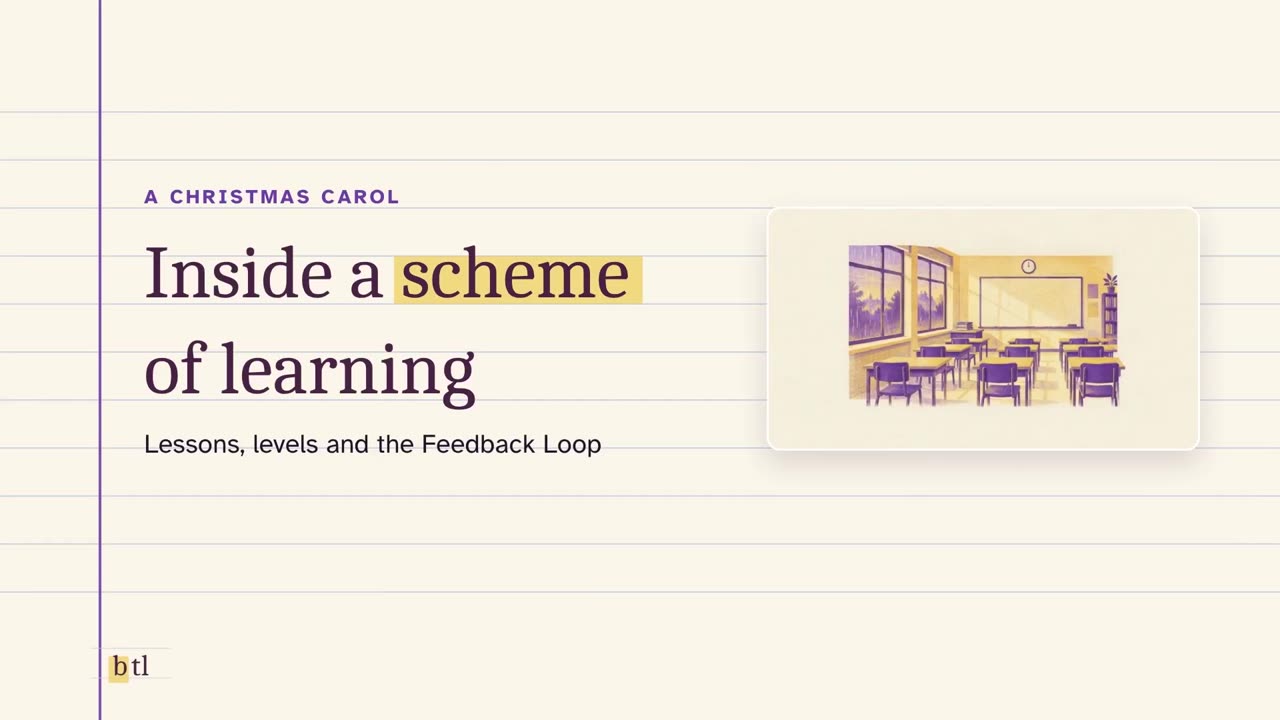
Every folder in the A Christmas Carol scheme: the teacher handbook, the slides, the student packs at three levels, the Feedback Loop kits, the end-of-unit essay, the stretch booklet and the catch-up and inclusion sheets.
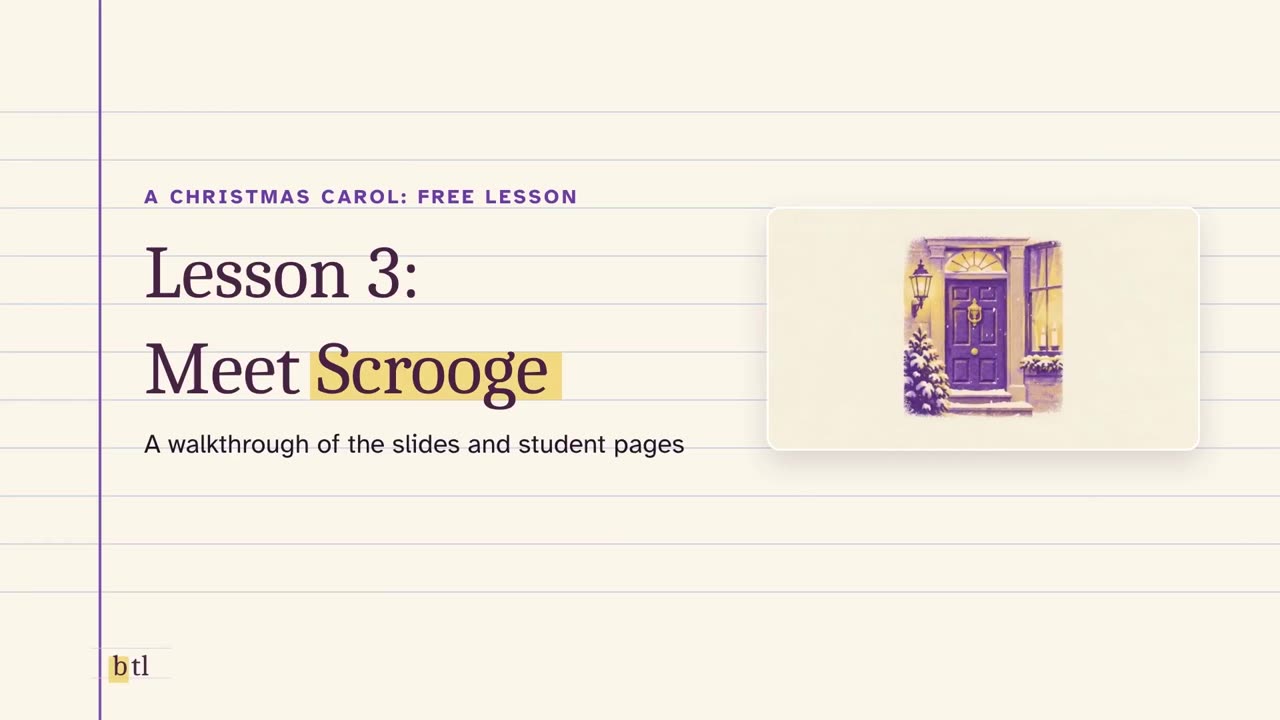
Hannah teaches through the free Lesson 3, Meet Scrooge: the Do Now, the four key words, exploding a quotation, the hinge question and the same task at Securing, Strengthening and Soaring.
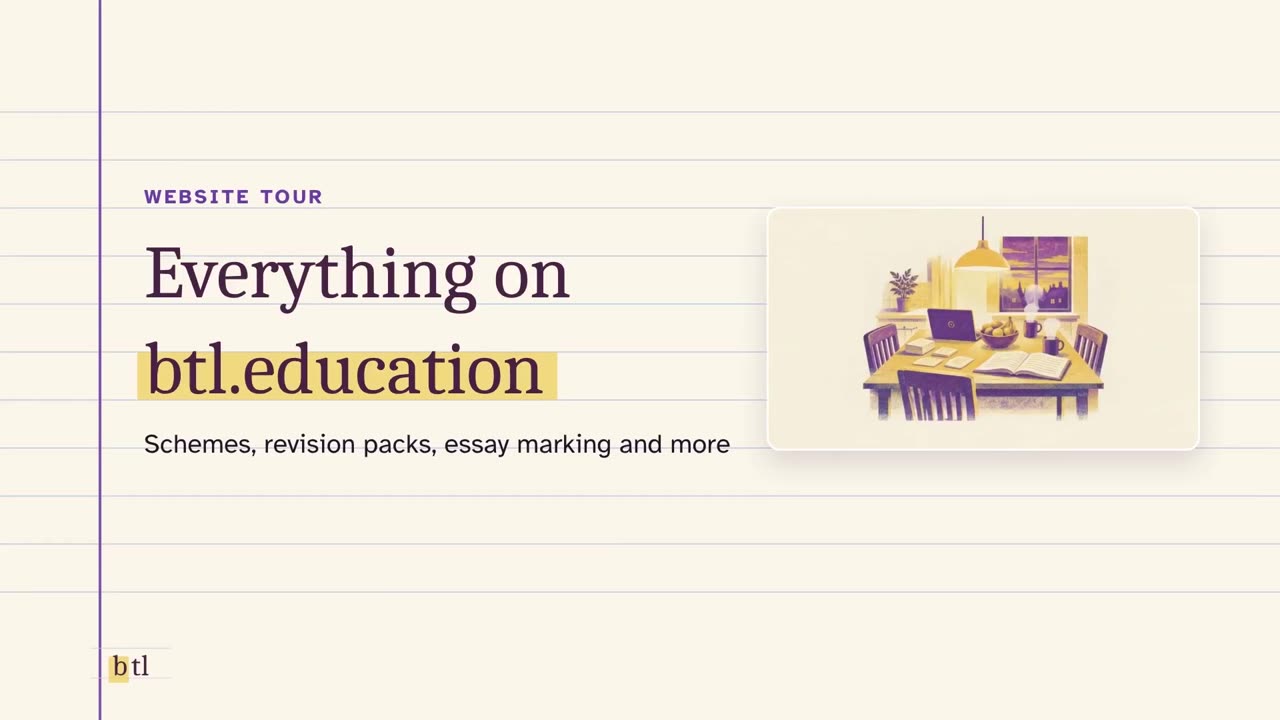
The schemes and licences, the free resources, revision packs for home, essay marking, the Knowledge hub and the display settings for reading on screen.
Long reads on the thinking behind the schemes, guides for teachers, students and parents and carers, education news and a glossary of 336 terms. Free to read, no sign-up.
The four English exams, how they are marked in levels, what the levels of support mean, and what helps at home. For parents and carers.
Every question on Paper 1: what it asks, how many marks it carries, how long to spend and what a strong answer does.
Every question on Paper 2: the two sources, summary, language, comparison and the viewpoint writing task.
The Shakespeare play and the 19th-century novel: the extract-to-whole question, timing, and what examiners reward.
The modern text, the poetry anthology and the unseen poems: the questions, the timing and how they are marked.
A 25-minute intervention session from start to finish: Do Now, extract, one quotation or skill, an exam question and a green-pen check.
How a Feedback Loop kit runs: the progress check, whole-class feedback in one lesson, and the improvement tasks at three levels.
A half-hour walkthrough of the An Inspector Calls scheme, made for departments using it: the handbook, one lesson in practice, the three levels, Feedback Loop kits, practice booklets, assessment, catch-up and inclusion.
A half-hour walkthrough of the Jekyll and Hyde scheme, made for departments using it: the handbook, one lesson in practice, the three levels, Feedback Loop kits, practice booklets, assessment, catch-up and inclusion.
A half-hour walkthrough of the Macbeth scheme, made for departments using it: the handbook, one lesson in practice, the three levels, Feedback Loop kits, practice booklets, assessment, catch-up and inclusion.
A half-hour walkthrough of the Romeo and Juliet scheme, made for departments using it: the handbook, one lesson in practice, the three levels, Feedback Loop kits, practice booklets, assessment, catch-up and inclusion.
A half-hour walkthrough of the Power and Conflict poetry scheme, made for departments using it: the handbook, one lesson in practice, the three levels, Feedback Loop kits, practice booklets, assessment, catch-up and inclusion.
A half-hour walkthrough of the Unseen poetry scheme, made for departments using it: the handbook, one lesson in practice, the three levels, Feedback Loop kits, practice booklets, assessment, catch-up and inclusion.
A half-hour walkthrough of the Language Paper 1 scheme, made for departments using it: the handbook, one lesson in practice, the three levels, Feedback Loop kits, practice booklets, assessment, catch-up and inclusion.
A half-hour walkthrough of the Language Paper 2 scheme, made for departments using it: the handbook, one lesson in practice, the three levels, Feedback Loop kits, practice booklets, assessment, catch-up and inclusion.
Get our emails
About once a month: new free resources and the dates that matter for GCSE English.