A 25-minute intervention session from start to finish: Do Now, extract, one quotation or skill, an exam question and a green-pen check.
Chapters
Transcript
Introduction
Year 11 intervention has a habit of landing on someone's desk at short notice. A room, a group, thirty minutes, and nothing planned. Raising Achievement drills are built for exactly that. Each one is a twenty-five to thirty-minute session with slides, a student sheet and a page for whoever is teaching it. Here's how one runs, using Macbeth Drill 1, which is free. There's a set for every Between the Lines scheme: nine sets, thirty drills each. Each drill takes one skill or one moment in the text and practises it the same way every time, so students know the routine by the second week. You can run them in order, or pick the drill that matches what your group got wrong in their mock. Every drill opens with a Do Now: five short retrieval questions on the text, answered from memory. In Drill 1 they're on the opening of Macbeth: who tells Duncan about brave Macbeth in Act 1 Scene 2, which title he already holds, and so on. The answers are on the teacher page, so whoever is in the room can go through them quickly, whether they teach English or not. Next comes a short reminder of what the exam question asks. For Macbeth, start with the extract, pick a short quotation, and write 'Shakespeare presents Macbeth as', never 'Macbeth is'. It's the same advice every time, on purpose. Repetition is the point of a drill. Then the class reads a short extract together. In Drill 1 it's Macbeth's aside after Ross's news, beginning Two truths are told. A few comprehension questions check that everyone has followed it. Then the zoom: one short quotation, explored word by word, with questions labelled by assessment objective. What is the suggestion? What does the verb yield suggest? This is where students practise going deep on very little text. Each drill teaches one writing technique. In Drill 1 it's embedding a short quotation inside your own sentence. Students see an example, then write one sentence of their own using knock at my ribs. It takes two minutes, and it's the habit that makes the biggest difference to their paragraphs. Then an exam-style question, but students plan the answer. No essay. In Drill 1 they have eight minutes to write a thesis and three planned points, each with a short quotation and a named method. A model plan follows, with notes on why it works, so students can compare theirs straight away. Finally, a short practice question on a new moment from the text, answered in two or three sentences, and a self-check list: does my thesis give an idea about Macbeth, or does it retell the plot? Have I named a method? Is my quotation short? Students mark their own work against it before they leave. Drill 1 of every set is free, with everything you need to run it. Try it with your group this week. If it works, the full set of thirty is sixty pounds plus VAT for your school, and every set is included in our school bundles. It's all at btl.education.
More videos
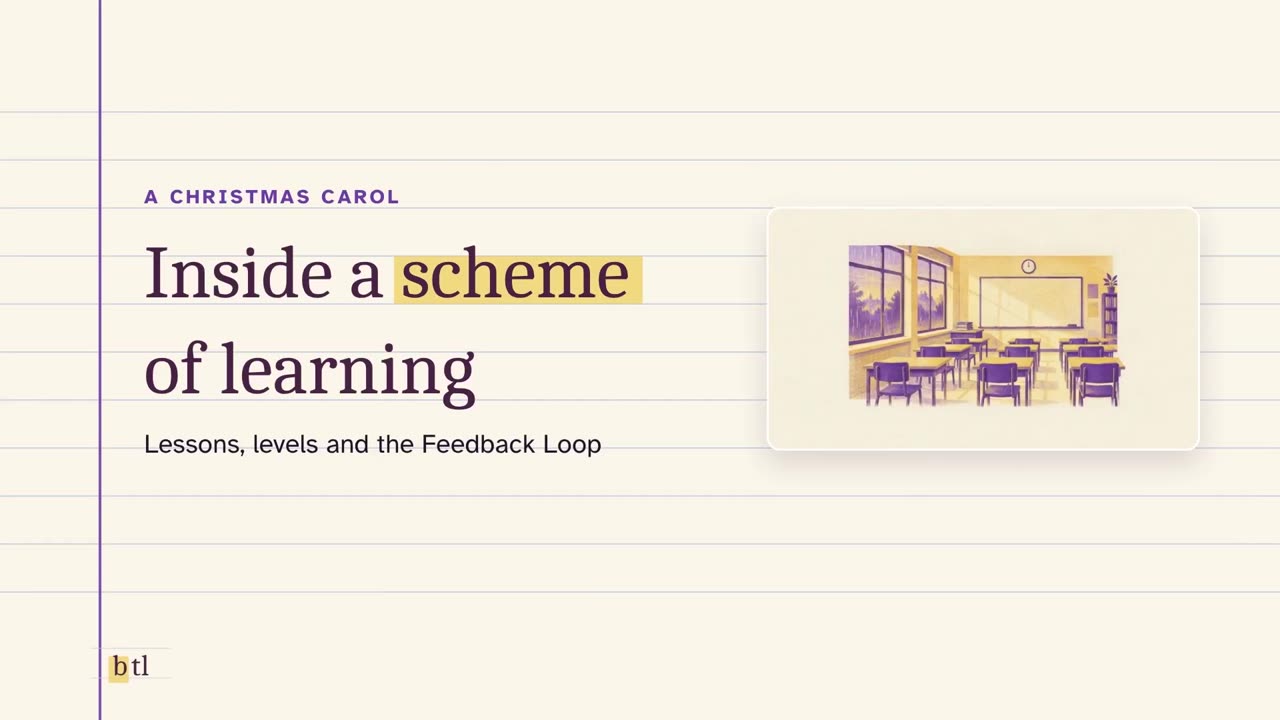
Every folder in the A Christmas Carol scheme: the teacher handbook, the slides, the student packs at three levels, the Feedback Loop kits, the end-of-unit essay, the stretch booklet and the catch-up and inclusion sheets.
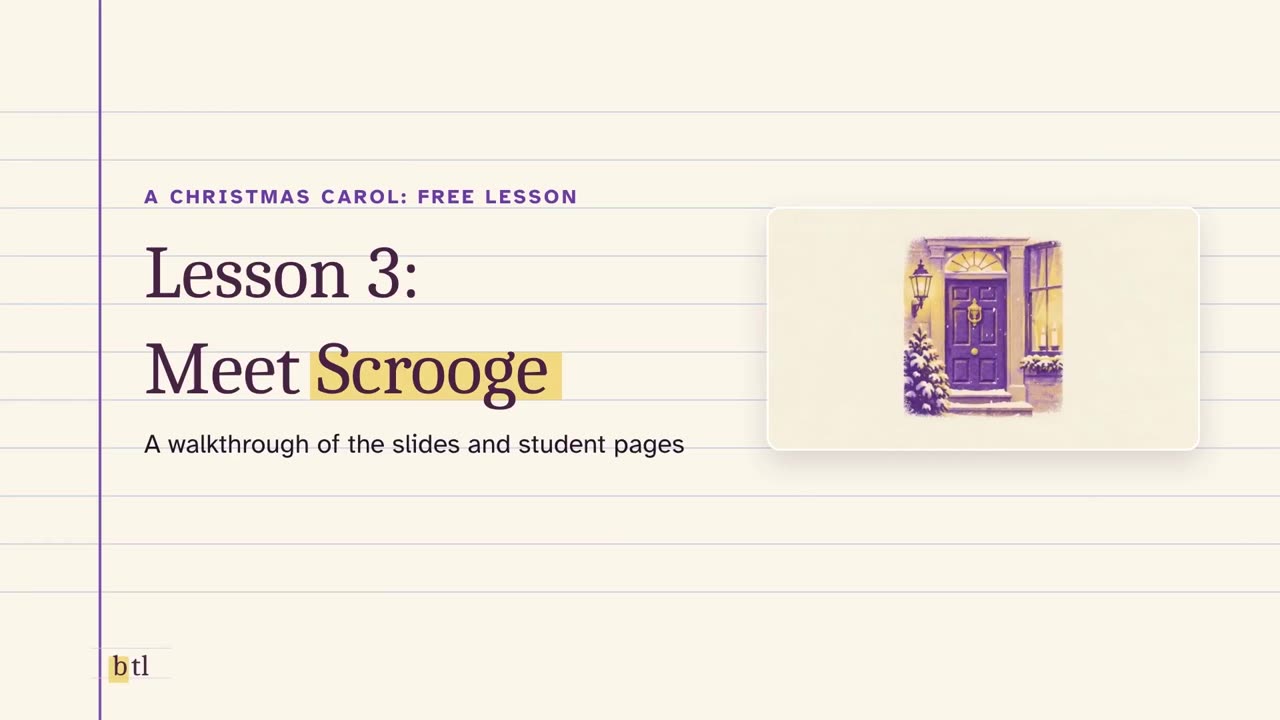
Hannah teaches through the free Lesson 3, Meet Scrooge: the Do Now, the four key words, exploding a quotation, the hinge question and the same task at Securing, Strengthening and Soaring.
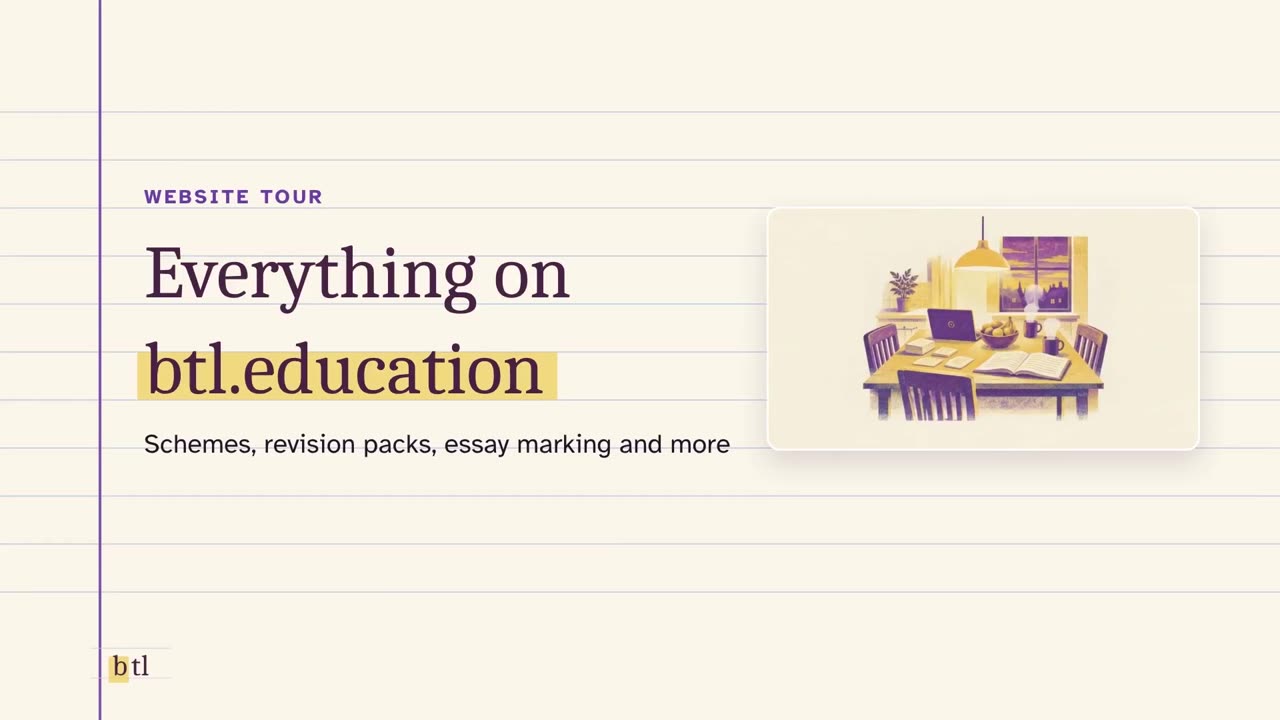
The schemes and licences, the free resources, revision packs for home, essay marking, the Knowledge hub and the display settings for reading on screen.
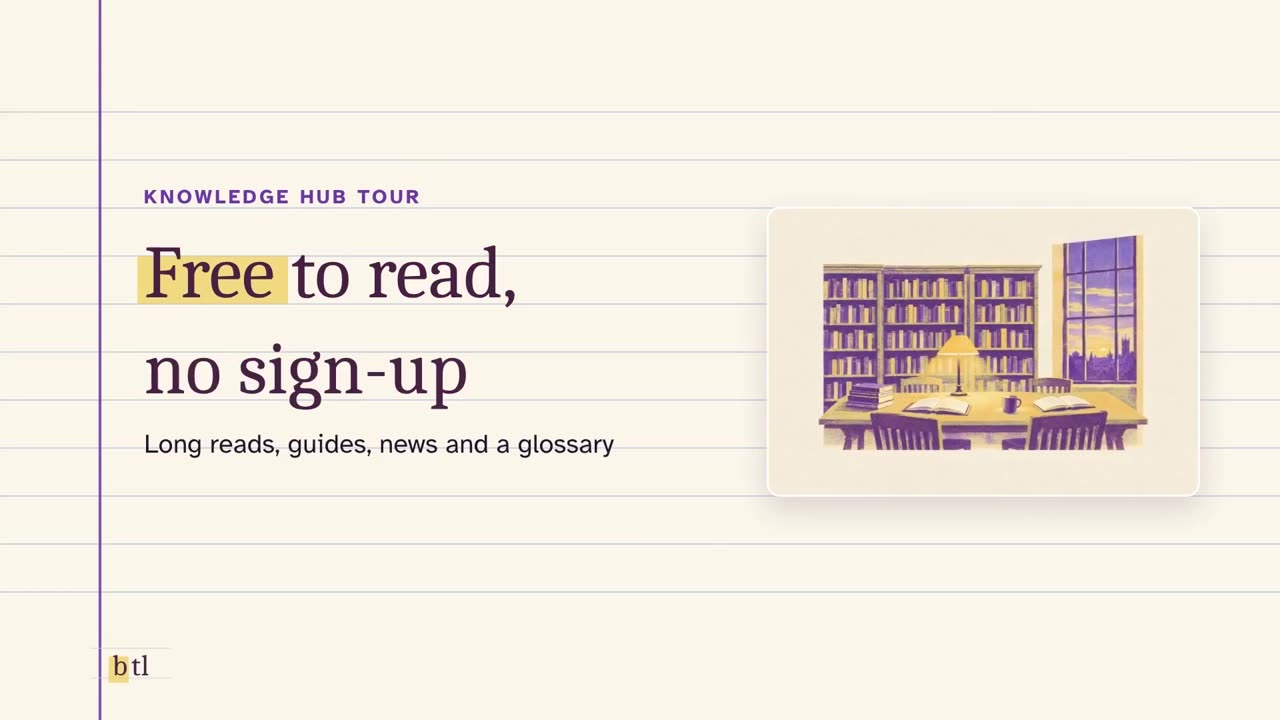
Long reads on the thinking behind the schemes, guides for teachers, students and parents and carers, education news and a glossary of 336 terms. Free to read, no sign-up.
The four English exams, how they are marked in levels, what the levels of support mean, and what helps at home. For parents and carers.
Every question on Paper 1: what it asks, how many marks it carries, how long to spend and what a strong answer does.
Every question on Paper 2: the two sources, summary, language, comparison and the viewpoint writing task.
The Shakespeare play and the 19th-century novel: the extract-to-whole question, timing, and what examiners reward.
The modern text, the poetry anthology and the unseen poems: the questions, the timing and how they are marked.
How a Feedback Loop kit runs: the progress check, whole-class feedback in one lesson, and the improvement tasks at three levels.
A half-hour walkthrough of the An Inspector Calls scheme, made for departments using it: the handbook, one lesson in practice, the three levels, Feedback Loop kits, practice booklets, assessment, catch-up and inclusion.
A half-hour walkthrough of the Jekyll and Hyde scheme, made for departments using it: the handbook, one lesson in practice, the three levels, Feedback Loop kits, practice booklets, assessment, catch-up and inclusion.
A half-hour walkthrough of the Macbeth scheme, made for departments using it: the handbook, one lesson in practice, the three levels, Feedback Loop kits, practice booklets, assessment, catch-up and inclusion.
A half-hour walkthrough of the Romeo and Juliet scheme, made for departments using it: the handbook, one lesson in practice, the three levels, Feedback Loop kits, practice booklets, assessment, catch-up and inclusion.
A half-hour walkthrough of the Power and Conflict poetry scheme, made for departments using it: the handbook, one lesson in practice, the three levels, Feedback Loop kits, practice booklets, assessment, catch-up and inclusion.
A half-hour walkthrough of the Unseen poetry scheme, made for departments using it: the handbook, one lesson in practice, the three levels, Feedback Loop kits, practice booklets, assessment, catch-up and inclusion.
A half-hour walkthrough of the Language Paper 1 scheme, made for departments using it: the handbook, one lesson in practice, the three levels, Feedback Loop kits, practice booklets, assessment, catch-up and inclusion.
A half-hour walkthrough of the Language Paper 2 scheme, made for departments using it: the handbook, one lesson in practice, the three levels, Feedback Loop kits, practice booklets, assessment, catch-up and inclusion.
How the 30 drills in each Raising Achievement set work, how to choose them and how to run them with small groups or whole classes.
Get our emails
About once a month: new free resources and the dates that matter for GCSE English.