Knowledge hub › For students › My Last Duchess
My Last Duchess by Robert Browning: GCSE poem guide
A duke shows a visitor a painting of his dead wife and gives away far more than he means to. Here is what happens, how Browning lets the Duke condemn himself and the lines worth learning.
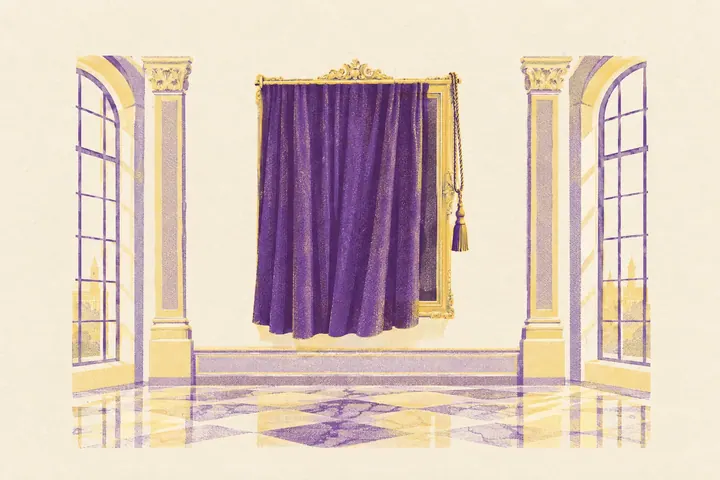
Robert Browning (1812 to 1889) was a Victorian poet. ‘My Last Duchess’ was published in 1842 in his collection Dramatic Lyrics. It is set in Italy in the 1500s, in the time of the Renaissance, when wealthy noble families paid artists to paint and sculpt for them.
The poem is a dramatic monologue: one character, a duke, speaks the whole poem to a listener who never answers. It is 56 lines long with no stanza breaks, so in this guide we give line numbers.
Read the transcript
This is ‘My Last Duchess’ by Robert Browning, from the Power and Conflict cluster of the AQA anthology. I’m Hannah, and I teach English. The question we’ll answer: How does every part of ‘My Last Duchess’ show the Duke’s need to control? We’ll go through the context, the poem section by section, one quotation explored closely, a model paragraph, the quotations to learn and which poems to compare it with. First, the context.
Victorian readers. Robert Browning published ‘My Last Duchess’ in 1842, early in the reign of Queen Victoria. The poem takes his readers back three hundred years, to Italy in the 1500s. Art as power. In the Renaissance, wealthy nobles paid artists to paint them and their families.
A portrait or a statue showed off a family’s power, wealth and taste to anyone who entered the room. A real duke. The speaker is a Duke of Ferrara, thought to be based on Alfonso II d’Este. His young first wife died in suspicious circumstances. A dramatic monologue.
Only the Duke speaks. He shows his late wife’s portrait to an envoy who is arranging his next marriage, to a Count’s daughter. There is no narrator, so readers must judge him from his own words. Here’s the poem. Read it with me.
That’s my last Duchess painted on the wall, Looking as if she were alive. I call That piece a wonder, now: Fra Pandolf’s hands Worked busily a day, and there she stands. Will’t please you sit and look at her? I said “Fra Pandolf” by design, for never read Strangers like you that pictured countenance, The depth and passion of its earnest glance, But to myself they turned (since none puts by The curtain I have drawn for you, but I) And seemed as they would ask me, if they durst, How such a glance came there; so, not the first Are you to turn and ask thus. Sir, ’twas not Her husband’s presence only, called that spot Of joy into the Duchess’ cheek: perhaps Fra Pandolf chanced to say “Her mantle laps Over my lady’s wrist too much,” or “Paint Must never hope to reproduce the faint Half-flush that dies along her throat”: such stuff Was courtesy, she thought, and cause enough For calling up that spot of joy.
She had A heart—how shall I say?—too soon made glad, Too easily impressed; she liked whate’er She looked on, and her looks went everywhere. Sir, ’twas all one! My favour at her breast, The dropping of the daylight in the West, The bough of cherries some officious fool Broke in the orchard for her, the white mule She rode with round the terrace—all and each Would draw from her alike the approving speech, Or blush, at least. She thanked men,—good! but thanked Somehow—I know not how—as if she ranked My gift of a nine-hundred-years-old name With anybody’s gift.
Who’d stoop to blame This sort of trifling? Even had you skill In speech—(which I have not)—to make your will Quite clear to such an one, and say, “Just this Or that in you disgusts me; here you miss, Or there exceed the mark”—and if she let Herself be lessoned so, nor plainly set Her wits to yours, forsooth, and made excuse, —E’en then would be some stooping; and I choose Never to stoop. Oh sir, she smiled, no doubt, Whene’er I passed her; but who passed without Much the same smile? This grew; I gave commands; Then all smiles stopped together. There she stands As if alive.
Will’t please you rise? We’ll meet The company below, then. I repeat, The Count your master’s known munificence Is ample warrant that no just pretence Of mine for dowry will be disallowed; Though his fair daughter’s self, as I avowed At starting, is my object. Nay, we’ll go Together down, sir. Notice Neptune, though, Taming a sea-horse, thought a rarity, Which Claus of Innsbruck cast in bronze for me!
Lines 1 to 13: The portrait and curtain. “That’s my last Duchess painted on the wall”. The possessive “my” and the adjective “last” open the poem: she is one wife in a series, owned like the painting on his wall. “Looking as if she were alive”. The Duke praises how lifelike the painting is.
The reader starts to ask why the painted woman is here and the living one is gone. “The curtain I have drawn for you, but I”. The brackets slip in a proud aside: nobody else opens the curtain. He now decides who sees her face and when. “Fra Pandolf’s hands”.
Renaissance nobles paid artists to show off their wealth and taste. The Duke names his painter to impress the envoy with his collection. Lines 14 to 24: The spot of joy. “Her husband’s presence only”. The Duke is thought to be based on Alfonso II d’Este, whose young wife died in suspicious circumstances.
Here his jealousy of anyone else pleasing her begins to show. “Of joy into the Duchess’ cheek”. A painter’s compliment made her blush with pleasure. The Duke resents it, but the reader sees a warm, happy young woman. “too soon made glad”.
The Duke pauses with dashes, as if choosing his words with care. The adverb “soon” turns her happiness into a fault. “and her looks went everywhere”. He means she was too friendly with everyone. Many readers see innocence and kindness, and a husband who wanted every look for himself.
Lines 25 to 34: All one to her. “Sir, ’twas all one!”. A short exclamation after a long, smooth sentence. For a moment the Duke’s anger breaks through his polite manner. “The dropping of the daylight in the West”.
A list sets the Duke’s own gift beside a sunset, some cherries and a mule. To her they were equal, and that is what he cannot forgive. “some officious fool”. The servant who picked cherries for her is a “fool” to the Duke. The reader sees his contempt for anyone below him.
“My gift of a nine-hundred-years-old name”. For a Renaissance noble, an old family name meant power and status. The Duke treats marrying into it as the greatest gift a woman could receive. Lines 35 to 46: Never to stoop. “which I have not”.
A parenthesis of false modesty. He claims he has no skill in speech while he controls every word he says to the envoy. “Never to stoop”. Pride stops him talking to his wife. Telling her what upset him would lower him, so he chose another way to deal with her.
“This grew; I gave commands;”. Short clauses and semicolons make the line flat and quick. The worst event in the poem takes three words, and he never says what the commands were. “Then all smiles stopped together”. Like the real duke’s first wife, the Duchess dies with no explanation.
With no narrator, Victorian readers had to judge a great nobleman from his own calm words. And lines 47 to 56. “Which Claus of Innsbruck cast in bronze for me!”. The poem ends on “me” and on another work of art he paid for. As in Renaissance Italy, art shows off his power.
So, to sum it up in one sentence: Browning lets the Duke’s polite, controlled voice give away a proud and jealous man who treated his wife as a possession and had her silenced, so readers judge him by his own words. One quotation, explored closely: “I gave commands; / Then all smiles stopped together”. Try it yourself first: method, zoom in, effect, and the context or purpose. Method: A short main clause, a semicolon, then enjambment that carries the reader into the next line. Zoom in: “commands” is plural and vague.
The Duke never says what he ordered, and he does not need to. Effect: The calm tone is chilling. The reader realises that the Duchess was silenced or killed, and that the Duke feels no guilt. Context: The Duke of Ferrara is thought to be based on Alfonso II d’Este, whose young first wife died in suspicious circumstances. And here’s a model What–How–Why paragraph for the question: How does Browning let the Duke reveal more than he means to in ‘My Last Duchess’?
Browning lets the Duke reveal that his pride matters more to him than his wife’s life. The Duke complains that she treated “My gift of a nine-hundred-years-old name” like any small gift. The long, hyphenated adjective shows how heavily he values his family name. He then says “I choose / Never to stoop”. The enjambment makes the reader wait on “choose”, so his refusal to speak to her sounds cold and deliberate.
Soon after comes “I gave commands”, spoken as calmly as a list of chores. Because this is a dramatic monologue, the Duke never hears himself. The reader does. The Duke of Ferrara is thought to be based on Alfonso II d’Este, whose young first wife died in suspicious circumstances, so Browning makes us fear for the next Duchess. The quotations from ‘My Last Duchess’ worth learning by heart.
“I gave commands; / Then all smiles stopped together”. The Duke admits, calmly, that he had his wife silenced or killed. “I choose / Never to stoop”. Pride: the enjambment makes the reader wait for his refusal. In our scheme, ‘My Last Duchess’ is compared with ‘Ozymandias’.
The question: How do Shelley and Browning present men with great power, and what do they want us to think of them? In the exam you choose your own second poem, so have two or three ready for each theme. Everything in this video comes from our Power and Conflict poetry scheme of learning for schools. If you’re a teacher, Lesson 3 of every scheme is free at btl.education. Thank you for watching.
What happens in the poem
- Lines 1 to 13: the Duke shows his visitor a portrait of his last duchess, painted by Fra Pandolf. He keeps it behind a curtain, and only he may open it.
- Lines 13 to 24: he explains the “spot of joy” in her cheek. She blushed and smiled at everyone, as well as at him. She liked whatever she looked at.
- Lines 25 to 34: she was as pleased by a sunset, a gift of cherries or a ride on her mule as by his gifts. Worst of all, she seemed to rank his “nine-hundred-years-old name” with anybody’s gift.
- Lines 34 to 43: he says he would never “stoop” to tell her what annoyed him.
- Lines 43 to 47: her smiles grew, so “I gave commands; / Then all smiles stopped together.” Now she exists only as a painting.
- Lines 47 to 56: he invites the visitor downstairs. We learn that the visitor works for a count, and the Duke is arranging to marry the count’s daughter. On the way out he points out a bronze statue of Neptune taming a sea-horse.
The main ideas
Power and control. The Duke has total power over his wife, his art and his visitor. He controls who sees the portrait and who speaks.
Pride. He cares most about his family name and his status. A wife who treated him like anyone else was, to him, an insult.
Women as possessions. The Duke talks about his wife as one of his works of art. At the end he calls his next wife-to-be “my object”, and in the next breath he shows off another piece he owns.
Self-revelation. Nobody accuses the Duke. He gives himself away in his own words, and the reader judges him.
How Browning does it
Form: a dramatic monologue
We hear only the Duke. The visitor never speaks, so the Duke controls the whole conversation, as he controlled his wife. The reader can still see that this man is dangerous.
Rhyme that hides itself
The poem is written in rhyming couplets (pairs of rhyming lines) of iambic pentameter. That is a strict pattern. But most sentences run over the ends of lines (enjambment), so the rhymes are hard to hear. You can link this to the Duke: on the surface he sounds relaxed and chatty, while underneath everything is under his control.
Structure: the turn at line 45
The Duke chats, pauses and corrects himself. Then come two short statements: “I gave commands; / Then all smiles stopped together.” The calm tone makes them more shocking. Straight afterwards he says, “There she stands / As if alive”, and moves on to business.
Language: one word zoomed in each time
“That’s my last Duchess painted on the wall”. Zoom in on “my”: from the first line she is his possession. And “last” suggests she was one of a series, with another to come.
“The curtain I have drawn for you, but I”. Zoom in on “curtain”: now that she is a painting, he decides who sees her smile. In life he could not do that.
“and I choose / Never to stoop.” Zoom in on “stoop”: to bend down. Talking to his wife about his feelings would, he thinks, lower him.
“I gave commands”. Zoom in on “commands”: he never says what they were. Most readers take it that he had her killed, or at least silenced. The alliteration of “smiles stopped” makes the end of her life sound sudden.
“Taming a sea-horse”. The statue of Neptune, god of the sea, taming a wild creature, sums up the Duke. Zoom in on “Taming”: it is what he tried to do to his wife.
Context that matters
The Duke is thought to be based on Alfonso II d’Este, Duke of Ferrara in Italy in the 1500s. His first wife, Lucrezia de’ Medici, died in 1561, soon after their marriage, at the age of 17. Rumours later said he had poisoned her. In the exam, keep this to a phrase at most.
The Victorian context matters more. In Browning’s England a married woman had few rights of her own: until the Married Women’s Property Act of 1870, even the money she earned belonged in law to her husband. A poem about a husband with complete power over his wife asks readers to judge that kind of power.
Using context in your answers shows how to use context in a sentence or two.
Myths about My Last Duchess
Myth The Duke misses his wife and is grieving for her.
What the evidence says
He is not. He is proud, jealous and controlling, and he is already arranging his next marriage. In 2023 AQA’s examiners found that some students thought he was grieving, which meant they “missed the point of the poem entirely”.
Source: AQA, Report on the examination, 8702/2, June 2023
Myth The more history you know about Ferrara, the better your answer.
What the evidence says
The same report found that comments on the Duke of Ferrara and Lucrezia “were not particularly useful in terms of developing a response to the effects of power”. The examiners praised answers about “the curtain”, the statue of Neptune and Browning’s use of dramatic monologue.
Source: AQA, Report on the examination, 8702/2, June 2023
Poems to compare it with
- Ozymandias: two proud rulers, each seen through a work of art. Ozymandias’s statue has fallen. The Duke still has his portrait, and all his power.
- London: power that harms other people. Browning shows one man and one woman. Blake shows a whole city.
- Checking Out Me History: both poems are about who controls the story. The Duke tells his wife’s story his way. Agard’s speaker takes control of his own story back.
How to compare two poems shows how to turn a pair into an answer.
Lines to learn
- “That’s my last Duchess painted on the wall” (the Duke, line 1). From the first word, she is his possession.
- “The curtain I have drawn for you, but I” (the Duke, line 10). Only he decides who sees her.
- “She looked on, and her looks went everywhere.” (the Duke, line 24). He complains about her kindness.
- “My gift of a nine-hundred-years-old name” (the Duke, line 33). He thinks marrying him was a present she should have been grateful for.
- “and I choose / Never to stoop.” (the Duke, line 42). He will not lower himself to talk to her.
- “I gave commands; / Then all smiles stopped together.” (the Duke, line 45). The calm way he admits it makes it more chilling.
- “Taming a sea-horse, thought a rarity” (the Duke, line 55). The statue sums up his wish to control.
Test yourself
7 quotations from this page. For each one, choose who says it and where it comes from. Ten at a time, in a new order every round.
Where is it? Open each quotation to check your answer.
“That’s my last Duchess painted on the wall”
The Duke, line 1
“The curtain I have drawn for you, but I”
The Duke, line 10
“She looked on, and her looks went everywhere.”
The Duke, line 24
“My gift of a nine-hundred-years-old name”
The Duke, line 33
“and I choose / Never to stoop.”
The Duke, line 42
“I gave commands; / Then all smiles stopped together.”
The Duke, line 45
“Taming a sea-horse, thought a rarity”
The Duke, line 55
Frequently asked questions
What happened to the Duchess in My Last Duchess?
The Duke says, “I gave commands; / Then all smiles stopped together.” He never says what the commands were. Most readers take it that he had her killed, or at least silenced, because she smiled at others as well as at him.
Who is the Duke talking to in My Last Duchess?
He is talking to a visitor sent by a count. The Duke is arranging to marry the count’s daughter, so the visitor is there to talk about the marriage. He never speaks in the poem.
What poems compare well with My Last Duchess?
‘Ozymandias’ is the closest match, with two proud rulers seen through works of art. ‘London’ works for power that harms others, and ‘Checking Out Me History’ for who controls the story.
Sources
- Poetry Foundation, Robert Browning (Dramatic Lyrics, 1842)
- Anne Commire (editor), Medici, Lucrezia de (c. 1544–1561), Women in World History, via Encyclopedia.com
- legislation.gov.uk, Married Women’s Property Act 1870
- AQA, Report on the examination: Paper 2, June 2023 (the Duke is not grieving, Ferrara and Lucrezia, the curtain and Neptune)
- AQA, GCSE English Literature 8702 specification (Paper 2, Section B)