
Videos › Your spoken language presentation, explained
Your spoken language presentation, explained
12 minutes · captions available
The spoken language endorsement for students in Years 10 and 11: what happens on the day, what AQA asks for a pass, merit or distinction, choosing a topic and taking questions, with Hannah and Alastair Greener.
Transcript
Introduction
Pass, merit or distinction. AQA spells out what each one needs. There are no marks in the spoken language endorsement. There's a list. So if you meet everything on the list for a grade... That grade is yours. Then let's read the list properly, together. I'm Hannah, and I've spent 10 years teaching English. And I'm Alastair Greener, President of the Professional Speaking Association for 2026. This guide is for you if you're in year 10 or 11 and there's a presentation coming up. By the end, you'll know what happens on the day, what each grade asks for in AQA's own words, how to pick a topic that gives you something to say and what to expect when the questions start. So what is it? You give a prepared presentation on a topic you've agreed with your teacher in advance. It has to be formal. It can be a talk, a speech, a debate or a dialogue. Though AQA's guidance says the most appropriate form is an individual talk to an audience because you're in full control of it. Makes sense. Nobody else is steering it. That audience is usually your class with your teacher there. You can use notes or slides. You don't have to. And the questions? As part of the talk or after it, people ask you questions and give you feedback and you respond. AQA's guide for the whole thing is no more than 10 minutes and that includes the questions. And is it filmed? Most schools film every presentation. So you're talking to a camera as well as a room. AQA asks each school for recordings of a sample of students, complete and unedited, questions and all, so it can check the school's grading. Your teachers choose that sample with students from each grade and AQA can ask for more once it has watched the first set. When you're filmed, you'll start by saying your name and your school or by holding up a sign. When does all this happen? Your school decides. It can be any time in your GCSE course and your teachers send the recordings to AQA before your first English language exam. You don't have to upload anything yourself. So how does the grading work? AQA grades on what it calls a competency basis and its definition is one line long. You must hit all the criteria in one grade before moving on to the next. So it's like a row of gates. Every gate for pass, then every gate for merit, then every gate for distinction. Exactly. Two gates come first at every grade. You have to be audible and you have to use spoken standard English, which AQA defines for this assessment as being intelligible and generally using language appropriate to the formal setting. Notice what isn't in there. Nothing about your accent. In practice, standard English means formal grammar and vocabulary. We were, even if you'd say we was with your friends. And if you don't reach a pass? The result is not classified and that's also the result if you don't attempt it. So it's a grade of its own? It is. It doesn't count towards your nine to one grade for English language and it appears on your certificate alongside it. So what does each grade ask for? In AQA's words, for a pass, you express straightforward ideas, information or feelings. You make an attempt to organise and structure your presentation and to meet the needs of the audience. And you listen to questions and feedback and give an appropriate response in a straightforward way. And in practice? AQA's guidance adds a useful detail. At pass, a talk is typically what I know. More description than explanation. And merit? Merit asks for more on every line. Challenging ideas, information or feelings using a range of vocabulary. A presentation organised and structured clearly and appropriately to meet the needs of the audience. It achieves its purpose. And you respond to questions and feedback formally and in some detail. That word purpose matters. It does. For the higher grades, AQA says it has to be clear what you want your audience to understand and think about your topic. Merit talks also weigh up other points of view with reasons. So the step from pass to merit often starts before you've written a word. You need a point to make. It's just like section B of English language paper two. For merit and distinction, you need a strong opinion and you stick to it all the way through. And distinction? Same shape and the bar goes up again. Sophisticated ideas, information or feelings using a sophisticated repertoire of vocabulary. A presentation organised and structured using an effective range of strategies to engage the audience. It achieves its purpose. And when the questions and feedback come, you respond perceptively and where it helps add further ideas and information. So what is a range of strategies? AQA's guidance names some. Asking your audience questions. Describing a scenario they can picture. Choosing the evidence and examples with the most impact. Talking straight to the audience and saying we when you want them on your side. And the delivery? Eye contact and presence count. And at distinction AQA expects your control of pace, expression and tone to be assured. That's a performance. And performances can be practised. One more thing. The questions are a gate like every other. So a strong talk with thin answers can't get past it. AQA wants you to use what you know to say something perceptive and to bring in ideas you didn't have room for in the talk. This is the only part of GCSE English language where you choose the topic. Make the most of that. The people at AQA who watch the recordings have a tip for you. Choose a topic which interests you and then find an angle, a point of view that gives the talk purpose and shape. What does an angle look like? A talk that opens with I'm going to talk about social media becomes why are we obsessed with social media? And if the topic's more personal? My trip to Spain becomes is tourism always a good thing? My dog becomes why are so many pets abandoned? Football becomes Do footballers make good role models? See the move? You start with something you care about and turn it into a question other people have a stake in. The topic is the ingredient. The question is the recipe that makes it a meal for everyone. When you agree the topic with your teacher, AQA suggests talking a few things through. Why this topic? Why it matters to your audience? What the talk is for? Your main point? And what you still need to find out? Then research it. Use facts and examples you can name a source for. And UK ones where you can. You will be asked about them. Merritt asks for a talk that's organised clearly and AQA's guidance is honest about where talks go wrong. Openings that simply announce the topic with no feeling behind them tend to lose people. And endings? Endings are often, in AQA's own words, frustratingly unfinished. People just stop talking and wait. Some say, that's all I've got. A planned ending fixes that. The structure I'd use comes from you. I call it HMRC. And I made a short film about it. RC is a simple way to keep your presentations focused. So the structure contains all the elements you need to write and deliver a great presentation. You'll also feel more confident when you come to deliver it. HMRC stands for hook, message, recap and call to action. Yes, the same letters as the tax office. Far more used to you in year 11 though. The next guide in this series plans a whole talk with it in 20 minutes. Now, notes. AQA's guidance says that reading everything from your notes is unlikely to get you to the higher grades because those grades need you to engage with the audience. It also says note cards are continually seen to be the most effective support for a speaker. I agree. Here's how I put it in one of my films. So I suggest avoiding having lengthy notes with you on the day because you'll probably just end up reading from them. Try just having some key words or bullet points to remind you where you are rather than long passages of text. You'll look and feel more confident delivering this way too. This will also help you sound more natural and let you spend more time looking at and engaging with your audience. Slides are allowed too. AQA suggests one test for every slide. Is what's on the screen essential to the audience's understanding? If it isn't, cut it. And think of your cards as road signs, not a map. A glance tells you which way to go next. Then practice out loud, standing up with a timer. AQA's guidance says it's clear from the recordings that many students have never delivered their talk before the day. Don't be one of them. Use a mirror, your family or your phone and listen back. Then the questions. AQA says every student should be asked several and your teacher should be one of the people asking. The questions should come out of what you've just said so nobody can hand you a list in advance. Like a quiz where you picked the round. You don't know the questions, but they all come from your talk. There's one question AQA calls completely inappropriate at the end of a talk. Why did you choose this topic? So you shouldn't get that one. So what will they ask? If you're heading for merit or distinction, expect questions that make you reason, weigh things up or imagine what would happen if. And feedback? Some of what you hear will be a comment about your talk and the criteria ask you to respond to that too. AQA's tip for students is short. Answer questions with authority. Show you know your subject. That's why the research matters. And one more thing from me. Take the questions before your final words. So the last thing people hear is your ending. Ask your teacher if you can. There's a whole guide on questions and feedback in this series. So here's where to start. Pick something you care about and find the question inside it. Write your main point as one sentence you could say to a friend. Then say it out loud to someone and ask what they'd want to know. Those are your first practice questions. It takes 10 minutes. Everything in this guide with AQA's criteria, word for word, is on a free page at btl.education.
More videos
Every folder in the A Christmas Carol scheme: the teacher handbook, the slides, the student materials at three levels, the Feedback Loop kits, the end-of-unit essay, the stretch booklet and the catch-up and inclusion sheets.
Hannah teaches through the free Lesson 3, Meet Scrooge: the Do Now, the four key words, exploding a quotation, the hinge question and the same task at Securing, Strengthening and Soaring.
Long reads on the thinking behind the schemes, guides for teachers, students and parents and carers, education news and a glossary of 336 terms. Free to read, no sign-up.
The four English exams, how they are marked in levels, what the levels of support mean, and what helps at home. For parents and carers.
Every question on Paper 1: what it asks, how many marks it carries, how long to spend and what a strong answer does.
Every question on Paper 2: the two sources, summary, language, comparison and the viewpoint writing task.
The Shakespeare play and the 19th-century novel: the extract-to-whole question, timing, and what examiners reward.
The modern text, the poetry anthology and the unseen poems: the questions, the timing and how they are marked.
A 25-minute intervention session from start to finish: Do Now, extract, one quotation or skill, an exam question and a green-pen check.
How a Feedback Loop kit runs: the progress check, whole-class feedback in one lesson, and the improvement tasks at three levels.
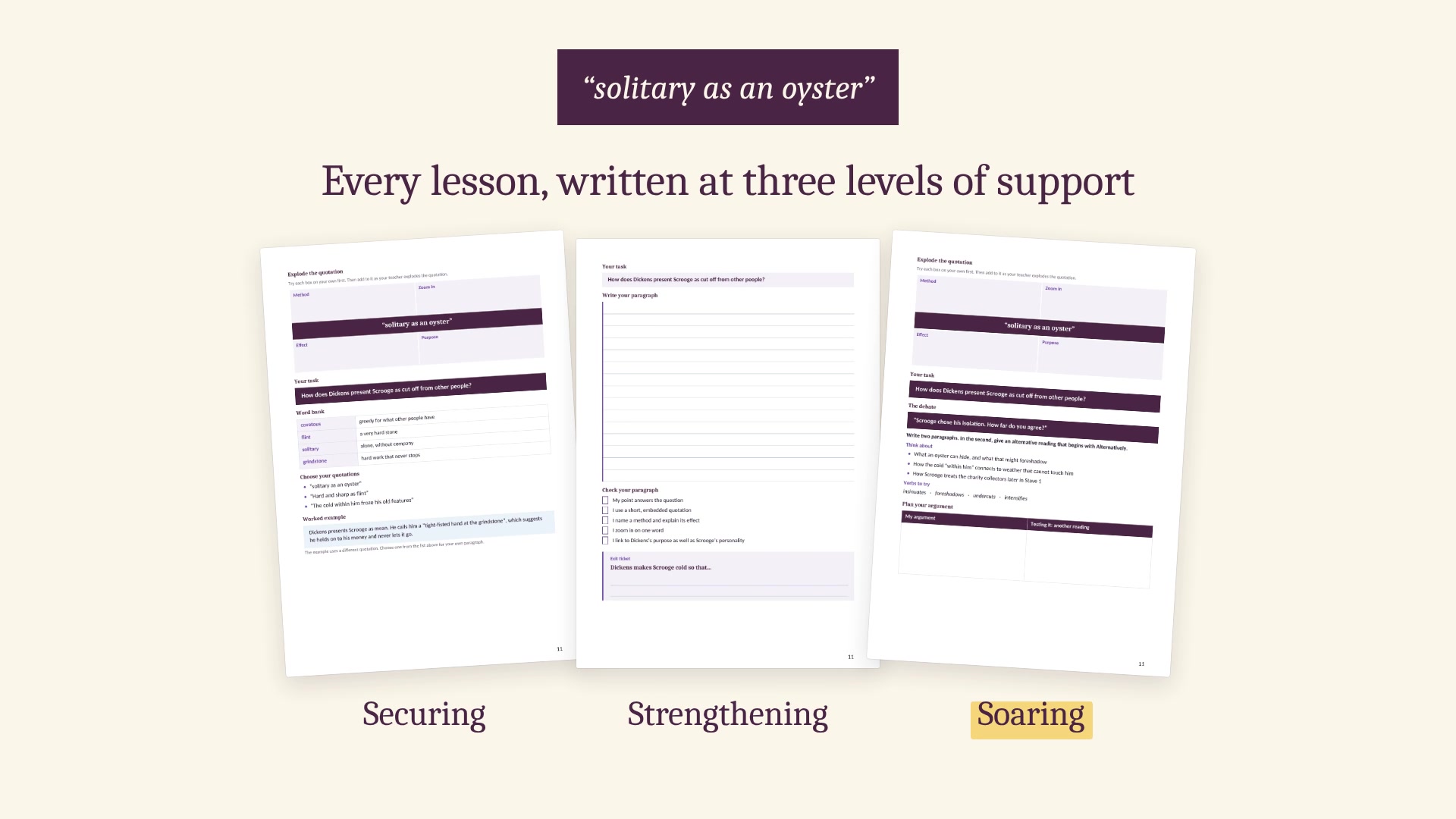
Schemes of learning for AQA GCSE English, with every lesson written at three levels of support so the whole class works on the same text. Lesson 3 of every scheme is free.
Hannah on how every lesson runs: Know, Apply and Master, with a Do Now and a hinge question built in, and every file editable.
Hannah on why she has always marked in purple: no crosses, no red pen, and comments a student can find straight away when they open their book.
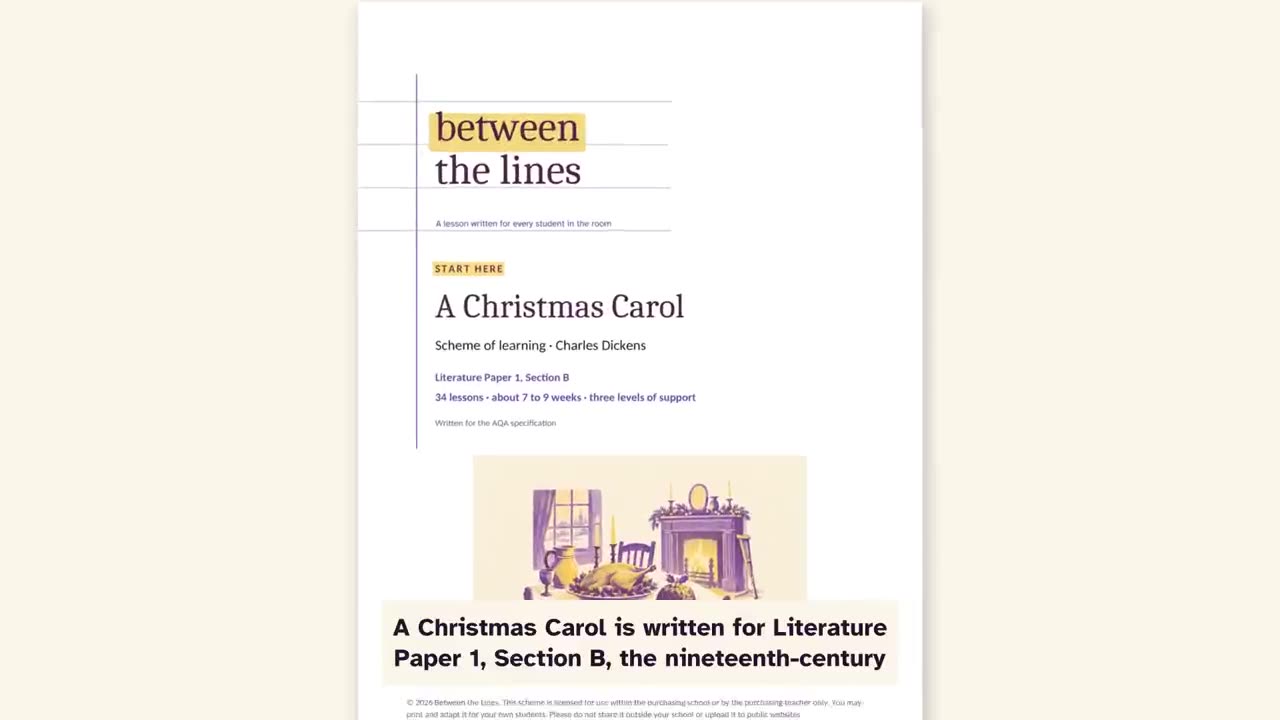
The A Christmas Carol scheme of learning in five minutes: the scheme at a glance, one lesson, the three levels of support and the Feedback Loop kits.
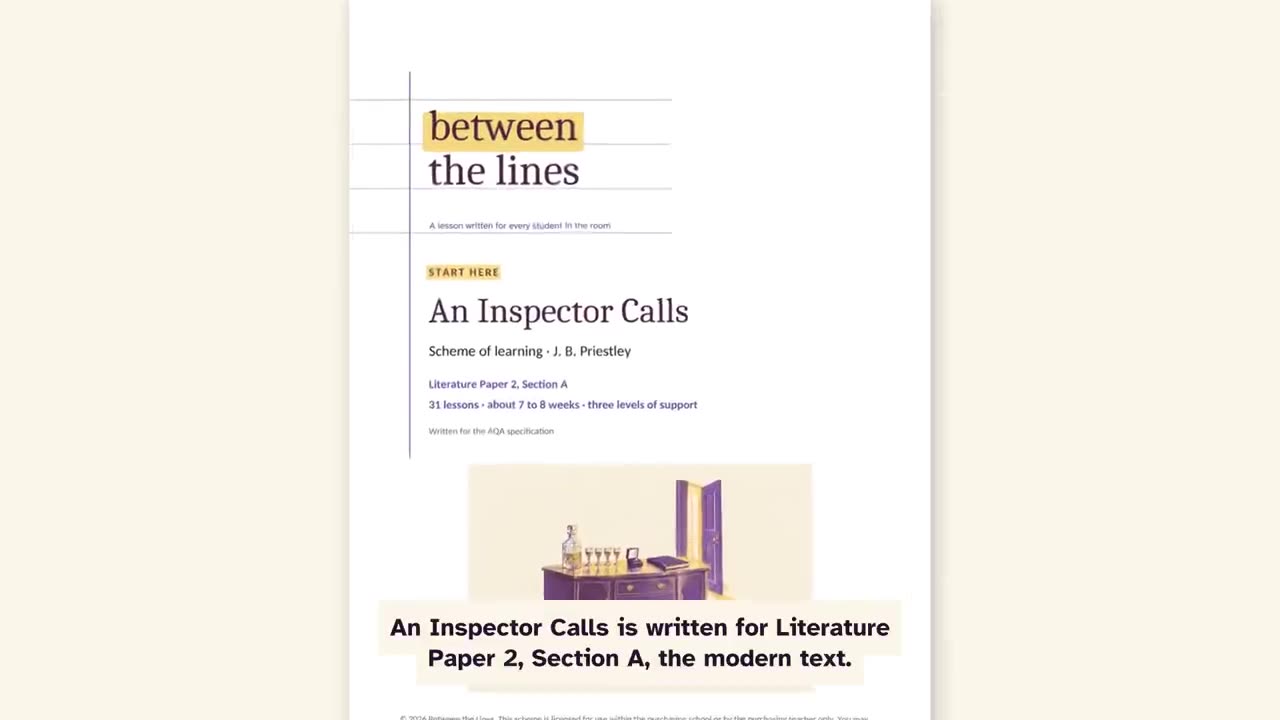
The An Inspector Calls scheme of learning in five minutes: the scheme at a glance, one lesson, the three levels of support and the Feedback Loop kits.
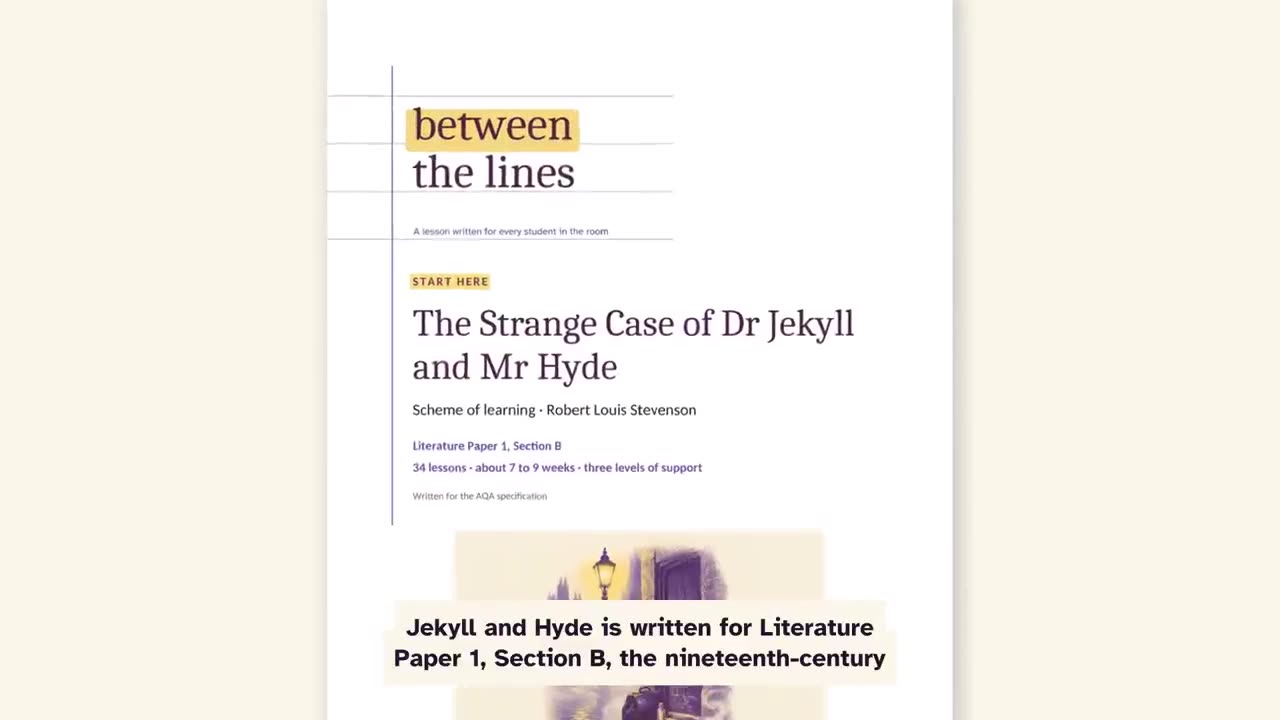
The Jekyll and Hyde scheme of learning in five minutes: the scheme at a glance, one lesson, the three levels of support and the Feedback Loop kits.
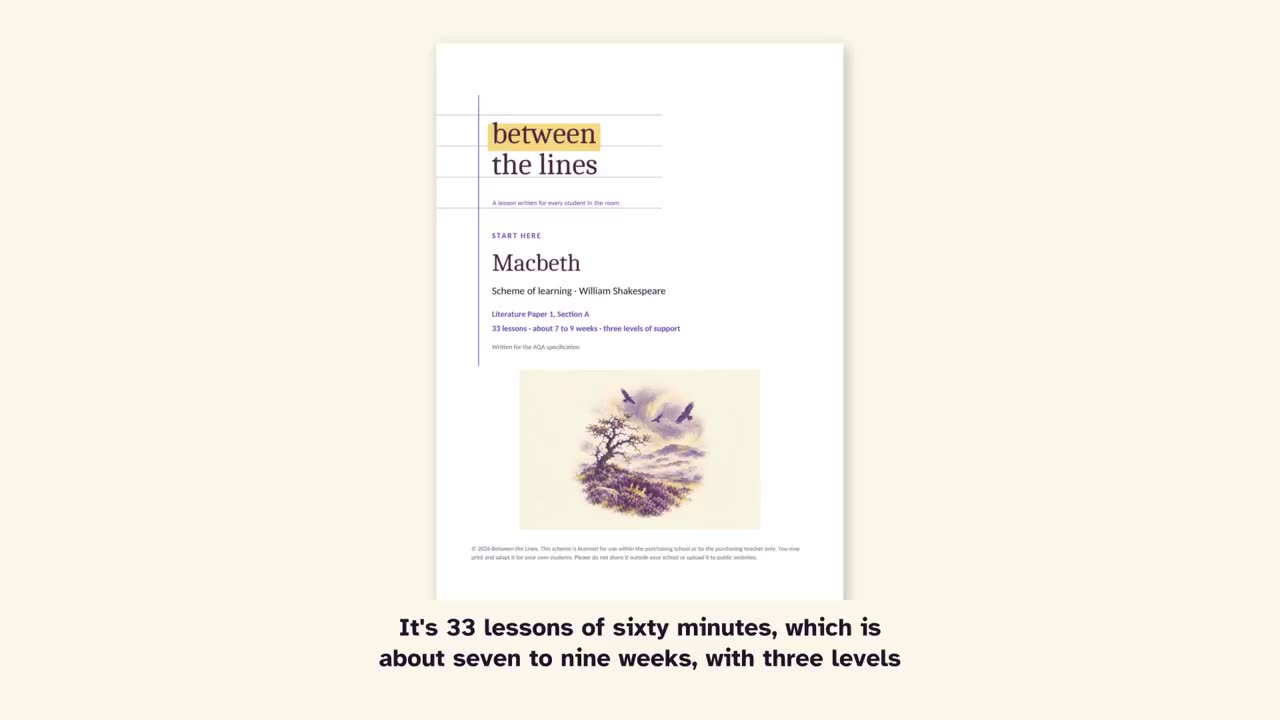
The Macbeth scheme of learning in five minutes: the scheme at a glance, one lesson, the three levels of support and the Feedback Loop kits.
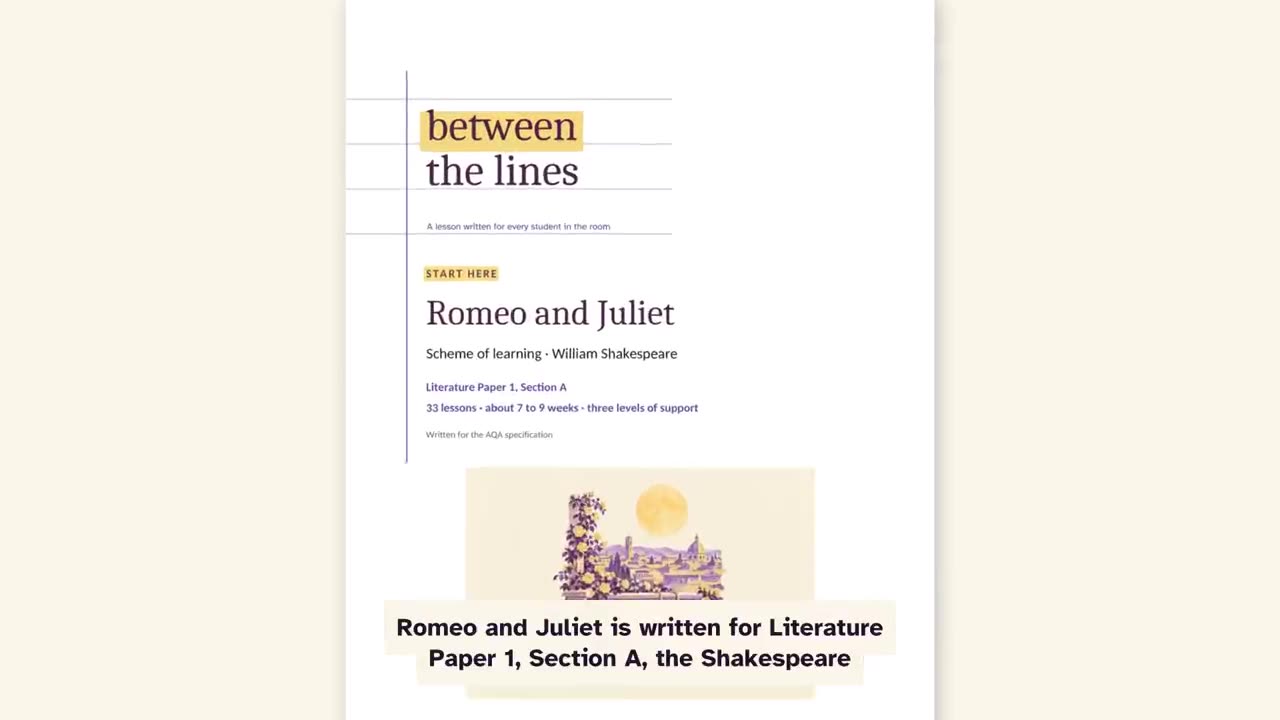
The Romeo and Juliet scheme of learning in five minutes: the scheme at a glance, one lesson, the three levels of support and the Feedback Loop kits.
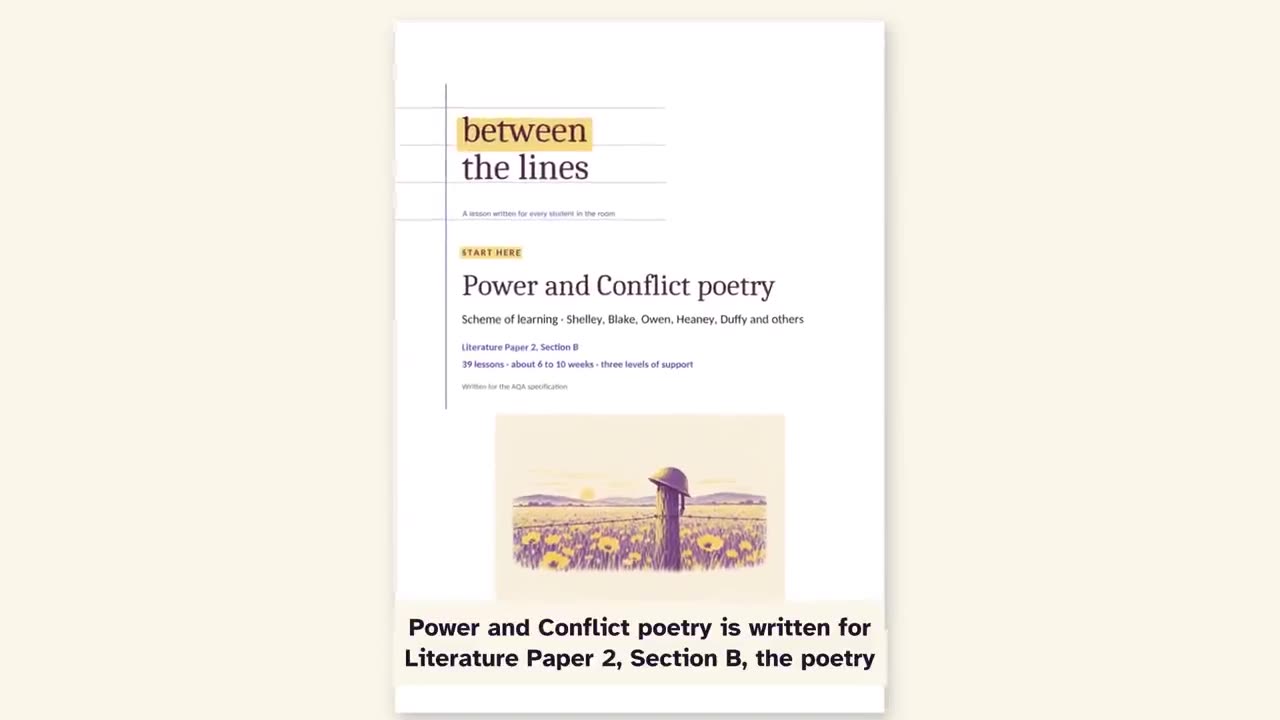
The Power and Conflict poetry scheme of learning in five minutes: the scheme at a glance, one lesson, the three levels of support and the Feedback Loop kits.
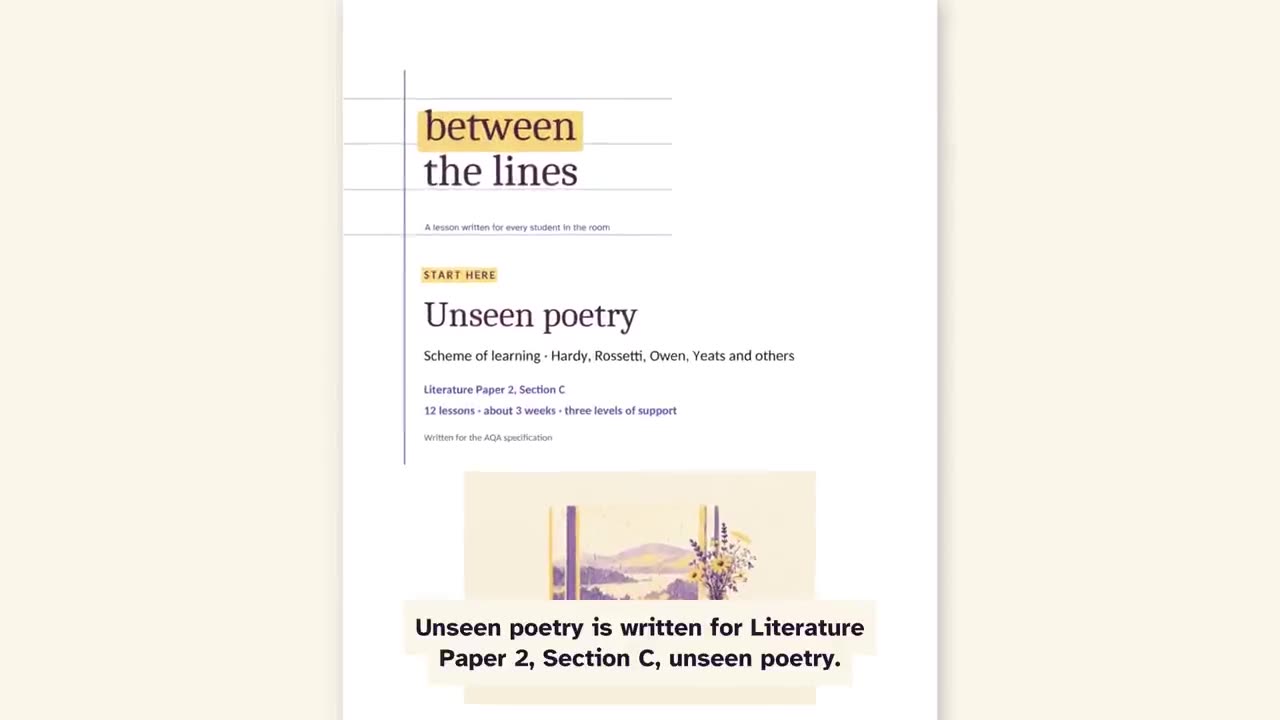
The Unseen poetry scheme of learning in five minutes: the scheme at a glance, one lesson, the three levels of support and the Feedback Loop kits.
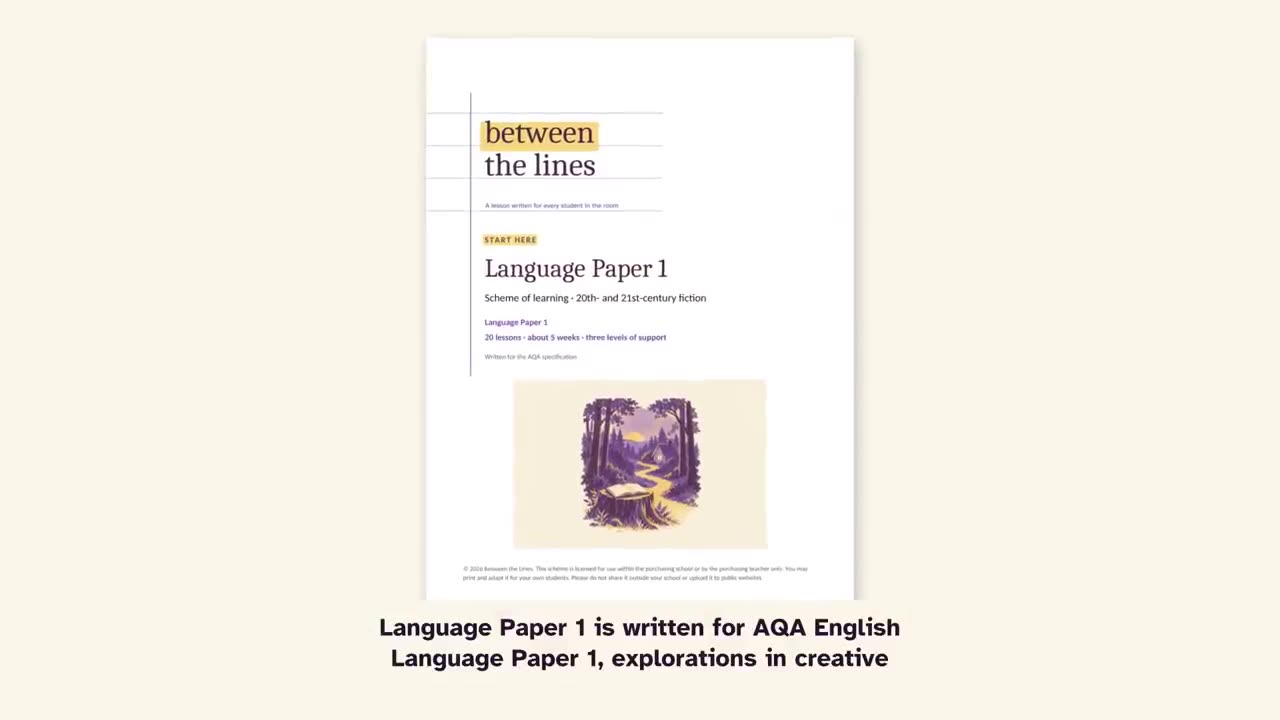
The Language Paper 1 scheme of learning in five minutes: the scheme at a glance, one lesson, the three levels of support and the Feedback Loop kits.
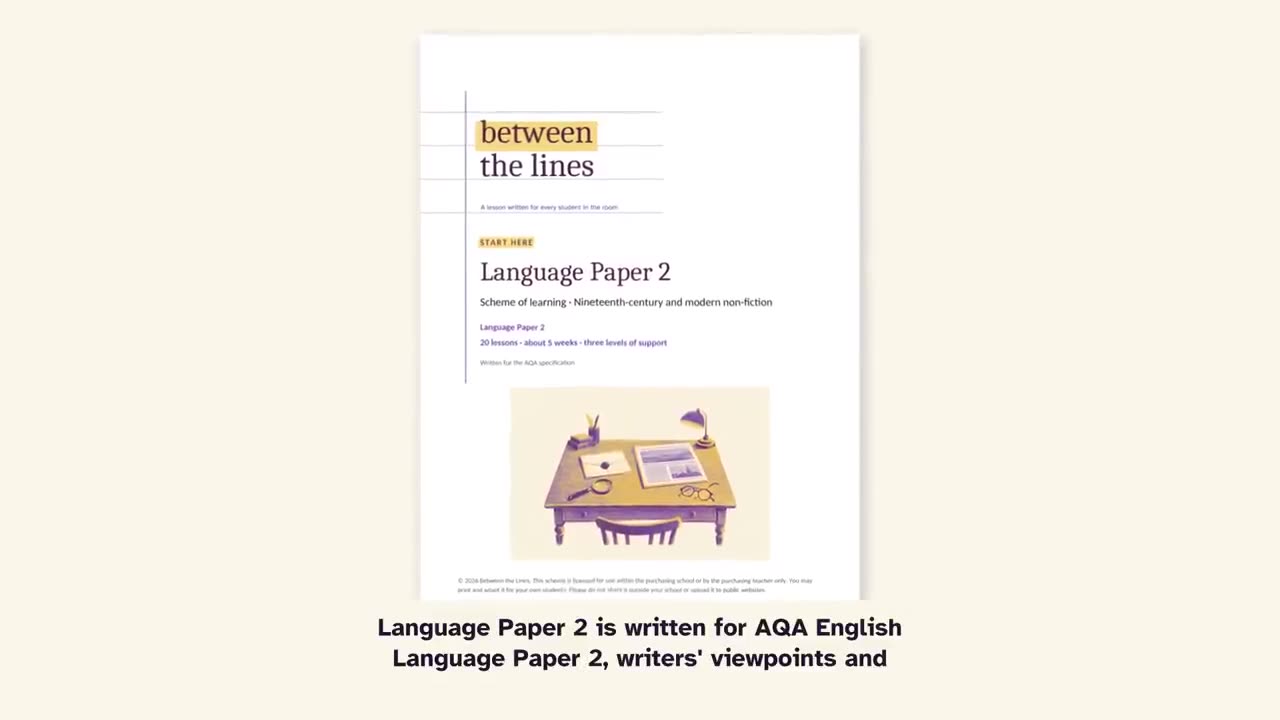
The Language Paper 2 scheme of learning in five minutes: the scheme at a glance, one lesson, the three levels of support and the Feedback Loop kits.
What is in a Raising Achievement set of 30 drills, how every drill runs and how to get started, in five minutes.
Get our emails
About once a month: new free resources and the dates that matter for GCSE English.